Job Quality Insights

In the U.S. the Upjohn Institute for Employment Research conducts a major empirical study on job quality (Houseman et al. 2025 1st wave 18.000 respondents). The documentation and the full set of questions (Link) cover 5 dimensions of job quality: compensation and job security; work structure and autonomy; work environment; worker agency and voice; growth and development. The special merit of the survey is that it makes great efforts to cover also new forms of (precarious) self-employment (Abraham et al. 2026). The degree to which can you make autonomous decisions is of relevance to the self-employed as well as it is a part of the job quality of dependent employees in small, large or big firms.
Related to the use of AI for work purposes question 31 asks for the influence on the decision to use new technologies in your job. This is the modern version of a question, whether you have influence on how you do your job. Bullying in a job may come from supervisors, colleagues or customers and respondents report on this. Beyond the answers given for “your main job”, it is noteworthy that the inclusion of questions on a secondary job allow to identify with more precision the precarious forms of how people try to manage to make a decent living in the U.S.A.
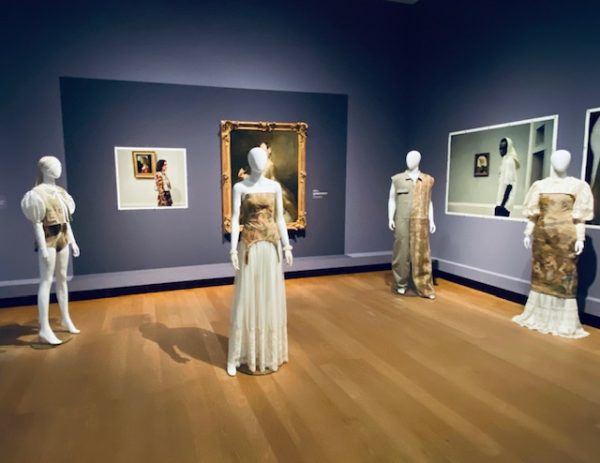
(Image: Exhibition Fashion Council Berlin at New National Gallery 2026)
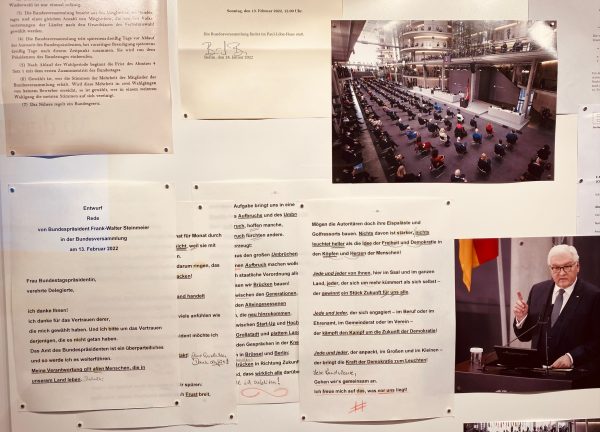
Words versus Balls

At the occasion of a visit to the “Deutsche Dom” in Berlin, which hosts the historical exhibition of the “Deutsche Bundestag”, I came across the memorable transcript of the speech by Bundespräsident Steinmeier (Image below), which he gave on 2022-2-13. The German President’s words come across as a forceful defense of freedom and democracy as a matter of mind and heart, and against the authoritarian leaders who keep constructing palaces of ice and golf resorts. (“Mögen die Autoritären doch ihre Eispaläste und Golfressorts bauen. Nichts davon ist stärker, nichts leuchtet heller als die Idee der Freiheit und Demokratie in den Köpfen und Herzen der Menschen!”, p.18). There is indeed an ongoing battle on which kind of diplomacy is more effective, words or playing golf together. Apparently the Finnish prime minister seems to be quite keen to play balls with President Trump on the golf course to ensure continued support of the 1000 km Russian Finnish border. Maybe, playing Ping Pong with the Chinese leadership might be more effective in balancing the trade books between Europe and China, just as much as golfing might do the trick with the current Trump administration. What’s your handicap in the golf and ping pong tournament of  international politics.

State capitalism

It is the 2025-12-17 edition of the Wall Street Journal (WSJ) that touts President Trump’s governance as “state capitalism”. Through a listing of recent state interference into the functioning of the economy, the branding of this as state capitalism by the capitalist-owned press is without precedent. The President’s office has obliged NVIDIA to pay 25% of revenue from its China business on advanced semi-conductors to the Trump-run government. We might call this a kind of kick-back or blackmailing, if you want to expand or keep your business with a specific client. Major institutions like the Central Bank (Federal Reserve in the USA) are tackled to follow state orders rather than keep an eye on their independent assessment of facts about the economy. Nomination of governor positions have been subject to persistent interference from the president’s office rather than the government taking a moderating role of divergent interests, competences and lobbying.
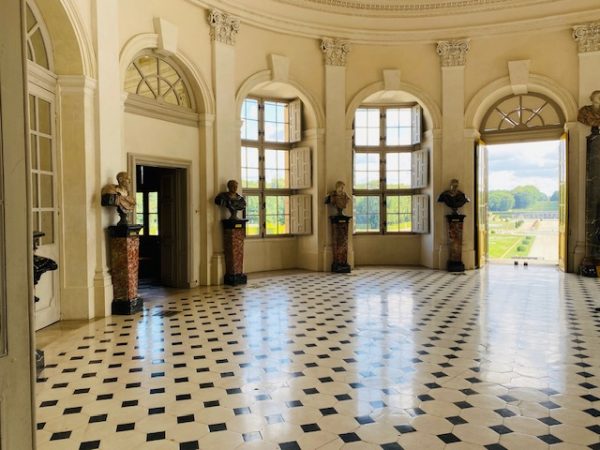
The medium and long-term inefficiencies of an “at-will economy” have several examples, many in South American economies. The US economy is moving South in several respects, with the loss of the value of the $ compared to the €, maybe even devaluation is used as a strategic economic weapon. (Image: Ballroom in Chateau Vaux-le-Vicompte, France)

AI employment effects

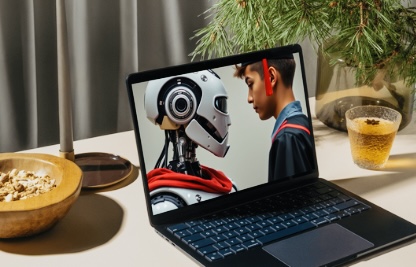
The first robust empirical evidence about employment effects of AI in the USA has been published by the Stanford Digital Economy Lab by  Chen, Chandar and Brynjolfsson (2025). A previous paper by Wang and Wang (2025) highlighted the comparative advantage of persons who use AI in their work compared to others and the authors coined the term “learning by using technology”.  The prediction of the model was that there might be job losses of more than 20% in the long run and half of this already in the first 5 years of the introduction of the technology. The Stanford economists have estimated with real world data these effects in the USA and find quite surprisingly that the negative employment effects of AI have the strongest impact on young labor market entrants with few years of labor market experience. Middle-aged and more senior employees seem to benefit from “tacit knowledge” about the work, which is more difficult to replace with AI, at least for the time being of the early days of AI. This evidence is based on recent payroll data from the largest payroll processing firm “ADP” in the USA which has firms overrepresented from the manufacturing and services industries as reported in another paper  (Firm size maybe another source of bias).  However, the effect that youth 22-25 years of age suffered the most calls into question the common belief that older workers are more likely to suffer the consequences as during in the rise of the digital economy around the year 2000. (AI Image created with Canva)

Vacation money

The budget for a vacation, depending on your destination, is subject to exchange rate adjustments. If there are several months between planning and traveling the exchange rate like between the US $ and the Euro € has fluctuated recently by 10% in favor of the €uro. Nice for those receiving salaries in € and who spend their vacation in a region using the US $ as main payment currency. International tourists frequently calculate in $ and therefore might find Europe a bit more expensive than before the return of Donald Trump in the USA.
However, for all those who live in the Member States of the Euro-area and take their vacation there as well, they no longer think in exchange rate risks to their vacation budget. Additionally, there are almost no risks to be subject to fake money transactions like in unfamiliar currencies.
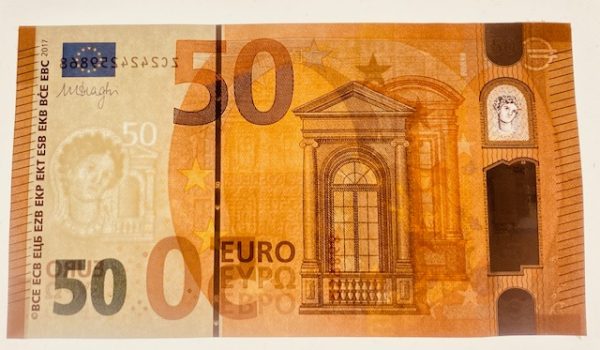
In the Euro area we can use for example backlight to make sure a 50€ bank note is a real one. Happy vacation! 

Travel Trumped

The travel and tourism sector of the U.S economy takes quite a hit from Trump‘s anti Canada and Europe tariffs and rhetoric. The Wall Street Journal (2025-6-3) reports data until May 2025  which show a 6% decline in international air travel and a 12% reduction in air arrivals from Europe (reference same period last year). Canadians seem to reduce their travels to the US as well, hitting many regions just across the long joint border. Airline bookings are an early warning indicator, but the more drastic figures are to be expected from the loss of spending tourists do not dispense in the US any more. Additionally, sizeable shares of US tourists travel to other countries due to the disgusting Trump rhetoric and spend their holiday budgets elsewhere. Trump‘s tariffs has focused a lot on redressing the trade balance of goods, but the balance of services like in tourism is worsening day by day now. The political economy of tariffs has multiple feedback effects which are quite hard to predict.

Tariffs Trade Deficits

US Tariffs target the US trade deficits across the globe. For a start on the topic it is helpful to take a look at the data. The US bureau of census publishes this time series regularly. Currently, you can compare monthly or annual data across countries from 1985 to 2025. The worsening of the trade balance is obvious just looking into some examples like trade with the EU, China, Japan, South Korea or Switzerland. we might calculate some rough indicators of trade deficits of the US with countries by the size of the country, which would make Switzerland look really bad relative to many much more populous countries. This probably explains why Switzerland is threatened by higher tariffs than the EU. However, this hints towards the “hidden” agenda of tariffs on countries. The major targets are multinational companies that produce in countries outside the US and particularly in those with low corporate taxes, like Ireland and Switzerland. Importing products from such countries worsened the US trade balance over decades.

Another factor to study more precisely is the sectoral pattern driving the trade deficits with countries. Exports in for example health-related products have soared due to Covid-19 pandemic starting in 2019. Where did the US buy face masks, ventilators, medicines and pharmaceuticals?  These countries will now also be penalized by higher tariffs. The tariffs topic is a complex interconnected business issue, which is not solved by blunt measures. The real danger is that with each month trust in US will erode further. For decades this has been an underestimated currency of international business. Eroding trust is likely to be the major fallout of the tariff and trade deficit nexus. It takes decades to build, but can be destroyed within a few days or weeks. (Image: Mont des arts Brussels February 2024, celebration of surrealism).


Deus DEI

In Latin the declination of deus = god starts with the genitive form “dei”. In the world of universities and labor markets the abbreviation “DEI” stands for diversity, equity and inclusion. These 3 topics have ensured for years that a university campus looks a bit more like society at large, even if biased towards younger generations. The MAGA saga of the USA in 2025 starts to turn the clock back on hard to accomplish advances in DEI-hiring and promotion. This likely to reduce the number of international students on US campuses and will make campuses look WEIRD again. Moreover, lots of talented students will seek DEI campuses in other countries to avoid discriminatory hiring practices and arbitrary risk of visa denial.  Europe is likely to benefit from this kind of brain drain and skill shortages might be substantially reduced due to such unprecedented shifts in US policies. The cuts of billions of grants to renowned universities for political reasons will leave a yawning gap of talent in the US in a few years time, the latest. Early movers will move very quickly to anticipate the exodus of talent.  It is puzzling to watch how quickly years of DEI policies might be undone with thousands of people and projects at a loss. Scholars of American history are reminded of the McCarthy era of political prosecution or the dismal period for science under the Nazi-rule in Germany. Americans seem to get much worse and extreme policies than they thought they voted for. “Deus Dei” also means “god of god” and in the current American political context the judgement of a god by another god has maybe a historical meaning. In the table of the Estonian town hall in Tallinn the inscription alerts rulers to beware of being judged as well. Sounds like a timely reminder to overly ambitious politicians.

Value destruction

The destruction of economic values as they are embedded in quotations on national and international stock exchanges has reached levels after the US tariffs announcements of unprecedented levels. Only the banking crisis had reached similar levels and bursting speculation bubbles. Whereas professional investors might have seen this coming, the normal small investors who had hoped for a positive effect of Trump’s economic policies on shareholder values, which occurred right after the election has been wiped off already. For those people who rely on stock market investments for their pensions have to digest heavy losses now. The second round effects of reduced consumption of pensioners who have lost 10% of their retirement savings will further aggravate the situation for this group of people. Paired with higher expected inflation the economy will be forced into a recession caused by Trump’s tariff announcements and enactments. As this will lower prices of oil and gas as well as other raw materials, his electoral base of tycoons following a « drill baby drill » device experience also losses. A lot of damage all around him leaves millions of people in the US with losses to digest. Probably even more across the world, particularly in the poorest countries of the world. Such a real world macroeconomic experiment is like playing poker on a global scale. However, many countries may build new alliances that may wither the storm better than Trump anticipated. Hence, the game of poker will reenter economic textbooks again in addition to game theory and maybe chess strategies. (Image winter sunset).

Rich richer

The US economy under Biden had continued to make Americans richer. In an article by Talmon Joseph Smith in the New York Times from 2025-4-3 p. 7 the puzzle that Americans have grown richer, but don’t feel it, has been well explained. The large share of households owning their homes albeit with mortgages from low interest periods have witnessed their increased wealth. However, inflation is eating into their cash available for daily purchases. With another round of tariffs and additional inflationary pressure caused by those, the average person or household doesn’t fell much better off than some years ago. Economic anxiety and our preference for loss aversion or loss avoidance make us react with consumption restrictions to prepare for increased risks as well increased uncertainty about the directions of the whole economy and our very private wealth and consumption patterns. How and when the US economy will get back on track remains to be seen. Higher uncertainty usually reduces investments and with increasing interest rates again the economic recovery might be protracted. The NYT p.7 cites business owners with statements like “we’re not putting our foot on the brake, but we’re taking our foot off the gas.” Betrayel of working class people due to rising unemployment after 3 years of very low unemployment is likely to widen wealth gaps in the US population even further. The rich will get richer, but at high costs to the population as a whole. (Image: ceiling painting in Petit Palais, Paris).