Stinging issues

Sometimes a topic can make it into the headlines only if it is a stinging issue. The fact that certain mosquitoes travel and survive further north due to global warming is indeed such a stinging issue. As the living conditions for mosquitoes depend on warm weather conditions particularly during (tropical) nights as well as water availability for breeding purposes, the spread of mosquitoes can already be observed studying the spread of dengue fever, malaria and chikungunya in some southern European and American countries. Climate change, especially the warming parts of it,  shall bring home a number of stinging issues and consequences to people who didn’t seem to know or care about the spread of spread of infectious diseases.  
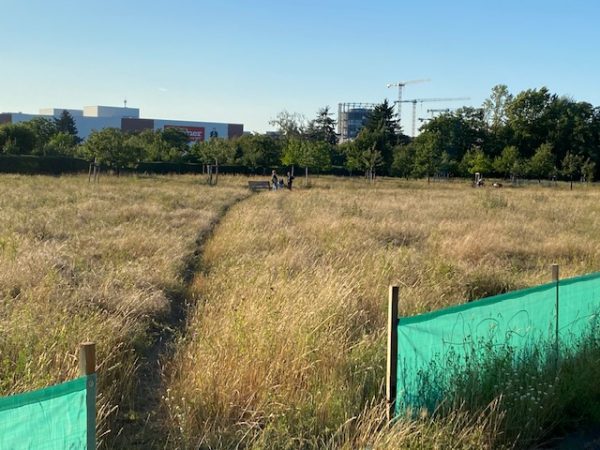
Green land in summer between Priesterweg and Südkreuz Berlin 2026

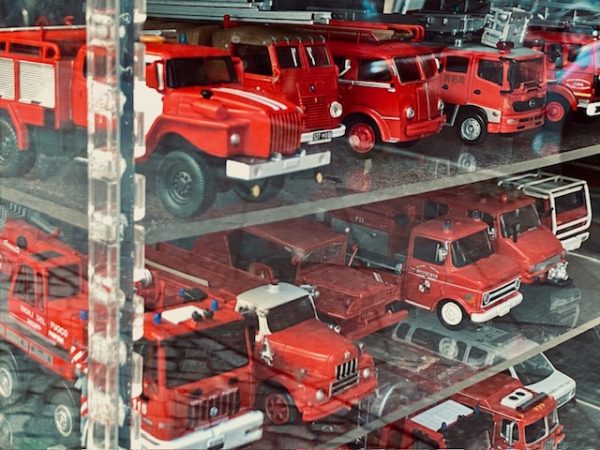
Fire engines

The collection of fire engines model cars on display in a Berlin antique shop reveal the whole dilemma of fire fighters across Europe. Lots of different models and technical specifications mean lower potentials for synergies. European cooperation is such a strong statement of hope and solidarity during emergencies. Better coordination in joint acquisitions would allow fire fighters from each Member State to be operational in other units. The power of the many could be a significant advantage to fight the fast progression of fire we have witnessed in 2026-7.

Fire engine models in window of antique shop in Berlin

Fighting fires

In our homes and offices we are used to have electric, digital and chemical devices to assist us in fighting fires. Fires can have multiple origins ranging from faulty technical devices to human errors, behavior and volition. Some countries have terrible experiences with city fires engrained into their history. The scale of wild fires in forests in Europe, the USA, Australia or Canada have reached a new dimension. With global warming fires known in southern parts of Europe reach further north and become more intense. The fire near Fontainebleau (Forêt de Sénart, France) in 2018 destroyed 9000 hectares forest. In 2026 the fires near Bordeaux burned 10 times the size (Link). There were about 8 years to get prepared between the 2 large scale incidents. The technocrats’ answer usually is just limited to the immediate surroundings of the fire. Instead larger scale actions have to be prepared and enacted to prevent the next incidents. The technocrat’s answer is more technology like aircrafts and yet bigger aircrafts(still largely insufficient in 2026-7). Satellite and drone surveillance with infrared cameras additionally can go a long way, but the human factor remains a hard to fight beast in all such technical fire fighting scenarios. This setup seems to be somehow like a constant to take into account in all technological propositions.  

Cercis siliquastrum Jardin des plantes Paris, planted 1785.

Social learning

The process and mechanisms that drive social learning are still not well understood. Beyond social psychology and sociological theory and evidence, neuroscience has made progress worth taking note of. The paper by Maciej Winiarski et al. (2025) offers a key insight into the neuro-biology of learning about social structures and the behavioral consequences. In their study of mice in the EcoHAB supervised group housing, information sharing through scent was the driver of learning about the social structure and the ensuing social behavior. The various experimental settings show that 1-2 mice became the most relevant informants about social structure and rewards. The “exploratory activities” are an interesting underlying parameter as well. The mus musculus model does not tell us much about humans yet, but we get a gist of important factors to consider for social learning in groups or organizations. Information seeking, informants, reward structures and “housing” have to be considered based on such research from neuroscience.

Berlin bears as statues decorated to demonstrate freedom and diversity in 2023

Preventable Asthma Burden

The global burden of disease data, analyses and projections allow us to identify more clearly the parameters to influence and prevent rising global burdens of disease. Among the so-called non-communicable (i. e. not infectious) diseases Asthma plays an important role.  Heat waves (wild fires) and air pollution (road transport, heating emissions) are major contributors to the burden of disease. In addition to the health related suffering of a population, the economic losses for groups of countries have been estimated by a recent study (Chen et al. 2026).  For the UK another study showed that 2/3 of asthma attributed deaths were preventable. This raises our awareness to the fact that adequate health care systems and the distribution as well application of asthma medications can help a great deal to lower also the economic impacts due to uncontrolled asthma. The labour-induced costs (lost years of production) are likely to be higher in the low-income countries, whereas capital-induced costs (in form of opportunity costs of health expenditure) accrue more in the higher- income countries. With the successive heat waves in 2026 and continued global warming, the estimated global burden of asthma is most likely a lower bound estimate of the economic impact. A focus on asthma prevention becomes a pressing concern today to prepare for the future.

Road injuries

Road injuries are a serious matter. The lives lost and people suffering from lasting injuries continue to be a major health hazard on a global scale despite significant reductions over the last 3 decades, mainly in wealthier countries . The Global Burden of Disease study (Ng et al. 2026) shows that between the ages of 10-39 fatal road injuries are the main cause of death for young men. The study has no data to speak to causal effects, but the basic statistics show a clear pattern according to gender. Several factors need further exploration:
1. Men are known to have a much larger share of the total amount of road traffic in most countries, which leads to a higher risk exposure.
2. Men seem to take higher risks when driving, which puts them at higher overall risks as well.
3. Responsibilities for road incidents are not investigated, which leaves other causes or contributions to road injuries (like alcohol or drug abuse) unaccounted. (Source: Ng et al 2026. Global, regional, and national burden of road injuries 1990–2023, p.7)

Cardiac arrest detection

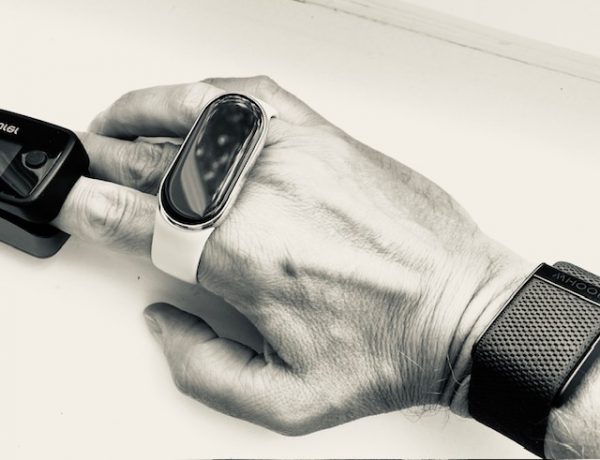
The number 1 cause of death is cardiac arrest in the modern world. Hence, the interest in the detection of cardiac arrest could save many lives. For assistance to arrive and intervene in time an alert needs to be issued as soon as possible. With early detection by nearby persons and skilled intervention the survival chances are about 50% of cases. The “silent” at home cardiac arrest is an important health and survival issue. The availability of wrist bands and watches which can issue alerts in combination with smartphones has risen considerably in recent years. Therefore, the improvement of reliable algorithms which interpret these data can realistically save lives as the delays can potentially be shortened for professional helpers to arrive. The study by Edgar et al. (2026) tested such a device and were able to show the very low number of false alarms issued by this device (about 1 out of 40). Extrapolated to millions of cases the challenge to a health care system is steep. However, we have to deal with such socio-economic issues of digital devices in medicine in the coming years more often.

Productive organizational energy

Productive organizational energy is more than the sum of individual efforts. Only if you manage to align the productivity of all employees and managers towards the same objectives, you are likely to reap the full benefits of productive organizational energy. The scientific literature is quite clear in this regard. The authors Vogel, Raes and Bruch (2026) highlighted the need to investigate current as well as anticipated Productive organizational energy using a tool called the “energy pattern explorer”. Through the repeated measurement it is possible to learn about trajectories which can be related to leadership styles, external and internal influences as well as to evaluate detailed leadership activities in more detail. Once in office, many leaders no longer deem it necessary to check or evaluate their decision-making processes, although the baseline measures should be taken at that time or before departure of the previous chief executive. About time to take productive organizational energy seriously to mobilize the energy of the many rather than the usual one man show.

UN General Secretary

The questioning of candidates for the position of UN general secretary in 2026-7 has revealed  a fundamental difference in the understanding of the role to be played by any General Secretary. Do you want a SG to be more of a General or more like a Secretary? In other words, do you abide by the idea to have a person in leadership position to rely and lead in a strictly hierarchical manner or do you choose a person that understands leadership as a service to the constituent bodies or membership organizations. There seems to be a predilection for the former rather than the latter leadership profile. However, 21st century has a chance to break with the erroneous paths, choices and missed opportunities. … “when will we ever learn”.

Gone birding

Birding is fascinating science and hobby. The recent advances in bird song recognition allow to compare the sometimes complex melodies across species. The support by many citizen scientists who collect data on sound, images and environment, made it possible to identify 8 major types of sound snippets. These constitute the basis from which to study or imitate the major bird songs, if you like. The scientific paper by Bacquele et al. (2026) shows that in dense forests the songs are more complex, whereas in open space simple tunes allow to travel far across space. Mating potentials seem to play an interesting role as well. But birding does not stop there. The Brancusi exhibits in the „Neue Nationalgalerie“ in Berlin deal also with the fascination about birds by the artist (image below). We also find depictions of the „bird-man“ in mythology more than 3000 years before our time and ever since. Flying probably brings together our science and dreams about birds and mankind. Science fiction is full of examples of that kind.