Make someone believe

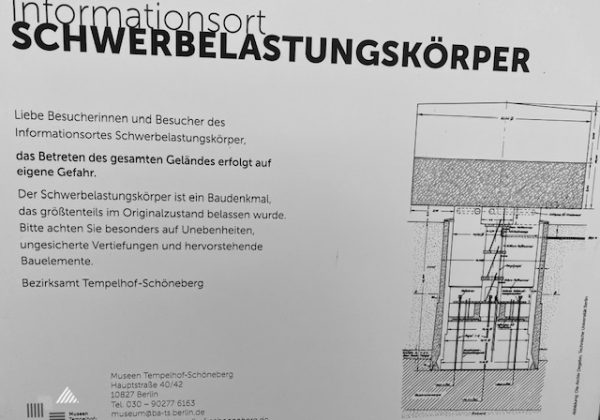
Some people are very successful in making others believe they are or can be part of something very big. Selling grand, utopian ideas to people is an old recipe to get people to support a person who might have great ideas and appears to be capable of obtaining this utopian goal. The Romans built their amphitheaters for the people to keep them interested in the Roman empire. Nazi-Germany made Germans believe in the grand idea to build the new city of Germania in place of the city of Berlin. To fool people further they needed to come up with ever greater plans and the test drills and small beginnings where realized irrespective of the war efforts and terrible losses of lives. Utopian plans, a bit like MAGA-mania, need ever greater utopian designs so that followers still adhere to the basic utopia. It is amazing to what extent people want to be fooled rather than proceed in small steps. It has been dangerous for humanity in many respects, but the utopian sagas keep popping up.  (Schwerbelastungskörper, Berlin) 
Perestroika – Glasnost

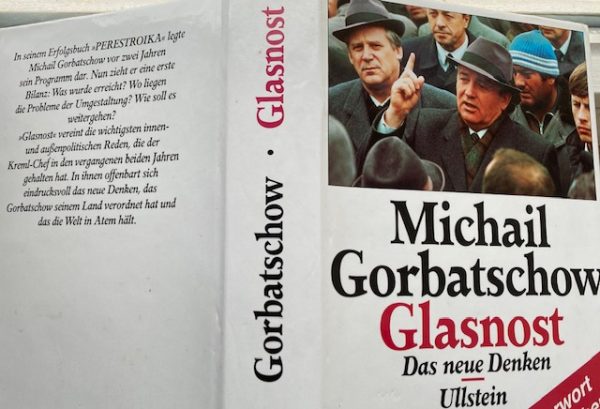
The extraordinary leadership of Michael Gorbatschow with his introduction and subsequent implementation of the principles of Perestroika and Glasnost has changed the lives of millions of people in Eastern Europe to the better. The independence of occupied countries became feasible. The aim to build a “socialist state based on law” (p. 86) and the belief in the power of the people without differentiation of what information is for all and what information is reserved to closed party circles and leadership were perceived as sweeping reforms. More than 25 years later there is little left over from these radical reforms. Putin and his narrow circles have locked in people and their freedom of expression again. The practice of Perestroika and Glasnost have been relegated to a distant dream again. (Image: book cover Gorbatschow).  


Xmas as information sharing

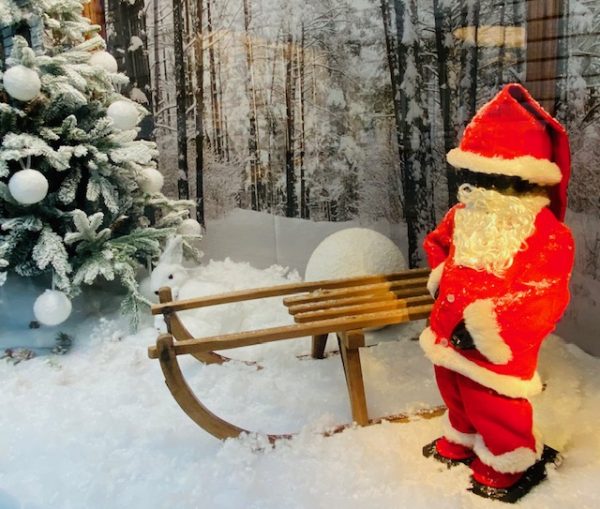
In modern theories and tests of the importance of information sharing, social learning in groups and the spreading of information in social networks are known to be powerful mechanisms. Hierarchies and survival might be at issue. In the animal model based on mice it the scent that is the byte of information. For humans thinking of information or narratives are probably more appropriate. The story of Xmas has been spread rapidly and the kings arriving to bring presents testify to this powerful mechanism of information sharing in social networks even before the so-called social media existed. Ever since, written accounts of the story were added in addition to regular meetings of persons who continued to share the story. Add music and theatre to the transmission of the story and the mechanism reaches even broader audiences, and maybe devoted believers. As behavioral flexibility might increase as well, more than one interpretation or ritual of the same narrative is likely to arise over time. In the animal model food is the major reward system. For humans the reward systems are more complex with forms of delayed gratification. Information sharing about the importance of delayed gratification takes us into new spheres of humanity versus rational choice. (M-P Brussels). 

Peak Refugees

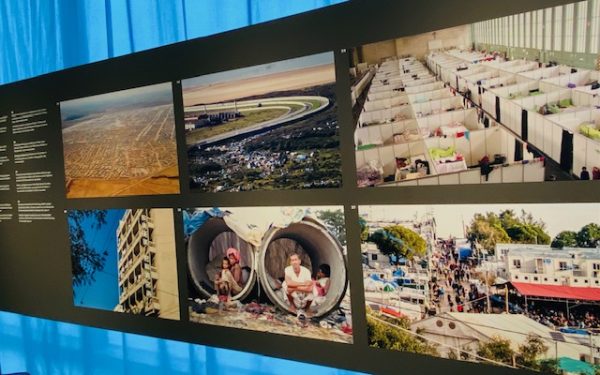
The number of refugees in the world has stabilized at a very high level. According to the data from the UN Refugee agency (UNHCR) until mid 2025 the number stands at 36.6 million people. With slight decreases in the last 2 years, the challenges remain at a high level. The 10 top countries hosting the largest numbers of refugees are Iran, Turkey, Columbia, Germany, Uganda, Pakistan, Chad, Peru, Poland and Ethiopia (compare Fig 4 of report). It is particularly remarkable that this list of countries is relatively little associated with a country’s level of average income. Humanitarian concerns and being a neighboring country play an important role. We all hope that we have witnessed peak refugees and that an assisted and safe return will be a feasible option for many of them eventually. Although we know that many people suffer from authoritarian regimes and, for many years, don’t have a return option in sight. (Image: Documentation Center on refugees in Berlin) 

Good or bad

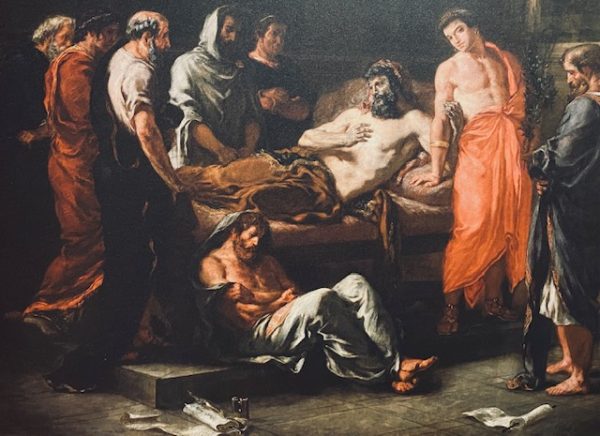
We have been taught by Shakespeare “to be or not to be, that is the question”. In political science we have pondered the question in a slightly augmented form. “to be good or bad, that is our question”. The basic image of women and men in society has been a subject throughout the history of ideas. For those who believe in the good nature of mankind, they tend to find reasons to believe that eventually mankind will find a way towards a peaceful cohabitation on our planet (there is no planet B yet for humans). On the other hand, each outbreak of violence and war are considered as a confirmation that mankind will always recur to some form of violence, even after extensive periods of peaceful cohabitation. According to the evidence presented by Meller, Michel, van Schaik, referring back to Kant, trade between people and nations is likely to prevent more violent relationships (p. 330). One of the major conclusions over the long term view of mankind is, that the periods of war have been far shorter and more rare than a focus on the last 3000 years seems to suggest. Maybe, “to be good or bad” is just a question of demographics of being too many at the same time in the same place.  Population growth and population density might be a powerful driver of “being good or bad”.  (Image: Delacroix, Last words of Marc Aurel)

How could this have happened

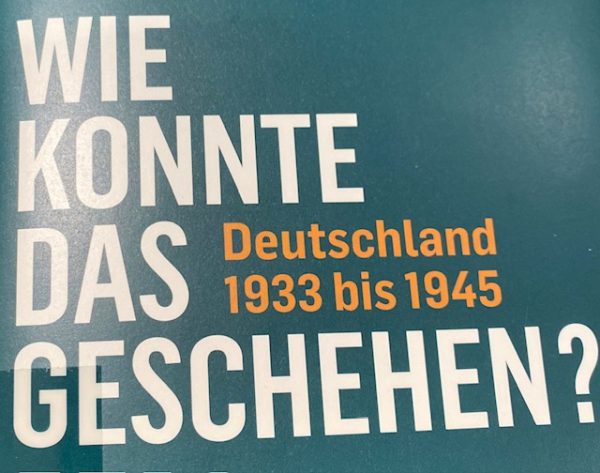
The latest thorough reflection on how the Nazi-terror could have stopped or being prevented remains an important question in our time. The more we see countries descend into the authoritarian regime types, the more we have to know our lessons from previous historical experiences. Götz Aly made a great contribution to this literature. He points our attention to the collective euphoria the Nazis (NSDAP) managed to make people believe, by at the same time blaming others for the past crises. People just wanted to believe the fake narrative of a promising future (p. 175) for a society based on social exclusion. The pattern, unfortunately, seems to find its replication in other parts of the world nowadays. This is a very slippery road which often leads to disaster rather than relief. Easy or catchy answers are preferred by many people rather than the nuances of well-informed differentiated options. Patience in social development is a collective virtue, but often misunderstood as a form of conservatism, which is is something very different.

Birds nutrition

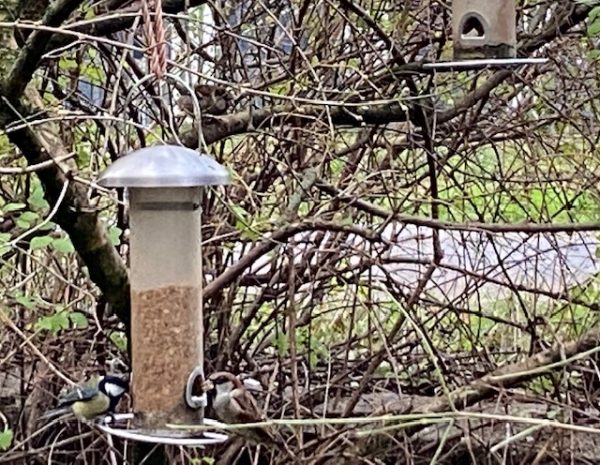
The winter diet for birds is less varied than during the other seasons. Human assistance seems to be appreciated as well even if food supply in inner cities appears to be abundant with huge amounts of wasted food in streets ans backyards. The different diets of different species are not easy to cater for. It is a two way learning and adaptation process. With a narrower range of birds feeding in cities, the task is easier than it used to be. Bringing back more diversity of birds in general starts with offering different nutrients as well. A long way to go.

Documentation Inclusiveness

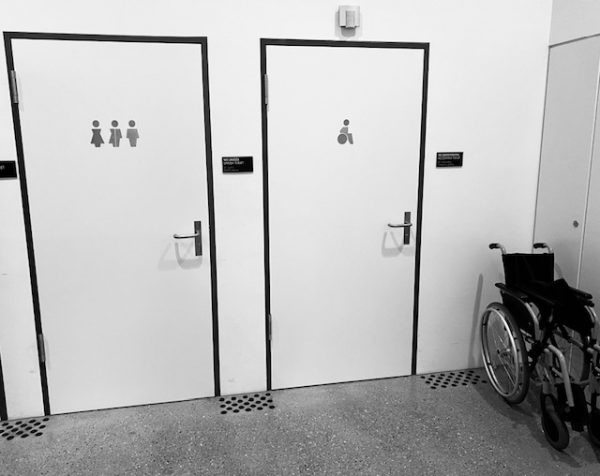
If we don’t measure it, it will not improve. Many public institutions and private organizations make great efforts to improve inclusiveness in day to day operations, but many barriers are still all around us. Both need monitoring in form of data bases and visual documentation. In a Berlin museum inclusiveness appears to be the most natural thing, nothing to worry about or to call out “wokeism”. Just small improvements in basics and everyone feels welcome.

Rilke’s Advice

One of the poems by Rainer Maria Rilke is entitled “You don’t have to understand life”.
And the first line of the first paragraph just repeats the programmatic sentence of the quite revolutionary romantic movement. Following a century of the enlightenment, which narrowly developed and focused on rationality and Kant’s “Critic of pure reasoning”, the authors of the romantic movement were eager to explore the world beyond reasoning again.
“Du mußt das Leben nicht verstehen,
dann wird es werden wie ein Fest.”
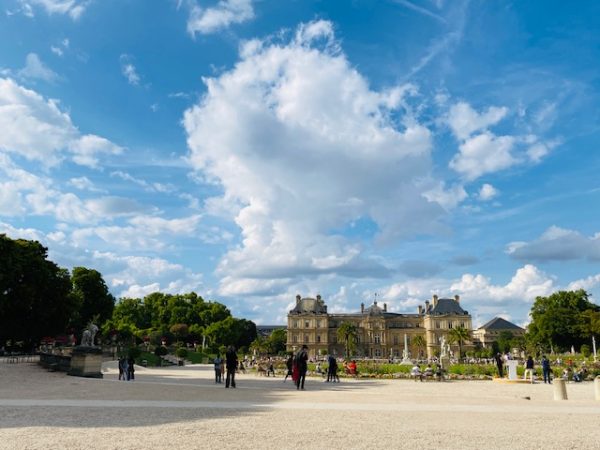
Rilke brings back the exuberant, Dionysian element into literature and captured the new spirit of his time. After a period of fast innovation in the sciences and applications of them in day-to-day life, Rilke revels in the innocent days and years during childhood, where youth is simply asking for more without hindsight. In doing so: “Life will be a like a feast”. So be it, we should like to add. (Rilke wrote a poem « Das Karussell » with subtitle Jardin du Luxembourg, Image below)

State capitalism

It is the 2025-12-17 edition of the Wall Street Journal (WSJ) that touts President Trump’s governance as “state capitalism”. Through a listing of recent state interference into the functioning of the economy, the branding of this as state capitalism by the capitalist-owned press is without precedent. The President’s office has obliged NVIDIA to pay 25% of revenue from its China business on advanced semi-conductors to the Trump-run government. We might call this a kind of kick-back or blackmailing, if you want to expand or keep your business with a specific client. Major institutions like the Central Bank (Federal Reserve in the USA) are tackled to follow state orders rather than keep an eye on their independent assessment of facts about the economy. Nomination of governor positions have been subject to persistent interference from the president’s office rather than the government taking a moderating role of divergent interests, competences and lobbying.
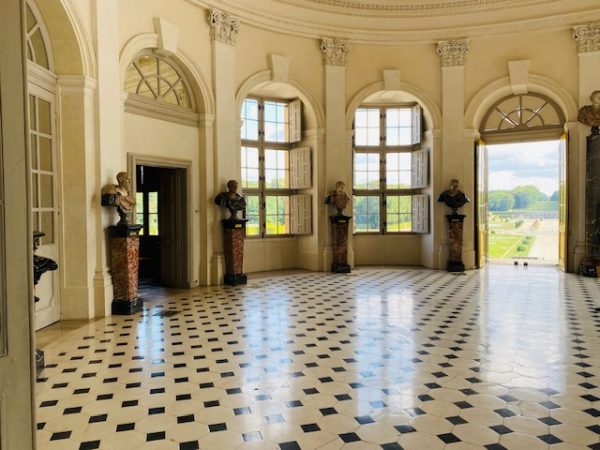
The medium and long-term inefficiencies of an “at-will economy” have several examples, many in South American economies. The US economy is moving South in several respects, with the loss of the value of the $ compared to the €, maybe even devaluation is used as a strategic economic weapon. (Image: Ballroom in Chateau Vaux-le-Vicompte, France)