The history of the typewriter and typewriter is comparatively short compared to the history of literature or other technologies as partners in the creative process. With the advent of AI (here as part of infografix, see image below) the skills of using and mastering a typewriter have become almost obsolete. The original design by Remington (timeline below) has dominated for almost 100 years the technology of typewriters. Then came the electronic IBM technique with an automated correction type, which was not only faster, but also more forgiving of “typos”, short for typing errors.
The craft of handwriting had suffered a tough blow, despite its almost intimate touch to it. Knowing the typewriter outline by heart allowed typing with closed eyes or a focus on another text or image as well as a parallel thought process. Scientists and writers (Claude Levi-Strauss) reported on their creative process as intrinsically being linked to their typewriter.
QWERTY outlines for English language typewriters still dominate the keyboard typing today. With the AI interaction on the rise, we might move away from typing as a “Kulturtechnik” a technology of our cultural era and focus more on human-machine interactions via our voice and microphones. The underlying question, however, remains the same: What is the best technology to enhance our thought process? This, in fact, tends to be a very personal human choice, where technology plays only a subsidiary role. 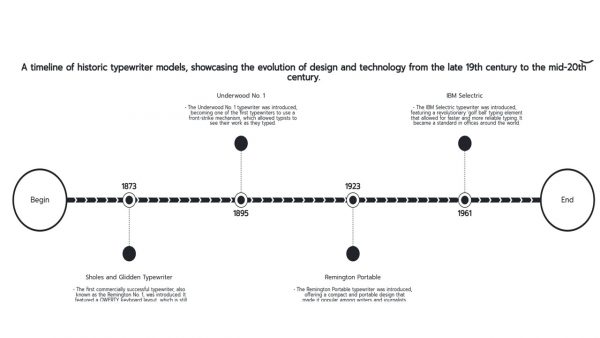

From AI to xAI
As humans, we like the feeling to be in control of things. This applies even to immaterial things like religious beliefs. Generative AI has created problems with its hidden structures and lack of transparency of their applications of algorithms (and combinations of algorithms) to basic data bases of knowledge and information. The use of xAI, which stands for explainable artificial intelligence, can address some of the concerns about the lack of transparency and explanation of responses from AI systems. Many users want to know in advance about the consequences of the use of specific words or notions in an instruction to AI. The interpretation of each single word by xAI can inform about the precision of interpretation (cheap versus cheapest, for example) or highlight the sensitivity to gender-neutral language or not in its guidelines. Additionally, ex post the xAI could indicate alternative notions in a prompt and, briefly, how this would affect results.
Yes, there is a trade-off between brevity of answer and room for explanations. As in psychology, there some value in a “thinking aloud” procedure for respondents in order to better understand (implicit) the reasoning behind a reply. xAI takes us a step further in this direction of asking AI to think aloud or more explicitly in a human compatible way of logic and broader reasoning.
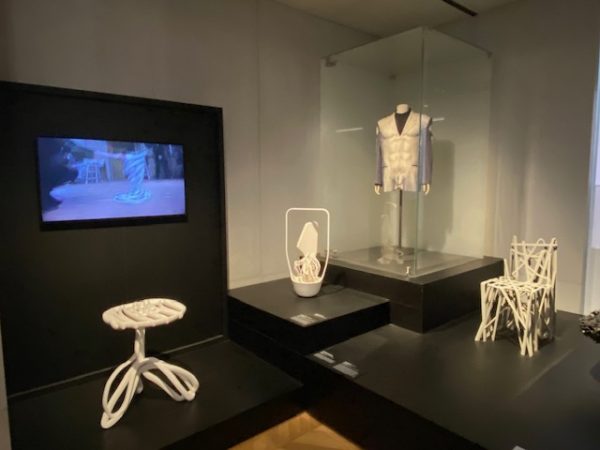
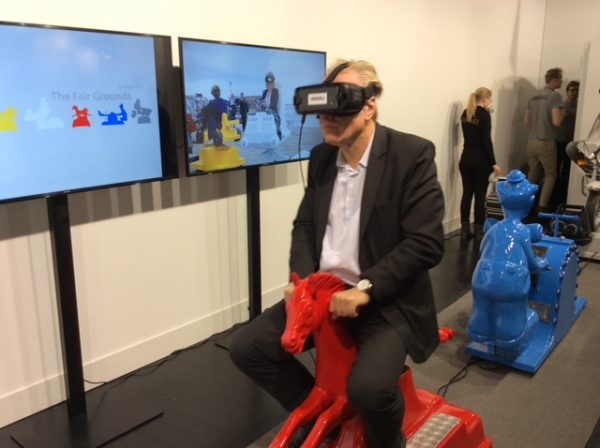
Put AI on the psychotherapist’s bench and xAI will be to the advantage of many more humans again. Humans just don’t like black box systems that lack the necessary as well as sufficient transparency. (Image on the right: Patrick Jouin, chaise solide C2, MAD digital humanism).
Animals’ dialogue
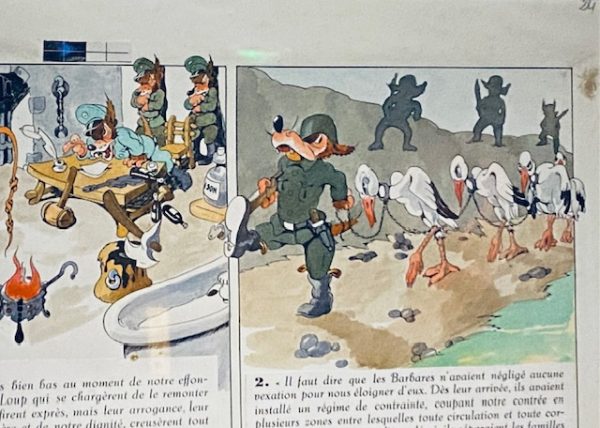
The writing of Colette became prominent in France already after the publication of the “La chatte”, the Animals’ dialogues and the “Peace amongst the animals”. Cats and dogs were popular in literature long before “La bête est morte” and Orwell’s Animal farm appeared and became famous. “Toby-chien” and “Kiki-la-doucette” became forgotten, before they reappeared to get people to read more again rather than just watch “fail-collections” or cats and dog shorts on video platforms. Funny as well as sad or even terrible stories can be told through the metaphorical use of animals to represent humans. Maybe this old tradition, dating back to La Fontaine and his fables, is only the precursor of the AI creations of “animal-like” chatbots or companionship. The sociology of the virtual or sociology of the animal-human relationship will bear fruit in analyzing the identification and differentiation between them and us. Tell me what kind of animals you like and a social or psychological profile is likely to be influenced by this (or vice versa). Social media platforms have tons of data already on this for better or worse.
Dynamic Equilibrium
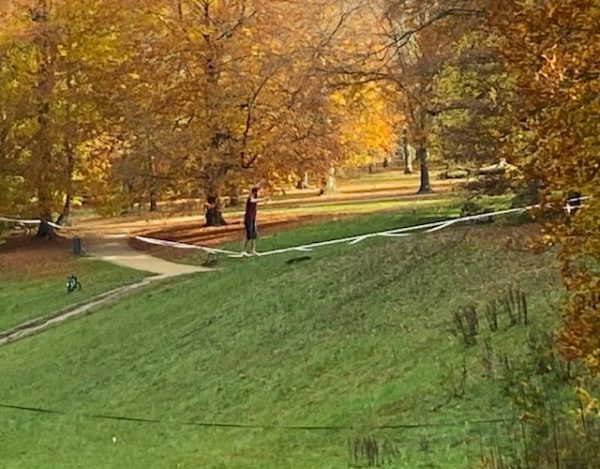
The notion of a dynamic equilibrium is applied in several scientific disciplines. The search of the world wide web takes us first to the application in chemistry. The dynamic equilibrium denotes the state when reactants and products are continuously converted. Fascinating as a process, there are videos where you can watch the process evolve. Applications in economic or social theory are also common even if the time scales to observe such processes of dynamic equilibrium usually take longer to evolve than in chemistry of bubbles. In physics we ponder about dynamic equilibria in Newton’s view of gravitational forces between planets and the celestial system. With a more down to earth approach we might just admire the dynamic equilibrium of an artist on a rope, before we dive into the complex challenges of the new balance of power in international politics of the multipolar world.
Telework Challenge
There is a seminal trend that many employees prefer to have a choice to work on the premises of the employer or remote from home. This flexibility has become a major element of collective bargaining on work and time in larger companies in order to clarify rights and obligations.
In France it is about 1 in 5 of employees who do telework one day per month (1 in 6 in Nouvelle Aquitaine). The higher up in the hierarchy a person is, the more likely s/he is to do telework. Higher levels of educational attainment and seniority in a company also improve the access to and use of telework. There are still many employees who would like to do telework in their jobs, which technically could be done remotely, but who cannot do it (1 in 3). Most of those are denied the possibility by their employers.
Data from a survey in Germany from 2014 showed that before Covid-19 men were worked more often remotely than did women (Lott & Abendroth, 2019). The latest figures from France 2024 show that women have overtaken men as remote workers (Askenazy et al. 2025). As working from home has become more a part of the “standard employment relationship” today, the fears of loosing out on career opportunities due working from home seems to play less of a role nowadays, probably for both gender. Compared to 2014 the costs of equipment and availability and ease of installation of fast internet have become more affordable and might push the spread of telework even further.
The data from France show a strong positive correlation of remote work and commuting distance to work. Hence, long commuting distances “drive” more people into telework, which makes a lot of ecological sense, too.
Cut it short
The “Revue des sciences humaines” (Demanze and Gleizes, Nr. 355, 2024 pp. 7-16) provides an interesting reflection on the widespread practice to find (new) ways to cut long stories or insights short. Short by itself, this introduction to a longer special issue on the topic “Faire court” stresses 4 elements of the contemporary impetus to cut it short:
(1) The creative process may be subject to condensation of content, similar to the process of a “reduction” in the culinary vocabulary. The speed of creativity, inspiration, freedom of expression are exemplified by the twitterization of and aphorisms in literature. Roland Barthes, in his analysis of the “haiku”, raises awareness to the different associations of the short text forms in different societies.
(2) The observed shortening of time spans of attention and the competition and economy of attention have raised the stakes for longer formats and explain to a large extent the success of shorts in the digital age.
(3) The short format works to increase the intensity of the literary experience.
(4) In deconstructing the associations of long formats as “monumental” versus short formats as ephemeral, the “cut it short“ tendency serves to “demonumentalize” the big shots of literature, science and the humanities. Well, about time to cut it short, “hic et nunc”, here and now!

Classic Farces
Molière’s theatre pieces were popular pieces. Born with the name Jean-Baptiste Poquelin and son of a rich “tapissier” of the rue Saint-Honoré in Paris, he made a tough choice to devote his life to touring as a ”farceur” and comedian, having studied also law in Orléans before. Only after his first successful performances, farces and theatre plays, he could afford to buy the theâtre du Palais Royal, despite a bankruptcy about 20 years earlier with his own theatre. The much later title “Troupe du Roi” (of Louis XIV) and a pension by the King assured a financial and political independence rarely found in this period of classic theatre.
Molière’s “Les fourberies de Scapin” was written towards the end of his life and as a classic farce in the 17th century. The story is full of funny scenes and witty dialogues, which make it a great “intergenerational” theatre play even today. The plot about the institution of marriage addresses a cleaving social and legal construct “marriage”, which continues to excite all generations and across centuries.
(Source: Histoire de la littérature française XVII siècle. Robert Horville in (Georges Décote series editor)
Sociology in Theatre
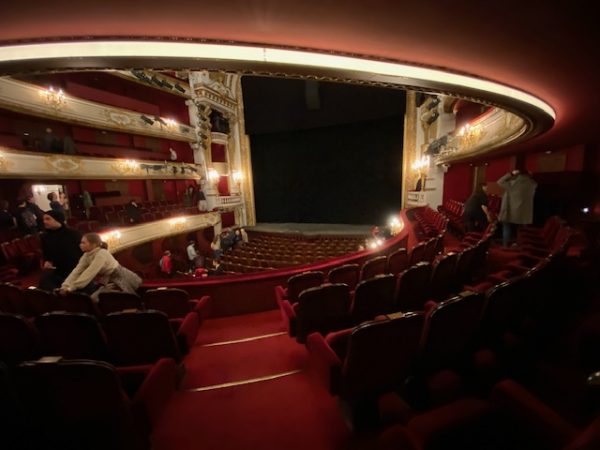
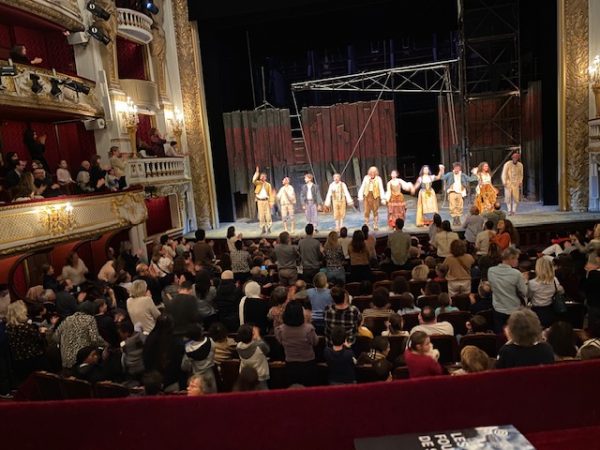
Thanks to the inspiring direction by Denis Podalydès of Molière’s “Les fourberies de Scapin” we can experience the fruitful application of sociology to classical theatre production. This combination of thoughts has been performed at the “Comédie Française” for more than 7 years in 2025-11. The accompanying booklet of the performance mentioned the ample inspiration of Denis Podalydès by the French sociologist Pierre Bourdieu. Personalities in Molière’s theatre are represented as incarnations of the “habitus” each character stands for. Such an interpretation of the roles in the theatre play, raises awareness about the subtle differences between personalities. Even two rich men may differ in their habitus, because their fortunes are of different size or kind, yet they may share even more personality traits. Molière was a particularly crafted author, director and actor to stage such subtle differences, which are embedded into societies often across generations.
Philosophy of Voyage
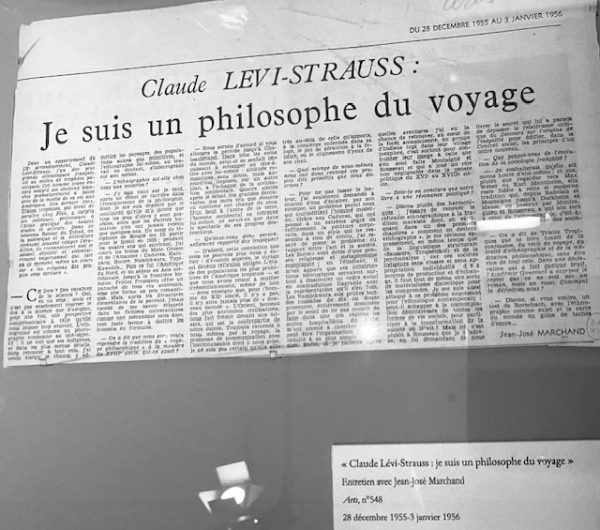
In an interview Claude Lévi-Strauss described himself as a philosopher of voyage. The excursions which lasted sometimes several months to live with indigenous people and study their languages, habits and culture became a scientific field of its own called social anthropology. He travelled with his wife and wrote down hundreds of notes and collected items. Only years later the concept of stuctural theory became evident to him. A voyage might go on after the end of traveling. It might start well before departure as well, not the least due to all the preparations. Colette, the French writer and polyartist, coined the phrase “ce qu’on sait faire, au fond, c’est de la route, ce n‘est pas du voyage ” in the novel « La chatte ». In the pre- and immediate post 2WW years “taking to the roads” often had a gendered view of this with women being rare to hold a driver’s license. To “find meaning through voyages” or “the voyage is the meaning” fill whole libraries. For better or worse, travel books are still best selling books in a shrinking overall book market (less print books sold, but still higher value of sales).
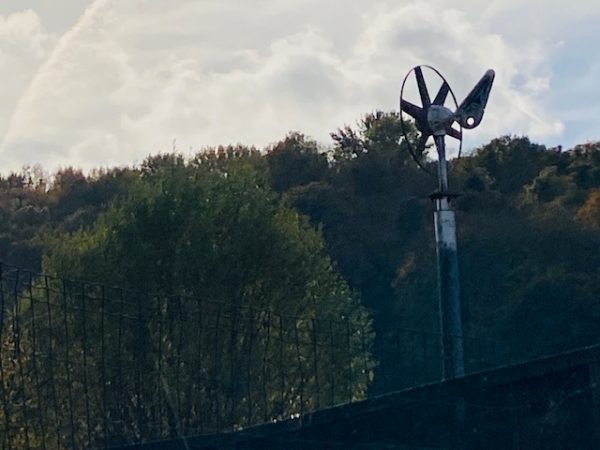
Home Wind energy noninvasive
The abundance of wind energy in some regions has made the use of this source of energy more popular. During long winter nights the harvest of wind energy is a wonderful source of free energy. Regulations and oversize wind turbines have tarnished the image of wind energy in some regions. However, even in France and not only in this small village of Asterix and Obelix who resist the Roman empire, that we can find tiny wind turbines providing small amounts of energy. For all those households that have a battery they can use this power whenever they may need it. Suddenly, we are looking forward to the stormy autumn season.