Failure time

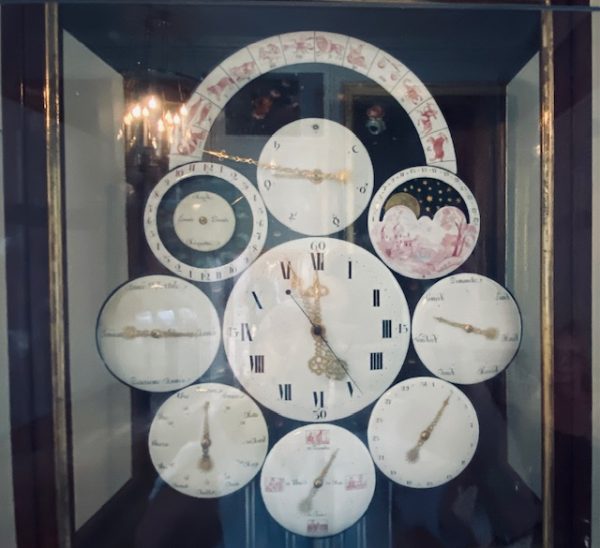
In mechanical as well as medical components it is interesting to know about the usually hidden failure time of a product. The failure time simply means probability the component will seize to function properly or altogether. Usually, this probability of failure increases with the duration and the intensity of use. We might know this from cars or heating systems, but airplanes and heart valves obey the aame basic statistical models. Programmed failure time is a nuisance, which works against all efforts of sustainability, Over-engineered products would work much longer than the actual use case. Locomotives with steam engines that still function well even today might serve as an example of the latter case. The issue becomes a bit more complex if we consider not only the product but each single component. Maximizing profits often leads to taking risks with failure times or failure rates over a fixed time (a more general term than the guaranteed lifetime of a product). This sounds rather abstract thinking, but in modern military equipment the consideration of failure time, self-destruction or destruction by enemy play an important role again. Failure time of military equipment has moved to the forefront of issues of equipment and is part of strategic planning, like it or not.  
Minds alike

Great minds, think alike. In the „propositions on happiness“, the author Alain mentions as inspiration for his thought process: Aristotle (XLVII) via Marc Aurel (LXIII) to George Sand (LXVI). This is an interesting perspective and abbreviation of the history of ideas. The impact of stoicism in his thinking of happiness becomes evident. Although originally he was described by another person as a relentless optimist, he was happy to accept this summarizing label of his personality. In his writings, that also may work as recommendations he stresses the importance to “know yourself”. That’s not an easy to achieve objective, as self-deceit is all to common.
However, in desperate moments or just on a rainy day (both are entries from Alain), you will need to know how to console yourself. Friendships and knowing how to please others become virtues, which contribute to your own happiness.
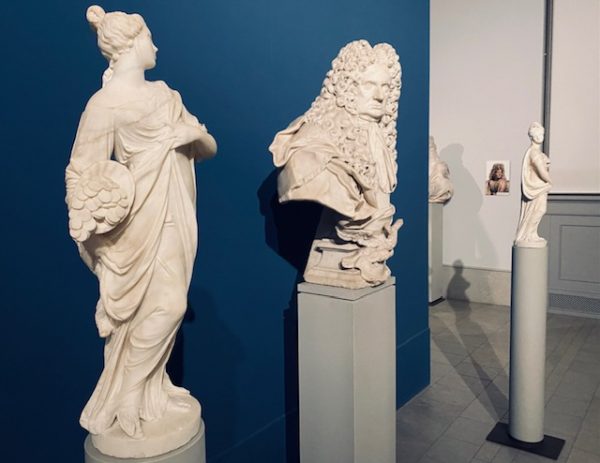
Perhaps the best summary of the history of ideas with respect to happiness is his last sentence in the paragraph “victories” (LXXXVII): “Le bonheur est une récompense qui vient à ceux qui ne l’ont pas cherchée.” In my own translation: Happiness is a reward for those who did not search for it. (Image: Bode Museum Berlin, Allegorie wealth in front, facing allegorie honour in background; middle duke Montecuccoli.) 

Reverse causality

Reverse causality is a beast, which empirically minded scientist fear almost like death. However, many processes we study are running not only in one direction. In most cases, causality is tested with, or assuming, a unidirectional model of causality in mind. But some processes have not only a set of multiple causes to take into consideration, but some processes might be reversible or run in a rather complex manner, which are difficult to quantify. Mind captioning is a technique in neuroscience, where easy language is used to describe an image perceived in a person’s mind. Such thinking aloud data is based on thousands of brain scans, where people watched videos or images (study link).
In my own journey into the working of my mind I play around with different directions of causality. Sometimes the text is the origin and the image follows in a selection of a telling illustrations, but occasionally the reverse causality is at work. The image is the starting point and gets the mental process going. It is a rather complex process which is not easy to approximate with the help of algorithmic thinking. Reverse causality has many surprises to offer. As scientists we have a hard time to come to grips with it. (Inspiration Link) 

Foul-smelling dictatorship

The animal world is full of interesting strategies of how to turn over a foul-smelling ruler or dictatorship. The ant queen of “lasius orientalis” infiltrates a colony of “lavius flavus” to spray the incumbent queen with a foul-smelling substance which turns the worker ants against their own queen and eventually kills the queen. This is a rather intelligent strategy to trick the defense system of rival colonies and prepare a takeover of a whole colony to install your own reign.
This may constitute a stark warning for democracies just as much as a threat to persistent dictatorships. In the age of the not so social media there is a lot of foul-smells produced. Beware of the risks to democracy as open societies are much easier to infiltrate than closed societies or dictatorships. (Link)

EU Digital Sovereignty

If we try to search for digital solutions, we shall encounter a whole lot of American and Chinese products, but very few European companies that are able or willing to compete. Hardware mainly comes from China, software from the US, at least until AI was not working in the background. If we add Russian interference to destabilize our digital infrastructure to the scenario, we are not really fit for the challenges of the 21st century. The very definition of a country or political union is the affirmation and competence to assure its sovereignty, particularly in cases of territorial conflicts with neighboring countries. My health or mobility data are a rather private affair, however, our state governments in EU-Europe have done little to ensure our data integrity. Business is also at a loss, if they do not spend heavily on data security themselves, usually relying on external cooperation. 

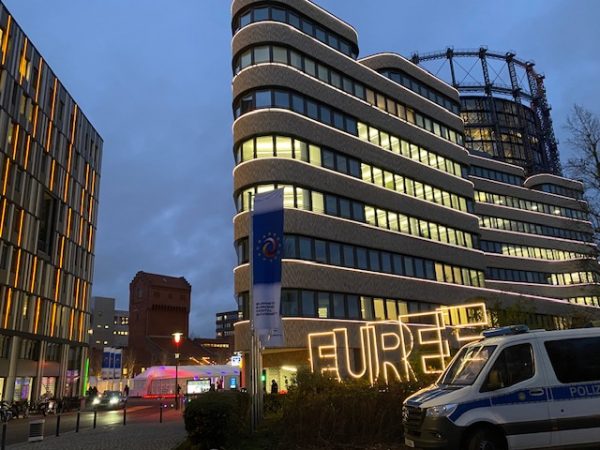
The EU digital sovereignty summit took place in Berlin on the EUREF campus in 2025. It can only constitute a beginning for intensified cooperation in  this long overlooked policy area. It will be tough to catch up where production has been abandoned for decades.  

Headless Saint Dionysius

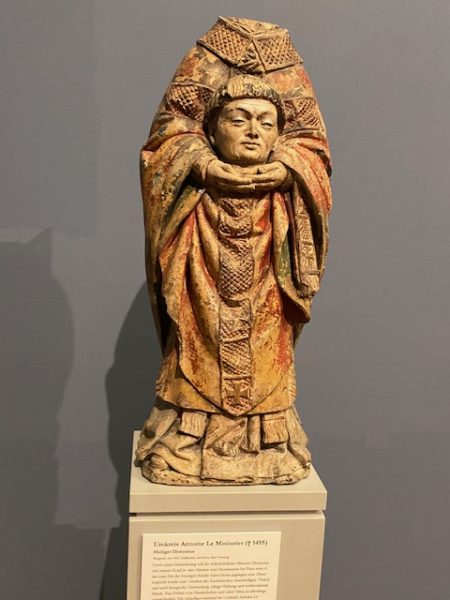
Denis of Paris stands for the Saint Dionysius, who is reported to have walked after being decapitated as martyr for his christian beliefs by the Romans in the 3rd century, all the way from Paris to St Denis in the suburb of Paris. We do not only find such a statue at Notre Dame in Paris, but also a medieval version in the Bode museum in Berlin. The cathedral of St Denis in Paris became subsequently the place for the coronation and burial of many French kings. The last king who lost his head through the guillotines was Louis XVI. It took almost another 200 years to abolish capital punishment altogether in France. Robert Badinter devoted his career to fight for this appeacement within the nation. (Image: Statue St Denis in Bode museum Berlin).  

Surrealism Networks

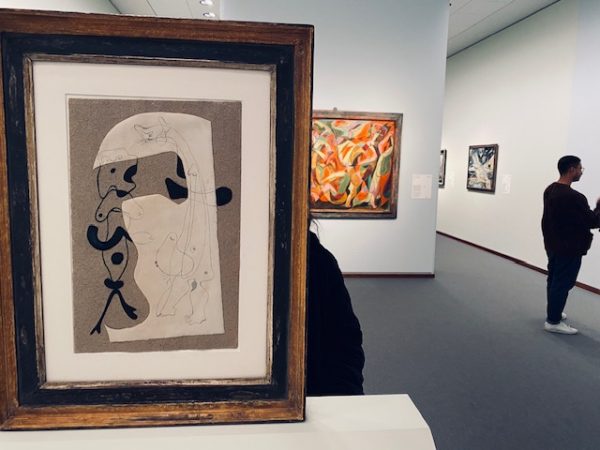
The research project on the networks of artists in the group of surrealism ranges from the male proponents Breton, Ernst, Magritte, Miró to female painters like Lenora Carrington and Dorothea Tanning. The collection of Ulla und Heiner Pietzsch, donated to the Neue Nationalgalerie in Berlin, excels not only in the depth and breadth of the collection of surrealism, but also in the way it contributes to our understanding of artistic movements and network dynamics. For those familiar with the theoretical and literary underpinnings of surrealism by André Breton, the collection allows to follow the traces of ideas into artworks. Interdependent inspiration in multiple ways becomes visible in this exceptional exhibition. The special concern and concept to honor provenance of the artworks makes the trajectories of each artwork explicit. Thereby, the geographic dimension, importance of collectors, galleries and personal relationships to gallerists become tangible. Additionally, the seizure of the 2WW heightened the need to have contacts to survive Nazi-terror. You find it all condensed into just one room at the Neue Nationalgalerie Berlin thanks also go to the Zentralarchiv to facilitate and participate in the research and documentation. (Image: Miró Collage, Berlin Neue Nationalgalerie 2025)

Memory design

The progress in the field of genetic editing and design is astonishing. The research group of Johannes Graeff tested the “behavioral consequences of epigenetically editing the Arc promoter within engram cells”. Plasticity is a key feature of memory formation and the experimental evidence shows that this plasticity can also be interrupted. Moreover, the scientists were able to demonstrate a reversibility of retention or un unlearning of manifestations in memory of mice. The bidirectional reversibility of memory expression has potentially therapeutic value for traumatized humans eventually. However, if memory becomes part of a design feature of human species, the risks involved are just as important as the potentials. In totalitarian political systems techniques of “memory design” might be able to adapt such influences on memory, which used to be called brainwashing. Ethics commissions could get ready already to define safeguarding of human memory.  (Image: The fountain of Bacchus, Museum of Paris, 18th century wine merchant entry)


Reason for war

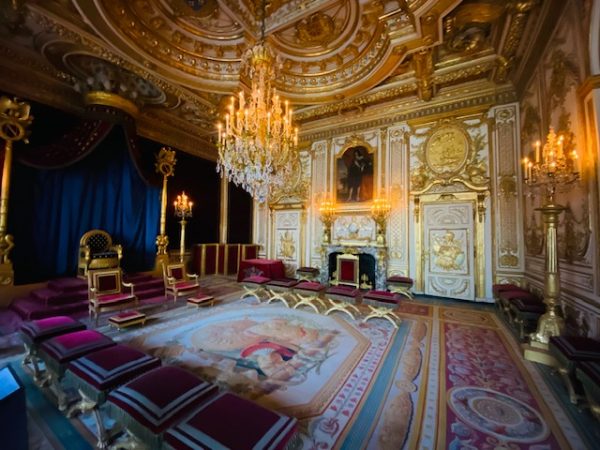
In his “Propositions on Happiness”, the French philosopher Émile-Auguste Chartie, called in short Alain (1925), takes issue with the strange predilection for war. In his proposition XLII Agir, he writes on war: “Je crois assez fort que ce qui plaît dans la guerre c’est qu’on la fait”. In later paragraph   XLVII on Aristotle, he takes up his recurrent concern to explain happiness with the importance of agency in one’s own life and actions. “Faire et non pas subir, tel est le fond de l’agréable“. In taking both quotes together, we understand that for Alain the reason for war consists primarily in the desire to demonstrate agency. In order words, the position of power, of being in charge, being in control of the political situation are the prime reasons to go to war. With the first quote stemming from 1911 Alain had already a sound understanding of what would happen decades later in the 1st and 2nd World War. Even Putin‘s war in Ukraine is probably a cynic demonstration of agency in a seemingly otherwise rather paralyzed country. With this in mind, Putin‘s wars in the 21st century appear as another chapter in the endless pursuit of cynic reasoning. (Sloterdijk, 1983). (Image: Throne Room at Fontainebleau since 17th century). 

Multilingual aging

Some myths, for example about the effects of multilingual competencies on brain health, continue to hunt people. The proponents of a monolingual world are widespread and have in some countries fatal historical heritage. The study by researchers  (Amoruso et al. 2025) use data from 86.000 persons in Europe  (SHARE Database, waves 1-9) from several countries. They show the better aging of brains for bilingual persons and even more so for persons practicing multilingual 2+ languages. The “domain-independent protective effect of multilingualism” for healthy brain aging is very robust and works after statistical accounting for other potentially intervening factors like socioeconomic or institutional factors. Some known stressors like migration, however, which operate often as psychosocial stressor, can have similar negative effects just as alcohol consumption and sleep disruption. Multilingualism and the correlate of multiculturalism keep a brain “on its toes” and contribute significantly to our healthy brains.