More people take to the streets on the 1st of May in Germany. The costs-of-living crisis with high inflation has increased the claims for pay rises for workers and adjusted wages for employees. We all have observed “greedflation”, i.e. excessive company profits in several sectors. Additionally, “shrinkflation” has affected consumers in their daily shopping experience. Political efforts to curb inflation have taken a long time to come about and most initiatives have ended already (Energy sector). This spurred a new drive for trade unions to come out in huge numbers to protest and claim adequate wage increases to cover the increased costs of living. In Germany the DGB informed on the annual 1st of May demonstrations across the country about a strong new entry movement of members of 400.000 persons. It is higher than the loss of members of the large baby boomer cohorts who retire.
Through a broad and engaged membership the pressure on higher wage settlements will persist. Companies have used the crises to generate extra profits. It is only fair that those employees who largely contribute to the success of a company will claim their share as well.
For society as a whole it is important to consider that the discrepancy between managerial pay and shop floor wages do not increase further. The social fabric of societies is in danger if perceived injustices grow. More radical forces can all to easily exploit this causing a severe danger for democracies. Meeting people on the 1st of May and joining forces across sectors and trades ensures that a society continues to build and rely on solidarity. High inflation times are a great reminder of the economic basics of societies in history as well as today. 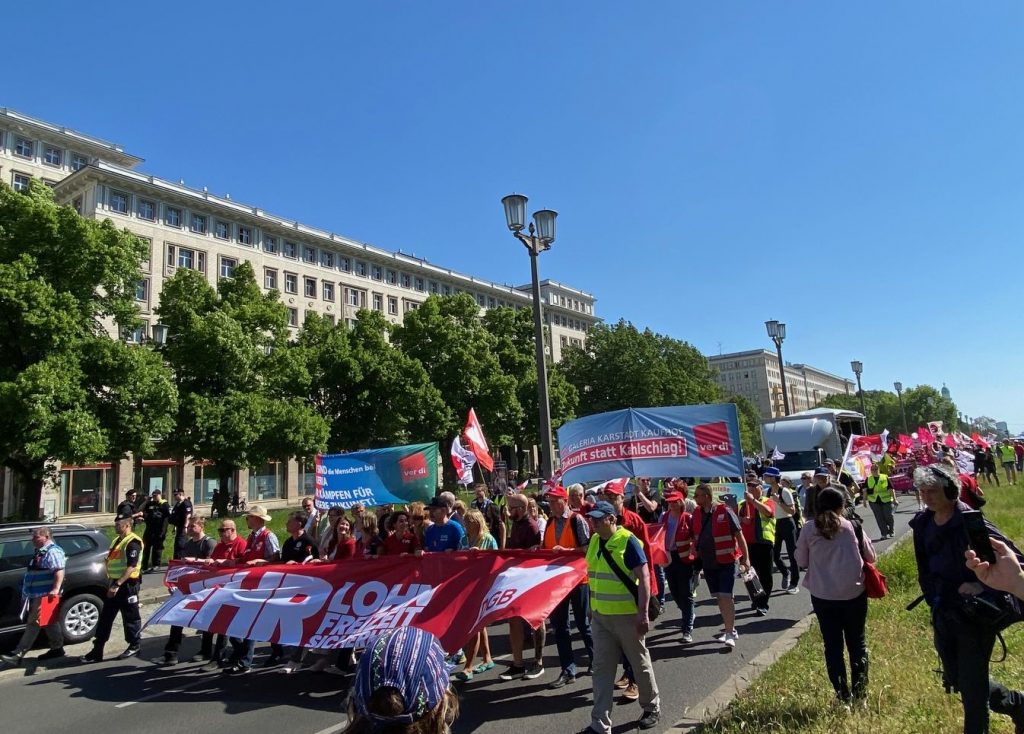
Find Trust
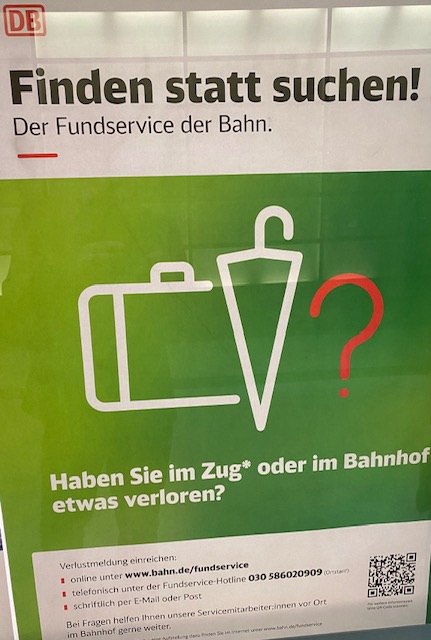
Societies have different levels of trust. Trust in politicians or political institutions has been researched a lot. Another example of trust is related to things lost and found. Losing an item on a train or a mobile phone somewhere are severe tests of the level of trust in a society. How likely is it that the item is going to be found and returned to you. We usually estimate the probability of the return of items as being rather low. The more we are surprised to find out that there are thousands of items found and returned. The Deutsche Bahn has a special service in operation to take care of lost items. Additionally, there are auctions of items found but nobody claimed the ownership of it in the following months. Not giving up on a lost item is the first step to find it again. It would be a nice test whether in high trust societies it is more likely to find something lost. If you have a higher trust that items will be returned you are also more likely to make the effort to claim the item back.
AI Disruption
Many scientists started to question the disruptive potential of AI in, for example, the military’s domain. The Journal of Strategic Studies featured 3 papers on AI and autonomous systems more generally. The major argument by Anthony King is the reliance of autonomous systems on other systems mainly human operators even in the background to get these systems off the ground and maybe back again. Not only logistic support but also satellite communication is needed to guide and protect the operations. In quoting Clausewitz, Anthony King stated that war is a “collision of two living forces”. Strategy and counter-strategy will co-evolve as will attack and defence.
Jackie G. Schneider and Julia Macdonald (2024) advocate the use of autonomous and unmanned systems for their cost effectiveness. Economic costs as well as political costs are lower for these new strategic weapons. Mass fire power from swarms of drones is much cheaper than nuclear warheads and the home electorate is assumed to be more willing to accept and support limited and more precisely targeted unmanned missions. The disruption potential of AI is huge but it is most likely an addition to the arsenals than replacing them. (Image 2 swarms of drones fly in the air above tanks, created by AI – copilot-designer 2024-4-29).
Digital Estonia
The progress of Estonia in going digital is quite advanced. The electronic identity card which allows data to be linked to health data and accounts or banking gives an impression of how far-reaching digitalization may go. Great steps have been taken to guide the population on the way to move towards the digital (only) world. Learning and coaching of a huge amount need to take place so that people do not abandon or get lost on the path towards “everything digital”. For the so-called digital natives, who have grown up with the sound of their smartphone at the bedside all the time, this move feels “natural”. Some experienced or silver workers got on track, if they were accompanied in suitable forms. The 65+ population might find it harder to adapt to the permanent use of digital devices for not only getting around in your city, but also to do your tax declaration, pay your dues and vote in elections.
Digitalization is not a goal in itself. It has advantages to reach communities in remote places or islands, but it might alienate older persons that have no other person around to assist them in the digital only world. An easy way to get some social science data to inform the debate is to refer to Eurostat and the surveys with information about the “overall life satisfaction” of people (EU-SILC). Checking for some major countries of the EU and neighbours of Estonia with less digitalization the differences are rather small. In terms of overall life satisfaction (16+ years old) Estonia has been catching up to the EU-average mainly between 2013 and 2021. Since then, stagnation at the EU-average is what the data tell. A quick testing of the hypothesis that the older persons (65+) might not see the past evolution as rosy is reflected in the EU-data as well. Good pensions seem to drive the “happiness” of older persons in the EU more than good digitalization. Eventually the two features of a society will have to go hand in hand to improve life satisfaction to higher levels. (Image: Data Eurostat EU-SILC Life satisfaction 65+, selected countries 2013-2023, retrieved on 2024-4-23, comparison with table all ages here, Data source)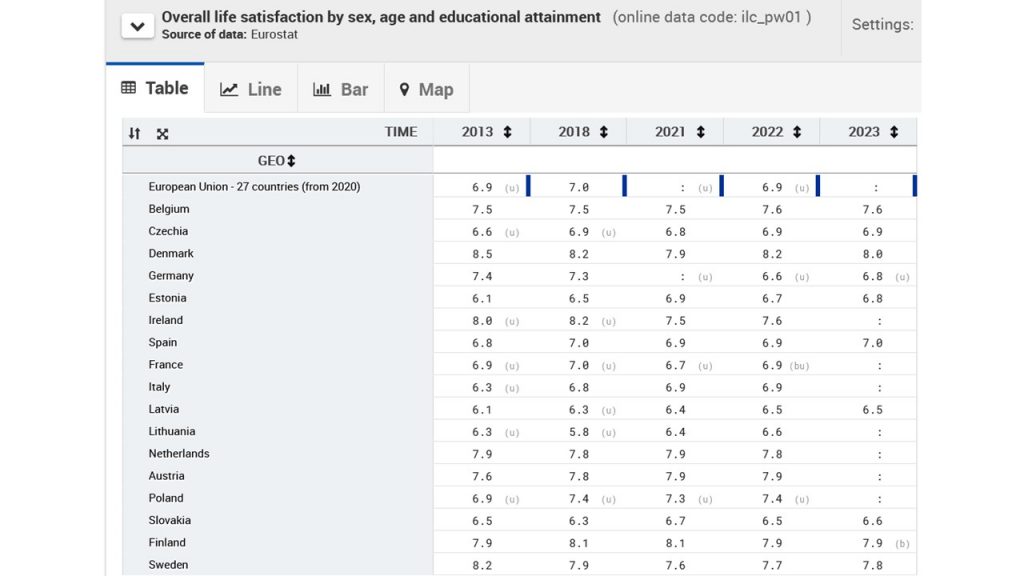
Opera Politics
We know that sports and international politics have ample links. This holds true for Opera performances, either due to the way they are presented or due to the content of the libretto. The opera Jeanne d’Arc (Giovanna de Arco, Jungfrau von Orléans) by Guiseppe Verdi was composed in 1844 and had its Premiere at La Scala in Milano 1845. The libretto is based on the drama written by the playwriter Friedrich Schiller. Later in the 19th century musical pieces followed that dealt with the court judging Jeanne d’Arc. The opera by Verdi creates a strong female voice and character which outperforms men around her. Obviously, she was and remains for many a quasi-mythological heroine. In short, this constitutes great plots for drama and operas. This is centuries old despite the rare occasions of more recent performances of Jeanne d’Arc in form of Verdi’s opera or other forms.
The Opera as arena of politics is currently tested in the Opera at Tallinn Estonia. Due to the aggression and occupation of Ukranian territory by Russia the plot of Jeanne d’Arc regained another European location of potential application. Ukraine pushed back the Russian invasion and struggles to win back its territory from the invaders. The performance of the Opera recreates an impressive Jeanne d’Arc in the person of Elena Brazhnyk who was trained at the National Tchaikovsky Music Academy of Ukraine. The evening inspired hope in many respects. Talents from Ukraine or trained in Ukraine reach out into to the world. Similarly, we have much reason to be inspired by courageous acts. Operas do politics. “Bravi”, as they say in Italian.
(Image: Opera Tallinn-Estonia2024-4-18)

Transparent Publishing
New technology pushes transparency of publishing, journalism and science to new levels. Through the hyperlink structure of texts it is easy to link back to the sources of a text. What used to be long lists of references at the end of a text or in footnotes has become directly accessible through weblinks. Only paywalls may or may not restrict the fast and easy access to original sources. In writing online, this is a major additional feature of publishing in the last few years. Some online journals allow this for quite some time now, but there are lots of printed versions that stick to the read and be stuck approach of publishing.
In teaching I have been an advocate of “read the original sources” as the basic source of inspiration for authors. The transparency of the thought process and the evidence provided in whatever form should be traceable. In publishing this transparency allows to exclude the copying of thoughts or unreflected referencing.
However, the task to check for the validity of weblinks and the updating is an additional task. 500+ blog entries with an average number of 2 weblinks per blog entry makes this a job of its own. Testing of 1000 weblinks is something you need a software or plugin which alerts you to “broken links”. The maintenance of a webpage, therefore, increases substantially as the content increases. Reorganisations of webpages make the follow-up of links sometimes quite hard. Projects like the general archives of the web and webpages are very important to ensure the transparency of publishing in the short, medium and long run. The archives of today look more like machine rooms than the splendid archives or libraries of the past and present. 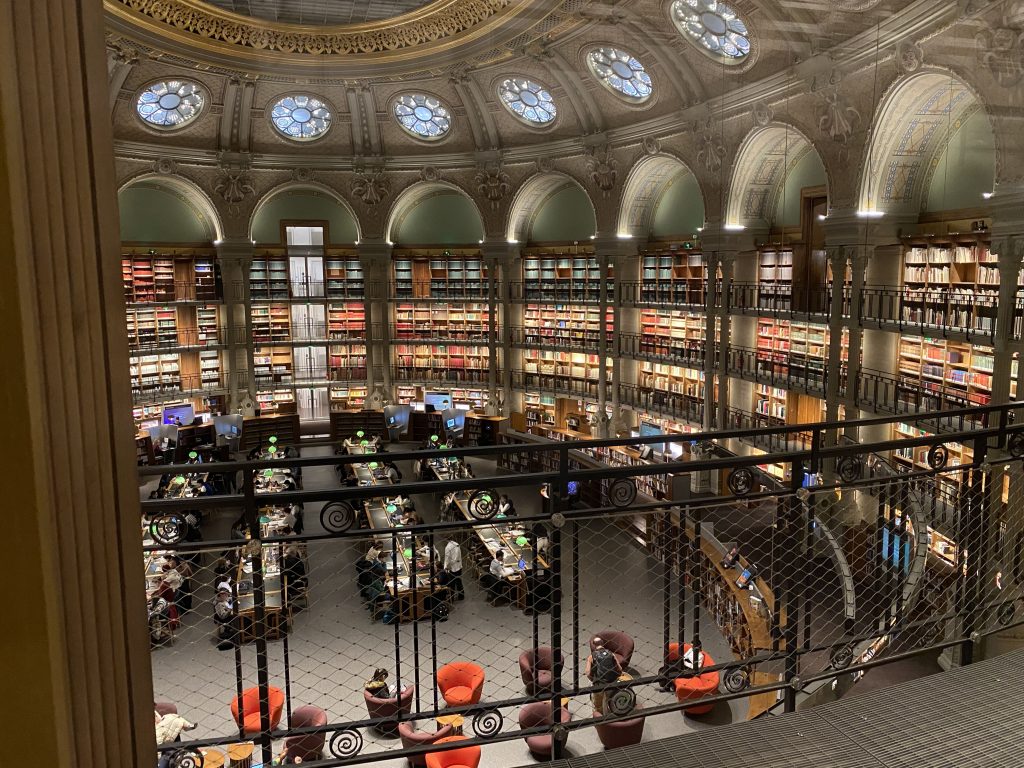
AI Reader
In the middle of the hype around AI it is useful to take stock of the reflection and evolution of AI. In my own analyses and writings on AI it evident that a narrowing of focus has taken place. Whereas before 2022 the writing dealt more with digital technologies in general. The links to the literature on the social construction of technologies was obvious. Algorithms and AI was a part of the broader topic of society and technology.
This has changed. The public debate is focused on “everything AI now”. We look at technological developments largely through the lens of AI now. Hence, my focus of assessments of technology from a societal perspective follows this trend. In a collection of blog entries on AI we try to demonstrate the far reaching changes that have started to have an impact on us. In the last few months the all encompassing concern about AI’s effect on us needs full attention of social scientists, policy makers, companies and the public at large. We can no longer leave this topic to the software engineers alone. By the way, they themselves ask us to get involved and take the latest advances in AI more seriously.
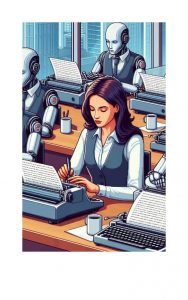
As a “flipbook” the online reading is rather comfortable (Link to flipbook publisher MPL). The pdf or epub files of the blog entries allow to directly follow the links to sources in webpages or other publications (AI and Society 2p 2024-4-18). The cycles of analyses and comments have become faster. Traditional book writing suffers from time lags that risk to make pubications outdated rather quickly. Dynamic ebook writing might bridge the gap between time to reflect and speed to publish or inform the wider public. The first update as .pdf-file is available here: AI and Society(2).
Citizens Gardens
There are multiple ways to link citizens to gardens. Most people would link citizens to the property of their own garden. This is more the perspective of people from the countryside. The aim of citizens who can afford it have a garden, many others wish to have one and all of them enjoy public garden spaces. An intermediate version of the public versus private property of citizens’ garden is the joint ownership of groups of like-minded people to work together in the shared property or rented garden space. The recreational and health effects are well documented, if care is exercised with utensils etc. Spring is the ideal time to join projects again as the results of a little bit of gardening will be visible and enjoyable for several months afterwards. Gardens are also meeting points for people of all walks of life as in the vicinity of the European Parliament in Brussels. The Citizens’ Garden has a different function to people gardening there. When you puzzled about Europe after a visit to the Parliament or the Museum of the History of Europe, then it is time for a stroll and relax in the garden nearby.
Alternatively, the Exhibition Centre of Tour & Taxis in Brussels not too far away from the North train station has an impressive indoor garden for the times of rough weather conditions. At the time of the book fair culture in the indoor garden made a splendid combination. There is a green version of Europe. It is like a small plant. It needs a lot of time and care to grow. 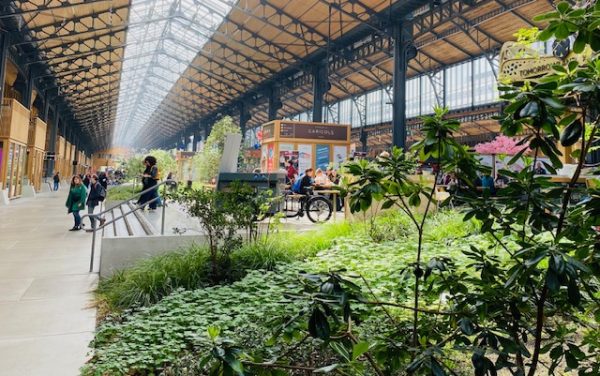
AI and languages
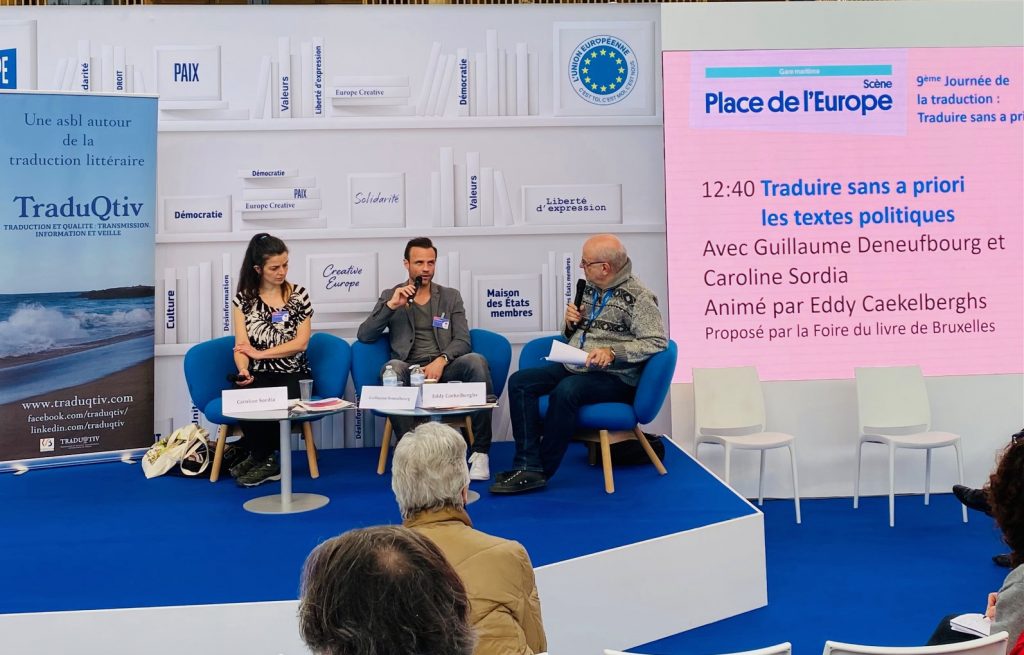
A big potential of AI is in the field of languages. Translations have been an expert domain and a pain for pupils at school. In professional settings translations are an expensive extra service for some or a good source of revenue. AI has shifted the translation game to a new level. In terms of speed of translating large amounts of written text AI is hard to beat. In terms of quality the battle of translaters against AI is still on. For chess players the battle against AI has been lost some years ago already. It remains an open question whether translators can still outperform AI or just adapt to using the technology themselves to improve both speed and quality of translations. The European Union with its many languages and commitment to cultural diversity can serve even more language communities with documents in their own language than before at marginally higher costs. A panel on the 9th day of translations at the „foire du livre de Bruxelles” 2024 expressed their reservations with regard to the use of AI in translation of political text or speech. Misunderstanding and misinterpretation will be the rule rather than the exception with potentially harmful consequences. Checking the correctness of translations is a permanent challenge for translators and can be very time consuming. There is room for an AI-assisted translation, but similar to other fields of application of AI, relying exclusively on AI bears high risks as well. We should not underestimate the creative part of translators to do full justice to a text or speech.
AI and text
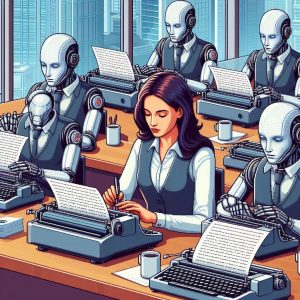
The performance of large language models (LLMs) with respect to text recognition and drafting texts is impressive. All those professions that draft a lot of texts have often decades of experience with using word-processing software. The assistance of software in the field of texts ranges from immediate typo corrections to suggestions of synonyms or grammatical corrections in previous word-processing software.
The improvement of AI stems for example from the potential to suggest alternative drafts of the text according to predefined styles. A very useful style is the “use of easy language”. This rewriting of texts simplifies texts in the sense that longer and more structured sentences are split into shorter ones, lesser-known words or acronyms are replaced by more common or simpler words. Some languages like German have a particular need to use easy language when it comes to administrative regulations and procedures. Public services that aim for inclusiveness of for example older persons or youth can become much more accessible if the use of easy language is spread more widely. Just keep in mind the large numbers of so-called “functional illiterates” (OECD study “PIAAC”) in all OCED countries.
AI can do a great job in assisting to reach a broader public with texts adapted to their level of literacy and numeracy competences. Webpage Designers have made use of Search Engine Optimization (SEO) for years now. The most common way is to use frequently searched keywords more often on your website in order to be found more often by search engines like GOOGLE et al. Additionally, AI allows to explain keywords, sentences or even jokes to you (Spriestersbach 2023 p.111). This may help in situations when cross-cultural understanding is important.
We have made use of optical character recognition (OCR) for a long time now in public services as well as firms and for private archives. AI is taking this “learning experience” to the next level by making use of the content of the recognized text. Predicting the following word or suggesting the next sentence was only the beginning of AI with respect to texts. AI can draft your speech to plead guilty or not guilty in a court. But we shall have to live with the consequences of making exclusive use of it rather than referring back to experts in the field. AI please shorten this entry, please!