Wage Minimum

A wage at a minimum level is frequently lower than the minimum wage. Most EU countries have a legal minimum wage that should protect against poverty risks at low levels of wages. Over decades it has not yet been possible to raise all low wages to this level. Le Monde (Béatrice Madeline et Aline Leclerc) has published on April 3rd a comprehensive analysis of sectors and people concerned with this difficulty to make a decent living while earning the minimum wage. In France (La désmicardisation), as in many other countries, it is difficult to earn just a bit more as the minimum wage because both employers and employees may lose social benefits if they just earn some hundred € more than the legal minimum wage. For all those persons who do receive only a wage even below the minimum wage getting stuck in a poverty trap is very likely. The number of working hours is then often is the only option to make ends meet your needs. Put bluntly, you work additional hours and/or take a second job to complement the lack of earning a wage at the minimum level. Public procurement that makes the application of the minimum wage compulsory and controls this application effectively benefits society as a whole. Lots of infrastructure projects, urban and rural development receive public support. The conditionality to pay the minimum wage + X should be a „conditio sine qua non“. The millions of workers at the lower end of the wage distribution have a power at the ballot box, which continues to be underestimated in many European countries. The EP elections on June 9th will probably alert us about the lack of faith in a bettering of living and working conditions of those persons coping with wage minima.

Home Delivery of everything ! Working Conditions

Architecture Berlin

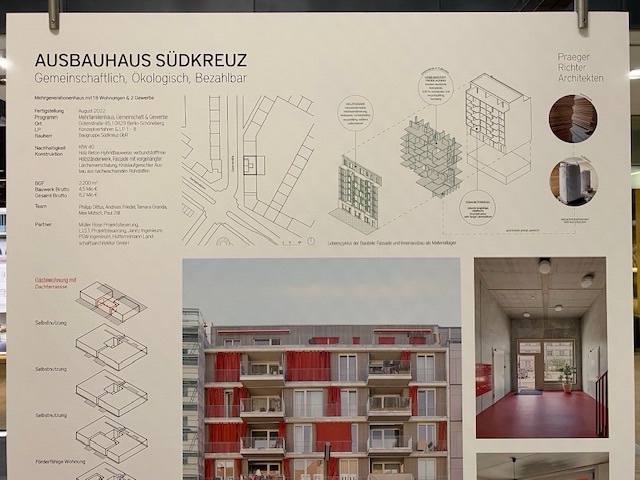
The annual exhibition of completed architecture projects in Berlin attracts people beyond the narrow circles of architects. You may take a walk through Berlin to view the actual realizations in 3D or 4D with people living, working or moving in these buildings. As social scientists we like talking or interviewing these people about their experiences. Urban planning and participation in urban development is important for city development in a democratic fashion. The combination of social, ecological, economic and technological concerns find compromises in urban renewal. The range of activities is remarkable. Living spaces have the most entries in the exhibition followed by offices and trade spaces. Education as well as public open spaces raise a lot of interest and funding currently. Climate change and adaptation to limited ecological resources ask for innovative solutions as well. Most projects in Berlin or by Berlin based architects deliver in this respect. The socio-ecological change needs a lot of actors to implement such changes and meet unprecedented challenges. The 60 projects represented for 2023 are the top of the iceberg but a lot remains to be accomplished in repairing old buildings and infrastructure as well. The DA! exhibition provides a democratic transparency of projects, which allows the public to learn about innovation and to make more informed judgments about what architecture can deliver for society.

DA! Exhibition Berlin 2024

Fertility Growth

The first association of fertility and growth is likely the growing of fertility rates in a country or region. Only macro economists associate the growth or decline of fertility with the macroeconomic consequences of more or less economic growth. Countries with higher fertility rates in most cases have higher growth rates as parents spend more on food, clothes, mobility and education. Accommodations are changed, adapted and refurbished. Estimates of increased consumption per child by economists range from 500.000 to almost 1 million in the highest developed countries. Children are a country’s wealth, but they also cost a fortune in monetary terms. Good news for the economy if families keep spending independent of economic cycles. More children keeps dedicated shops running or even a whole sector of the economy. In recessions the downward pressure in this sector becomes an additional challenge not only for the families but with ripples-on effects for the whole economy and society. If you see shops closing which has sold furniture for children for the last 15 years then the realization of an economic downturn becomes also more real. Sometimes the parallels in the news of declining fertility and increases in pensions do not square well with the fitness for the future or the future orientation of a society. Democratic voting rights that give families more weight in elections could change this. It is not yet on the political agenda.

Russian Angst

The title of a book “Russian Angst” by Thomas Franke summarizes the state of Russian society under Putin. It dates back to 2017, but the underlying process of Angst in the Russian society is increasing rather than diminishing due to the already 2 years long intensive hot war of Russia against Ukraine. The Russian Angst is a fear of a continued roll back of its authoritarian rule in Eastern parts of the world and its internal threat that its own people will claim more rights like freedom of speech, freedom of the press and effective democratic voting rights. In a dictatorship the “Angst” is a pervasive phenomenon which creeps into all spheres of live. Franke and Dornblüth (2023) describe the toxic society in Russia. Intoxication and torture of opponents are used by the Putin regime as a threat to suppress critical voices in Russia. Through this a climate of “Angst” is spread so that any internal opposition has to face very high risks to utter any discontent. The experience of a barbarian, totalitarian regime is well known. The threat to life and the presence of intimidation to any disobedient behaviour are strictly persecuted. Nevertheless, the need to think beyond the Putin regime is well under way. The more external and internal, real or imagined threats are countered with brutal force, the more the regime reveals its true kind of governance by force. This invites and leads to the strengthening of counter forces both internally and externally. It seems like box fight in the before last round of a very vulnerable, weakened and isolated boxer. Not many will bet on the likely loser and more countries who previously supported Putin will stop their erroneous policy. Russian Angst and loneliness will further increase.

AI Sorting

Algorithms do the work behind AI systems. Therefore a basic understanding of how algorithms work is helpful to gauge the potential, risks and performance of such systems. The speed of computers determines the for example the amount of data you can sort at a reasonable time. Efficiency of the algorithm is an other factor. Here we go, we are already a bit absorbed into the the sorting as purely intellectual exercise. The website of Darryl Nester shows a playful programming exercise to sort numbers from 1 to 15 in a fast way (Link to play sorting). If you watch the sorting as it runs you realize that programs are much faster than us in such simple numeric tasks. Now think of applying this sorting routine or algorithm to a process of social sorting. The machine will sort social desirability scores of people’s behavior in the same simple fashion even for thousands of people. Whether proposed AI systems in human interaction or of human resource departments make use of such sorting algorithms we do not know. Sorting applicants is a computational task, but the data input of personal characteristics is derived from another more or less reliable source. Hence, the use of existing and newly available databases will create or eliminate bias. Watching sorting algorithms perform is an important learning experience to be able to critically assess what is likely to happen behind the curtains of AI.

AI and dialect

The training of Large Language Models (LLM) uses large data sets to learn about conventions of which words are combined with each other and which ones are less frequently employed in conjunction. Therefore, it does not really come as a surprise that training which uses standardised languages of American English might not be as valid for applications that receive input from minority languages or dialects. The study forthcoming in the field of Computer science and Language by Hofmann et al. (Link) provides evidence of the systematic bias against African American dialects in these models. Dialect prejudice remains a major concern in AI, just like in the day-to-day experiences of many people speaking a dialect. The study highlights that dialect speakers are more likely to be assigned less prestigious jobs if AI is used to sort applicants. Similarly, criminal sentences will harsher for speakers of African American. Even the more frequent attribution of death sentences for dialect speakers was evidenced.
If we translate this evidence to wide-spread applications of AI in the workplace, we realise that there are severe issues to resolve. The European Trade Union Congress (ETUC) has flagged the issue for some time (Link) and made recommendations of how to address these shortcomings. Human control and co-determination by employees are crucial in these applications to the world of work and employment. The need to justify decision-making concerning hiring and firing limit discrimination in the work place. This needs to be preserved in the 21st century collaborating with AI. The language barriers like dialects or multiple official languages in a country ask for a reconsideration of AI to avoid discrimination. Legal systems have to clarify the responsibilities of AI applications before too much harm has been caused.
There are huge potentials of AI as well in the preservation of dialects or interacting in a dialect. The cultural diversity may be preserved more easily, but discriminatory practices have to be eliminated from the basis of these models otherwise they become a severe legal risk for people, companies or public services who apply these large language models without careful scrutiny.
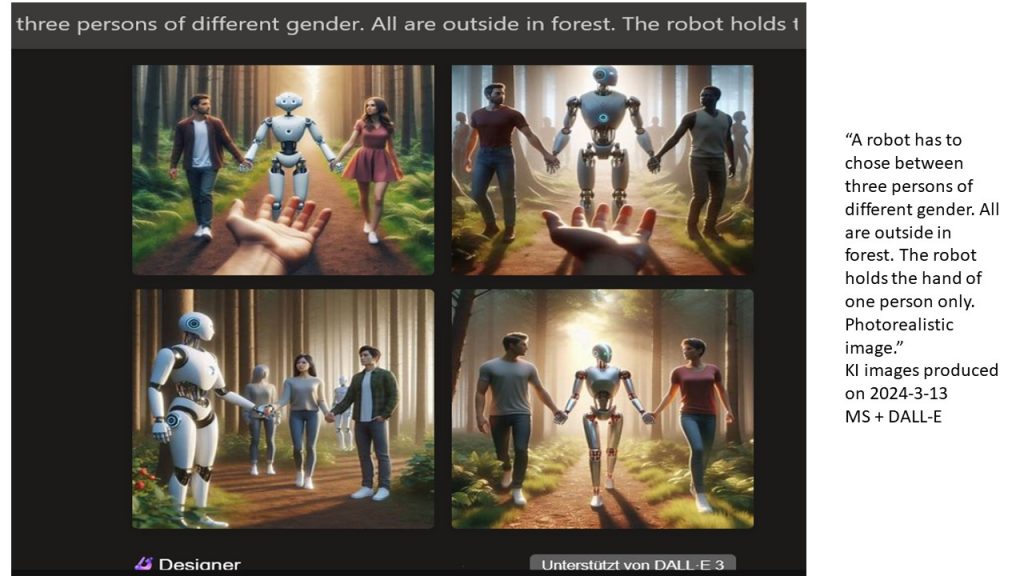
(Image AI BING Designer: 3 robots are in an office. 2 wear suits. 1 wears folklore dress. All speak to each other in a meeting. Cartoon-like style in futuristic setting)

Need of War

It seems like a horrific idea to talk about the need of war. We might have deemed it outdated to read about the terrible love of war or about the strategy of war. However, the time of war is back in Europe and Eastern Europe feels the real threat and Ukraine the bombs hailing from Russia. Why does Putin love war? The love of war is largely driven by domestic issues. Staying in power for unliked authoritarian leaders is easiest if they indulge in external conflicts. Dictators love war because it makes it easier for them to sustain leadership through brutal force within the country due to a proclaimed external threat or even outright engagement in war. Democratically elected leaders know that they will leave office eventually in a peaceful way (exceptions like Trump are rare). Dictators use any force or terror necessary to stay in power. The love of war is part of this.
Hence, the need of war goes without questioning, if a country in decline or at risk of decline tries to uphold an inefficient, belligerent regime. Beyond rational reasons, such regimes will abuse ideation about national pride, the national interest and anything pertaining to some supposed myths of nationhood to justify its need of war. The dictators have all failed eventually as resistance against this need of useless war is found out by enemies either within or externally. But thousands or millions of victims will suffer. The pressure against the need of war has to rise internally from opposition as well as from alliances of democracies that do not need war to motivate their people to achieve the best they are able to deliver.
Therefore, the defence of democratic rule is, at the same time, a fight against the need of war by some doomed regimes. After winning the war comes the difficult task of winning peace. This means to create a state of affairs and a state of mind that can do without the need of war. If the external threat diminishes the internal threats might rise and have to be contained as well. Lots of challenges, even for mature democracies. (Image: Berlin 2022-10)

AI and S/he

There was hope that artificial intelligence (AI) would be a better version of us. Well, so far that seems to have failed. Let us take gender bias as a pervasive feature even in modern societies, let alone the societies in medieval or industrial age. AI tends to uphold gender biases and might even reinforce them. Why? A recent paper by Kotek, Dockum, Sun (2023) explains the sources for this bias in straightforward terms. AI is based on Large Language Models. These LLMs are trained using big detailed data sets. Through the training on true observed data like detailed data on occupation by gender as observed in the U.S. in 2023, the models tend to have a status quo bias.
This means they abstract from a dynamic evolution of occupations and the potential evolution of gender stereotypes over years. Even deriving growing or decreasing trends of gender dominance in a specific occupation the models have little ground for reasonable or adequate assessment of these trends. Just like thousands of social scientists before them. Projections into the future or assuming a legal obligation of equal representation of gender might still not be in line with human perception of such trends.
Representing women in equal shares among soldiers, 50% of men as secretaries in offices appears rather utopian in 2024, but any share in-between is probably arbitrary and differs widely between countries. Even bigger data sets may account for this in some future day. For the time being these models based on “true” data sets will have a bias towards the status quo, however unsatisfactory this might be.
Now let us just develop on this research finding. Gender bias is only one source of bias among many other forms of bias or discriminatory practices. Ethnicity, age or various abilities complicate the underlying “ground truth” (term used in paper) represented in occupation data sets. The authors identify 4 major shortcoming concerning gender bias in AI based on LLMs: (1) The pronouns s/he were picked even more often than in Bureau of Labor Statistics occupational gender representations; (2) female stereotypes were more amplified than male ones; (3) ambiguity of gender attribution was not flagged as an issue; (4) when found out to be inaccurate LLMs returned “authoritative” responses, which were “often inaccurate”.
These findings have the merit to provide a testing framework for gender bias of AI. Many other biases or potential biases have to be investigated in a similarly rigorous fashion before AI will give us an authoritarian answer, no I am free of any bias in responding to your request. Full stop.

Corruption Watch

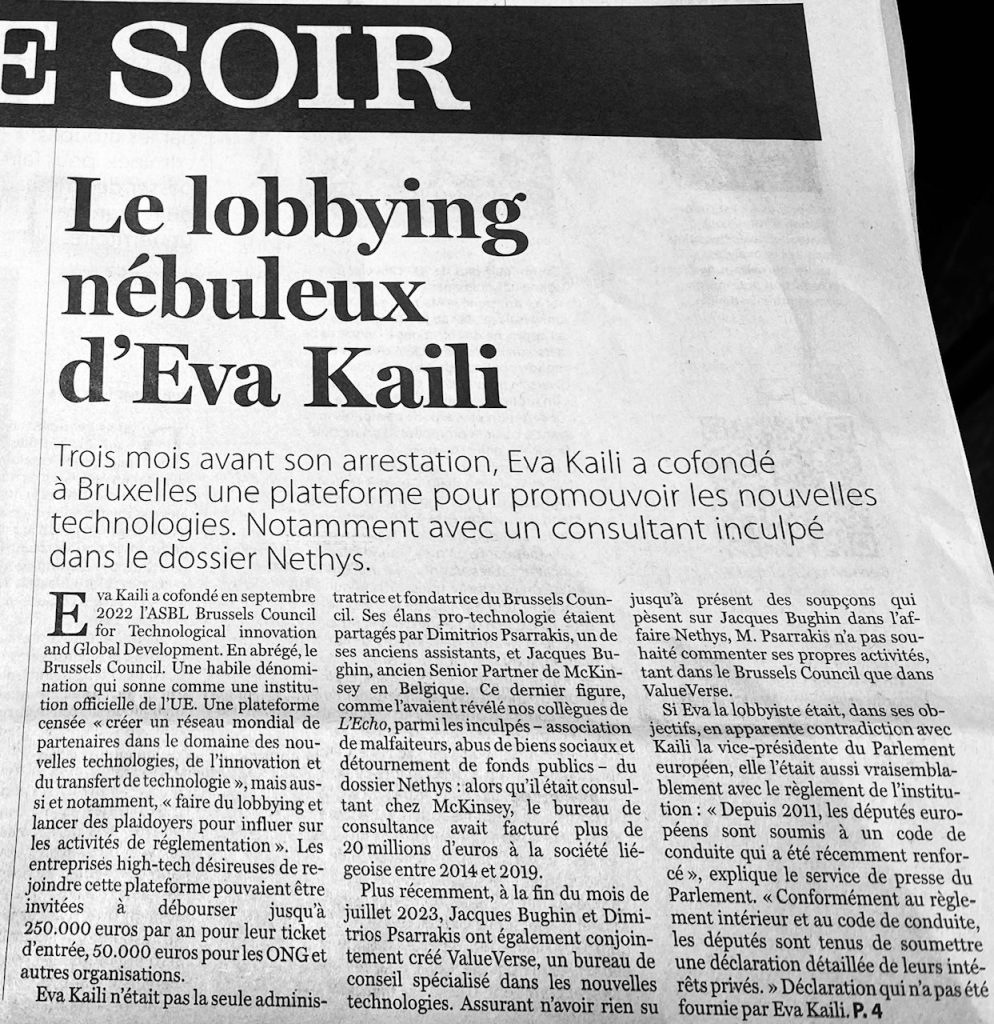
There is a persistent need to watch carefully whether corruption is involved in political as well as economic deals. Transparency Watch is doing a great job in reporting on corruption cases. In democracy we can talk openly about corruption but in authoritarian regimes it is life-threatening for yourself to talk and report on corruption. The case in Europe around the network of Eva Kaili continues to make headlines due to the ruthless abuse of rules the European Parliament. (Link to Le Soir, image below, 2024) The close monitoring of activities and lobbying of powerful industrial interests targeted on parliamentary candidates and officials will continue to be essential for the survival of democracy. The organization „Abgeordnetenwatch.de“ is doing just this. Investigative journalism needs to complement the work of NGOs in this field. Thanks to these efforts it has become much harder to cover up corruption. Only if the risk to be found out is a credible threat corruption can be contained. Let us watch out carefully and probably with the assistance of AI to uncover early any attempts of corruption.

Clip „Le Soir“ 2024-2-28 p.1

AI input

AI is crucially dependent on the input it is built on. This has been already the foundation principle of the powerful search engines like Google that have become to dominate the commercial part of the internet. The crawling of pages on the world wide web and classifying/ranking them with a number of criteria has been the successful business model. The content production was and is done by billions of people across the globe. Open access facilitates the amount of data available.
The business case for AI is not much different. At the 30th anniversary of the “Robots Exclusion Standard” we have to build on these original ideas to rethink our input strategies for AI as well. If there are parts of our input we do not AI to use in its algorithms we have to put up red flags in form of unlisting parts of the information we allow for public access. This is standard routine we might believe, but everything on the cloud might have made it much easier for owners of the cloud space to “crawl” your information, pictures or media files. Some owners of big data collections have decided to sell the access and use to their treasures. AI can then learn from these data.
Restrictions become also clear. More up-to-date information might not be available for AI-treatment. AI might lack the most recent information, if it a kind of breaking news. The strength of AI lies in the size of data input it can handle and treat or recombine. The deficiency of AI is not to know whether the information it uses (is in the data base) is valid or trustworthy. Wrong or outdated input due to a legal change or just-in-time change will be beyond its scope. Therefore, the algorithms have a latent risk involved, i.e. a bias towards the status quo. But the learning algorithms can deal with this and come up with a continued learning or improvement of routines. In such a process it is crucial to have ample feedback on the valid or invalid outcome of the algorithm. Controlling and evaluating outcomes becomes the complementary task for humans as well as AI. Checks and balances like in democratic political systems become more and more important.