Fighting Fascists

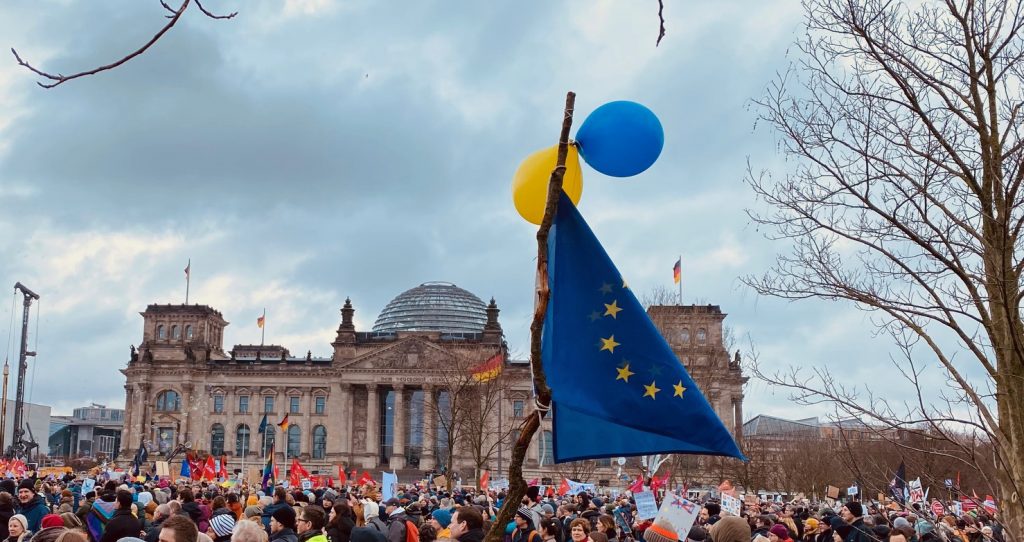
On february 3rd 2024 Berlin has seen the Parliament (Bundestag in the old Reichstag building) surrounded by young and old to raise their voice against the rise of right wing extremism in Germany. The broad alliance against extremism finds grassroots support from a very broad and diverse community. 1700 organizations have joined forces to send a strong signal that they are ready to act against the inhuman propaganda and persistent hate speech. The creativity to express the discontent in clear messages is impressive. Civil society is showing that diversity offers multiple benefits to find new ways to unite people. Great that European flags and balloons in Ukrainian colors where present as well. A movement of solidarity was felt with these people and that provides a strong message for the months ahead with so many elections taking place at the local, regional, national and European levels.

Berlin 2024-2-3

Continuity in 2024

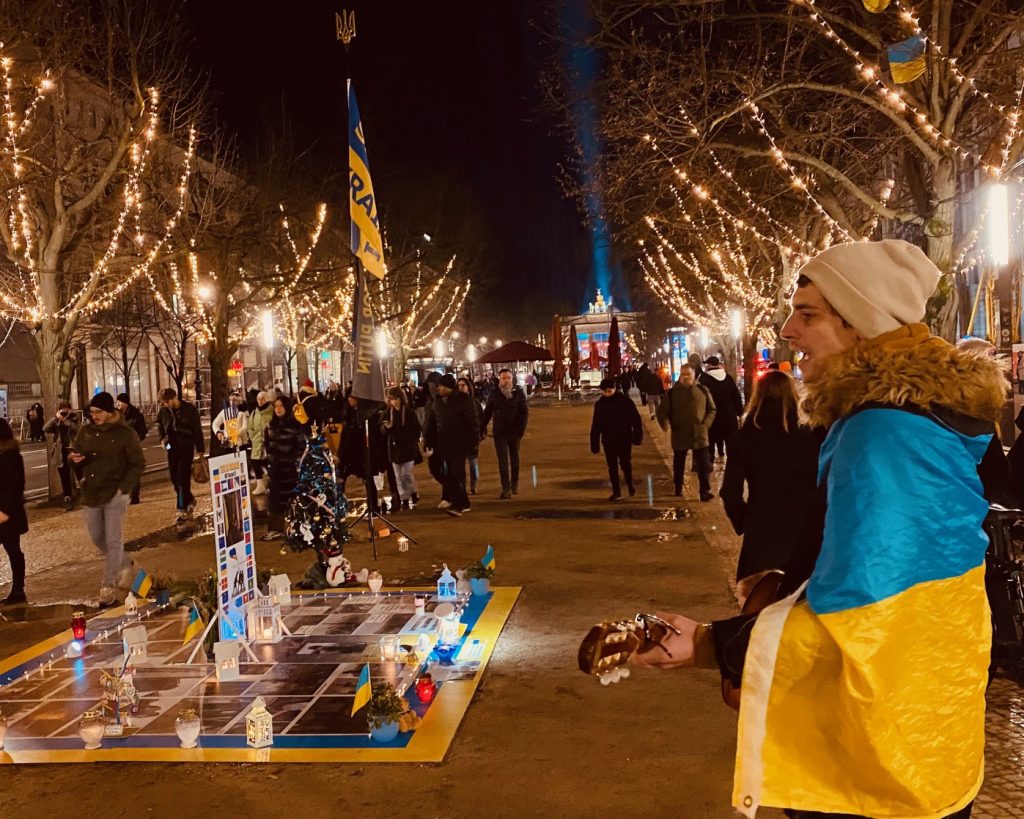
The Russian aggression continues on Ukrainian territory also in 2024. Based on false allegations and stories about a supposed Russian heritage based on Ukraine territory the ongoing war is once again fought more about the past than the present. The future is entirely disregarded by Russia as if it is clear to them that they do not have a future of the dictatorial regime. If a country does no longer care about future perspectives or future generations even, this country is likely to become very dangerous for neighboring countries and beyond because of the high discounting which implicitly applies to all its investments. Western companies who moved out of Russia had immediately high losses. At the same time Russia continues on a daily basis to destroy lives and property. We just shall not stop to support the fight for freedom and democracy in Ukraine as long as it takes. It fighting for our future rather than demons of the past.

Berlin 2023-12-30

Winning Peace

Most analysts of international conflicts deal with winning or losing a war. At best they deal with short-term versus long-term versions of winning and losing. However, the question of how to win or achieve a lasting peace is rarely researched. Research on the 2nd World War reveal as soon as the turning point of the war was achieved the preparation of what will come after defeat. Organising humanitarian relief is part of warfare. The U.S. has set a good example of how to organise humanitarian aid as well as ensuring a lasting peace in Europe after the 2nd World War. Lots of books have been written on the Marshall Plan to get the economies in Europe (Western Europe) back to producing. Much less attention has been devoted to the important element of “de-nazification” of whole societies.
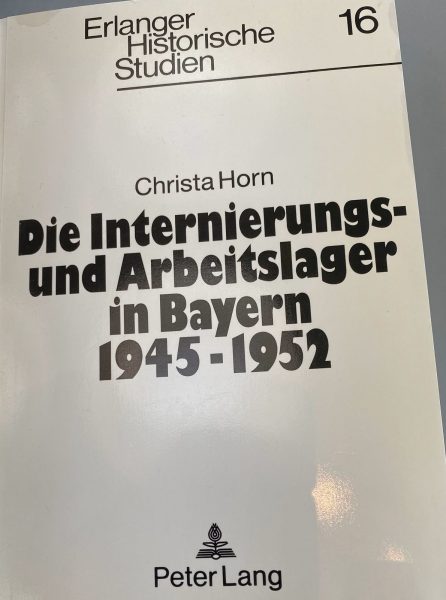
To win peace after the monstruous crimes of the Nazi-regime and the millions of followers and ruthless fighters was a challenge without precedents. The U.S. gave a good example of how to handle the process of winning peace in the regions under its military authority. In the following I shall refer to work published by Christa Horn (1992) “Die Internierungs- und Arbeitslager in Bayern 1945-1952”. The Allies had agreed upon to pursue war criminals. In April 1944 the Supreme Headquarters Allied Expeditionary Forces published the “Handbook for Military Government in Germany”. It was deemed important to detain “certain government and party officials and members of police and para-military formations” (p.17).
Common to demilitarisation efforts after a war, it is the primordial function to reduce the risks of a renewed uptake of guerilla-like attacks due to the amount of arms still widely available or hidden on the enemy’s territory. The document specified further that the continued presence of Nazis in government and other exposed positions “might be a threat to the security of the Allied Forces or an impediment  to the attainment of the objectives of Military Government in Germany” (Arrest Categories Handbook, P.2). Denazification was a means to an end. The size of the task was, however, underestimated at several instances. For example, the organisation of the arrest and detention of more than 100.000 persons was a difficult task. After the end of fighting the transition to peace is not instantaneous. Hierarchical military and party structures had to be dismantled. The so-called “automatic arrest” issued on 13.4.1945 included all grades from the NSDAP down to the “Kreisleiter” or even “Ortgruppenleiter” as well as SS members and their “Helferinnen” (Horn, 1992 p.21). These arrests without judicial procedures came under critic as not-American in the U.S., but it took until 10.10.1948 to abandon this procedure. The literature on the issue refers more to the lack of adequate judicial procedures to handle such so many legal procedures with qualified persons as well as the difficulty to organise detention camps for more than a hundred thousand persons that should deserve to be prosecuted. Handing over to the national or regional judicial instances was, therefore, an important step. The risk to abandon the process of “denazification” was evident, but it was equally important to counter the expansion of the Russian-domination in Eastern Europe with the help of a strengthened Western Europe. Winning peace is a delicate balance of prosecution through the winners of the war and the subsequent prosecution of criminal actions through the indigenous population and its new institutional and judicial setup.
Social Sciences have a lot of solid insights to offer to win peace. With careful consideration they are helpful to learn from even for current international affairs and raging wars. Demilitarisation is only a small part of winning peace. Changing mind sets to internalise humanitarian values remains the biggest challenge and involves more than one generation.

City Museums

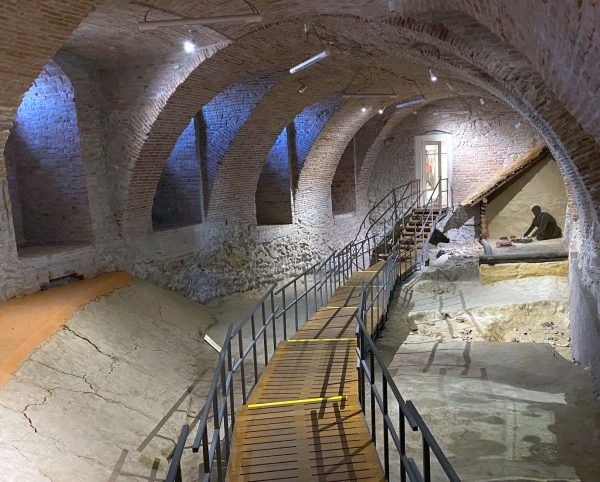
Some city museums have a difficult time to present the richness of their historical heritage. Additionally, the question of city heritage maybe entangled with a process of nation building and citizenship altogether. The focus I advocate is on the evolution of democracy and the process of civilisation. The Zagreb City Museum on the top of the hill comes pretty close to such a perspective on history or historical perspective. Due to the recent efforts to excavate remains of the iron age underneath the more recent City Museum the historical line of Zagreb civilisation can be traced back even longer. The tumuli are worth a whole new section in the Museum. The process of civilisation with “burying cultures” are more than 2600-3000 years old in Zagreb. Democratisation as a process can also be studied with all its ups and downs over the history of the city and the Croation nation building. Capitals and city live play an important driving force in this process. Zagreb has experienced a bombing of the city centre as recently as 1991 (Banski Dvora) and again in 1995 (city of Zagreb) in the Croatian war of independence.
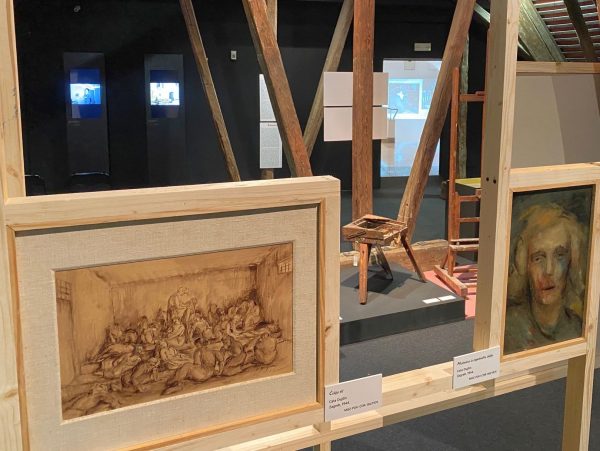
It is a real pleasure to walk through centuries of historical evolution beginning with the recent excavation of the iron age as well as the arts and crafts since the medieval times. Even passing the horrors of the 2nd world war through the eyes of the author and painter Cata Dujsin (image below from 1944) speak to us even today.
There is no linear process of civilisation which is improving over time. There have always been backlashes and there will be. It is even more important to be aware of the continuous risks to independence and democracy. The current setup of the Zagreb City Museum seems to focus on the Croatian population to remind them of their great heritage. With more English and foreign language subtitles and inscriptions the example of civilisation and democracy will be more accessible for even larger crowds of visitors. The online visit accessible in English is already an excellent appetiser.
The City Museum is moving from the internal Croatian function more and more to additional external function to offer learning experiences beyond the Croatian visitors in this tourist attraction that is internationalising in its work force at a rapid rate.

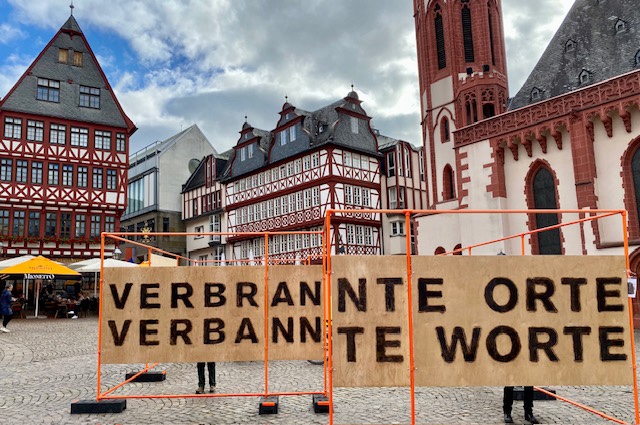
Verbannte Worte

Die Ausstellung Verbannte Worte im historischen Zentrum von Frankfurt trifft auf viele Besuchende der Messe aus der ganzen Welt, die oft nur ein bisschen Rathaus, Marktplatz oder Paulskirche sehen wollen. Aber unbefangen kann keiner an der Geschichte dort vorbeigehen. Neben den Millionen an gedruckten Worten muss es eben einen würdigen Ort geben, der den

verbannten Worten gewidmet ist. Viele Kunstschaffende und Schreibenden konnten bestenfalls im Exil überleben. Das ist heute in großen Teilen der Welt weiterhin so. Der PEN International listet erschreckende Zahlen dazu. Das erneute Post-COVID Wachstum der Frankfurter Buchmesse erfreut alle, die sich unermüdlich für das freie Wort einsetzen. Jedoch auch klare Worte finden denen gegenüber, die das freie Wort menschenverachtend missbrauchen. Dazu leistet die kleine Ausstellung ein sehr wichtigen Beitrag, der über die Buchmesse kraftvoll in die Welt getragen wird.

Frankfurt am Main 2023-10-22👍🏼

Geo-politics

In the middle of October 2023 we witness the unexpected and unwanted rise of the geo-political importance of the European Union. First, after the aggression of Russia to realise a huge land grab on Ukrainian territory, the European Union managed to define its new geo-political role in supporting the Ukrainian struggle of independence and freedom versus Russian oppression. This means continuous support of several forms: humanitarian, supporting infrastructure like energy and food supplies as well as military equipment for defensive purposes. Achieving our own strategic autonomy means decoupling from energy supply from Russia despite huge investments to build interdependence particularly by Germany or Finland. Additionally, strategic autonomy means relying on international partners that share our values and quest for sovereignty. Supply chains for production systems have to be re-organised to ensure independence even in military conflicts.
A new role has become evident also in the attack from Hamas on the state of Israel. Historic links and responsibilities to the creation of the state of Israel have led the European Union to make its voice heard in the Middle East to limit escalating confrontations.
These changes in the geo-political role of the European Union have far-reaching implications internally as well as in its external relations. Some have been spelt out by Luuk van Middelaar (2022, adviser to Herman van Rompuy) in his lectures “Le réveil géopolitique de l’Europe”. In the introduction he makes clear what are the 3 major elements of the geo-political wake-up for Europe: (1) power, (2) territory and (3) narrative. Europe has shunned away from its geo-political role as a powerful player. (1) Believing more in a peaceful role, a moderator, deviating from its colonial past, upholding the primary role of international law and justice, the European Union has been forced by external powers disrespecting these premises to enter into various international border conflicts as a power in its own right. (2) Questions of territory matter most, if they are challenged by powerful neighbours who are not inclined to respect international law. Even uncontrolled migration is part of this disrespect of territorial integrity. (3) Speaking in the name of a whole community of countries who share the same values, gives a convincing force to be able to overcome national particularities and predilections.
However, the European Union’s new geo-political role has to be carefully communicated not only to the outside world (it is in no way thought to be offensive), but also internally. For example, the budgetary implications of the geo-political role need to be communicated to the electorate and public opinion(s) in Europe. Do not forget to carefully prepare the whole population on this new role.
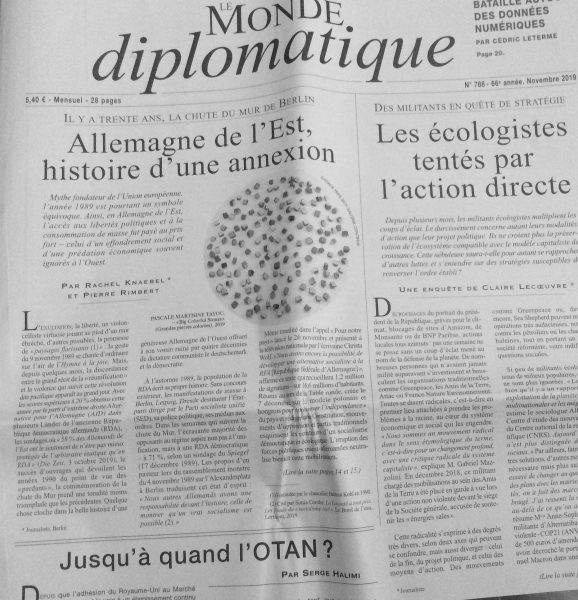
Donald Tusk held steady to counter claims from the PIS-leaders in Poland to reduce the geo-political role of the European Union. Many countries and people sharing our values are eager to see the European Union to accept this new geo-political role to defend human rights, internal law and justice. (Background reading: Middelaar, L. v. 2022. Le réveil géopolitique de l’Europe. Paris : Collège de France. doi :10.4000/books.cdf.12770 ). Image: Extrait  LeMonde diplomatique 2019-11) for discussion.

Landtagswahlen

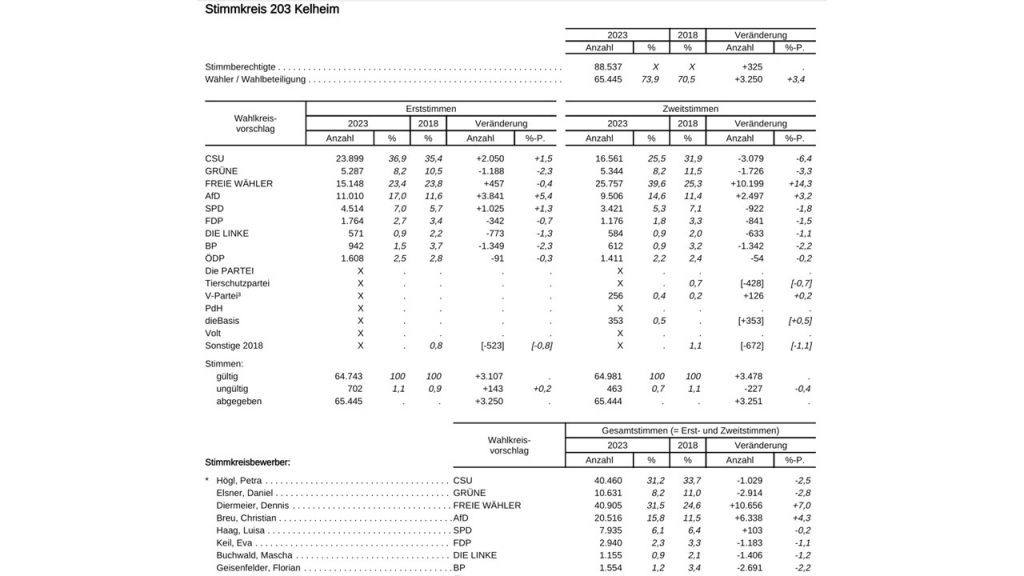
Bayern und Hessen haben am 8.10.2023 ihre Landtage gewählt. Hessen erreichte eine Wahlbeteiligung von 66%, Bayern 73%. Das ist ein erheblicher Unterschied. 7 Prozentpunkte als Differenz warten auf Erläuterungen. Ein stark polarisierender Wahlkampf mobilisiert Wählende aus allen politischen Lagern. Positionierung dafür oder dagegen lassen mehr Leute zu den Wahlurnen gehen. Selbstverständlich gibt es auch diejenigen, die sich etwas angewidert von dem Spektakel abwenden. In Bayern war mehr deftiges Schenkelklopfen und öffentliches Abwatschen zu beobachten. Das hat wohl das Wahlvolk ermuntert, mit dem Wahlzettel an dem Wahlkampf aktiver teilzunehmen. Das gehört zum demokratischen Wettstreit dazu. Bedenklich sind jedoch Abstimmungsergebnisse, die nur noch wenig pluralistische Meinungsvielfalt aufzeigen.
Relativ einmalig und erschreckend zugleich ist das Ergebnis im Wahlkreis Kelheim. CSU, AFD und FW gemeinsam vereinen ca 80% der abgegebenen Zweitstimmen auf sich. Da sollten wir öfters genauer hinsehen, was da los ist. Einzelne Provinzen in Bundesländern haben mittlerweile diametral entgegengesetzte politische Tendenzen. Die Debatte verschärft sich. Dabei brauchen wir doch angesichts der vielfältigen internationalen Krisen mehr denn je Einigkeit und Recht und Freiheit, aber eben auch Meinungsvielfalt. Historisch waren tragische politische Fehler nicht mehr weit weg, wenn das Spektrum der Parteien allzu eingeschränkt daherkommt. Es braucht schon wieder Mut, um in einigen Regionen für eine vom allzu dominierenden Meinungsbild und für eine abweichende Meinung einzustehen. 

Bauer

Ein Bauer im Schachspiel kann spielentscheidend sein. Ist der Bauer erst einmal jenseits der gegnerischen Angriffs- und Verteidigungslinien am Ende des Schachbretts angekommen, kann er in die Figur seiner Wahl eingetauscht werden. Wir sollten den Bauer also nicht in seiner Bedeutung unterschätzen. Das trifft auch auf Fritz Bauer zu. Der hessische Generalstaatsanwalt Fritz Bauer, Mitbegründer der Zeitschrift Kritische Justiz, hat die deutsche Justiz in besonderem Maße herausgefordert. Durch seine Anklagen hat er viele der aus der NS-Zeit belasteten Richter angeklagt und entschieden an der Verfolgung und Verurteilung von Adolf Eichmann mitgewirkt.
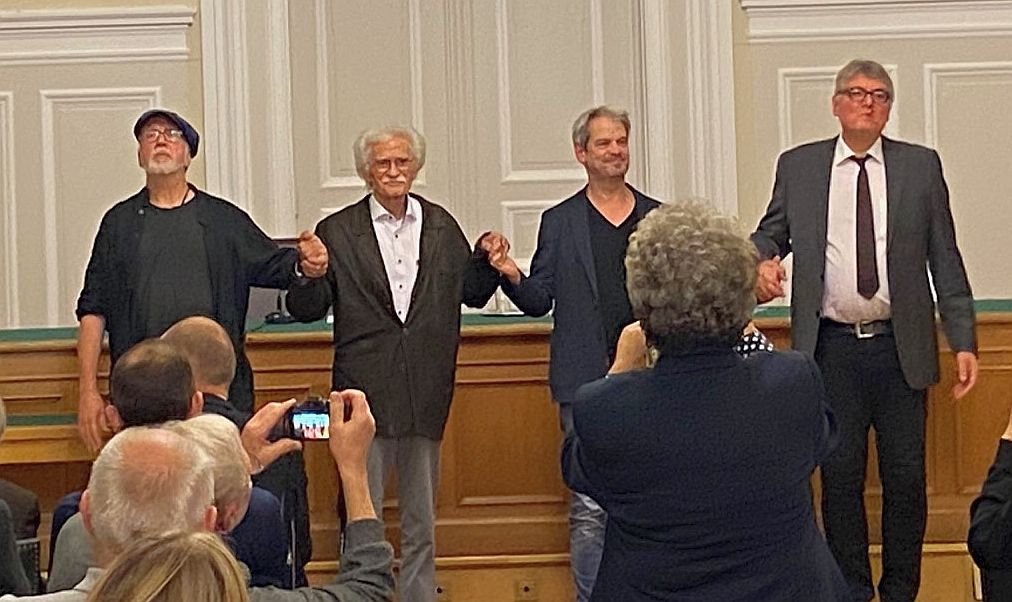
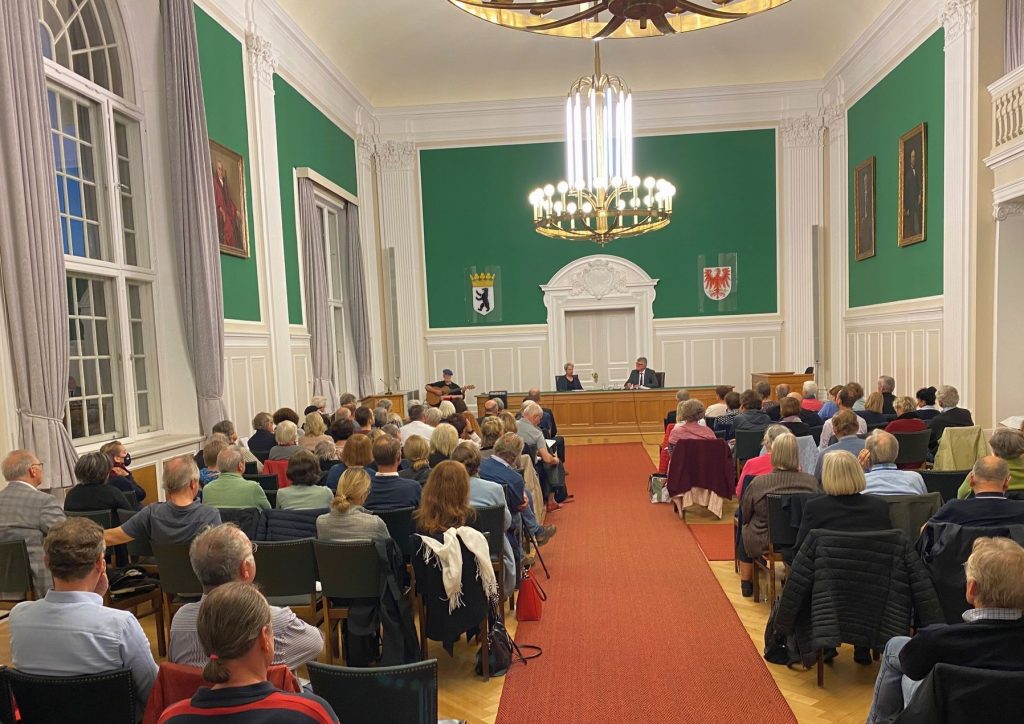
Dieter Schenk hat in seiner Dokumentation und einem fiktiven Interview eines Journalisten mit Fritz Bauer die Persönlichkeit anhand seiner Schriften und Interviews lebendig als Theaterstück inszeniert. Bereits 2x in Polen aufgeführt, hat die Deutsch-Polnische Gesellschaft Berlin e.V. zu ihrem 50. Jubiläum zusammen mit dem Bund ehrenamtlicher Richterinnen und Richter, Landesverband Brandenburg und Berlin dieses Werk im Oberverwaltungsgericht Berlin Brandenburg zur Aufführung gebracht. Frank-Walter Steinmeier hat die Arbeit von Fritz Bauer mit folgenden Worten gewürdigt: … vielmehr ging es Fritz Bauer darum, die Deutschen zu immunisieren, sie vor einem erneuten Rückfall in die Barbarei zu schützen.“ Das ist heute noch genauso wichtig wie in der Vergangenheit. Der historische Gerichtssaal des OVG BB in der Hardenbergstraße in Berlin bot dafür eine eindrucksvolle Kulisse. So voll war der Saal noch selten, betonte der Hausherr.  Den Besuchenden viel sicherlich auch die Gedenktafel mit den Namen der von den Nazis entlassenen Richter auf dem Weg zum Plenarsaal im Treppenhaus auf.
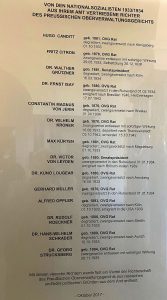
Eine stille Anklage richtete sich in dieser Veranstaltung eben auch in Richtung Polen, die Rechtsstaatlichkeit und unabhängige Richterinnen und Richter zu gewährleisten. Deutschland hat sich historisch viel Schuld aufgeladen, umso mehr Verantwortung haben wir jetzt, uns für diese wichtigen Grundrechtsprinzipien einzusetzen. Der Verein „Gegen Vergessen, Für Demokratie e.V.“ soll als Ko-Organisator unbedingt mitgenannt werden. Hans-Josef Schöneberger und Uwe Neumann als Schauspieler und Ian Melrose mit seinen Intermezzi auf der Gitarre haben eine tief beeindruckende Atmosphäre geschaffen. Es wurde klar, dass Recht, selbst Verwaltungsrecht viel mit Streitigkeiten verbunden ist. Die Befriedungsfunktion des Rechts wirkt oft erst über Generationen hinweg.
Ich wäre gespannt zu wissen, in welche Schachfigur sich Fritz Bauer am anderen Ende des Schachbretts hätte eintauschen lassen. Mein Tipp, vielleicht als Turm wichtige horizontale und vertikale Linien besetzen oder doch ein Springer, der nicht einfach zu berechnende Sprünge leisten kann. Von einigen seiner Verehrenden wird er auch als König gehandelt, der allerdings, wegen seiner Verwundbarkeit, oft anscheinend ohnmächtig im Zusammenspiel mit den anderen starken Figuren agierte.
Checks and balances

The principle of checks and balances refers back to the separation of powers introduced by the French political theorist Montesquieu in his writings “De l’esprit des loix” in 1748. 40 years later in 1788 James Madison wrote as §51 in “The Federalists Papers” explicitly about the system of checks and balances as part of the constitution of the USA. For maintaining the principle of separation of powers it is necessary to install a system of checks and balances between the powers to prevent one power dominating the others. These well-known principles of democracy face, nevertheless, continuous challenges as to the balance of the powers (legislative, executive, judiciary). In order to safeguard democracy a basic scepticism towards the exercise of power is warranted. “In framing a government which is to be administered by men over men, the great difficulty lies in this: you must first enable the government to control the governed; and in the next place oblige it to control itself. A dependence on the people is, no doubt, the primary control on the government; but experience has taught mankind the necessity of auxiliary precautions.” (Federalist Papers, 1788, p. 239).
The necessity of auxiliary precautions has led modern democracies to a multiplicity additional checks and balances. Independent Anti-fraud offices, disciplinary committees within the separate powers as well as the checks and balances between the separate powers play a role in the survival of democracy. Recently, in July 2023 services like the internal service of the police to overlook the adequate execution of the force applied by police have been much in the headlines. Checks and balances apply to each branch of separate powers internally, and if they prove inadequate, they have to be corrected by other powers. This is the procedural as well as fundamental interaction within the separation of power. Presidential systems, where this system of checks and balances has major deficiencies, are very likely to fail its people through an overpowering executive. Neither the country of Montesquieu, nor of the Federalists is free of these dangers. Freedom of speech, freedom of movement and to meet with people, all contribute to strengthen checks and balances in a democracy. “A dependence on the people is, no doubt, the primary control of the government” (p.239).

Collective Violence 2

Summers and Markusen (1999) subsume state terrorism under the broader heading of collective violence. Even beyond non-governmental groups, states might apply collective violence against innocent people. Among the strategies governments use as a form of collective violence fall (1) arbitrary arrests, (2) imprisonment without trial, (3) torture and (4)a summary execution of members of alleged enemy groups. Particular outcries are caused by, for example, police or other para-military groupings of persons who jump from (1) to an execution of an innocent person or of several even seemingly unrelated murdered persons (4b).
Amnesty International attempts for decades to fight against such occurrences on an almost global scale. The need to complement the national legal systems through supra-national instances as well as NGOs in this domain is obvious. Even the most advanced democracies need to permanently check their systems for several forms of state terrorism or abuses of power to eliminate or intimidate opposition.
Staub (1999, pp.195) undertook an attempt to list elements that allow to predict and maybe prevent collective violence. The theory starts with “conditions of life” more generally like economic, social and political conflicts as well as rapid social change. Activation of basic needs in people, like several forms of security, challenges to a person’s self-concept, traditional values, simply the customary way of life (COVID-19) or new comprehension of (climate) realities, they all challenge old world views of people (superiority) and their place in the world (AI).
Claims for support by other people (government), missing connection to others (individualism) lead people to focus more on their own needs and isolated action. Rebellion as collective violence is directed against differences in status, power and (social) rights. Self-interest is becoming an overriding societal principle. Racism (p.200) and police violence (p.201) are part of Staub’s theoretical considerations. He argues in favour of training of situations in which a police officer is likely to become unnecessarily violent or to stop it if it occurs. At least a medium-term solution.
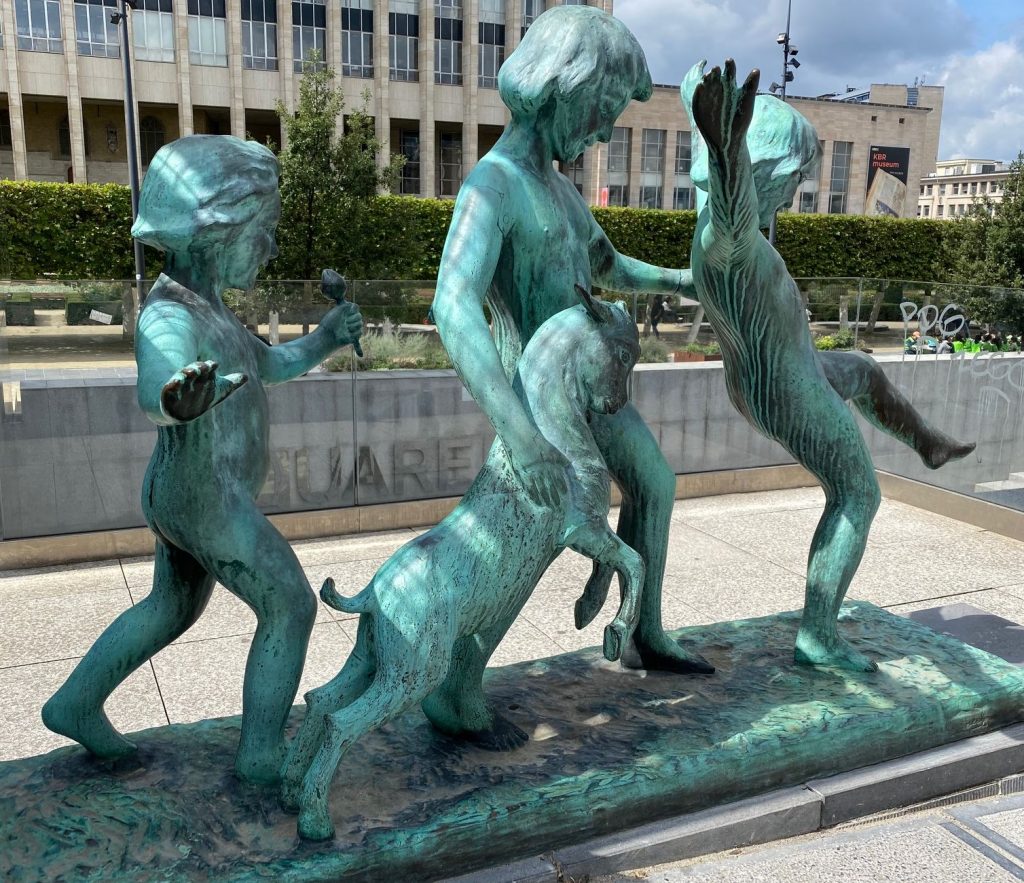
Framing of such training as preparation of good teamwork rather than betrayal is crucial in action teams, be they in the police or the military. The reader on “violence subie, violence agie” by Seron and Denis (2000) allows us to take a step back and reflect on the spirals and repercussions involved in violence from the perspective of the person who carries out an act of violence and the victim. A social-therapeutic approach aiming at reconciliation is worth trying, albeit a lot of obstacles. Collective dance rather than collective violence is the immediate as well as long-term solution (More on dance here).