Denkmal

Jedes Jahr gibt es die hervorragende Möglichkeit am Tag des offenen Denkmals, historisch wertvolle Gebäude und Anlagen zu besichtigen. An heißen Tagen, wie in 2023, sind Altbauten oder klimatisierte Räumlichkeiten besonders bevorzugt. Die Philharmonie hat erneut die Möglichkeit geboten ohne langwierige Voranmeldung, spontan vorbeizukommen und an einer Führung teilzunehmen. Das von Hans Scharoun entworfene Gebäude samt seiner akustischen Spitzfindigkeiten bietet spannende Einblicke. Stille, Sound und Noise in einem Gebäude und Konzertsaal will sorgfältig geplant sein. Kompromisse mit verfügbaren finanziellen Mitteln und Planungsverfahren gehören zur baulichen Realisierung, wie eventuell zu den Kompositionen, die dort aufgeführt werden. Heute erscheint uns die gelungene Akustik als historischer Meilenstein. Ebenso die Form des Konzertsaals mit Plätzen hinter dem Orchester, aber auf das Gesicht der Dirigierenden bietet einzigartige Einblicke in die Praxis der Aufführung. Für 10 Minuten war selbst bei der Führung zufällig ein Zuschauen bei der Generalprobe der Berliner Philharmoniker von weitem erlaubt. Komponist und Dirigent Jörg Widmann probte noch Ausschnitte aus der am Abend aufzuführenden Werke. Selbst hoch unter dem Dach der Philharmonie konnten die leisen Ansagen des Dirigenten leicht verstanden werden. Akustische Meisterleistung der Architekten. Wer hätte gedacht, dass Anfang der 60er Jahre eine solche Glanzleistung möglich war, im Berlin, das gerade erst durch die Mauer getrennt werden sollte und dann geteilt überleben musste.
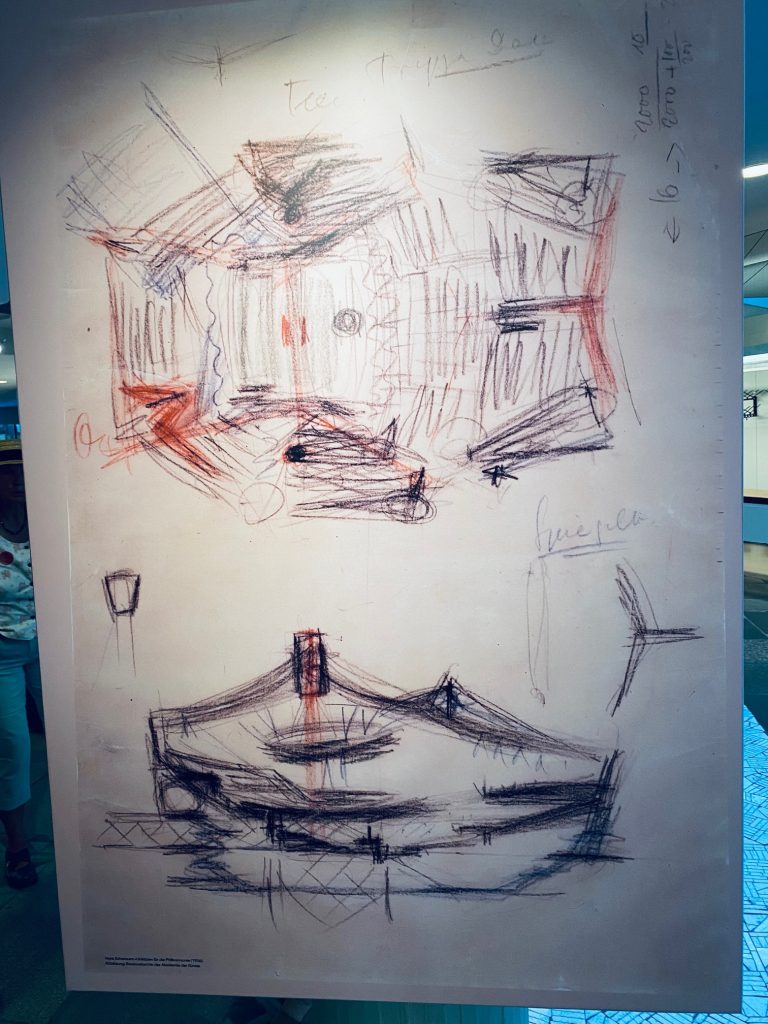
Entwurf Hans Scharoun Ausgestellt in Berliner Philharmonie 2023

Write, write, write

A poster announcing the “internationales literaturfestival berlin 2023” prints in big letters: “Read, read, read, … 14 times”. This is a quote from Werner Herzog when he was asked what makes a good filmmaker. The message from Manjeet Mann to the young audience at Berlin added to this: “write, write, write”. At least this was my impression as a summary of the talk and her short readings from her novel in verse “The crossing”.
The lecture hall of the “Stabi” was packed with students from high-school who felt at ease with the English language presentation and talk. The host Shiva Mesgarian managed to get the crowd of students to ask questions in the huge lecture theatre. Manjeet was giving a lot of insights into writing, editing, motivation and the difficulty to give a voice to persons from marginalized backgrounds. In her case as a person of colour herself, born and raised in England with additional links to India, she took issue with the topic of refugees. Living in Folkestone (Kent), she is confronted with people crossing the Channel on a daily basis.
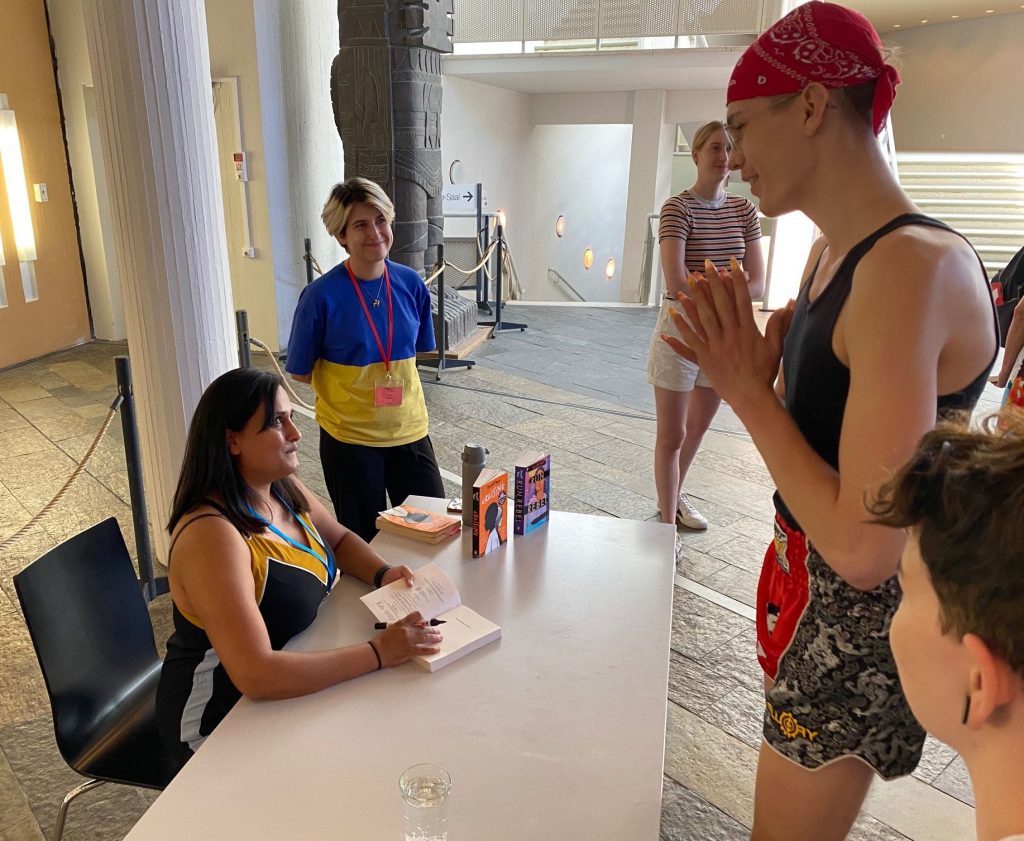
Her book “The crossing” is actually building bridges between countries and continents. Her entertaining way to talk about her hard work as writer motivates, inspires and encourages young persons to pick up their pencil and/or notebook to start writing. Just don’t stop. Journaling helps. Take your emotions of an issue seriously, then work on it. Give characters a voice who have not received much attention. Go out and interview persons to get authentic input.
It is not about appropriation of a story. It is about meeting and exchanging with marginalised persons. Return your written pieces to those “sensitive readers”, whose story you attempt to develop. All this takes time. Re-writing is an important element as well. “Having written the story for yourself, you then re-write it for the readers”. Edit, clarify, sharpen, blur, attend to detail – all this helps the reader to follow and enjoy. These were the messages to all the students who were grateful for advice as the new season of essay writing in school, university and beyond is about to start.

Ozone

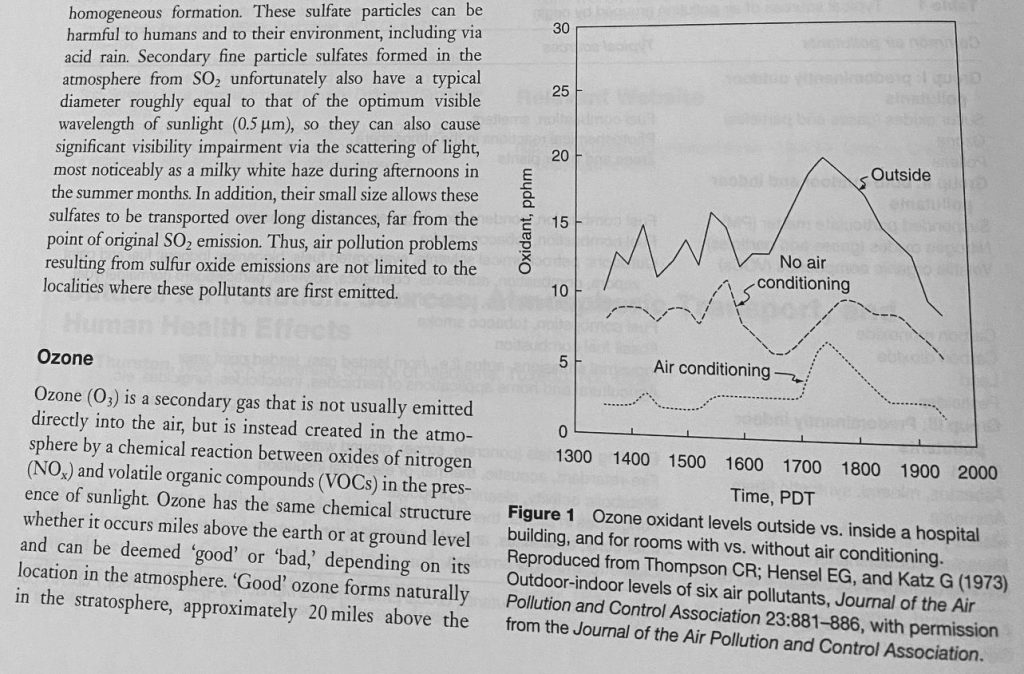
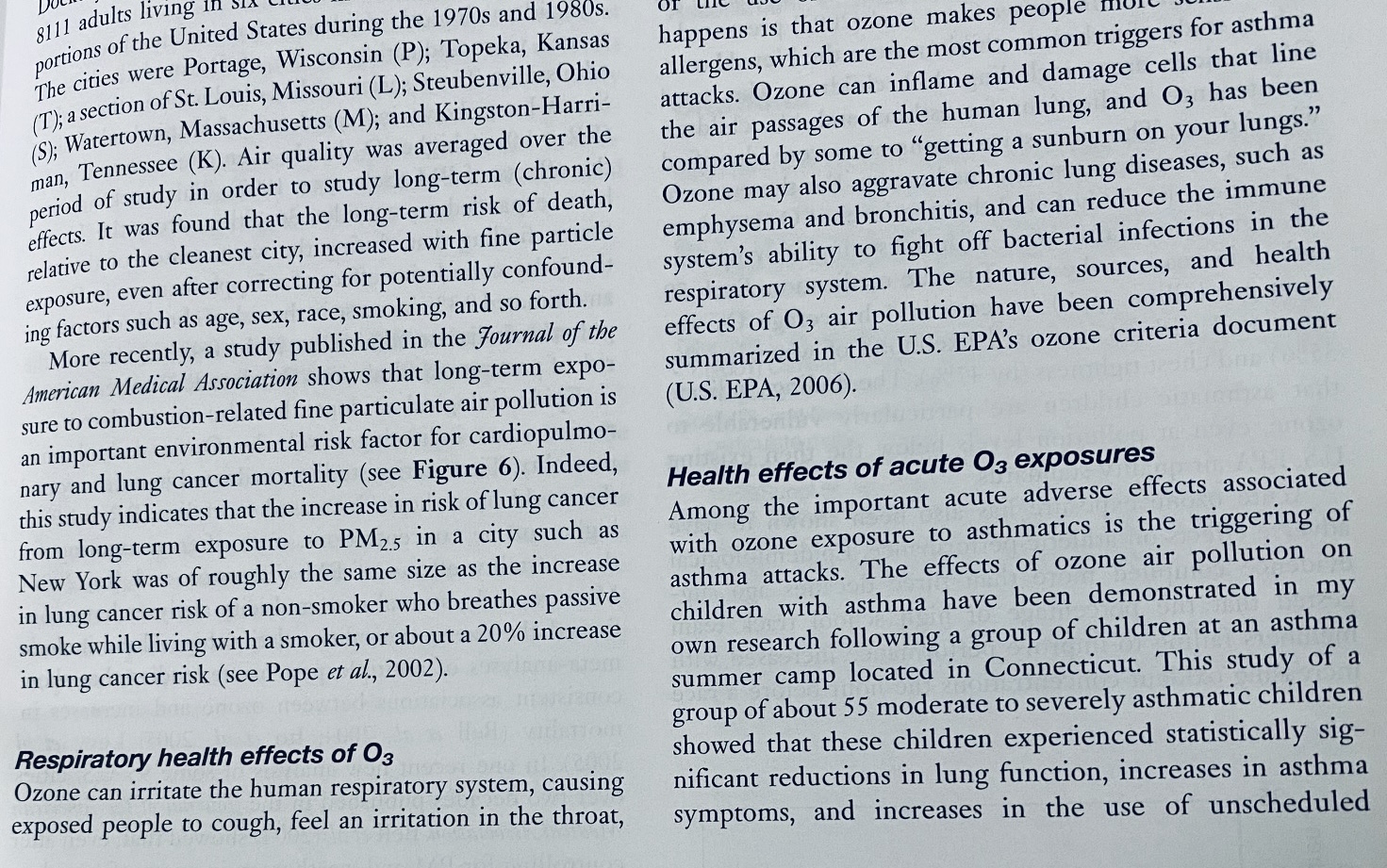
Ozone (O3) has a rather mixed reputation. High up in the stratosphere it protects us from too much radiation from the sun, but down on earth in our respiratory environment it causes and amplifies respiratory difficulties. Hence, it is very important to differentiate the 2 different layers and differential effects of concentrations of ozone in the air. A forthcoming study in the Lancet Regional Health Europe (Nov. 2023) by Tianyu Zhao et al. demonstrates the long-term, negative effect of higher concentrations of Ozone on lung function. The prospective cohort study followed individuals in multiple states and locations over 20 years and corrects estimated effects for other environmental effects (fine particles PM 2.5 pollution) and green environment. Faster decline in spirometric lung function is highly likely to be caused by higher ambient ozone concentrations. The study is based on 3000+ observations from 17 centres in 8 countries in Europe. Older persons in the range from 35 to 55 had a steeper decline in ozone-related decline in lung functions.
This is rather bad news for older persons living in inner cities where both ozone concentrations, mainly in summer, heat and micro-particles cumulate. Similarly, areas with frequent so-called inversion micro-climate, (a layer of cold air on top of SMOG blocks the renewal of air for extended periods) face particular health risks. Professions that work long durations outside in the sun or the exercise of sports during high ozone day-time run higher risks for a deterioration of their lung functions in the long-run. The medical evidence is there now, also for Europe, what had been shown already for the US before.
It is time to adapt our lifestyle to these health risks. High effort physical work outside should start as early as possible in the morning hours or even before sun rise. Staying indoors is highly recommendable for older persons and persons with reduced lung functions (asthma risks) during such periods of high ozone concentrations. Like it or not, even wearing a mask outside, when it is sunny and hot would be preferential, but is rather inconvenient. We need to shift airing living rooms or offices without climatization to early morning hours rather than ambient temperatures in the afternoon, when ozone peaks are prevalent.
These effects and remedies have been known for some time, but the evidence is much more compelling now (Zhao et al. 2023). Climate change in form of global and local warming, particularly in inner cities, will only exacerbate these effects in the coming years. Prevention measures need to be considered in public health measures as well as urban planning. We can do it, if we want to. Start now to benefit from the effects a decade later or for the benefit of younger generations. (Image: Int. Encycl. of public health, p.702).

Bogenspannerin

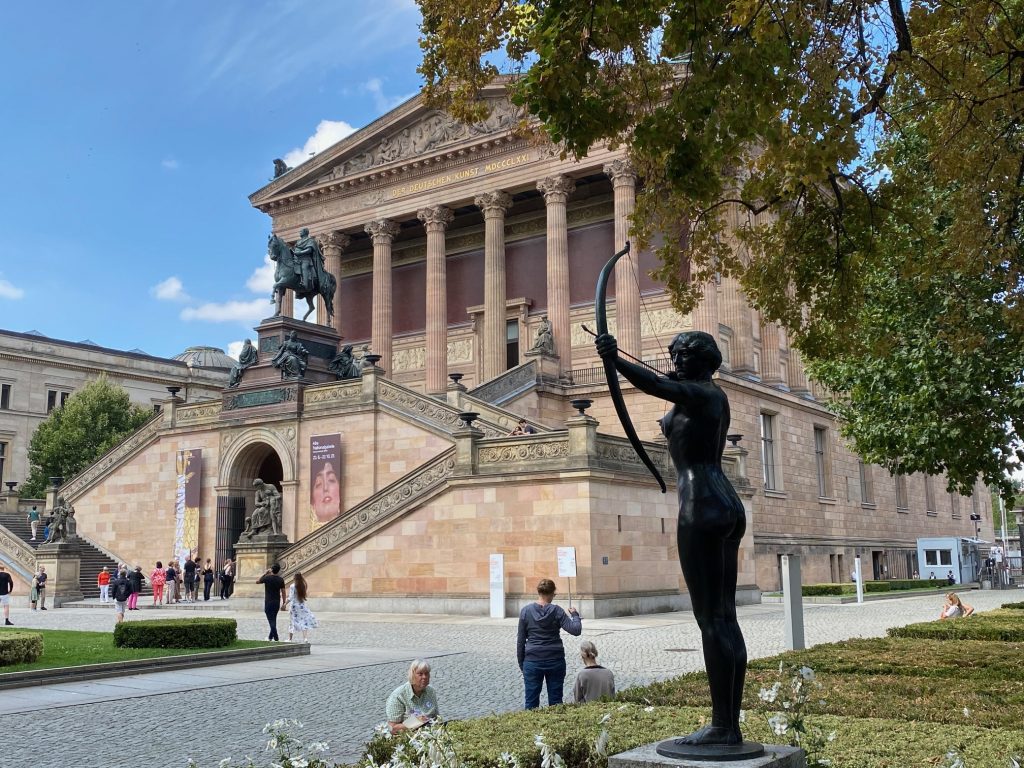
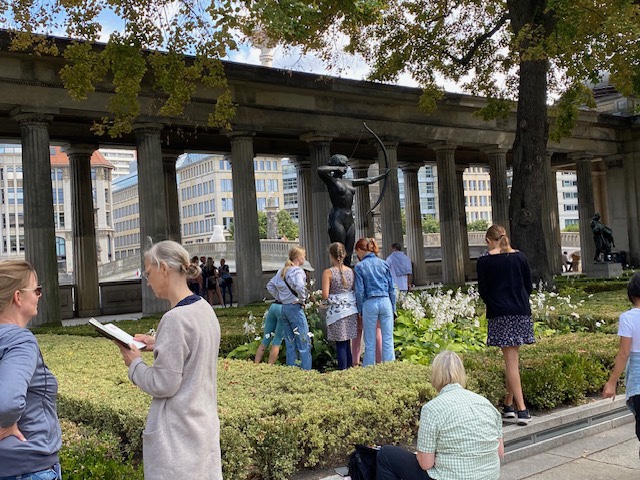
Seit der Antike sind Bogenschützen und Archer ein Thema der Künste. Meistens ist die männliche Repräsentation die dominierende Variante. In Berlin lässt aber auch seit langem eine starke weibliche Realisierung bewundern. Nahe dem Pergamon Museum und der Alten Nationalgalerie steht die Statue der Bogenspannerin. Die Zielrichtung geht Richtung Hedwigsdom, als ob der Kampf zwischen Kunst und Religion ein andauernder wäre. Erfahrene Stadtzeichnerinnen, aber auch Jugendliche fühlen sich dadurch angeregt. Kunstschaffende können einen nachhaltigen Einfluss haben. Innerhalb Berlins ist nicht nur die Vielfalt der Kulturen zu bestaunen, sondern auch der Wettbewerb der Künste um Aufmerksamkeit. Da werden nach Regierungswechseln oft viele Bögen gespannt. Bleibt abzuwarten, wen es alles dieses Mal treffen wird.

Energy Ethics

Around the topic of energy there many ethical issues that urgently need sorting out. Carlos Diaz-Rodriguez and co-authors have provided a sound basis for such ethical considerations. To leave the disastrous path of energy provision through polluting fossil fuels and, additionally very risky, nuclear energy, they propose a departure from the principles and values that have guided us into a dead end. In their opinion we suffer from a mistaken belief to be able to control in extremis, through scientific methods, the forces of nature. In ethics this mistaken belief has roots in religious beliefs that mankind is mandated to make the earth subordinate to its own will. The authors propose to overcome this old paradigm with a new paradigm. This builds on the (1) “precautionary principle”, (2) justice as equity, (3) protection and the (4) principle of responsibility.
Most European readers of philosophy and social science are familiar with these principles. The virtue of the paper is to expose and juxtapose these principles in a clear format and a stringent application to the ethics of energy (production as well as consumption of it).
The precautionary principle is part of the European treaty on the functioning of the European Union Art. 191, but its implementation on energy issues reveals that it is a tiger without teeth. Younger generations across the globe are right to claim a more forceful implementation of this principle.
The perspective of justice as equity is bringing in later born generations as well into the balance costs and benefits of “cheap energy today” but huge costs of dismantling, repairing, stocking deferred to the future.
The protection principle refers to the loss of biodiversity and exploiting resources in areas of world heritage, for example.
The principle of responsibility goes beyond the judicial and economic principle that the person, company or state causing damage through exploitation of resources, and in producing energy with it, has to pay for repairing those damages.
As this is hard to achieve in real terms, there is an urgent need to reiterate the responsibility principle at all levels. Despite the inefficiencies of legal systems, the international legal order in particular, there is no way around than to insist on responsibility from the individual behaviour, company strategic goals as well as objectives set by nation states and international organisations. The Paris agreement and all COP XY conferences only prove the fact that irresponsibility continues to be a guiding principle.
Maximalist positions as well as continuing like decades before is failing people on earth. Organising a discourse on these ethical issues is a first step, but we have to be able to address negationists as well.
The missing principle so far is the solidarity principle. Without a firm commitment to intergenerational and international solidarity we shall remain unable to solve the ethical puzzle. It is high time to organise solidarity related to the field of energy.
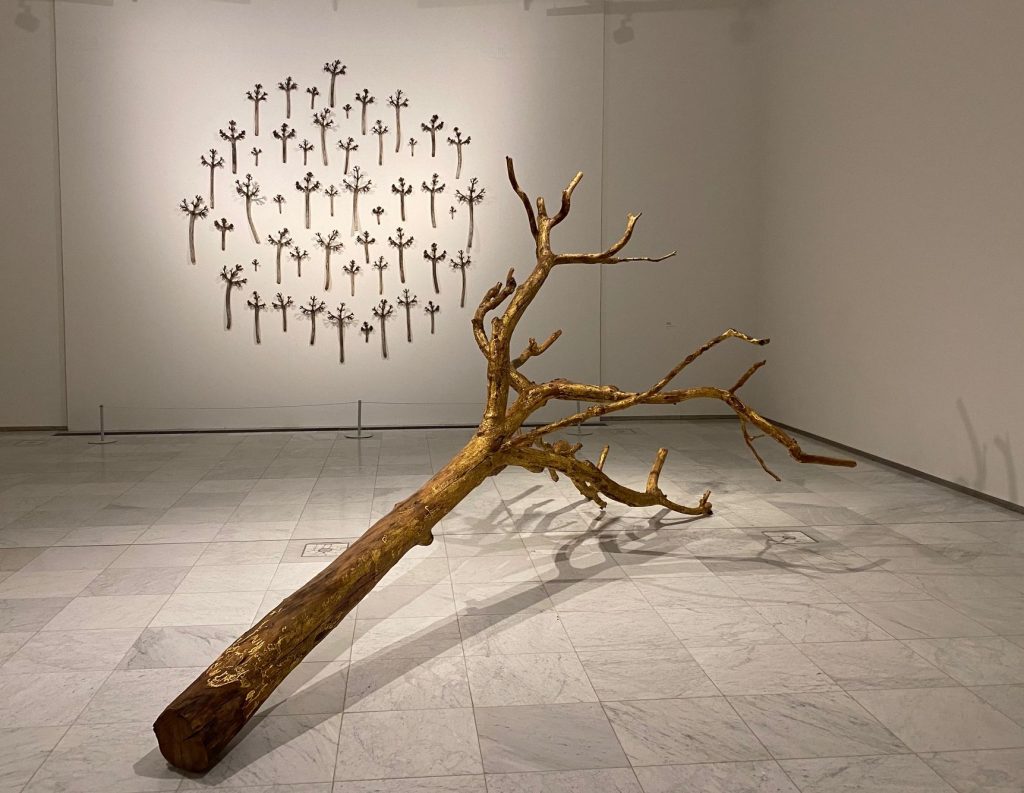
(Image: “The fallen tree of knowledge” by Fabrice Samyn. Exposition in Yerres, France 2021-11)

Smart watch

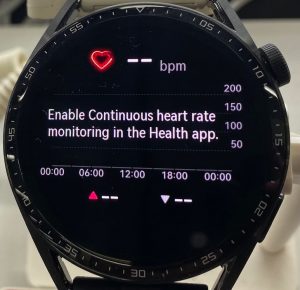
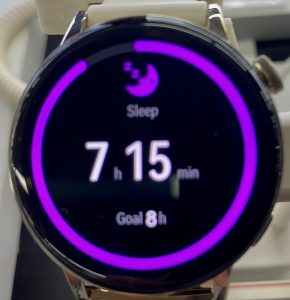
Das Handgelenk hat noch viel Platz für elektronische Geräte. Vom preiswerten Schrittzähler bis zur smart watch und intelligenten Armreifen oder sogar Ringen gibt es dort viel Potential für Innovation. Jenseits der Schritte werden mittels vielfältiger Sensoren eine Fülle von Daten erfasst. Datenschützer erschaudern geradezu. Das Potential für medizinische und soziologische Auswertungen dieser Daten ist immens. Vergleichbar mit einer elektronischen Waage, die Knochenmasse, Wasser und Muskeln erfasst erlauben die smarten Uhren noch mit Ungenauigkeiten, aber stetig besser werdend, kardiologische Werte und Schlafrhythmus zu erfassen.
Mit Daten von tausenden bald Millionen Datenlieferanten lassen sich wichtige Studien zur Früherkennung von Gesundheitsrisiken durchführen. Plötzlicher Herzstillstand ist eines der immer noch wenig aufgeklärten Phänomene. Die Studie im LANCET digital health hat solche Daten ausgewertet und kommt zu der Schlussfolgerung, dass dyspnoea für Frauen und Männer der größten Risikofaktoren darstellt. Für Frauen wird Entwarnung gegeben für Diaphoresis, exzessives Schwitzen, aber nicht für Männer. Letztere sollten Schmerzen in der Brust ebenfalls ernst nehmen. Daten sammeln kann durchaus Leben retten.
Dennoch droht dem Gesundheitswesen eventuell eine Welle an falsch positiven Selbsteinweisungen in der Notaufnahme der Krankenhäuser. Darauf sind wir noch wenig vorbereitet, inklusive der möglichen rechtlichen und finanziellen Konsequenzen. “Big brothers are smart watching you”. Müssen Ärzte die smarte Evidenz berücksichtigen, etwa so wie eine Patientenverfügung? Was wenn plötzlich der Notarzt unaufgefordert an der Tür klingelt? Wer hat meine Uhr gehackt, … , singt das Paulchen Panther jetzt.

Stabi locker

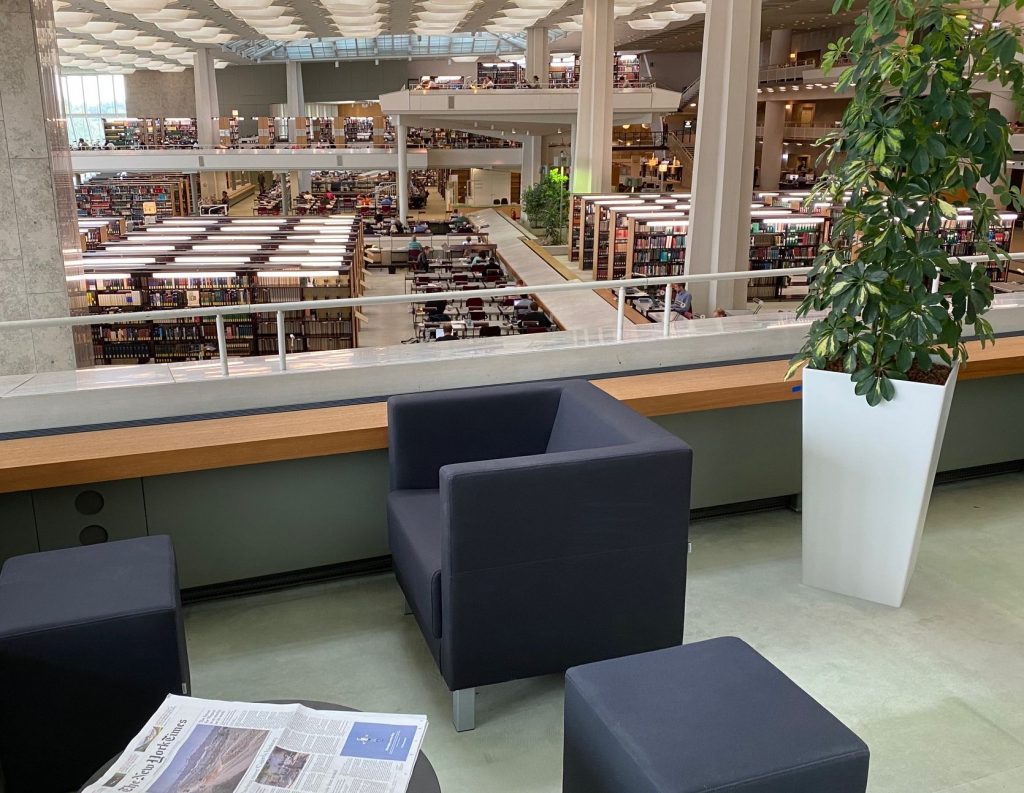
Die Staatsbibliothek Berlin in der Potsdamerstraße macht sich mal richtig locker. Neben all dem gebundenen und gebündeltem Wissen gibt es eine kleine, etwas versteckte Ecke in der richtig gechillt werden kann. Mit aktuellen Tageszeitungen in Papier und online lässt sich gut pausieren. Eine tolle Aussicht gibt es zusätzlich. Selbst eine vorübergehende Schließung wegen überfälliger Sanierung wird die Stabi bei den Wissbegierigen eine wichtige Location vermissen lassen (fehlende Bücher).
Neben Wissensmaschine ist die Stabi eine Lernanstalt erster Klasse. Die Anzahl der mitgebrachten dicken Gesetzbüchern samt Kommentaren lassen einen immer wieder staunen über den Mangel an stillen Lernorten an Universitäten und in Privatwohnungen. Die richtige Lernumgebung befördert den Ansporn, noch eine extra Meile zu gehen. Wissbegierig ja, aber es braucht auch viel Durchhaltevermögen bei ständig wachsenden Ablenkungsmöglichkeiten. Gemeinsam, einsam, allein mit sich und dem Wissen lässt sich vorzüglich dicke Bretter bohren. Das ist ein wichtiger Teil, das Lernen zu lernen. Kunst am Bau und im Bau gibt es gratis dazu. Die Nähe zur Ablenkungsindustrie am Potsdamer Platz, Kinos, Spielbank und Fresstempel kann da getrost auf ihre späteren Opfer warten. Mit Regionalzügen und S-Bahn kommt man von dort rasch wieder weit weg.

Barbie explore

The film on Barbie after more than 60 years of the first puppets to arrive on the market is a huge money spinning exercise. Hitting more than 1 billion $ is really a huge box office success. More interesting even is the banning of the film in some countries like Algeria. This gives the film an interesting subversive touch to it, which we in the Western countries no longer see as something special. Emancipated women pose a threat to authoritarian regimes.
However, we see in the stereotypes of beauty-driven dolls not that much of an emancipatory chance. To view emancipation independent of the looks of a person is another interesting twist to the role in stereotypes of beauty. It is not only fun to play around with stereotypes, that is mostly, if you are not negatively affected by them (age, gender, ethnicity, extraordinary persons). A nice task for sociology and psychology to explain the working of stereotypes in society and possible remedies. Tolerance is a competence that needs to be learned and updated continuously, from early age onwards.
Therefore, the website created by the US Design Agency Rvnway offers an entertaining way to play around and learn about stereotypes. Perceived, generalized beauty or gender roles can be explored using the tool. Maybe some see themselves differently after such explorations. Everybody is a model. This is the message. www.bairbie.me will let you explore other formats of yourself. After 3-D rendering and printing your children or grandchildren will decide what role they would like you to play in their playfull, or virtual “real” life. I suppose many of us will be up for a big surprise. Go on and imagine in 4D. In the age of selfies all around us, all the time, we believe we are very modern, but the artists of the 19th and 20th century following all great painters before, frequently started their careers with an “autoportrait” or “Selbstbildnis” or series of those as they were aging.

More Design

How about a subject like Design in school. Rather than the same old boring teaching manuals in art, music, economics or social science, young learners have always been attracted to making things by themselves. The theoretical context is then coming to the subjects and objects more naturally. Economics as market design, design social security for platform workers, sound or furniture design could bring in the creative potential of the learners. Lessons learned through subsequent applications or realizations of prototypes allows the link of theory and practice. A school garden would even be a fantastic cross-discipline learning opportunity.

The most difficult part is probably to find competent coaches to guide the learners exploring and designing. The world is not perfect, so why should learners not be confronted with imperfections in learning set-ups. The most fun part in science is when experiments go wrong, hopefully not too badly though. Catching learners by their curiosity is very likely to get them hooked on more thorny scientific questions as well. Across Europe holidays are coming to an end and millions of pupils go back to their benches and rigid curricula. We should really care more about the next generation.

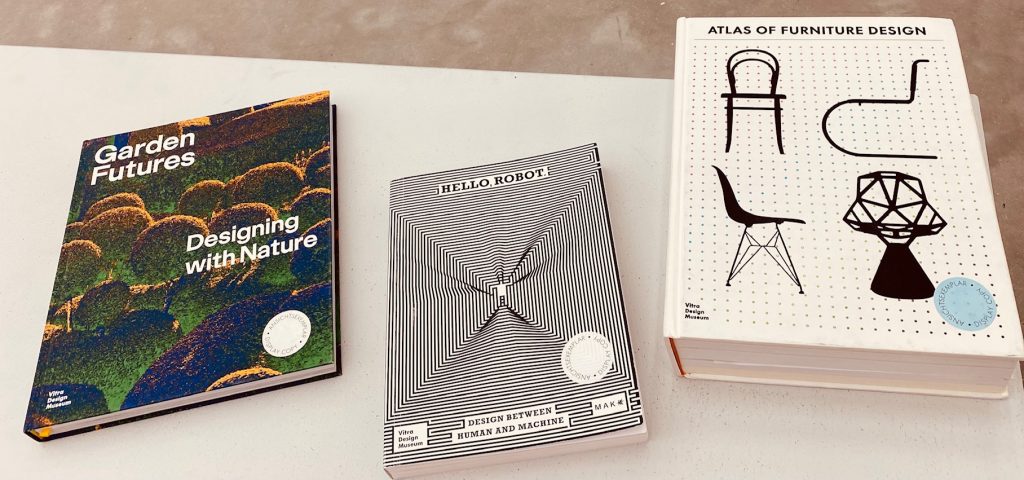
Vitra Design Exhibition and Campus 2023

Europa Meer

Europa und das Meer, so lautet der Titel eines Buches und Katalogs zu einer Ausstellung des Deutschen Historischen Museums (DHM) aus dem Jahr 2018. In 2023 im August sind die Zeitungen voll mit Artikeln über Meererwärmung und die schwerwiegenden Folgen für Menschheit und Bio-diversität. Die Geschichte der Beziehung zwischen Europa und dem Meer ist leidvoll und euphorisch zugleich. Alljährlich zur Sommerszeit wird das Mittelmeer von Wellen mit Touristen überspült die „over-tourism“ erleiden müssen. Menschen sind oft eine in Massen, aber nicht in Maßen, auftretende Spezies. Das Meer spielt zusätzlich eine faszinierende, verheißungsvolle Anziehungskraft aus. Europa sieht sich zudem gerne noch als Dreh- und Angelpunkt der Weltgeschichte.

Der Ausstellungskatalog enthält lesenswerte Beiträge von der Antike übers Mittelalter bis in die Neuzeit. Die Thematisierung von Herrschafts- und Handelsräumen , Brückenschlagen und Grenzziehungen, Meer als Ressource bis hin zum Sehnsuchts- und Imaginationsort bieten eine originelle Herangehensweise. Schon 2018 enthielt der Katalog einen Beitrag zum Massengrab Mittelmeer sowie zum Sehnsuchtsort Hafenmetropole Odessa.

Migration in ferne Länder samt der Verheißung eines vermeintlich besseren Lebens sind so alt wie die Menschheit. Die Weite des Meeres suggeriert zusätzlich die Möglichkeit des Neuanfangs und Althergebrachtes, hinter sich zu lassen. Freiwillig oder gezwungen, das ist dabei oft die entscheidende, unterscheidende Frage.

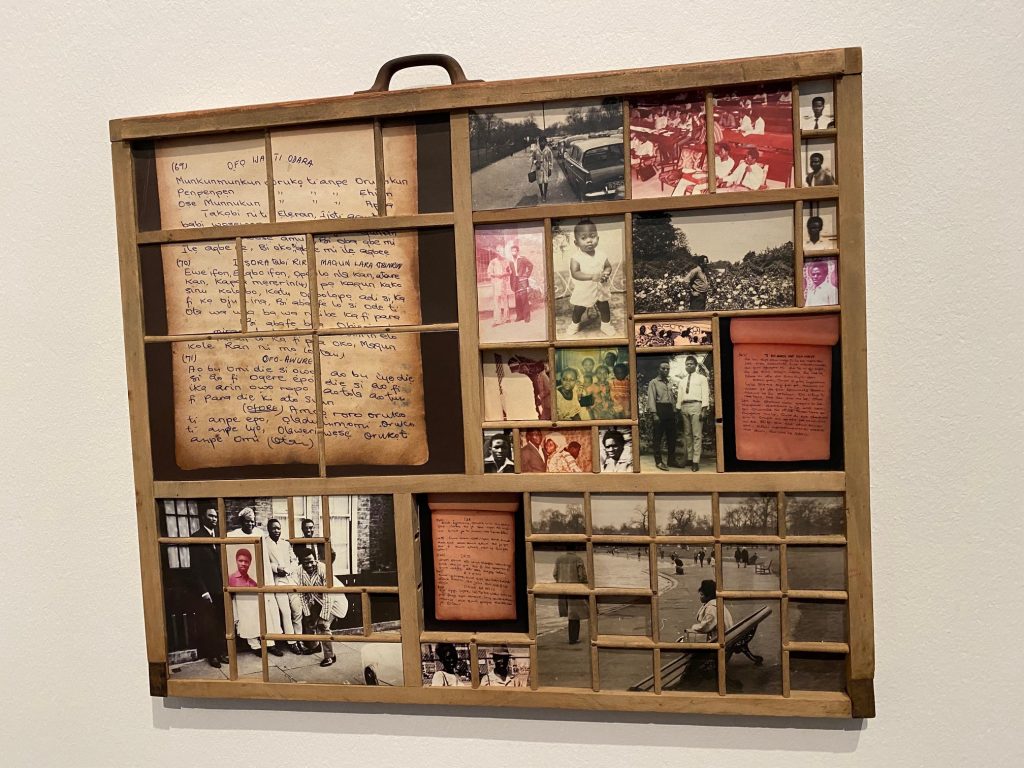
Kelani Abass, Casing history, Gropiusbau 2023