Autonomous Agents

We all have seen more or less autonomous robots somewhere, maybe in a garden silently doing its job or doing more demanding tasks like in playing table tennis against a human. Even the evolution of polluting fireworks to swarms of little light-emitting drones designing figures on the sky have become quite popular. The AI-world is similarly advancing rapidly and proposes more and more “autonomous agents” to assist us. It seems crucial to distinguish the 2 Ds of autonomous agents: Degrees and Dimensions. As with job quality or job satisfaction, there are several sub-dimensions, which need to be considered when dealing, in a summarizing form, with such encompassing terms.
You might allow an agent to order missing food for a meal and pay for this autonomously. You might even be assisted in financial choices to a large degree, but you might not want an autonomous agent to make far reaching decisions concerning your health or partnership(s). Besides such dimensions, the degree of autonomous decision-making needs to be calibrated according to your (perhaps changing) preferences. Booking a table in a restaurant, with a single other person, might not just be a friendly, nice assistance, but it might get you into severe trouble. However, managing conference bookings, a family event or a birthday party might allow you to concentrate on other issues or specific details. Additionally, there are underlying and cross-cutting topics like trust, risks and security that enter the “2 Ds of autonomous agents”. A 2-dimensional matrix plotting levels across dimensions might work as a behavioral guideline in the development of autonomous agents. More dimensions may be added during the implementation.

Autonomy in swarm

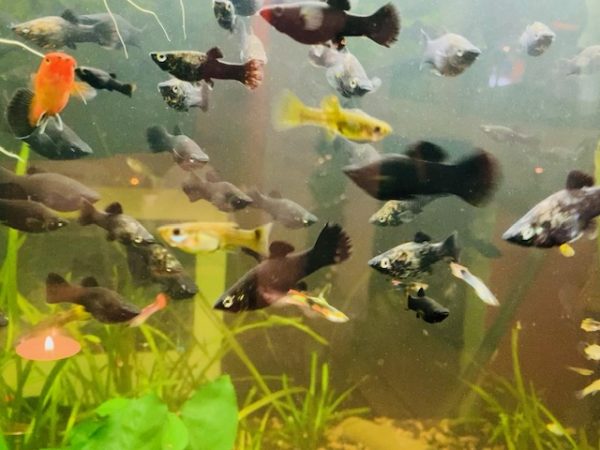
Swarm behavior is a fascinating research area. Almost all scientific disciplines feature some interest and publication in this area. The biological origins have been associated a lot with the marvelous behavior and patterns formed by fish moving about in swarms. Some species of birds show similar patterns of collective and somehow coordinated swarm movement. It appears to be tricky to safeguard some form of autonomy in the overriding mass behavior and mass movement.
Recent advances in this field by Li, Li & Zhao (2023) model such behavior within a predator-prey framework to explain the evolution of overall swarm behavior. Whereas “prey” strategies consist in “flocking” and “swirling” to irritate predator(s), the predators make use of “dispersion”, “confusion” as well as “marginal predation tactics”. Additionally, several assumptions go into the modeling of swarm behavioral evolution: agent observation, agent dynamics, and the environment. The mixed cooperative-competitive multi-agent setting applies reinforcement learning, additionally. The framework of evolution has 5 driving forces: (1) homogeneity of a swarm (parameter sharing); (2) actor with decentralized critic network; (3) replay buffer to enhance learning; (4) rewards for predator and loss for prey; (5) learning algorithm.
The modeling approach reveals the impact of an agent-critic network (potential of autonomous behavior) for protection of a swarm in a predator-prey scenario. (Image: fish in fish bowl 2024)

Autonomy as Job Quality

As many labour markets have been confronted with employment and skill shortages in OECD countries, the interest in what constitutes a good job has increased. After the “decent jobs” campaigns by the ILO, it became crucial to be able to better measure what constitutes a decent job and job quality more generally. The COVID-19 crisis had pushed remote work, but the impact on job quality has been mixed.
A larger empirical effort set out to measure job satisfaction and job quality more precisely. The study funded by the Luxembourg Chamber of Labour (Steffgen, Sischka et al. 2020) puts autonomy at work in the category of “job design”. The findings suggest that autonomy has substantial correlations with almost all other measures of job quality, but in a multivariate setting work-life conflicts, job security, atypical working time, mobbing, time pressure or social demands overwrite the issue of autonomy as a statistically significant impact on general well-being. Social support, however, has the strongest positive impact on overall satisfaction. Solidarity at work drives overall well-being.
The more narrow concept of satisfaction with one’s job find autonomy just as important as career advancement on the 5% significance level. Participation in decision making, income and again social support have somewhat stronger impacts. Autonomy concerns time and tasks. Can you decide what to do, how to do, where to do and when to do your tasks?
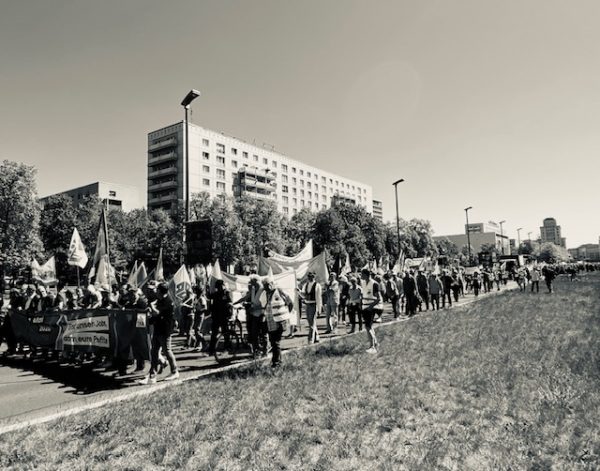
Depending on how you answer these questions on a 1-5 scale, the more or less satisfied you are with your job. Of course, leadership styles might interfere additionally. (Image: May 1st 2026 Berlin)

Democracy or Democrisis

Measured on a global scale, democracy is in retreat. The report by the “Varieties of Democracy Institute” indicates that there are fewer people on the globe who enjoy the freedom and benefits of democracy overall. This is measured in domains like freedom of expression and the democratic quality of elections. The prevalence of democratic decision-making in opposition to autocratic ruling is closely related to the possibility to freely elect a new government in regular time intervals. The V-Dem Report 2026 indicates that 18 countries are on a favourable democratic development trajectory, whereas democracy is on the retreat in 44 countries. The freedom of expression suffered most (44 countries) and the quality of elections suffered in 22 countries. The positive developments (11 for freedom of expression, 7 for quality of elections) were outnumbered by negative ones. The cases of big countries with negative trends towards or tightening of autocratic ruling deteriorates the overall number of countries and specifically the number of people living in democracies in 2025 on the globe.
For all those living in lively democracies this should be a warning message (South Korea), that democracy is not a given. The enemies of democracy are working continuously from external territories to undermine a country’s democratic structures and decision-making. It is urgent to raise the quotas and limits by which fundamental democratic rules can be abandoned before it is too late. Let’s prepare a “defensive democracy doctrine” in Europe and the EU to signal more forcefully our willingness to stand up for freedom and democracy as fundamental values of humanity rather than an “Animal Farm“.

Press in the 1970s

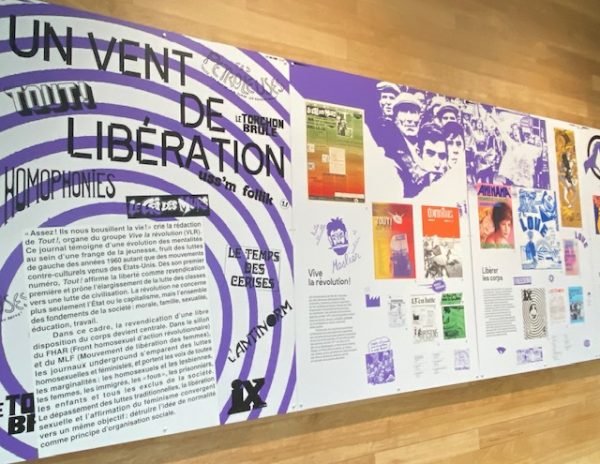
In the 70s there were many so-called underground or alternative papers printed. For people in bigger cities or in cities with universities, the 70s flourished with independent journalism which addressed small audiences. Each access to printing materials and paper allowed to go it alone for groups of society that did not feel they were adequately represented by established media. Some of these “underground” papers published texts that could be considered going against the dominant legal principles. Topics like feminism, birth control, abortion or more left wing political statements against private property had to fight to reach their audiences. The cold war period created another overarching threat to the representation of all opinions. Hence some groups we t underground to function as they wanted and how they interpreted the freedom of expression and being published. (Image: BNF Exhibition Underground 2026-6). 

Dry January

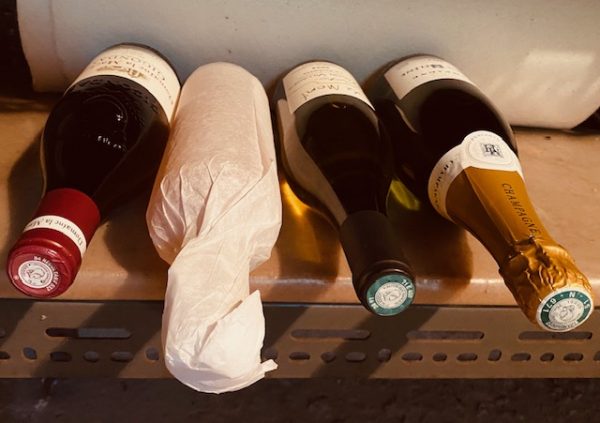
There is a health trend to pass a sober, “dry January” after the X-mas and New Year festivities. It seems to be rather popular, so that the French wineries have started a marketing campaign of a “French January“. We shall see what the battle of marketing campaigns means in the end for the health of our liver (Study Link). It might lead to changes in consumer behavior of the following kind. Take advantage of good price offers for French wine and champagne in January and drink it as of February.
For addicts of the “carneval season” this should not be too difficult, jointly with a couple of friends. Alternatively, you might not be bothered and continue a moderate consumption across seasons. Moderate consumption, however, is the tricky part of alcohol consumption. Medical guidelines (health of liver) have evolved recently to count each drop of alcohol into your total consumption in either fluid litres of pure alcohol or the equivalent measured in grams. 

History as Science

There are persons entering history and there is the science of history. Whereas the former persons may sometimes enter for very dubious reasons into history, responsible for killing people, the science of history draws on a whole lot of evidence, social, economic or demographic, to evaluate a person’s legacy or the merits of an epochal change. In the development of this scientific approach towards history, rather than a purely chronological, family structure or narrative-oriented approach, Marc Bloch has been a central figure. His research and exemplary own biography as student of history at the ENS in Paris, teacher and later Member of “La Résistance” is honored by an exhibition on his life and time at this formidable French institution of teacher training. In an exhibition in the ENS library you can even inspect a list of the books taken out by Marc Bloch as a student as well as his experiences as a student in London or Berlin before the 1st World War. A strictly science-based approach to history made him an influential historian and social scientist beyond his lifetime. (Image: Salle Marc Bloch at ENS Library Paris 2026-5) 

Security and Popularity

With webpages it is a bit like in the world of glamour. The more popular a webpage becomes, the more you have to invest in security features.
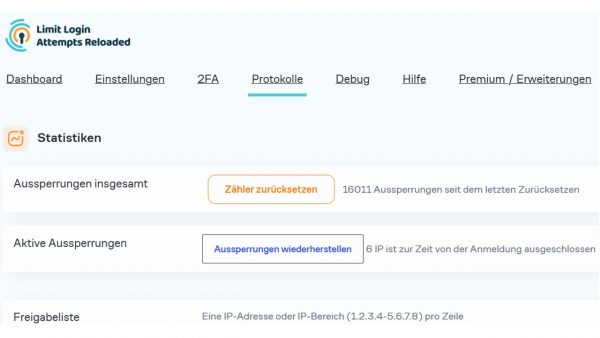
In a parallel webpage project, the choice has been to go for a popular name for the webpage and blog activities. After a year of sporadic blogging the site has become a regular target for hacking attempts by means of login attempts. This has led the administrator to previously allow only one single login attempt before banning login attempts from the same IP-address for several days. This does no longer allow a misspelling of the tricky password on your own behalf or the password-manager, if you happen to use one.
Security becomes a “sine qua non” condition for web-users as well as web-developers. We usually take only sufficiently care of this point, when it is “almost” to late. With 16.000+ login attempts over the time of about 1 year and 6 running locked-out IP-addresses, I almost gave up already on another domain with a more popular name. External backups become another necessity to prepare for the eventual failure to access own content and data bases.
Actually, I feel rather safe going out at night as a man in Europe, but the dangers of the global access to a web-page feels much less safe most of the time.

Latent social structure

In empirical approaches to sociology we occasionally apply “latent variables analyses”. The aim is to uncover links between data that are not obvious in standard analyses of data. We are pretty convinced by evidence that age correlates with the probability of death. However, most tragedies are created around exceptional counter examples to this “rational expectation”. We also somehow have an intuition about the positive effect of social networks or the social fabric in a more general sense on living and survival. In some of those latent variable models we find evidence for an underlying factor without being able to properly name or frame it. Hence, as social scientists we continue to be interested in ways to make latent social structures more visible. With such an approach in mind I visited the exhibition by author and photographer “John Kolya Reichart” in the “Schöneberg Museum” entitled “Die Kette” (The Chain, 2026-5). The start of the chain is a familiar person in your neighborhood who leads you to the next person and so on. It is explicitly a non-random procedure, which complements proceedings of strictly random sample selection of survey methodologies. The sources for bias outcomes are multiple, however, an underlying or latent social fabric of a friendship and support mechanisms can be shown. Besides the b/w portraits and audios, giving a justification for the choice, the documentation of the process of production gives more insights into the risks and potentials of this form of insights into latent social structures.
(Image: Schoeneberg Museum, “Die Kette” by John Kolya Reichart)

Beeple Deeple People

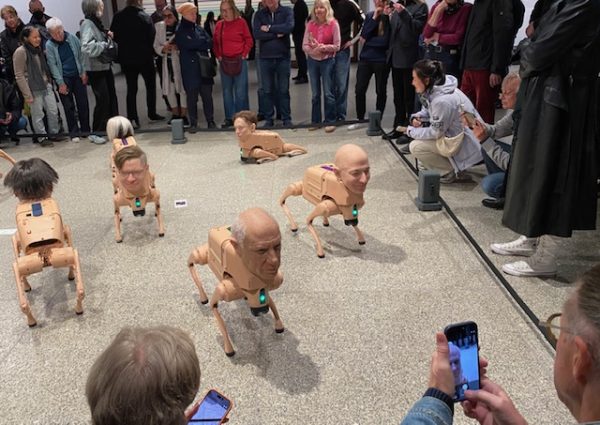
The “Neue Nationalgalerie” in Berlin hosts in 2026-5 the work by “Beeple” artist Mike Winkelmann together with the “Andy Warhol Robot K-456” by Nam June Paik. The re-interpretations of robots and the imagined effects this new media has or shall have on our lives, this is the subject of a critical projection and the artist’s chosen form for a projection into the future.
In 1994 the “Andy Warhol Robot K-456” prefigures the pervasive decoration of the human body with screens as a futuristic way of communication with others. The communication practices in 2026 have changed with software and applications like DeepL, which allow real time translations of speech to our neighbors or distant cultures.
The installation “Regular Animals” brings to our attention the power of images in our daily communication. Warhol built his art around the topic of pop culture with the visual heroes of, for example, Elvis Presley and Marilyn Monroe as the best known pop images or icons of his time. In Beeple’s work, the dog robots’ conversation is only via instant images. These images are AI-edited and distributed rapidly at random across space, the floor in a well-delimited space. Space does no longer matter as distance as it is passed instantly. Perception and reception are transformed into a power-play via images and distribution channels. We are all transformed into “Beeple Deeple People” without noticing it, aren’t we?. About time that social science or sociology of the visual recons with these not so new facts of communication in the 2020s.