Mem-flation

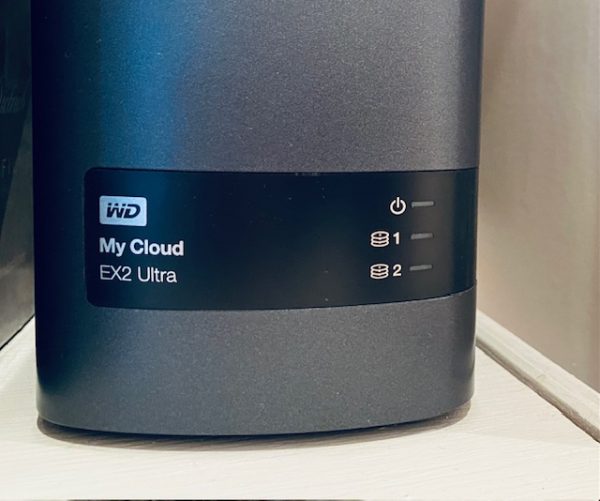
A recent addition to the repertoire of inflationary pressures is inflation due to real or supposed shortages of computer memory and microchips. Contrary to other forms of inflation which are induced by supply shortages (like fossil fuels) mem-flation is due to heavy actual and even more proposed investments in data centers, server farms, cloud storage and AI-driven computing capacities. Quantities and quality of microprocessors, which are essential parts in all these devices, might not be able to follow this demand-driven inflationary tendency. The hype around AI, therefore, is a major element in this likely overshooting market reaction. The current market trend is likely to last for another year as the already announced investments of the big data companies have been announced including 2027. The producers of NVIDIA, Samsung, TSMC, SK Hynix, Micron, ST Microelectronics, Infineon, Intel and AMD have realized huge profits from this demand-driven mem-flation.
Diamonds are forever

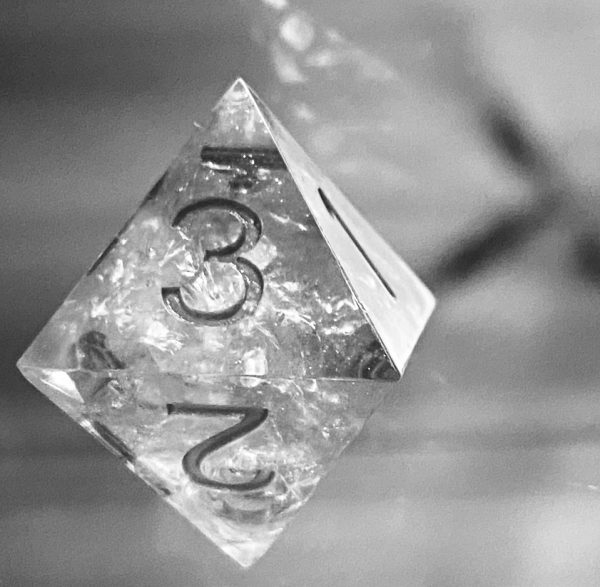
Due to the highly condensed carbon structure of diamonds, the use of diamonds has gone beyond the decorative stage. The difference between naturally grown or developed diamonds and the lab-produced diamonds has puzzled the market of the precious miniature materials. The paper by Zhang et al. 2026 has demonstrated that at the tiny size of a nano-structure the typically found hard structure of a diamond brakes down. The size-dependent softening of the diamond at the nano-size is a puzzle, but has been resolved with the explanation that on the surface the atoms remain rather stiff, only the inner structure of the cristalline core does “wobble”. Hence, diamonds are still almost forever, unless you crush them with far too much weight or power.

Forgotten but Unforgettable

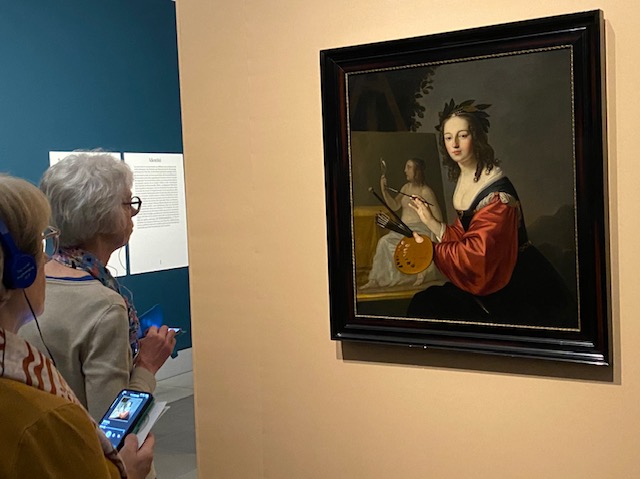
Many women painters and artists who worked during the 17th and first half of the 18th century have been forgotten until recently. The galleries of the time and many years later gave little attention to the women artists of that time. Most of them were relegated to be of minor importance in the course of art history. The exhibition of the Museum of the Fine Arts Ghent in Belgium has accomplished to rectify this place of women painters in art history. The fine pieces of art, ranging from painting to sculptures, were frequently signed by men, probably to achieve higher market values and become visible in the public sphere at all at their time.
The exhibition is a kind of a revelation of how difficult it was for women to move from an “object of art” to be the subject painting including painting themselves. This also dealt with the view or regard of others towards women. Additionally, the exhibition features a section on “Social Expectations”, which deals with the expectations of the Flemish and Dutch societies towards women. Family values, marriage, wealth and social status were of utmost importance.
These women painters were forgotten far too long, but have staged their comeback as “Unforgettable” in the 21st century.
(Image: “Pictura at an exhibition” taken in the MSK Ghent 2026-4)

AI data Input

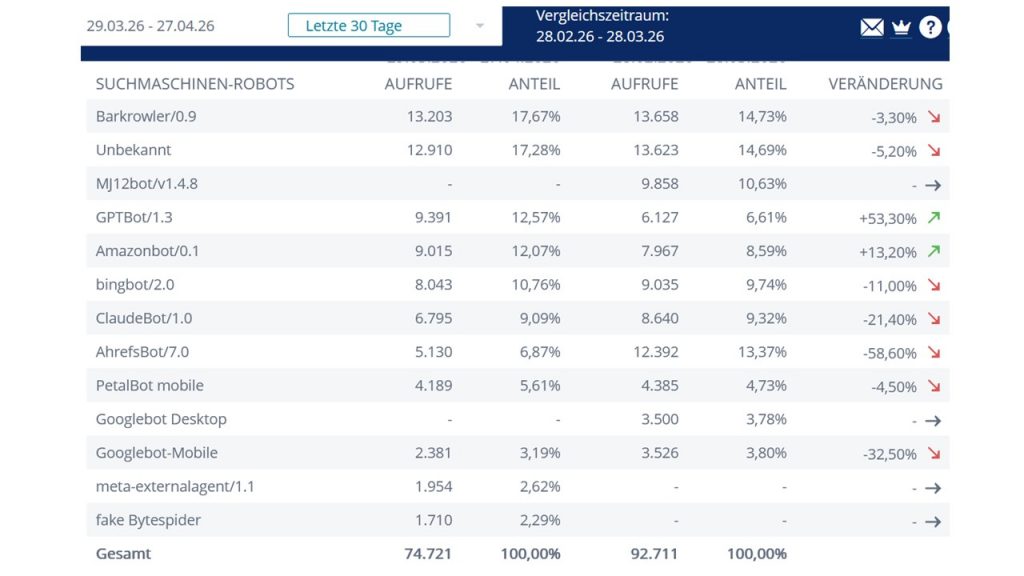
If you ever wondered where the information from AI and AI chatbots comes from, you will not be surprised that this webpage schoemann.org is regularly solicited for such purposes. The number of crawlers, that do so, is quite large. The ability to trace what exactly they are harvesting on your website, is quite a tricky issue. At least a basic awareness of how the internet has been transformed in the last few years becomes evident through the comparison of unique visits, many through search engines like Google search or others, with the amount of contacts by AI-associated crawlers (see slide from own webpage below).
During he last month up to 2026-4-27 there were about 75.000 contacts, compared to 93.000 during the previous month.
At first sight, AI chatbots have largely outnumbered the “personal visits” of my webpage (see evaluate web analytics). On the other hand, I have no information of how many visits are, (at least potentially) re-directed hints from AI chatbots to my content.
In terms of “traffic” for a webpage, the information of how the AI-driven or AI-assisted search operates with other persons’ contributions will be the challenge of the coming years. If AI chatbots had to pay 10 cents per visit, I would have a comfortable pay every month from this content use. The issue of AI paying for access to reliable and high quality content has to be dealt with sooner rather than later. You may prompt a chatbot on this issue.
Meanwhile: My New Book on AI is out Now 2026-4-28:
“AI and Social Science: Potentials versus Limitations” by Dr. Klaus Schoemann, online reading and free download (here) before implementation of Paywall later on.

Evaluate Web analytics

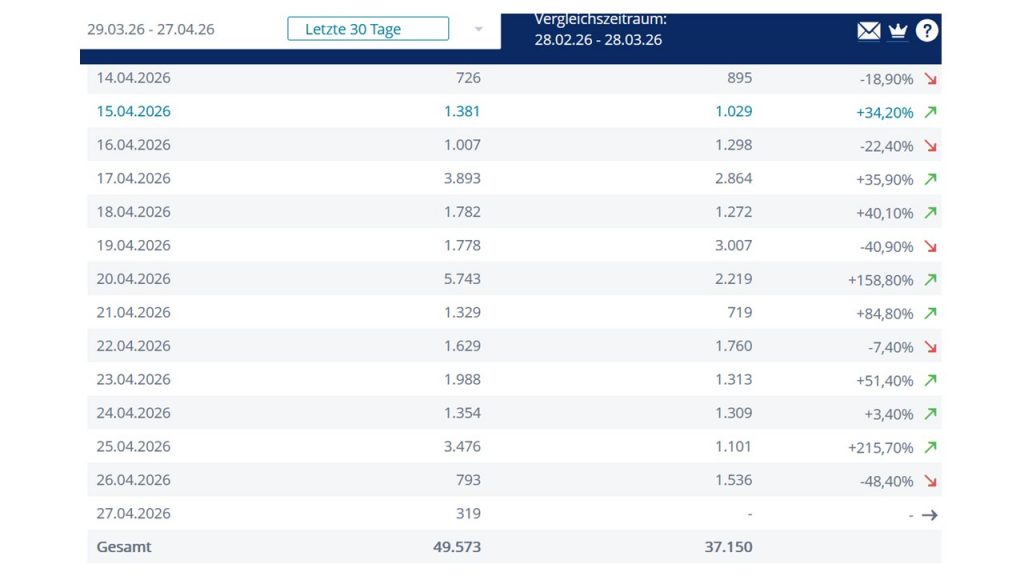
An own webpage “schoemann.org” allows to gain interesting insights into the skills needed for the internet era and the security as well as cost structures for running such a business endeavour. Taking stock of basic web analytics, therefore, should be on the agenda from time to time. Towards the end of April 2026, it is about time to look into some simple statistics again. The host of this webpage offers access to some anonymous statistics (see below). The number of daily or weekly visits of the webpage are suitable to get a basic idea about frequencies of visits. Average daily visits are still below 1000 daily visits, but there are peaks of 3000+ and even 5000+.
Whereas the distribution across weekdays (no peaks on weekends, correlation with bad weather not tested yet ;-)) is rather random compared over months. However, the topics which received most attention are do not seem to be random. In 2026-4 the most attention has been raised with “Abduction of Europa”, followed by a brief entry on “Confessions” a philosophical topic in a broad sense (Stats below 2026-4-27. Next in popularity are 2 entries of my scientific “fail collection” which reflect on take-home-messages from the “Flop exhibition”, quite topical in combination with the 40th commemoration of the Chernobyl nuclear reactor explosion and pervasive contamination across Eastern Europe.
(Image: Page visits between 2026-3-29 to 2026-4-27 compared to month before same year)

Individualism and beyond

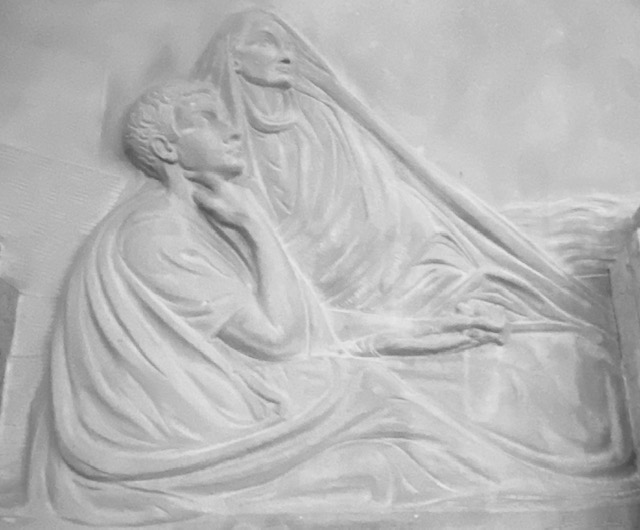
For many social and political scientists it is interesting to look into the origins of our present day individualism. In a permanent drive to learn more about ourselves, millions of persons on social media try to visualize primarily themselves in different roles and life situations. Saint Augustine was the first philosopher who exposed his own personality and past choices of pleasures on earth in a journal like fashion named “Confessions”. Isn’t this what every person is somehow doing on facebook, tiktok or instagram? Thousands of entries deal with persons succumbing to earthly pleasures. Saint Augustine writes about his own very personal experiences and this invention of “the individual path” to philosophical, spiritual, religious ideas and convictions makes him a milestone in the history of ideas.
Maybe the original version of the text is further advanced than the Christian AI chatbot that has recently been released, because Saint Augustine proposes in the last paragraph of the Confessions 3 questions and finally 2 sentences to close his journey into his philosophical and religious mind.
(Image: Saint Augustin & Saint Monique, by Jean Boedts on Confessions Book 9, Ch. 10 on his mother dying, Church Saint Augustin, Brussels Altitude 100)

AI Motion Sculpture

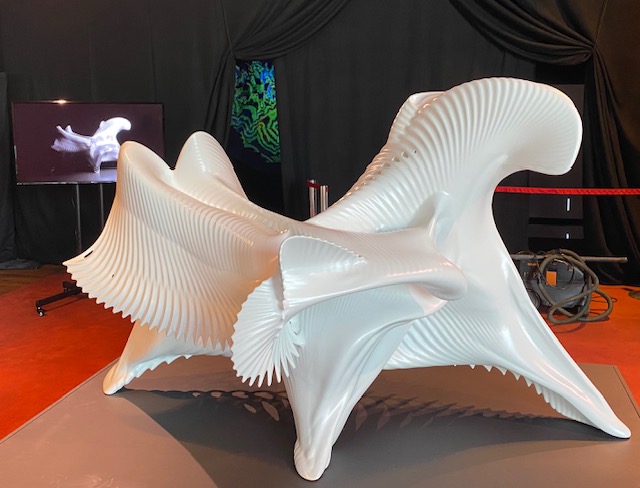
At the Festival Noûs in Paris, the collaboration of AI with artists was a major event. Based on the huge collections of the BNF in form of data bases it is possible to join the 3 worlds of library conservation, technological innovation like AI and the imagery of artists. In the preparation of the exhibits and the parallel documentation of the genesis of the exhibits of the artists, the creative potential and process becomes more evident and understandable to broader audiences. The exhibit by Tobias Gremmler, Anatomy of Motion (2026 see below), captures the motion of a dancing body in a sculpture based on a 3D printing of a series of images blended into each other. with a fast photography camera, known from sports images previously, the dynamics of a motion become a tangible sculpture. The intriguing new form is in fact a motion that has been captured or has cristalized or materialized in a permanent fashion. New technologies and materials enter into art as they offer new ways of expression as well. The collection of art and documentation centers shall enter into new phases as well. (Image: Tobias Gremmler, Anatomy of Motion (2026) at BNF 2026-4).

Fact and Fiction on Maps

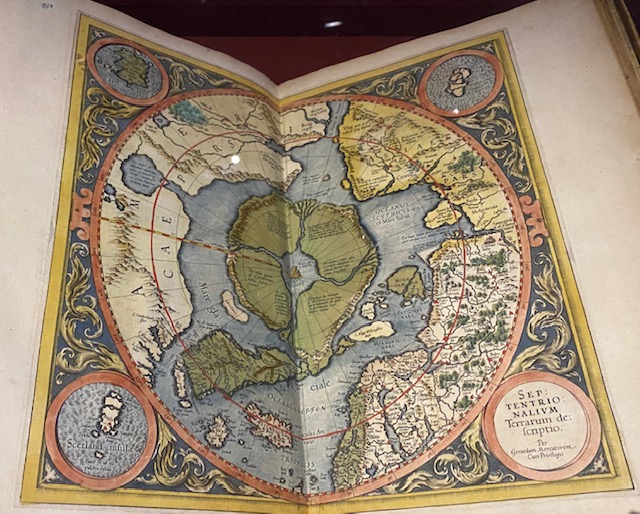
As a matter of fact, for centuries maps have played in both registers, fact and faction. In geography we expect maps to represent geographical facts, and yet based on a historical perspective on the subject, we realize that early cartographers had to brush over, at their time unknown, territories. What did many of them do? They imagined what could be the case.
In the early days of “creating a map” the artists had to rely on some sort of fiction or were intentionally creating a fictive image of the unknown world. Out of this “science and fiction” approach, a whole discipline of literature has evolved, science-fiction. The imagery of Manga-mania in the 2020s owes a lot to this drawing and mapping of fiction in form of stories.
Maps tell lots of stories. They are powerful in their neurological function, similar to mind maps that are a tool to structure our thoughts or story lines. The gesture to point at an area on a map of the Arctic, Greenland for example, can send shivers across the globe. Maps make stories and stories may lead (eventually) to shifts of attribution on maps. In the same vein: the mapping of power also reflects the power of maps, be they based on facts or fiction.
(Image: Exhibition: Cartes imaginaires, BNF Paris 2026-4-8, Gerardus Mercator, Map of North Pole 1595)

Time dependent failure

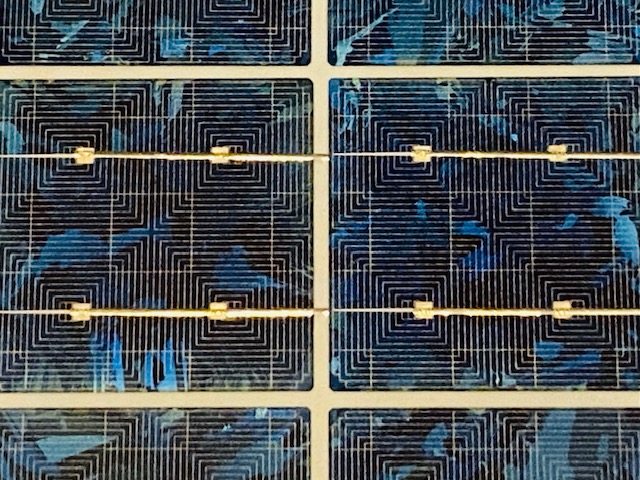
The collection of failures has an ambiguous relationship with time. Some innovations that are celebrated at a specific point in time shall be considered failures at some later point in time. The Musée des Arts et Metiers has an early version of a solar panel on display dating back to 1996 (see image below, Photowatt 1996). This example reflects the cycles of public as well as expert opinions about technical innovations that either are en vogue or at disgrace. Ecological, design and economic considerations enter into the consideration of what constitutes a failure. Claims of European energy sovereignty may additionally enter into the failure equation. The time horizon over which energy savings are generated is yet another element in the judgement. The more general perspective should take sustainability and depreciation of quality of an object into consideration. The Flops exhibition just scratches a bit on the surface of an important and rather complex issue of the relationship of society, technology and innovation.  Surely, there is more to come in terms of flops and failures, and this is okay in most cases. 

AI and Social sycophancy

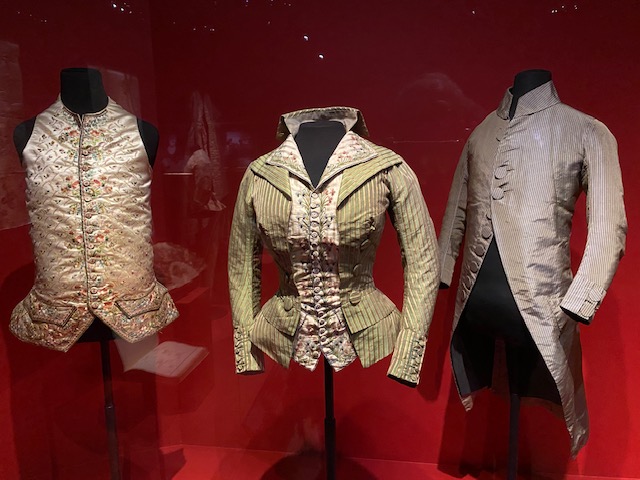
The study by Myra Chen et al. (2026) on the practical use of various AI tools demonstrates the risks of social sycophancy of these models. Maybe a large part of the initial success of AI models exactly due to sycophancy i. e. the people-pleasing, flattering and affirmative bias of these models. If users of AI just receive predominantly confirmations and reassurance of their intended behavior, they shall be less inclined to accept more outright criticism in normal interactions with real people. The more you receive flattering responses by some people, the more likely they have used AI in preparing themselves for a response. The rigorous psychological tests applied in the paper can in fact explain a large part of why we are likely to become addicted to the always flattering responses from the current versions of AI. Only the scientists will consciously seek for disapproval of their beliefs and keep challenging the AI-provided returns. Even using different AI models did not change the affirmation bias. Maybe programming a “grumpy old professor AI” as an alternative could do the trick. I shall have to think seriously about this as the alternative to current models. The critical AI is most likely not a viable business opportunity, but it might survive many other sycophantic AI unicorns. (Image: waist coat 18th century, Paris exhibit Musée de la mode 2026).