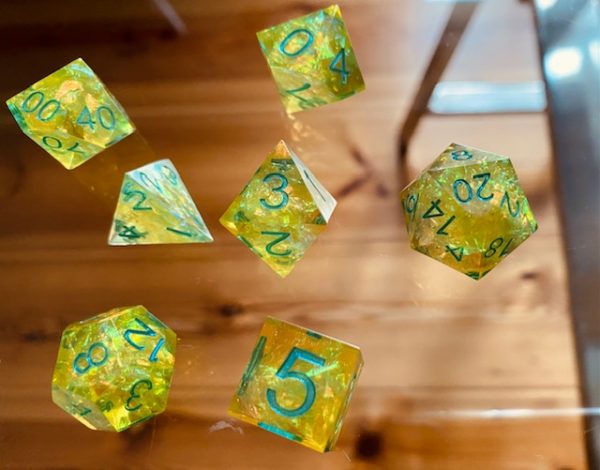

In textbooks or courses of statistics, just as ordinary experiences with throwing a dice, we assume the perfect dice. This means the dice is assumed to have equal probabilities to roll on each side. Further, each throw of the dice of a sequence has an independent equal chance for each number to come up. To determine a “fair” dice we would throw the dice a thousand times to check, whether the probability of each side is about equal. However, the world of dices is not perfect and temporary or persistent margins of deviation are part of the real world. The weekly lotteries demonstrate this over and over again. Playing around with different shapes of dices makes the issue of probability tangible. Well worth to explore further empirically as well as a topic for inspiration of new approaches to learning about statistics. (Image: Dices produced by “devinsdice” Berlin 2026-5-5)