Master AI

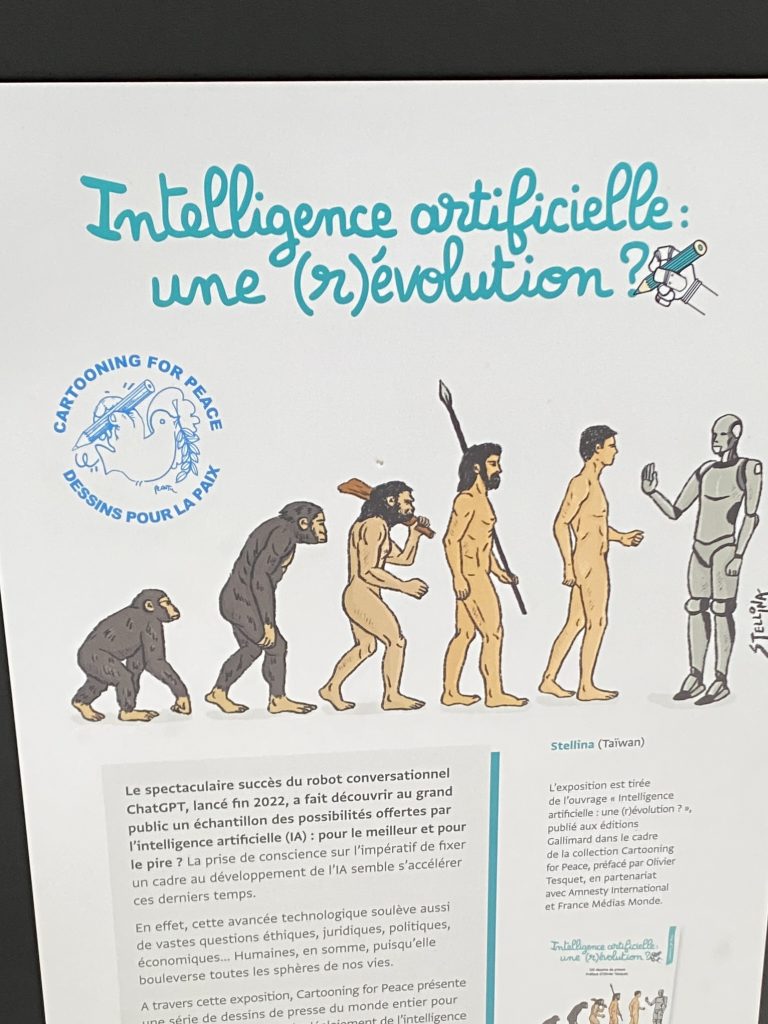
In 2025 the exhibition “Cartooning for Peace” at the BNF in Paris had already an exhibit authored by Stellina Chen from Taiwan, which summarized the evolution and projected the consequences of an all encompassing AI revolution (Image below taken at exhibition 2025 BNF). Currently we exercise ourselves in using various forms of AI or learn how to program them ourselves. It is our aim to master the new technology so it becomes a helpful tool. However, there are already many instances where it is no longer us mastering AI, but the AI has turned around the table and has started to master us. The applications of AI have entered our work tasks, tries and frequently succeeds in improvements of our routines and processes.
In private life a similar revolution is happening, when AI offers advice, which is hard not to follow and very convincing most of the time. Since getting involved in a conversion with AI tests your logic and debating competences, we find ourselves more and more in situations where AI is telling us what to do in the best of a convincing manner. After centuries of humanity to find freedom from oppression and the freedom to what we want ourselves, we seem to be ready to hand over control to AI. We are just like toddlers in this respect, willing or obliged to follow our master.
Antichambrer

In political circles it has been a common practice to “antichambrer”. It traditionally meant that topics are discussed in smaller circles before they are presented to the ruling royals or aristocrats. In modern democracies this role of more or less open “antichambre” (lobbying) is probably best translated as a form of consulting, which builds on personal contacts and small group discussions.
Scientists play a specific role in this political endeavor as they have to offer theories, hypotheses and evidence to support lines of argumentation to convince decision makers. Spin doctors, who know how to turn (around) an argument are, of course, present as well. All this represents the political, religious and business arena. All this happens in splendid locations that are part of the game of convincing, just as much as diplomacy.
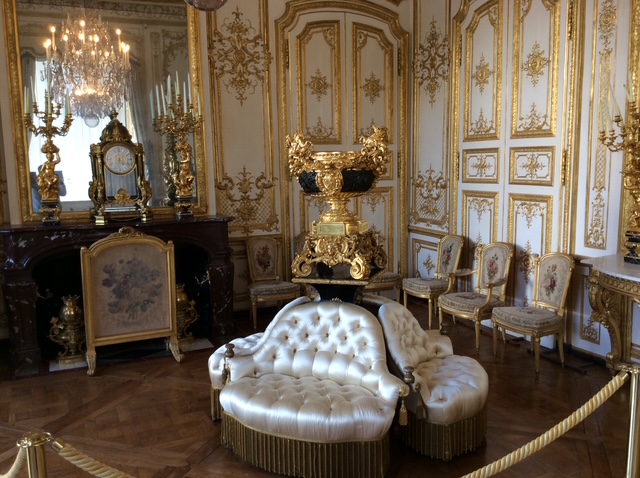
The theater play “L’antichambre” by Jean-Claude Brisville, (produced by Alpha Théâtre in Paris 2026) sets the play in a historical 18th century scenario to unfold the intricacies of “antichambrer”, less in the political arena, but in view of the personal turbulence in may engender. (Image: Château Chantilly Antichambre)

Public or Publics

With the advent of the internet and even more so with the (not so) social media, we can observe that the public political arena has been differentiated into several distinct publics. This constitutes a working hypothesis in order to check whether there are necessary as well as sufficient evidence that there is a lack of exchange of opinions between the various publics. Technology is an intervening process which basically might be able to advance or hinder exchange between groups of society. Following the much debated theory of communicative action of Jürgen Habermas the existence of one public is a precondition of the theory. Empirical tests are needed more than ever.  

Myths debunked

There has been careful research on the use, or not, of color in classical Greek sculpture. More than 40 years of research have documented that what was long believed as monochrome sculptures, have in fact been very colorful specimen. The collection and researchers linked to the “Liebieghaus Sculpture Collection” can be inspected with experimental versions of the colors of the classical Greek time. “Gods in Color”, an exhibition by the Liebieghaus, provides a view of the rich colors of classic statues like the “archer” using the chemicals of the time to produce more or less durable or resistant colors. See also the archaic Greek Sphinks at The Met Museum.
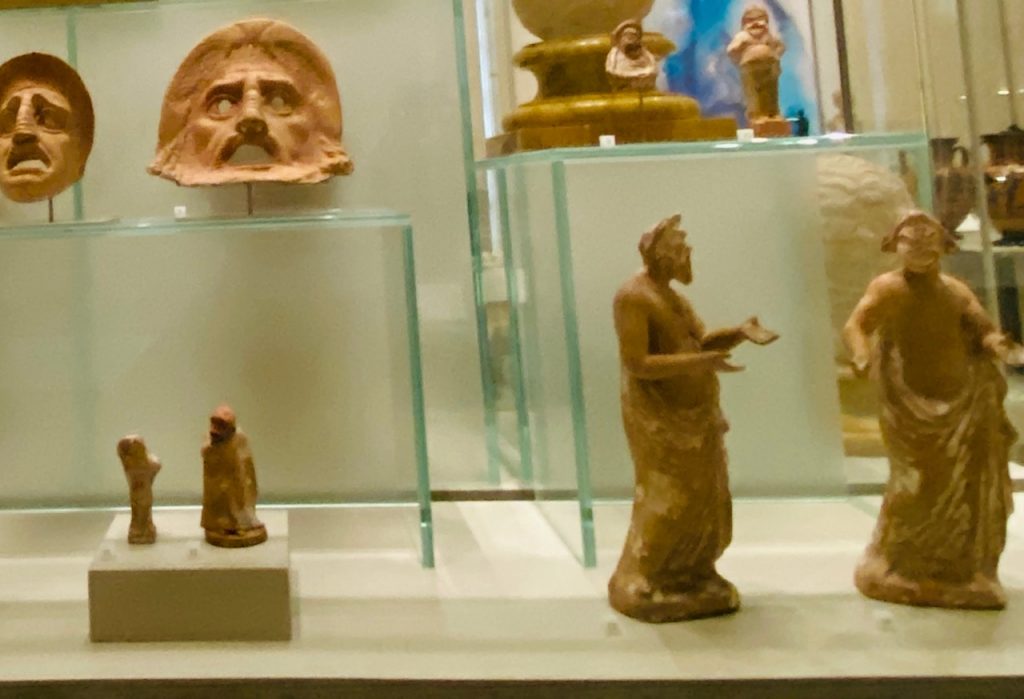
Brinkmann and Koch-Brinkmann have spent close to 50 years on this research and attempts to convince the public of the “monochrome myth” of Greek sculptures. Research alone did not convince people, they seemed to need to see the colorful versions eye to eye to believe. The broader social science interest is to realise how much time it can take to re-establish scientific facts once they have been “eradicated” previously. (Image: Statuettes of classic Greek actors, lower row, BNF Paris)  

Democracy in Nepal

Nepal has witnessed a peaceful revolution in which the young generation of Nepalis has “out-smarted” the previous rulers of Nepal. With close to a 2/3 majority of seats in parliament (Nepali Times), the RSP as the party of a somehow charismatic musician and performer has a 5 year mandate to tackle the many challenges to bring real change for Nepali people. The hopes are running high that corruption will be contained and enough jobs inside Nepal can be created for the young. The positive sign, that many Nepalis migrant workers who had left the country now return to Nepal, encourages further support by international donors and investors.
Running a democratic election in a country that comprises the Himalayan mountainous region is confronted with a particular challenge to make every vote count as communication with remote areas takes additional time and effort. Campaigning through social media can be more effective only if even remote areas have reliable access to the internet. Inter-generational assistance is often a precondition of timely access to information. The Himalayan region experiences already the effects of global warming as melting of glaciers. It is the youngest generation that will have to confront the consequences. Time to take government in their own hands, and beyond a one man show. (Image: ESA Himalayan Mountains, ESA Standard Licence) 

Bob the AI-enhanced builder

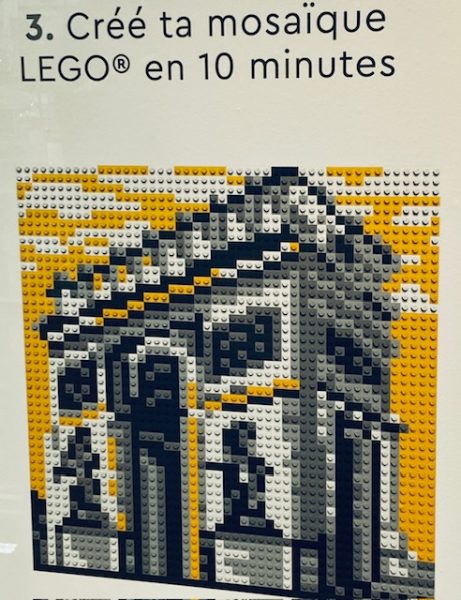
Most kids today and GenZ youth have come across the TV-series “Bob the builder”. Baby boomer parents have been worried about the work ethos which might be the hidden agenda of the videos. In 2026 we can now draft a new episode called “Bob the AI-builder”. Many episodes could be re-written when Bob and his team have access and get training with AI toolboxes. The study published by ActivTrak (2026-3-11) reports that companies make on average use of 7+ different AI-tools, up from 2 in 2023. This constitutes a hint that complexity at work is increasing as each tool has to be managed and the boundaries of its use need to be respected. As most search engines offer an AI-short cut to search it is not surprising that now 80% of the workforce use some form of AI in 2026. The productivity increases in quantitative terms as more output can be achieved in the same time or slightly shorter work days. However, workload is moved even more to weekends now.
The upcoming challenge through AI-tools is the reduced “the AI users’ focus time”, which suffered 9% compared to non-users. For Bob the AI-enhanced builder this means “AI is being used as an additional productivity layer, not a substitute for existing work”. The overall workload is not reduced by AI. The intensity of work increased between 2023-2025.
There is still a puzzle in the data. Multitasking (+12%) and collaboration (+34%) both increased, but the duration of an average focused session and focus efficiency dropped. The challenges for employees increase. Handling simultaneous processes and keeping an open mind to collaboration are key competences for Bob the AI-enhanced builder.
(Image: LEGO-shop in Paris 2026-2)

Retrieval-augmented AI

As a scientist it is in our DNA to cite other scholar’s work with precision. As a university professor your job is to check the quality of citations, kinds of citations and accuracy as a regular part of your job, also as supervisor of junior scientists. In 2026, the use of up-to-date AI (Asai et al. 2026, OpenScholar AI) allows not only to summarise large bodies of scientific literature, but also to cite references and even quotes from the paper(s). Literature reviews used to take months to compile. AI can speed up the process enormously. The citations can be ordered following an own logic or an AI-suggested logic.
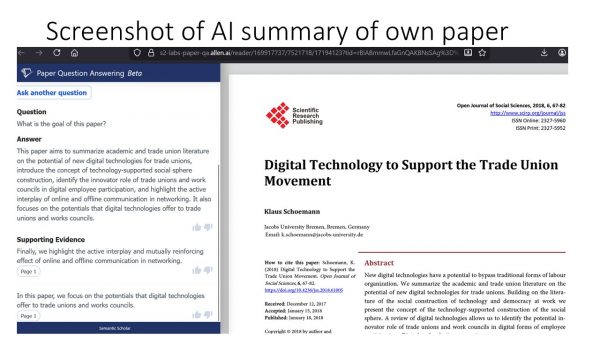
It has become much harder to evaluate the degree of innovation of a candidate for a scientific degree. Tools like retrieval-augmented Language Models enhance the scientific potential of generative AI since they extract more or less short citations directly from the original source just next to the original based on a simple query of author and approximate subject (see screenshot below of own previous publication).
The good news is: (1) referral to previous research and citations should become faster with improved tools for verification. (2) You will find papers written by yourself that you no longer have in your own archive.
The bad news is: (1)self-citations of researchers might become more feasible, although this problem is conditional on a researcher’s seniority. (2) so far, Language models prioritise specific languages (although not necessarily) and differentiate names with “foreign” characters e.g. “ö,ä,é” and do not double check “close neighbours” of them like “o, oe, a, ae, ue, e, ê, è” leading to a “character based normalisation bias“.
It is, of course, rather easy to point out deficiencies of the search, sorting and inclusion algorithm if you know already about the complete picture of a data set. 

Trust or not to trust

… that is the question. The social science research on trust, distrust or corruption is expanding rapidly. As in some other fields of research the increase in research itself becomes an issue of trust in science as the uncontrolled use of AI has produced an inflation of pseudo-scientific papers as well (Link). However, the finding by Spadaro et al. (2020) that interpersonal trust (trusting beliefs and behavior) is influenced by a general feeling of security as well as trust in institutions is supported by experimental and interview-based research.
There are still many challenges to the research in this field. The “feeling of security” has an overall component, but also several subcategories like the objective or subjective feeling of job security, which is dependent on national and collective systems of employment protection legislation. Economic security or security of a sufficient retirement income might be at times considered more important than (in-)security in cities or the countryside. Differences of the mechanisms by gender and age have to be studied in detail as well, which necessitates large data collections on the issues. Churches that used to be considered as trustworthy institutions or the police forces have been accused of abuses of the high trust placed in them in the last few years. These 2 examples demonstrate that trust itself is a dynamic issue with ups and downs over time, rarely constant over time. Game theoretical considerations add further to the view that trust might be used as a strategy just like economic power. (Image: Cathedrale de Meaux) 

1000+ entries

From time to time it is useful to review whether a project is still on track or has developed biases, which may run for some time without reviews. Just like the United Nations Strategic Development Goals (SDGs) have been set 1bout 10 years ago, I do scan my own publishing project whether I still cover the SDGs in a larger spread. The goals need monitoring and I shall redo my own review as well.
As the number of blog entries on a daily basis has reached 1000+ entries, a review becomes a bit of a statistical exercise. As a kind of anniversary reward, a publication of more collections beyond the AI-reader or the Paris Olympics 2024 reader should be fun. However, there is so much work with checking and updating links, that the e-book, pdf and epub publications have become a time-consuming effort.
The search function implemented on this digital publication format is so fast and powerful that I am myself delighted again and again about the digging up of previous entries, concepts and evidence retained.
Time is a treasure and a value in its own right. Test it!

Visitor retention

For media, platforms, stores, webpages as well as blogs one of the more interesting measures about popularity or spread consists in visitor retention. It is a bit like counting the pages of a book you have read, which you have at home, or have you read them all? The zapping across radio or television channels is also an indicator or unsuccessful retention of viewers. Webpages, online stores or the blog entries here are all more or less directly trying to increase the retention of visitors on the same page. Maybe this can be considered as one of the first steps into a (not-so) social media addiction. The IT-sector offers tools for this.
On this webpage “schoemann.org” we make use of “linkz.ai” a ready-made plug-in that provides overviews on the links entered on this webpage, mainly to avoid that visitors have many additional tabs opened in their browser, do not jump off to follow up the links, but rather stay on the same webpage and “scroll on”. At the same time this means referrals from other webpages, which use the same techniques, will be less frequent.
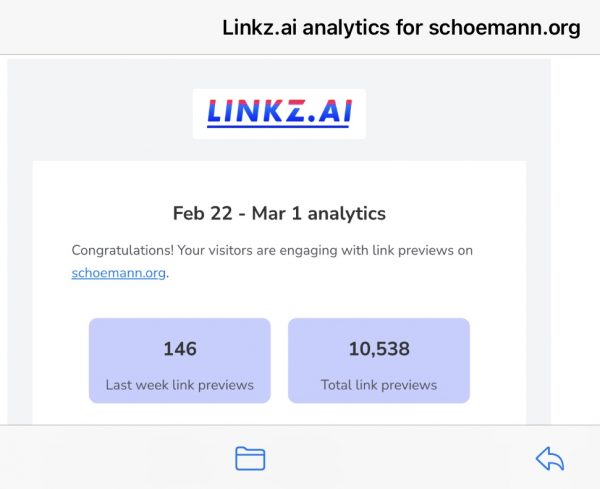
The visitor retention tool used on this webpage is besides the original content 😉 “linkz.ai”. This tool scans other blog entries and links, and proposes the image on the previewed link at the top of the blog preview, for example. Basic weekly frequencies on previews are provided, which might guide a strategy to increase visitor retention, if that is one of your objectives.
The current discussion of addictive potential of social media platforms could be measured through such tools as well and has probably been used already for years with even more sophistication and direct feedback loops into the algorithms.
(Image: basic own statistics Linkz.ai use 2026-2-28) 

Screenshot