National interest

Especially in times of international conflicts, it is customary that politicians refer to “the national interest” as a justification for their actions beyond the state borders, commonly named foreign policy. There is a huge literature on the subject, in which the concept of the national interest is useful, (1) because it suggests some higher ranking political goal, (2) because it clarifies and prioritizes a country’s goals, particularly at times of military interventions and (3) because it “arouses the support necessary to move towards a realization of the goals” (Rosenau 1968, Int. Encycl. p.34).
A critical assessment of this concept in international relations should start with the democratic perspective that a country’s government is subject to regular elections, whereby the goals a previous majority had put forward, might substantially change as a new majority takes the lead. Continuation of the same foreign policies is not excluded, but at least subject to revision. In authoritarian regimes the definition of the national interest is probably more stable, because authoritarian leadership does not hesitate to define the national interest in “splendid isolation” from its people.
Overall, the concept appears to serve mainly communication purposes, both internally as well as towards the outside as in communicable foreign policy goals. Conflicts between countries can thus be named and become subject to diplomacy and international treaties. But we have to fill this with substance over and over again as new topics arise like climate change and global warming.
External-Internal Threat

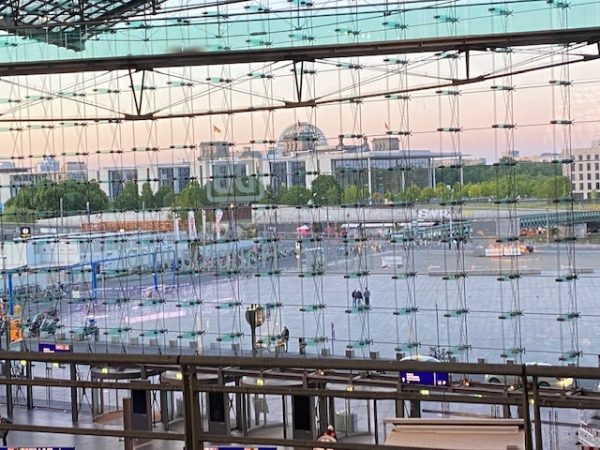
In a time perspective of at least since the German unification of 1990, we have to reconsider the perception of what constitutes an external versus an internal threat. Prior to the implosion of the Soviet Union and the Glasnost years, the external Russian threat has been transformed across the globe into more hybrid threats coming from internal forces which have been “instrumentalized” by external forces. In an essay by Valentine Faure (Le Monde 2026-2-21) this twist to internal politics has been described as a form of new forms of interference of external forces into European internal political, economic and social affairs. In fact the basic strategy is as old as the famous Trojan horse, but the strategy has been refined and to work over much longer time spans as well as in other scientific applications. Any form of powerful, interested party would rather use the soft power of persuasion than brutal force to reach political objectives. Corruption and buying votes, directly or indirectly, has become a legitimate way in this hybrid or open use of power from the inside of a society than through a more traditional external affairs strategy. The confrontation of the bipolar world made it easy to put emphasis on external military power. A multilateral as well as more multilayered international political arena precludes to some extent the bipolar confrontation as conflicts on several frontiers  increases risks exponentially. In search of other strategies it seems plausible to turn to hybrid as well as disguised external force. Europe and democratic systems in general are more vulnerable than autocratic states, because the belief in an open form of society is part of its DNA. Open societies shall have to sharpen their sensory systems to transformed external to internal threats.

Collaborative Leadership

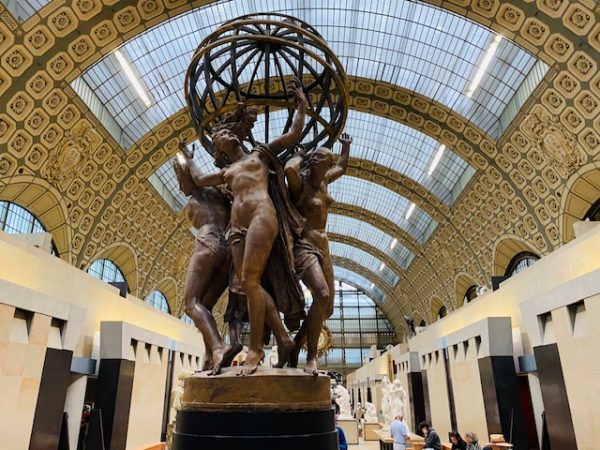
There are many reasons to praise collaborative leadership. Work climate, learning climate and innovation in teams and organizations benefit a lot. Absenteeism from the workplace is a proven and close correlate of hierarchical leadership styles. The theory and empirical evidence is rather clear in this respect, however the effective practice of collaboration among a leadership team is hard to sustain. Not only the ways to reach leadership positions is mostly rewarding tough elbows on the way to the top, the multiple rounds in the competition for top positions tend to train the toughest strategic  behavior. A return to more cooperation and collaboration appears to be a real challenge for persons that eventually arrive in top management positions in politics or business. Administrative science or organization science deserves much more attention especially if we are moving into the age of multilateral international institutions and multinational corporations and organizations. (Image: Les quatre parties du monde soutenant la sphère céleste, 1872, Musée d‘Orsay Paris).

Time in Leadership

We identified already the importance of monitoring in democracies. The same theoretical considerations hold for an analysis of leadership irrespective of the organizational context, be it a government, governmental organization, non-governmental organization, association or private enterprise. In democracies, it is in most cases a constitutional rule that leadership positions are limited in time and it is “best practice” to have clear rules about renewable terms of office as well.
In private enterprises this seems to be of lesser importance, but the issue deserves more close scrutiny, not only by shareholders in case of a shared ownership or stocks. A particular person in the leadership position might be a good match for a company at times of growth or scaling of a start-up, but the same leadership is less likely to be an equally good match for the period of eventual stagnation or shrinkage.
Therefore, as an alternative hypothesis it might be wise to adopt leadership rules similar to filling leadership positions with politicians. Fixed-term and 1 renewal could be worth testing at the leadership level (like in presidential republics, USA or France), even if this does not preclude close monitoring of leadership processes. As a starting point for empirical research, Vogel, Raes, Bruch (2022) offer a toolkit to assess organizational energy and leadership trajectories. Learning from democracies as well as democratic procedures might be a worthwhile leadership model to follow. (Image: ceiling painting in chateau  Vaux le Vicomte)

Regulation and bureaucracy

Economists will celebrate 55 years of the theory of regulation pioneered by George Stigler, which was published in 1971 in 2026. The basic question asked at the time and today is: why do we have regulation? The pubic choice and political economy answer of Stigler (1971) and many scholars after him, is that the industry of a specific sector will acquire the regulation or the public interest in this regulation and, subsequently, the industry will design and operate it to its benefits. At least, this is in a nutshell my summary of the literature inspired by Sam Peltzman (2021, p.20). If we add to this the perspectives of theories of bureaucracy (Sharma, 2020), we become skeptic of an efficient implementation of regulations by governments or governmental agencies.
In the field of pharmaceutical applications, it is the “European Diabetes Forum” which calls for a regulation on reliable “glucose monitoring devices” with industry and user backing. Of course, this asks for bureaucratic control of the regulation, imports and markets of such devices later on. The one (regulation) is rarely coming without the other (bureaucracy). It is about time to acknowledge this for societies as a whole as well.

Democracy in democracy

The more we are confronted with illiberal turns of democracies, the more we need to watch out for democracy washing in democracies. What do we mean by this? The NGOs like Transparency International, for example, keep records of states and their tendency to use in-transparent means or corruption to pursue their political objectives. In addition to such criteria there a number of non-negotiable items in democracy, which justify to carry rightfully the label of being a democratic state. Separation of powers, independence of the judiciary, freedom of the press figure among the best known criteria. Some states or theorists of democracy would add a federal organization to this list. The control over the military forces and the freedom to object to subscriptions is particularly relevant at times of armed conflict. Equal rights for women and men and laid convictions as well as freedom of consciousness or religious beliefs have been and still are a challenge in some countries. Each of the broader topics have to be broken down into more specific issues and indicators to measure the evolution. Advances in some areas might be confronted with regress in other areas. Each of us may have their own list of priorities what makes a democracy a democracy. On many criteria the USA has lost a leading role. The evolution of democracy in the US-American democracy has become a substantial threat to other democracies. Such analyses of comparative democracy research should guide us in the way which alliances we want to choose in the new multipolar world.

Holocaust commemoration

The commemoration of the Shoa or the Holocaust is part of an international remembrance of atrocities against humanity. It needs to be present in countries beyond Germany, even if Germany under Hitler’s rule caries the sole responsibility for the ruthless execution of a plan and the murder of 4 million of its own people of Jewish decent and additional 2 million Jewish people of neighboring countries. In the speech by Tova Friedman, a Shoa survivor, she pointed to the perceived threat which children posed to the Nazi-regime as witnesses of mass murders. There she is. In front of the whole nation she testifies for what seems like a distant past, but for many this past is still not over. Responsibility of Germany does not stop after a certain number of years, maybe in judicial terms, but a moral obligation to act against denial of these atrocities is primordial. 20 years after the inauguration of the memorial of the holocaust in the center of Berlin and the exhibition center “topography of terror” (image below, 2026-1-27) we should start an initiative to make the International Day of the commemoration of the holocaust a national day, of commemoration, where all daily routines are paused in Germany to give people time to act and reflect on what can be done that such atrocities will never happen again.

Art Station

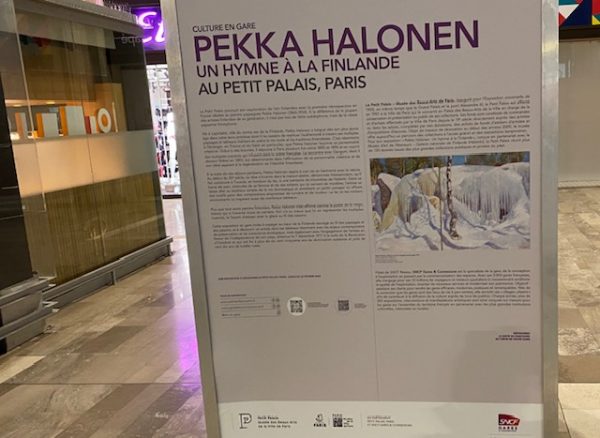
Mobility takes time. All people who travel frequently know the long waiting times at train stations. Be for commuting between places or long distance travel, we can hardly escape from the moments when time gets long and longer. The Paris train station Gare de l’Est has brought art in form of posters to the station as a kind of accessible micro-exhibition. The cooperation with the Petit Palais in Paris allows to give more people a taste or at least an appetizer to art work. Most people rush by, but some spend some minutes reading, inhaling exhaling, and continue to their destination or next date. In the battle for attention such initiatives like art in the station hold societies together. People with very different horizons cross each other for short moments in time.

Perestroika – Glasnost

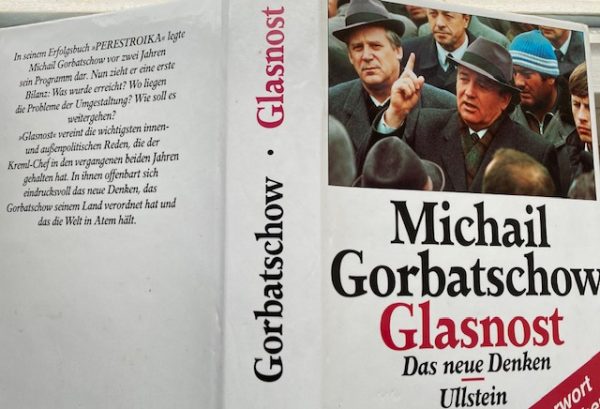
The extraordinary leadership of Michael Gorbatschow with his introduction and subsequent implementation of the principles of Perestroika and Glasnost has changed the lives of millions of people in Eastern Europe to the better. The independence of occupied countries became feasible. The aim to build a “socialist state based on law” (p. 86) and the belief in the power of the people without differentiation of what information is for all and what information is reserved to closed party circles and leadership were perceived as sweeping reforms. More than 25 years later there is little left over from these radical reforms. Putin and his narrow circles have locked in people and their freedom of expression again. The practice of Perestroika and Glasnost have been relegated to a distant dream again. (Image: book cover Gorbatschow).  


Good or bad

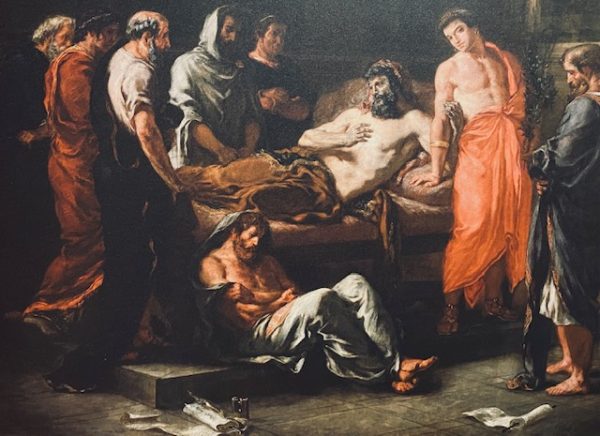
We have been taught by Shakespeare “to be or not to be, that is the question”. In political science we have pondered the question in a slightly augmented form. “to be good or bad, that is our question”. The basic image of women and men in society has been a subject throughout the history of ideas. For those who believe in the good nature of mankind, they tend to find reasons to believe that eventually mankind will find a way towards a peaceful cohabitation on our planet (there is no planet B yet for humans). On the other hand, each outbreak of violence and war are considered as a confirmation that mankind will always recur to some form of violence, even after extensive periods of peaceful cohabitation. According to the evidence presented by Meller, Michel, van Schaik, referring back to Kant, trade between people and nations is likely to prevent more violent relationships (p. 330). One of the major conclusions over the long term view of mankind is, that the periods of war have been far shorter and more rare than a focus on the last 3000 years seems to suggest. Maybe, “to be good or bad” is just a question of demographics of being too many at the same time in the same place.  Population growth and population density might be a powerful driver of “being good or bad”.  (Image: Delacroix, Last words of Marc Aurel)