Over the 20th century technology has pushed forward in many fields. As there were huge investments needed the public campaigns to support new technology without much further reflection of potential consequences have pulled many western societies into risky technologies. Except the Club of Rome there were very few to question the naïve beliefs that technological change will make societies rich and potentially even more equal. The recent report “Climate Inequality Report 2023: Unequal Contributions to Climate Change” has debunked both of these claims. More flying across the planet, particularly short city hopping, has allowed few persons to reap the benefits of the jet-set world, but contributed to climate change in excessive quantities. This is a fact when we compare major world regions among each other as well as within each country. It has to be the wealthy countries that have to shoulder the biggest share of the costs. It has to be the wealthy that pay higher contributions for their pollution. Society has to reign in technology more than ever before. Moreover, we still have to get the income and pollution distribution organised in a better way. It is not only an implementation challenge, but the major question of the 21st century to repair the damage largely caused throughout the 20th century. 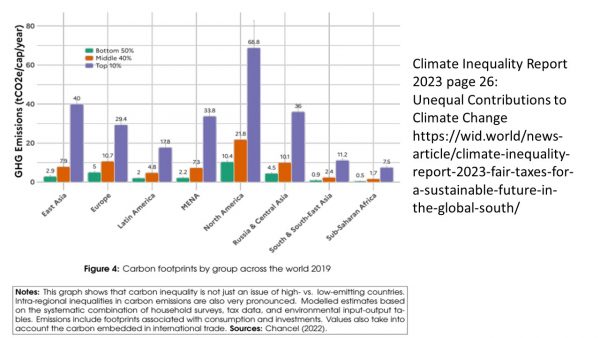
20th Century
The 20th century has told us many lessons. History does not repeat itself, but it appears that new variants of old themes keep coming back. Slowly passing the century like a movie in decades instead of episodes, we witness socio-emotional tides. The first decade, the 00s intensify the beginning of urban planning and social revolutions. The 10s show the arousal and subsequent extinction of masses of people in trenches. The 20s were described as the Carefree Twenties. In the 30s we observed the rising tides of fascist organisations followed shortly afterwards by the disastrous 40s. After the Shoah and the World War the 50s were fabulous viewed from the U.S. and Western Europe. The 60s propagated sex, drugs and rock n’ roll spreading across continents. The wild 70s became almost inescapable through the continued rise of mass media. The 80s were depicted as the colourful 80s as the 2 previous decades had set the scene for psychedelic colours. The 1990s have been coined as the gay 90s by some. Coming out as a gay person became easier and Western societies more sensitive and open to diversity. The back cover of the recent publication by Aurélien Bellanger “Le vingtième siècle” (The 20th century) speaks of the book as “roman polyphonique virtuose”. I look back on the 20th century as “polyphone” in many respects. It would be an illusion to believe we can only keep the nice sounding harmonies without the tensions or dissonances. 
Aphorismen L2
“Man soll öfters dasjenige untersuchen, was von den Menschen meist vergessen wird, wo sie nicht hinsehen und was so sehr als bekannt angenommen wird, dass es keiner Untersuchung mehr wert geachtet wird.“ (Lichtenberg S. 50). Eine eindrückliche Warnung sich nicht nur den großen Wellen und Wogen der Öffentlichkeit oder der Wissenschaften hinzugeben. Wo viele nicht hinschauen oder bewusst wegsehen, da gibt es meist einiges zu ergründen. Die Soziologie der kleinen Dinge, der Alltagsgegenstände bringt faszinierende Erkenntnisse hervor. Nehmen wir nur einmal die Bekleidung beim Kochen. Von der Kittelschürze zum gestylten Outfit für die Kochshow zum Gesellschafts-cooking“ haben sich Kleidungsstücke und Berufe in ihrer Funktionalität gewandelt. Dem Anlass entsprechend wird sich gekleidet. Kochen ist von den Hinterzimmern mancherorts ins Zentrum der Gesellschaft mutiert. Wertschätzung von Handwerk und delikate Zubereitung sollten Rekrutierung erleichtern. Bleibt nur noch die Arbeit drumherum. Einkaufen, Einräumen, Einweichen, Abtrocknen, Aufräumen. Die Arbeit geht uns nicht aus, sie verändert sich nur. Wertschätzung der kleinen Aktivitäten, desjenigen, „was von den Menschen meist vergessen wird, wo sie nicht hinsehen“ kann so aufschlussreich sein. Hinschauen und Verstehen lernen bleibt angesagt. Lichtenberg weiter: „Man frage sich selbst, ob man sich die kleinsten Sachen erklären kann; dieses ist das einzige Mittel, sich ein rechtes System zu formieren, seine Kräfte zu erforschen und seine Lektüre sich nützlich zu machen.“ Aphorismen können ein ganzes Forschungsprogramm auf den Punkt bringen und so die kleinsten Beiträge noch als nützlich erweisen. (Foto: Schreibatelier von George Sand in Nohant). 
Narrative economics
Narratives have been with us as long as mankind exists. They just take different forms and content nowadays. Whereby narratives have first spread orally, then much later through written words, images and movies, they are forceful ways of communicating. Robert Shiller wrote a good story about narratives related to the field of economics. Referring to the writing of the polymath David Hume (1742), main proponent with Adam Smith of the Scottish enlightenment, contagion like in pandemics is mentioned for the first time to explain that “the multitude will certainly be seized by the common affection and be governed by it in all their actions”. (Shiller 2019, p. 58). In order to understand narratives going viral Shiller mentions the importance for narratives to be embedded in “narrative constellations”. Holding truth against spreading false narratives might not be enough in itself. Strong, catching narratives seem to bypass or override even truthful information. Additionally, narratives never die, but rather offer opportunities for repetition. On content of economic narratives Shiller exemplifies stock market panic, consumerism, financial stability, automation and AI fears, speculation bubbles, evil business and labour unions. Topics like lazy unemployed persons, too early entry into retirement, too late entry into the labour market for youth, women or migrants, all have endured stigmatising narratives across time and/or across countries. With emotional and powerful economic narratives all around us, trust and authenticity become a very important meta-currency. The instantly printing camera now serves as proof. Beware of the scenery, actors and action chosen. Medieval painter Gabriel Metsu (1629-1667 Leiden-Amsterdam) had chosen the economic narrative of the “women baking pan cakes and the child as beggar”. Ending up in a museum instead of the White House is probably the opposite of going viral. The same Photo in black and white might have more of a trustworthy documentary character than the suggestive colours. 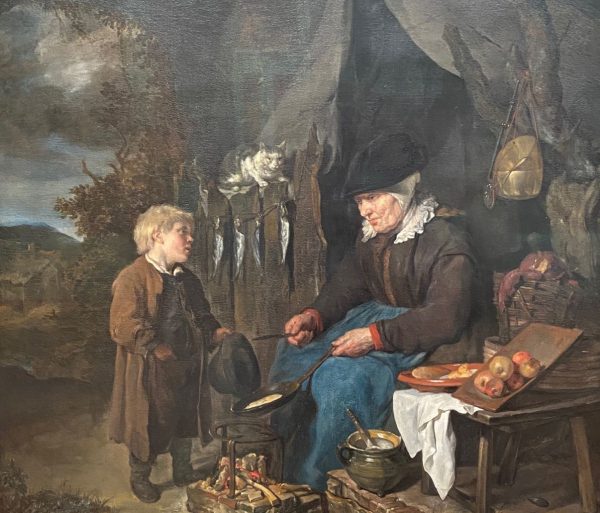
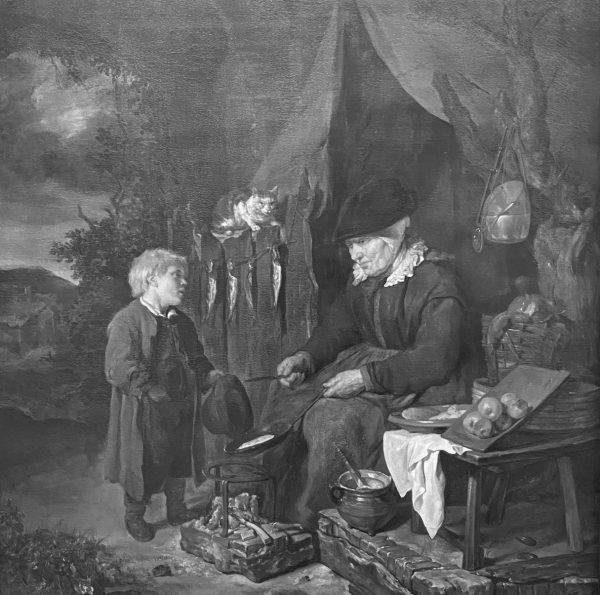
Economic Narratives
Joseph Stiglitz (2003) provided a detailed description and interpretation of the economic history of the 1990s in his book on the roaring nineties. As a member of the Clinton Administration serving as a Chairman of the Council of economic advisers, he had first hand access to the information, debates about interpretations and conclusions drawn during the period. In the preface (2003, p.XII) he provides some of the lessons this work has provided him. “Today, the challenge is to get the balance right, between the state and the market, between collective action at the local, national, and global levels, and between government and non-governmental action. As economic circumstances change, the balance has to be redrawn. Government needs to take on new activities, and shed old ones. We have entered into an era of globalization in which the countries and peoples of the world are more closely integrated than ever before. But globalization itself means that we have to change that balance: we need more collective action at the international level, and we cannot escape issues of democracy and social justice in the global arena.” The surprising approach by Stiglitz, as a winner of the Sveriges Riksbank Prize, to present no data in tables or figures demonstrates the need for telling convincing stories beyond throwing images and shuffled data at your audience. However, this is probably only feasible once you won a quasi-Nobel prize to not lose credibility among economists. Nevertheless, the issue is larger. Stiglitz manages to address the much larger audience of non-economists who construct or constructed their own “collective memory” of the legacy of the nineties as the “global 90s”.
The narrative of the 1990s grossly neglected the value of the biosphere. Asymmetric information (his shared prize winning issue) was and is still used in the market of natural resources to keep polluting the planet and push ahead with careless deforestation. The Exxon case is just one piece in the puzzle of asymmetric information and misinformation. Misguiding economic narratives play a powerful role. Maybe we need to write more about the “roaring failures” of economics and public policies across several decades in the 20th century. (red dots = forests lost on our planet A early 2000s, and there is no planet B) 
Time5
The social sciences deal with time either as part of social theory and as part of social measurement in the broadest sense. The entry of time in “The encyclopedia of social theory” (Ritzer, 2006, p.837-41) reminds us that since the age of Augustinus, believing that time is a God-given concept, we have evolved with Kant’s notion of the “Ding an sich” that time exists within our experience, but also beyond our experience of it. It is Durkheim who sees time as a social institution and raises the issue of a social construction of the concept(s) of time. In the process of civilisation, Nobert Elias leads us to think of time as an evolving social process which allows us to reach higher levels of civilisations. Despite wars and other backlashes, the basic premise remains an eventual improvement on previous situations (Time 3). The phenomenological method applied by Husserl points at the “inner time consciousness” of persons, which finds its literary expression for example in Proust’s writings.
In addition to time as the object of social theories, we find frequent implicit use of concepts of time as a component of social theories. Life courses, social change, social mobility, social integration, learning, all these concepts are conceived with “time stamps” attached to the them. Their temporality, i.e. location in time and space, durations, sequential orders and interlinkages form huge fields of research. Whole societies have attempted to define when is the “normal”, “right” or “best” time to do something for the individual or the society as a whole. Social desirability is linked to time and space and varies accordingly. The 1960s probably were a decade where the questioning of social desirability was most obvious.
Social measurement of time and the location of social phenomena in time leads us to the empirical field of studying time or the treatment of time as a basic dimension in and of social processes. “The encyclopedia of social measurement” (Kempf-Leonard, 2005) list the sampling of time as a basic entry to the topic. Frequency of sampling, (yearly, quarterly), level of sampling (person, household, region, country), repeated surveys (prospective, retrospective) of same person or rotating samples of persons have their specific strengths and weaknesses. Analytical methods rely on the concepts of the measurement of time. It seems to be a fair observation that (Clarke and Granato, 2005, p.836) the future of time series analysis lies in the linkages to theory. After all, the 2 worlds of theory and empirical measurement are linked through the concept of time, despite the tendency to abstract from it or assuming a large overlap in the concept of time (and space) referred to. Clocks seems to be ticking differently in different places.
Image: Dali Paris. R. & N. Descharnes Salvador Dali Sculptures & Objects. Eccart. Ref. 615, page 238. 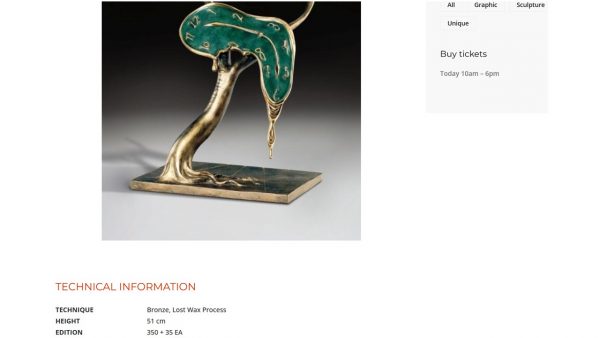
Aphorismen L
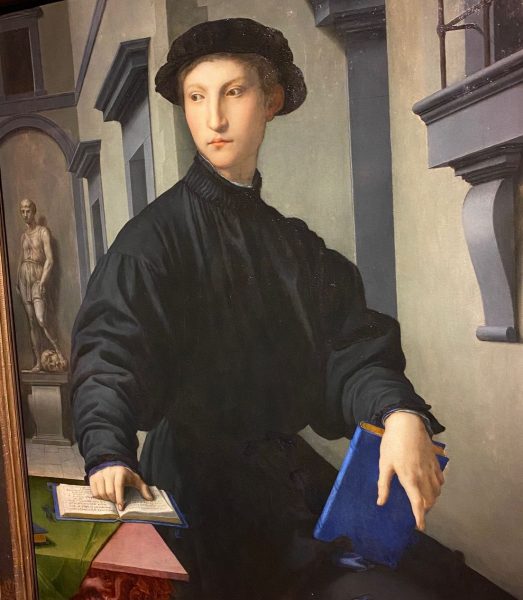
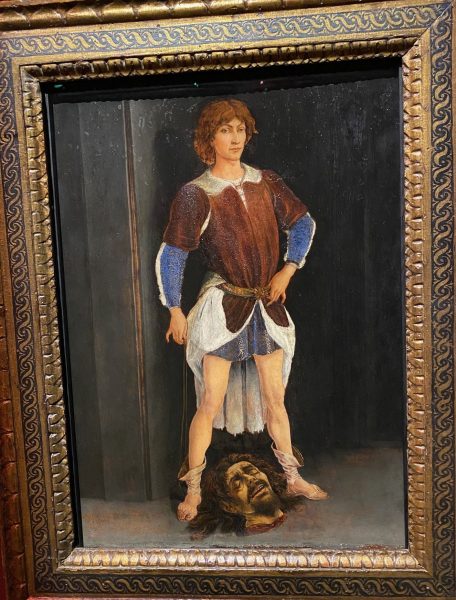
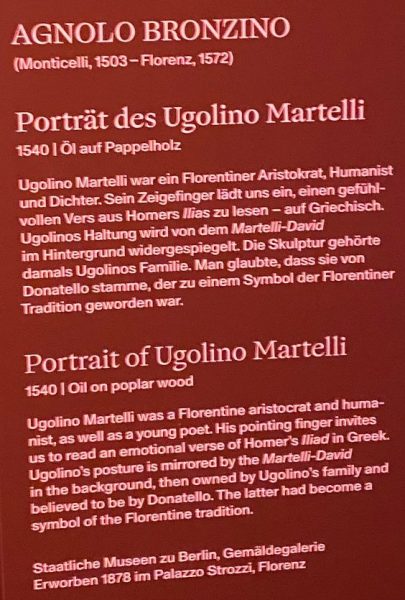
Lichtenberg hatte den späteren ausufernden Individualismus spekulativ in seinen Aphorismen vorweggenommen. Im ersten Band der Sudelbücher schrieb er bereits: „Je länger man Gesichter beobachtet, desto mehr wird man an den sogenannten nichtsbedeutenden Gesichtern Dinge wahrnehmen, die sie individuell machen.“ (1976, S.25). Unsere Fototechnik und soziale Medien haben eine wahre Revolution durch die Flut der allgegenwärtigen Fotos geschaffen. Was früher der Spiegel war, ist längst der schnelle morgendliche Blick in die Kamera des Handys geworden. Intelligente Spiegel wären also die durch Kamera aufgenommenen und direkt auf einen größeren Bildschirm übertragenen Bilder. Das Hautscannen auf Melanome oder checken von depressiven Phasen könnten eine frühzeitige Erkennung ermöglichen. Sollten wir das wollen? Aus derartigen Hinweisen lässt sich sozial invasiv Gefahren für den Einzelnen, die Einzelne ableiten, aber eben durch Bezug des Einzelfalls auf verallgemeinerungsfähige Vergleichsfotos. Gesichter länger anzusehen, das hat seine sozialen Grenzen. Mit Breughel durften wir das dann. Kindern wird früh erklärt Personen nicht anzustarren, dabei trainieren sie so, was das einzelne Gesicht so singulär macht, die Augen, Ohren, Mund, Zähne, Nase oder Schattierungen. Donatello, gepriesen als der Erfinder der Renaissance, spielte schon mit den Details der Gesichter. Mehr Mut zum längeren Hinsehen sollten wir aufbringen, auch beim Hinsehen auf einfache Charaktere, auf Armut statt Wegsehen. Oft ist David interessanter als Goliath. Die Rahmung des Bronzolino verstärkt geschickt eine zeitgenössische Analogie zum 24.2.2023.



Berlin Wahl 2023
Wähle Wähler, sonst hast du die Wahl verloren. Die wiederholte Wahl geht sicherlich in die deutsche Wahlforschung ein. Murks bei der Durchführung einer Senats- oder Landtagswahl dürfte in etablierten Demokratien nicht in diesem Ausmaß vorkommen. Solche Versuche, demokratische Systeme zu delegitimieren, kennen wir aus demokratiefeindlichen Umgebungen. Die angeordnete Neuwahl hat eine um ca. 150.000 Stimmen geringere Wahlbeteiligung ergeben, bei einer Anzahl von ca. 1.500.000 abgegebenen Zweitstimmen von ca 2.500.000 Wahlberechtigten. Neuwahlen bringen also nicht unbedingt ein faireres Ergebnis im Sinne der Beteiligung an Demokratie mit sich. Im Gegenteil, Frustrationen äußern sich an Wahlurnen in Form von Denkzetteln statt Wahlzetteln. Die Summe der entschieden für Demokratie eintretenden Wählerstimmen, die im Senat vertreten sein werden liegt nur bei 1.170.905 Stimmen. Das ist keine absolute Mehrheit der Wahlberechtigten mehr. Damit sollten die demokratischen Alarmglocken klingeln. Während sich Rot-Grün-Rot im Zentrum behauptet ist der Speckgürtel deutlich schwärzer geworden. Die Neuwahl hat ca 1 von 10 Wählenden abgeschreckt. Sogar die Protestwählenden und ungültigen Stimmen sind rückläufig. Meinungsäußerung über das Parlament wird dadurch weniger repräsentativ und das kann auch gefährlich werden. Interessenvertretung findet dann mehr auf der Straße statt als im Parlament. Partikularinteressen, die Tierschutzpartei hat 36.233 Zweitstimmen gewinnen können, die FDP nicht einmal das doppelte davon, können Parlamente bereichern, in dem sie kleine Gruppenmeinungen ermöglichen. Das fordert die Koalitionsfähigkeit und den Koalitionswillen aller demokratischer Parteien heraus. Allzu knappe Wahlergebnisse von 105 Stimmen, wie zwischen den Grünen und der SPD in Berlin bei den Zweitstimmen schüren kontraproduktive Glaubwürdigkeitsdebatten. Der Gerichtsbeschluss zur Neuwahl 2-2023 ist gültig, verloren hat aber eher die Demokratie als Ganzes, die das Gericht zu schützen glaubte. Vielleicht am Überraschendsten von allem ist, dass die Skandalpresse nicht wirklich von diesem Ereignis profitieren konnte. Die noch Lesenden sind wohl auch von der belehrenden Berichterstattung dazu eher angewidert gewesen. So schreitet das Auseinanderleben der Stadt und der Gesellschaft weiter voran. Solche sozialen Prozesse sind lange bekannt. Sie heißen „Schelling’s process of segregation“. (genauer Gentrification) Eine fortschreitende Entmischung einer städtischen Bevölkerung ist die Konsequenz. Schelling’s Modell ist ein gutes Beispiel. Der Markt alleine, auch mit häufigen Wahlen, wird die Gesellschaft nicht zusammenbringen oder zusammenhalten. Bund gegen Stadtverwaltung gegen Bezirksverwaltung bringt noch mehr Unzufriedenheit in die Stadt. Es ist Karneval und die Berliner Bären tanzen noch gemeinsam, hoffen wir mal. (Datenquelle: Wahlleiter Berlin)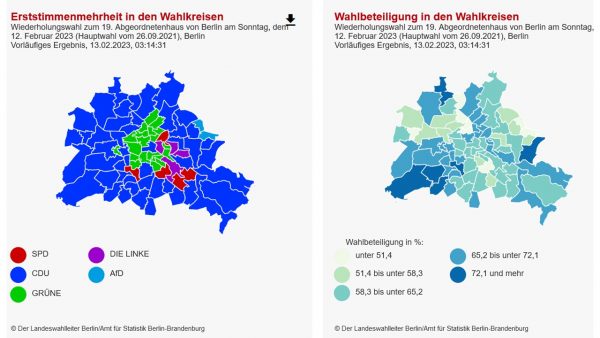
Flotow Europa
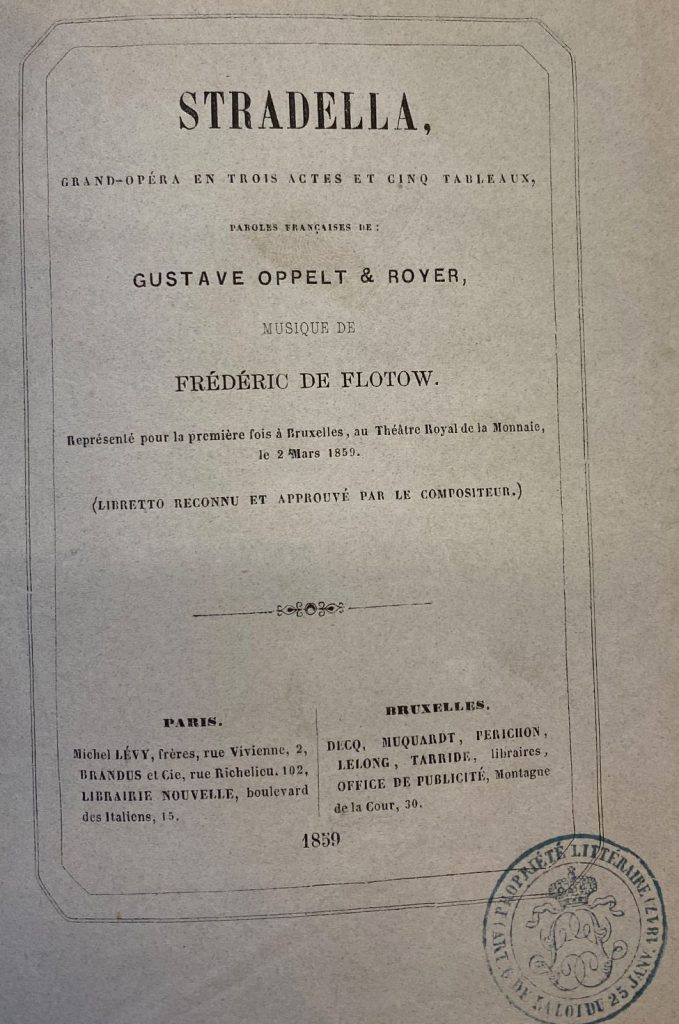
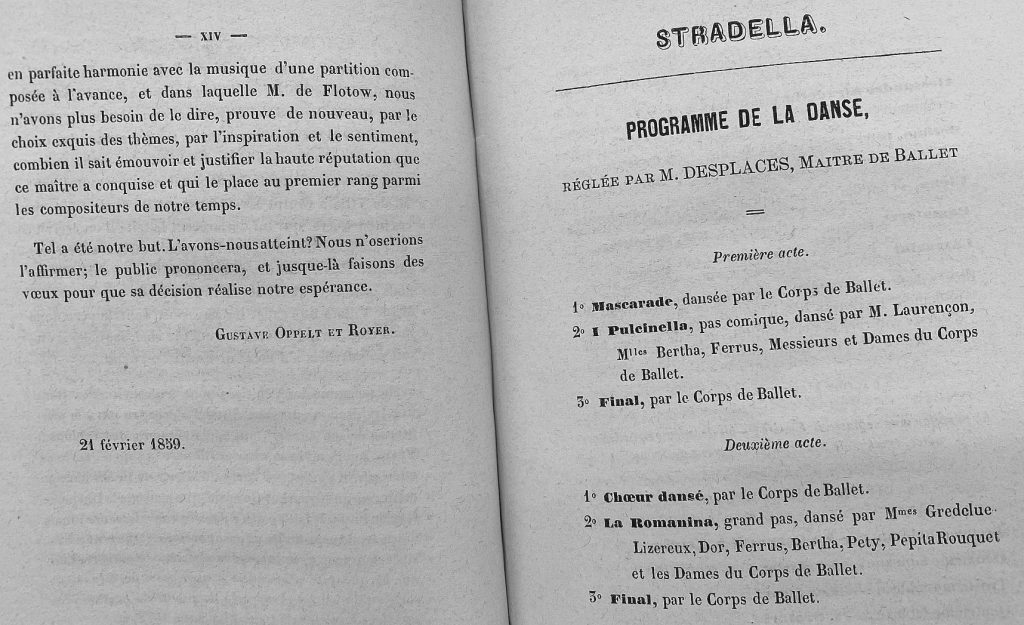
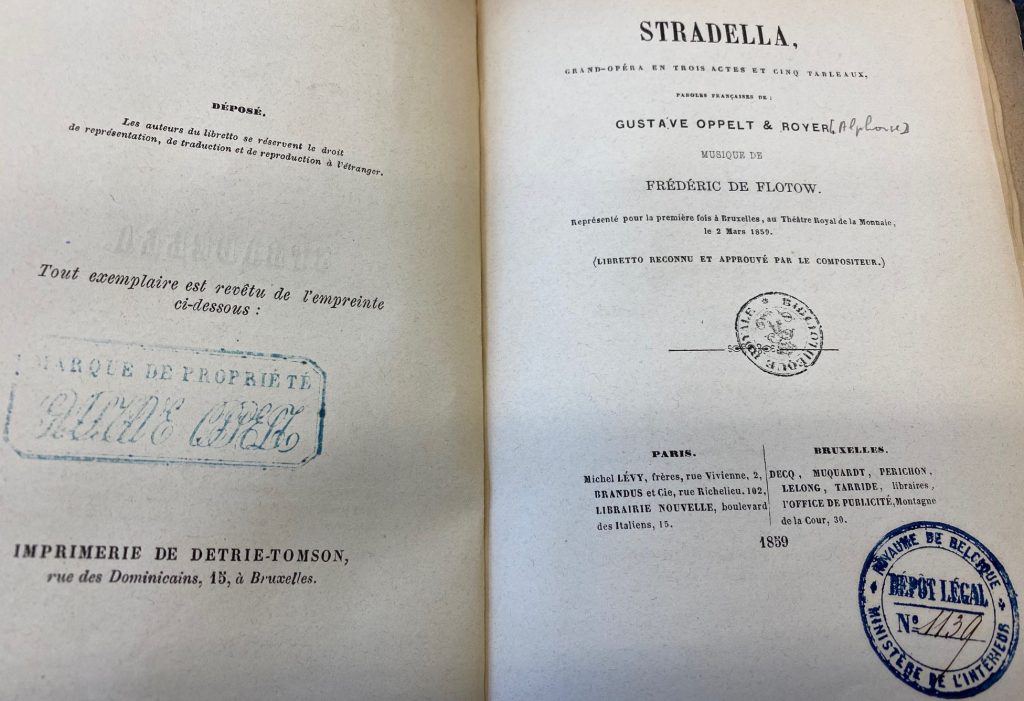
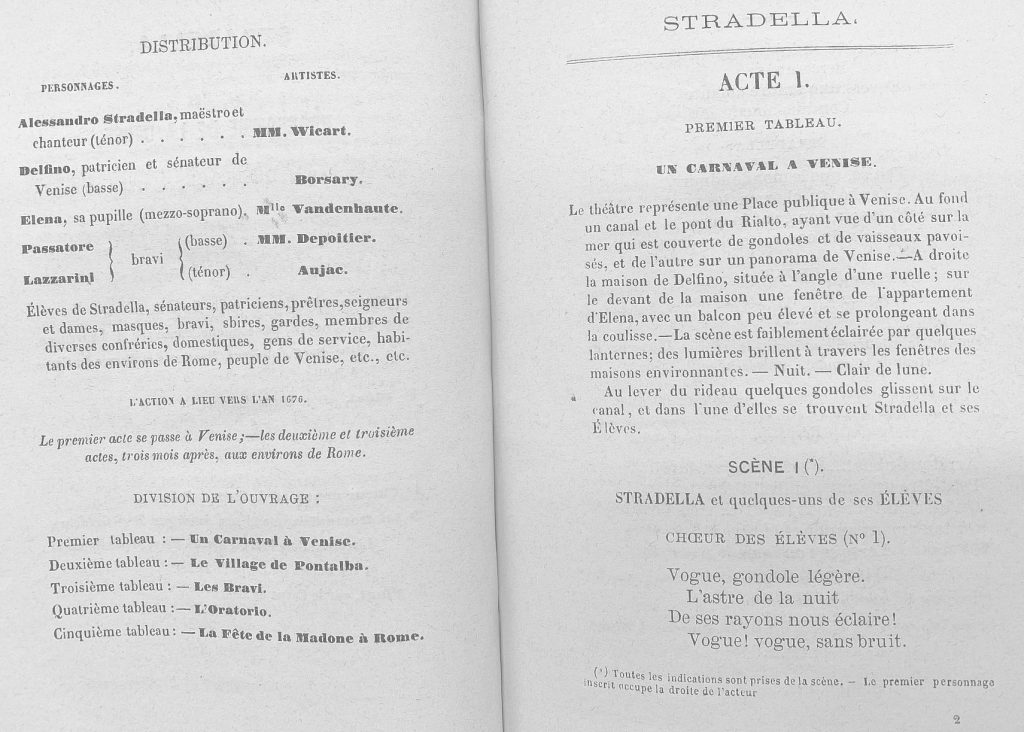
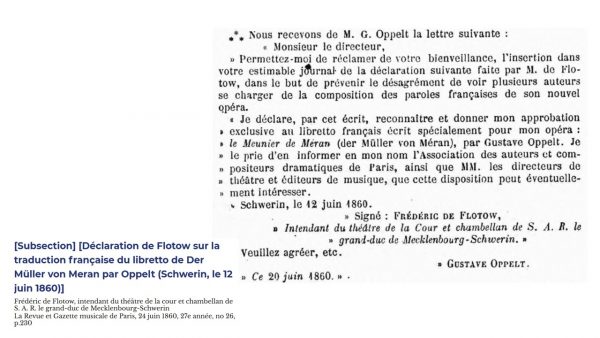
In der späteren Aufführungspraxis des Werks von „Fritz“ von Flotow, wie ihn seine Mutter in MeckPom nannte, sollte es für den in Frankreich ausgebildeten Jugendlichen einige Fallstricke zu überwinden geben. Bereits seine erste Oper „Alessandro Stradella“ hatte mit Produktpiraterie zu kämpfen. Der Übersetzer Gustave Oppelt (1844 Autor zu Stradella genannt BNF), mit Erwähnung auch von Alphonse Royer, hatten die Rechte des Librettos inne (Stempel des Dépôt Légal 1859 Nr 1139). Anlässlich der Erstaufführung in Brüssel am 2-3-1859 au Théâtre Royal de la Monnaie erschien das gedruckte Libretto versehen mit einem Echtheitsstempel. Bereits 1860 gab es dann Anlass, dass Gustave Oppelt mit der Unterstützung von „Frédéric de Flotow“ für seine Übersetzungsrechte kämpfen musste und dazu eine Notiz in der „La revue et gazette musicale de Paris“ veröffentlichen mussten. Autorenrechte waren und sind keine Selbstverständlichkeit. Die Lebensgrundlagen vieler Künstler, besonders der KünstlerInnen, auch heute, bleiben meistens prekär. Flotow war bereits beteiligt an Vereinen, die die Kompensation von AutorInnenrechten vertraten. Die „Dédicace“ an die königliche Hoheit Madame la grande Duchesse Douairière Alexandrine de Mecklembourg-Schwerin, née princesse de Prusse (Link Stammbaum), versteht sich dabei wohl auch als Dank für die Berufung von Flotow als Intendant an das Theater von Schwerin, gleich neben dem schönen Schloss. Mäzene konnten wohl über Stellenbesetzungen KünstlerInnen ihr künstlerisches Arbeiten weiterhin ermöglichen. Flotow brauchte auch die Unterstützung, die ihn zu seinem Lebensende nach Darmstadt umziehen ließ.
40s
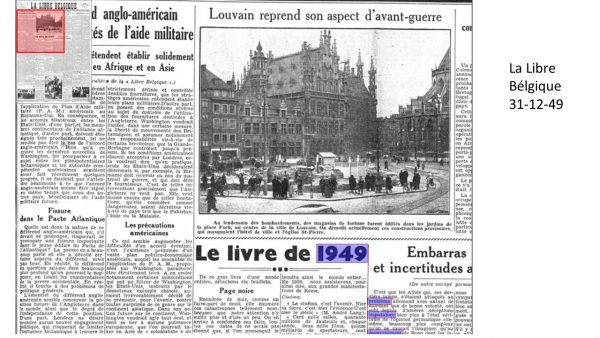
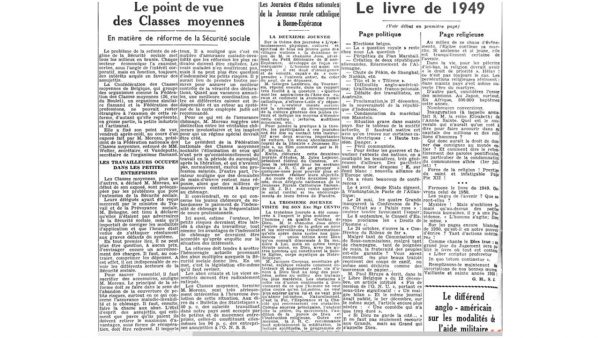
The years spanning from January 1940 to December 1949 are probably the worst to cramp into one decade. However, there are a few historians that use this approach to throw new light on a distant series of historical events in the 40s. The European perspective is dominated by war years and still has to deal with the unimaginable atrocities committed by Nazi-Germany until the end of the Second World War. From a more global historical perspective the war in the pacific also leaves lasting political changes, which are important to understand international politics and affairs of today. After a disastrous beginning with war for the USA for the decade, on the 10-12-1948 the United Nations (Charter Ratification 24-10-1945) General Assembly adopted the Universal Declaration of Human Rights. On the timeline at the end of the 40s we find the founding of NATO (4.4.1949) and (12-8-1949) the Geneva Convention which specifies internationally accepted laws of warfare. The beginning of the Cold War (Yalta and Potsdam Conferences in 1945) with strategies of containment and confrontation (Thomas Tandy Lewis, 2011 p.220), Berlin blockade determined a long-lasting concern for a balance of power across the world. The 40s were a market period of de-colonisation as well. The U.S. enabled struggles for independence to succeed with a sticks and carrots politics towards their wartime allies. The Marshall Plan for European Recovery is the most prominent example of this period. Ronald Goldberg (2012) includes a chapter on the home front in his summary of the forties in the U.S.A. After the 2nd World War all countries had to re-establish their societies and economies that had suffered due to lack of sometimes even caring for the most basic needs. Important lessons have to be learnt from the 1940s (Dave Renton, 2000 p.144) concerning how Fascists could rise and why, for example Britain, could resist the fascist movement. Anti-fascism in Britain during the 1940s and the importance to stop beginnings of an undemocratic political movement early and with the help of the police are 2 elements of the lessons learnt. Goldberg argues that it is less the Fascist ideology that conquered the minds of people, but the organisation as a political and para-military movement that is the more important threat to democracy.