Sei ganz ruhig

Sei ganz ruhig. So heißt das kurze Gedicht von Angela Krauß und auch die erste Zeile. Es hat mich seit einiger Zeit schon begleitet.
Gerade der Eintrag zum Himalaya und den Besteigenden des Mount Everest hat mir die Zeilen erneut in Erinnerung gebracht. Für einige wenige besteht das Leben immer noch aus Sensationen. Immer höher, immer weiter, immer schneller. Dabei wissen wir, unser Planet hält das nicht aus.
Unsere Einkaufsmeilen suggerieren uns ein Übermaß an verpassten Gelegenheiten, wenn wir jetzt nicht zugreifen. FOMO (fear of missing out) ist allgegenwärtig und ein viel zu erfolgreiches Marketingkonzept, dem sich kaum eine Person entziehen kann. Die Selbsteinschätzung der Zeit, die uns verbleibt bis zum Tod (perceived time till death) oder unseres spezifischen Sterblichkeitsrisikos bezüglich Vermeidbarkeit oder allgemeinem Risiko, beeinflusst „unbewusst“ unser Verhalten. In Vergangenheit verhaftet sein, ist keine Lösung. Das Leben wird vorwärts gelebt, und rückblickend verstanden.
Bei einem gelegentlichen Rückblick wird vielen bewusst, es hat sich viel angesammelt (nicht nur im Keller). Aber mehr, muss es nicht werden, anders schon, besser vielleicht. Als Hommage an Angela Krauß mal ein 7-Zeiler, beeinflusst von der Konferenz im Europäischen Parlament „Beyond Growth“ im Mai 2023. Ruhig werden und ruhig bleiben, sollten wir beständig versuchen.  Klein- statt Großschreibung, flache Hierarchien, Gleichstellung bei Wörtern und Sätzen. Warum noch Satzzeichen? Denk dir deine Welt, wiedewiede wie sie dir gefällt.

bleib ruhig
bleib einfach ruhig
la vie est belle tel quel
hab keine angst was zu verpassen
es bleiben jahre zu verweilen
schau mal umher
da ist viel

Indigo Waves

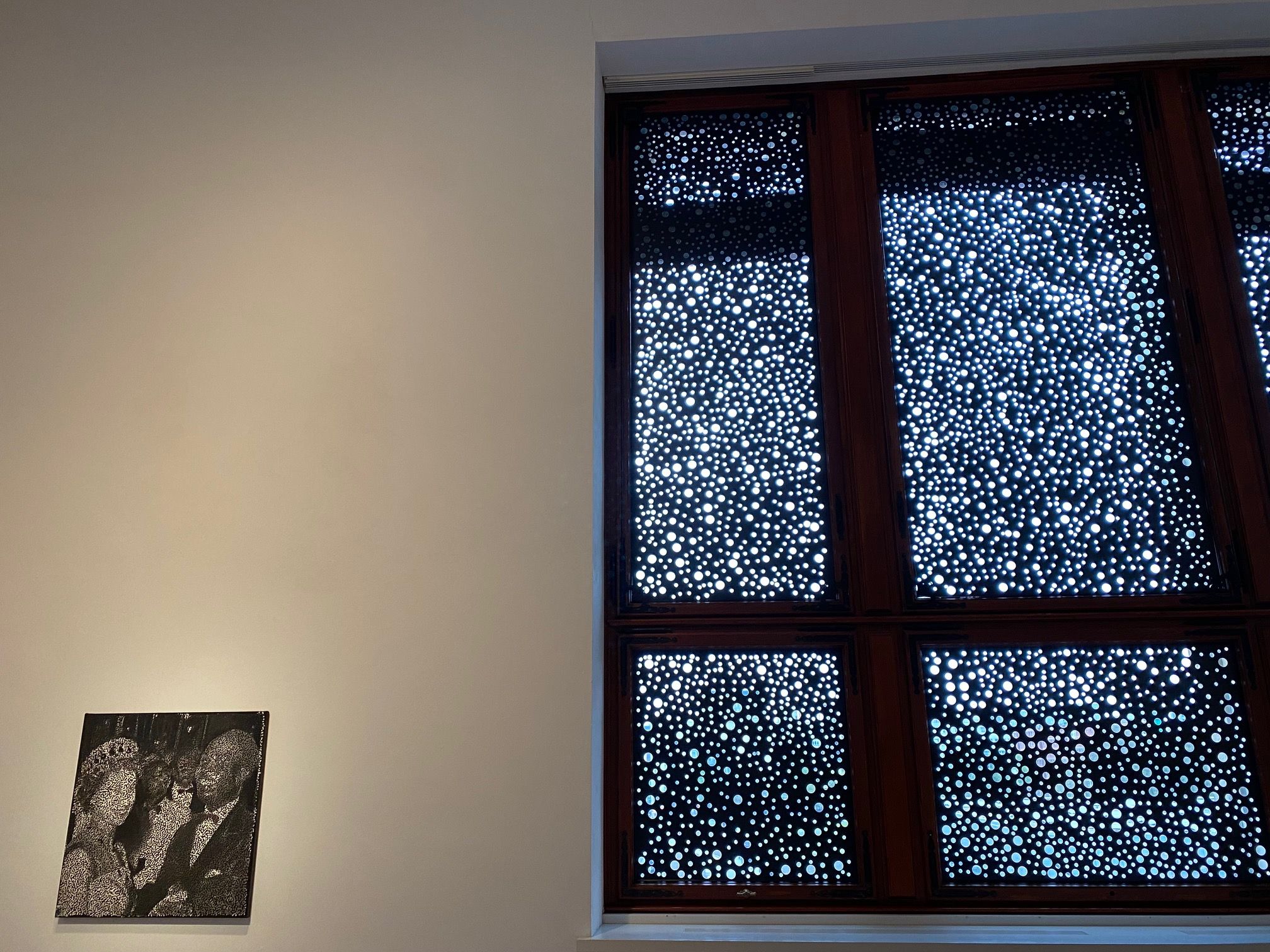
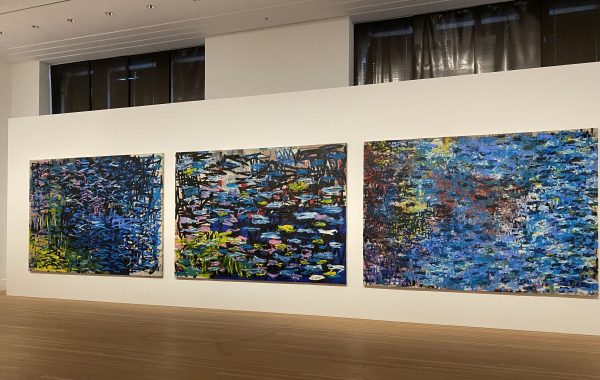
„Indigo“ is an almost mystical colour. Its deep blue nature refers to profoundness and in combination with oceans to a surprisingly still largely unexplored world of biodiversity. Additionally, in association with endlessly forthcoming and retreating waves, indigo reveals its many possible shades. Oceans separate or link continents and it is this feature of Oceans which is explored in the exposition “Indigo Waves and Other Stories” (Gropiusbau). Beyond our all to common focus on the transatlantic relationships, “Indigo Waves” explores the links between the African and Asian continents. Embarking on a new narrative for the Afrasian Sea, i.e. the Indian Ocean, we are taken to new horizons through the continuous challenge to our value systems, comprehension of art, poetry or culture more generally. The exposition, through multiple challenges, succeeds in displacing us into the context of other perspectives. Following Oscar Murillo, imagine to view the water roses from Claude Monet (Les Nymphéas) from below the surface. What do you expect? In Europe? Near a barrier reef in the Indian Ocean? Beauty is often not visible at first sight, yet it is co-determined by the currents that build and potentially destroy it (compare photo from exhibition below). The balance of social ecosystems is easily messed-up just like the beauty of ecosystems in nature. “Indigo Waves and other stories” tells us other versions of the colonial stories most of our history books told us for centuries. It is an eye-opening exposition, but probably not the way we expect. Following a poem towards the end of the exhibition by Tishani Doshi “Do not go out in the storm”, we are drawn into the ambiguity of our existence irrespective of the continent of origin. Jack Beng-Thi preserves a poem from Jean Joseph Rabearivelo in his artistic book creation and installation to bring to light “indigo waves”. “vos yeux clignotent dans l’azur, et je les appelle : étoiles. ” (Translated suggestion: “your eyes blink in the blue sky, and I call them: stars).

Archer

The Archer is a recurrent topic in art. We find lots of examples around in Berlin just as in front of the National Gallery. Historical references are manifold, too. The exhibition in the Martin-Gropius-Bau with works by Daniel Boyd adds temporarily 3 paintings. But wait, beyond this shared anthropological phenomenon across continents, this exhibition challenges our western, imperialist perspective on human existence.
Please take of your shoes, at first entry into the museum entry hall. Unsettling for most of us, we are continuously confronted with our narrow perspectives on perceptions. Poetics, philosophies, perceptions and cultures are all to easily classified and devalued.
This exhibition achieves to surpass our traditional western concept and empathy for land, room, light, air and water. Eurocentric narratives still dominate the world of art and art history.  Daniel Boyd manages to unsettle this through his relentless effort to differentiate from this narrow perspective. Aiming for a difficult to accomplish solidarity across resistance movements, he highlights the common injustice “First Nation People” had to go through. These original inhabitants of continents claim their right to own languages, customs and spiritual or spatial perception. It remains a challenge to start to like the notion of opacity (Éduard Glissant) rather than our western aim for transparency, associated with the enlightenment philosophical tradition. The archers in Boyd’s work aim into the, maybe opaque water, maybe clouds, maybe into the twilight. It sometimes seems more like a ritual than a weapon. Family histories find their way into his works based on photographs of grandparents. The images are different from our conventional depictions of First Nation people, just to highlight the limitations of our western photographer’s eye and mind.

Printing

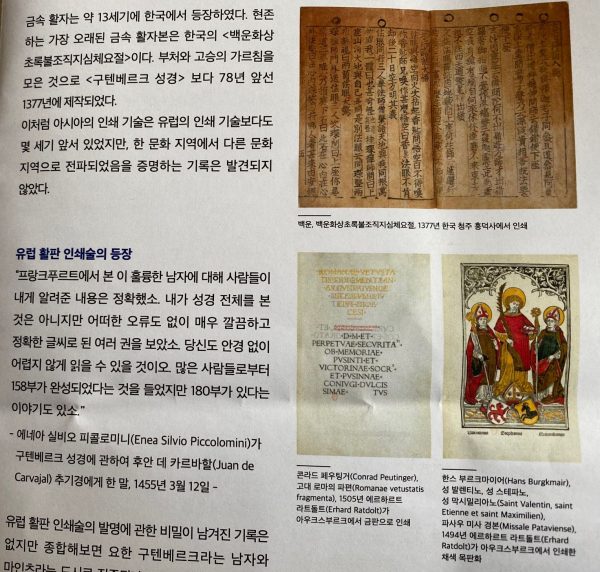
Printing is a more than 5 century-old industry. The invention of the printing press is mostly attributed to Johannes Gutenberg from Mainz. However, the Asian precursor of mobile type letter printing of Cai Lun of the Jikji dates back to 1377 in Korea. These early masterpieces of the inventors of print can be inspected at the Bibliothèque nationale de France (BnF). The summary term for this technical innovation by historians is the “age of start-ups”. The procedure for Gutenberg to have 2 financing rounds with his “business angel” Johann Fust, who is later claiming even almost the full rights of the printed volumes, resembles the start-up spirit of today as much as that of the 15th century. Not belonging to the Patrician families, it was very difficult to defend your rights in courts of the gilds. The printers also became a very powerful intermediary themselves. They either sold pre-ordered books or had to take the risk of assessing the market for their product. The editors of today do much the same in the trading world of books and rights of authors and translators. Merchandising products of the church and later churches (protestants Luther Bible) had a particular value to both the clergy and its devotees, not to mention the shop keepers in-between as well. Pilgrimage business was another start-up industry still going strong in the 20th and 21st century and popular in all religions. The early prints and typographs applied are fascinating  in themselves, but there is a lot to be learned about the foundation of a new industries that still employs millions of people and is at the origin of learning revolution similar to the one we are living with the digital technologies today. The European languages with respect to printing had a certain competitive advantage, based on 26 letters of the alphabet, far fewer types were needed to print books than the more than a thousand different signs for printing a Korean text. In terms of printing this is cost-reducing and probably you do not need to be able to read yourself to be a printer or it makes proof reading more accessible favouring benefit margins. After all, the age of industrialisation probably had a precursor in the printing industry. The potential of the printing industry was only exploited much later to the full extent. Comparable to “peak oil” we hope to have reached “peak paper” at last as well for the sake of our planet and our own survival.

Architecture

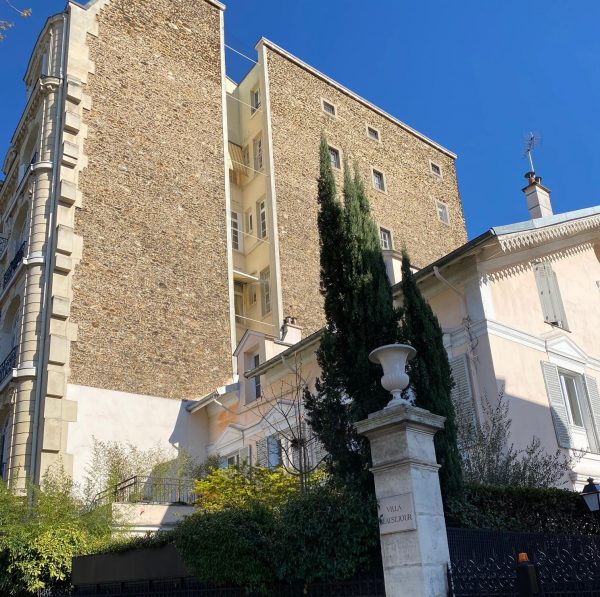
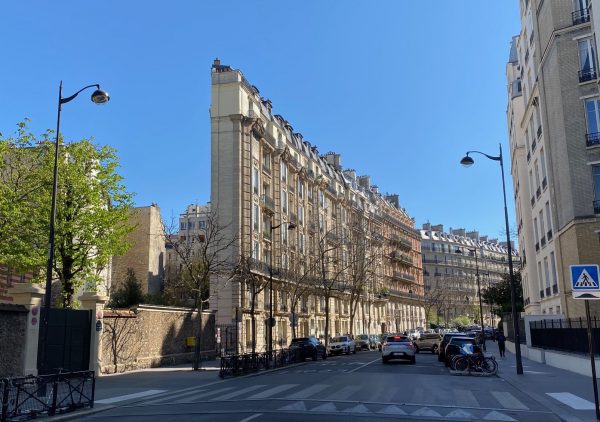
Architecture is all around us. However, we rarely consider the build environment as “conditioning” feature of our life. Architecture is contributing extensively to our perception of “social space” (Bourdieu). Inner cities, suburbs or spacious residential areas have diverse impacts on our perception of, for example, security, modernity, health or sanitary sensations. The corona-crisis has made it clear to most people that a healthy environment is a very essential part of our perception of comfort. Here the psycho-social perception of living and/or working space enters into the co-creation of housing people. Technology is a big driver of change in housing, urban spaces and rural imagination. In order to avoid corona infections a new culture of working from home for the masses become a health-driven imperative. Payment without contact, home delivery of meals, food, books, medicine have changed the living style of many people. Too little movement for our bodies has caused another silent pandemic of obesity. Enough reasons to rethink architecture from a sociological perspective on it. This probably starts with speaking of architecture as architectures. By this we mean to think of architecture from its social origins, functions, impacts and perceptions. Great historical examples of architects have implicitly or explicitly formulated a social theory of architecture or space as the basis of their “concrete” realisations. The sociology of professions of architects and the many construction-related professions needs empirical foundation beyond the cliché of socialisation as artist versus technician. Still recent forms of participatory democracy as part of urban and rural planning as well as realisations. Participatory individual or community housing are likely to stay with us. People want to get involved in co-creating their living and working space as their social environment. Architecture as social process and specific layer of the network society will be the new mantra. It has always been there, implicitly. Up to us to strengthen the social discourse on architecture.

Wasser im Wald

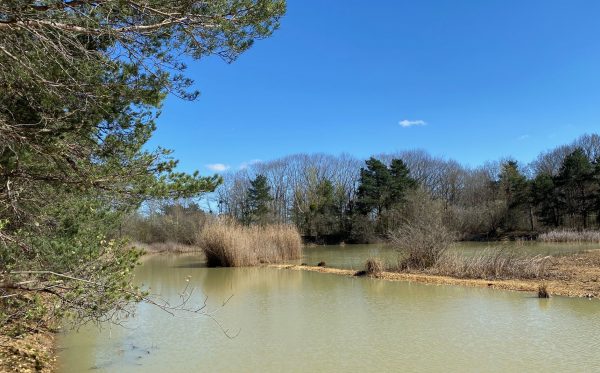
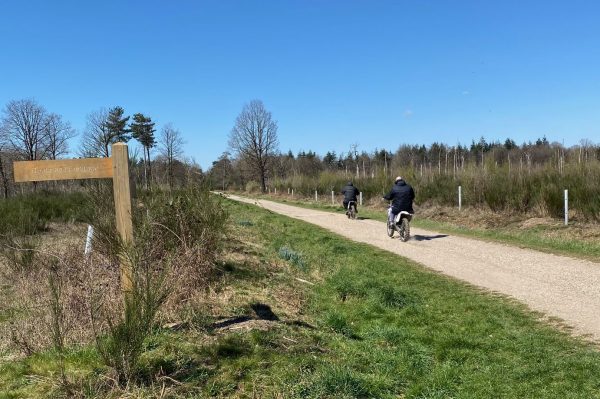
Wasser im Wald hat viele Funktionen. Historisch erleichterten Wasserstellen an denen sich Wildtiere genüsslich im Morgengrauen laben, die Jagd des erschöpften Monarchen. Einfache Ziele, die jeder Jagende sich zu nutzen machen kann. Kleine Seen dienen aber auch als Wasservorrat beim Löschen von Waldbränden und nicht nur den Badenden im Sommer. Viele kleine Seen in Frankreich leiden an erheblicher Wasserknappheit. Wasserstände, die sonst im Spätsommer erreicht wurden, nach Trockenheit und Verdunstung, sind im Frühjahr 2023 berreits erreicht. Ein Waldbrand könnte kaum mit vor Ort vorhandenen Wasserreserven gelöscht werden. So hängen Feuer und Wasser im Wald recht eng zusammen. Austrocknende Seen vernichten zusätzlich die Biodiversität im Wasser, denn weniger Lebensraum im Wasser hat Konsequenzen. Das heizen mit den Motorrädern im Wald, hab ich selbst gemacht vor vielen Jahren, ist heute eh schon verboten. Aber Verbote und Jugend sind ein eigenes Thema. Wir haben der Jugend die Freiräume geraubt, die wir noch hatten und jetzt beschweren wir uns über die stubenhockenden Jugendlichen mit ihren Computerspielen und Social-Media-Aktivitäten!?! Ein völliges Überdenken des Wassermanagements ist von Nöten. Das sind wir den nachfolgenden Generationen schuldig. Welche Arroganz besitzen wir, dass die Jugendlichen von Heute viel klüger und noch schneller erwachsen sein sollen als wir selbst in diesem Alter. Aus Fehlern lernen wir, aber wir scheinen das Lernen, den späteren Generationen überlassen zu wollen. Leider funktioniert das so nicht, wir müssen schon an unser Verhalten ran und von uns verursachte Schäden selbst reparieren. Das Fegefeuer brennt schon, ob wir es noch rechtzeitig löschen können?   

Schaukel

Sagt die Lehrperson zur Schulklasse: Stellen wir uns alle jetzt mal alle eine Schaukel vor. Wie sieht die Schaukel denn so aus? Was gibt da so drumherum? Könntet Ihr nun bitte versuchen, die Schaukel auf ein Blatt Papier zu malen? Jeder hat seinen Bleistift und einige Buntstifte dabei. Einfach mal versuchen, es gibt keine Noten dafür. Es soll Spaß machen und wer möchte kann sein Bild anschließend den anderen zeigen. Schön, sofort wird es ganz laut in der Klasse und alle legen los. Naja, fast alle, das stille Mädchen aus einer der hinteren Bänke stockt und wirkt unruhig. Sie ist erst seit einigen Monaten in der Klasse und spricht noch nicht wirklich wie die anderen die Ortssprache. Da liegt wohl an der langen Reise, die die nicht mehr ganz so Kleine hinter sich hat. Die meisten Jungen und Mädchen erklären zugleich recht lautstark welche Schaukel sie malen werden. Die vom Garten hinterm Haus, vom Spielplatz nebenan oder sogar die Schaukel unterm Baumhaus im angrenzenden Waldstück. Bei den meisten Kindern steht rasch die Schaukel nicht mehr im Mittelpunkt der Kurzgeschichten, sondern die Freunde oder Kinder mit denen sie gemeinsam schaukeln. Nur unser stilles Mädchen erinnert sich mehr an ihren Reiseweg, bis sie dort in dieser schönen bunten Schule angekommen war. Das waren viele Stationen, von denen sie gar nicht erzählen möchte oder gar ein Bild malen möchte. Die meisten Erinnerungen war so, dass sie diese lieber für sich behalten wollte. Zu weit weg waren sie von den aufgeregten Erzählungen und fantastischen Geschichten der anderen MitschülerInnen. Doch dann hatte sie doch ein Bild vor Augen. Ein Spielplatz in einer großen Stadt, Berlin genannt, ist ihr in Erinnerung geblieben. Als sie diese Schaukel grob, ohne Farbe nur mit Bleistift auf das Blatt skizzierte, keiferte der Banknachbar schon: So sieht doch keine Schaukel aus! Die Neue kann noch nicht mal eine Schaukel malen. Das stille Mädchen blieb weiter still, wusste sie doch genau, dass ihre Schaukel eine Überraschungsschaukel war. In der großen fremden Stadt war ihr diese Schaukel aufgefallen, denn sie war fast so schön, wie die Schaukel an dem starken Ast des Baumes, im Garten ihrer Großeltern. Dadurch verknüpften sich ihre vielschichtigen Erinnerungen zu einem Bild. 

Monitor SDGs7

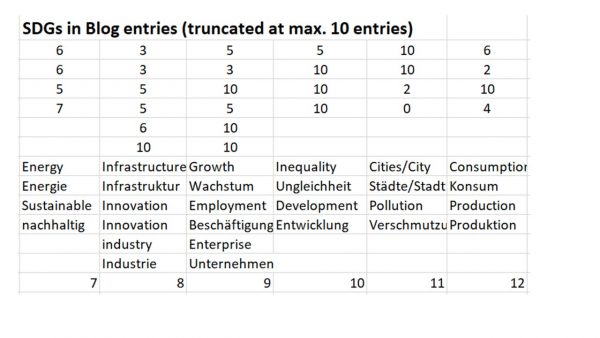
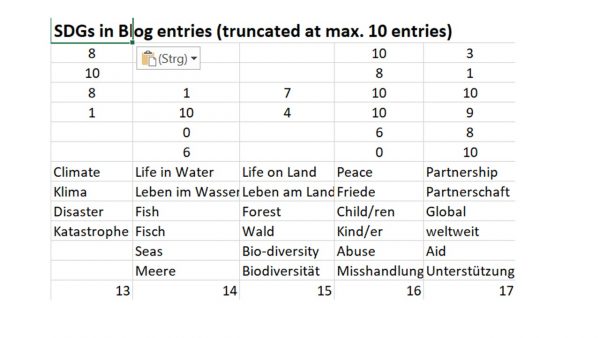
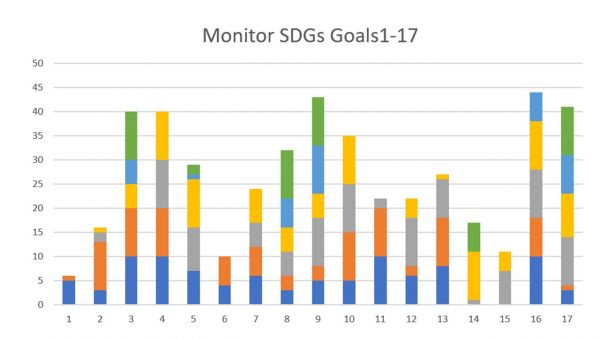
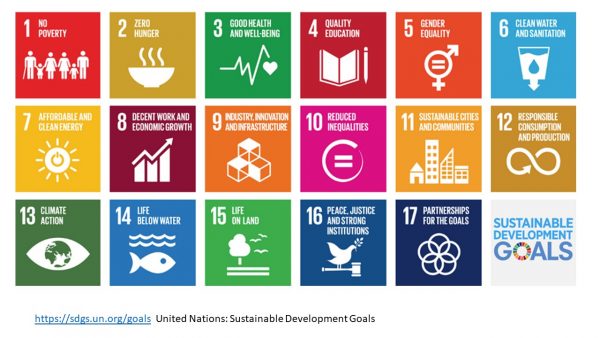
The complete monitoring of the SDGs of the UN for global development shows a surprisingly large coverage of topics. The search function is indiscriminate of some contradictions or returns the same entry twice like in sustainable industry. However, the simple check reveals frequent and less frequent entries. Entries  1 = Poverty, 6 = Water and 14 + 15 = Life on  Land and in Water received less attention. The agenda for the coming weeks is set.


Goals SDGs

The Strategic Development Goals (SDGs) date back to 2015 for their enactment. The goal setting is a routine procedure for the UN and its subsidiary international organisations. This makes a lot of sense, because if you do not name the problems, you are unlikely to address them in a systematic fashion. Quantifying the goals is then a much more difficult task and that then already part of the ensuing discussion about idealist, illusive or realist goals. Most diplomatic exchanges focus on this goal setting and scheduled monitoring as well as more comprehensive evaluations of goal achievement. The SDGs comprise another strategic twist. Rather than concentrating on national governments, non-governmental organisations and businesses were encourages to actively participate in the implementation of the goals. After more than 7 years the achievements of intended improvements should become visible. Well, goal setting and monitoring over the last seven years is likely to reveal failure on several of the 17 indicators. Covid-19, disruption of supply chains, wars causing recessions and high inflation are major factors to explain failure. However, knowing the reasons of failure is a substantial part of improving in the next coming years. Returning to cooperation rather than confrontation could do the trick. Even after wars cooperation to organise relief is the only way forward to come closer to achieving the SDGs.
Bold initiatives like the Marshall-Plan for Europe in the 20th century made it possible to rise from the ashes. Countries that have been in ruins at that time, now have important roles as financial contributors to support other regions. The goals remain the same, the challenges as well.

On Noise

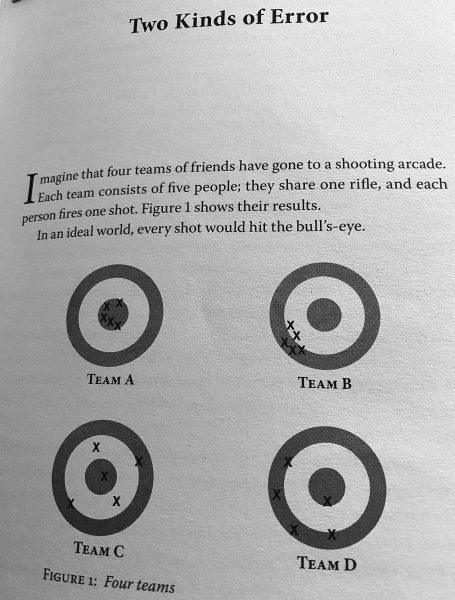
The 3 authors Daniel Kahneman, Olivier Sibony, Cass R. Sunstein have published in 2021 the impressive attempt to sell statistics to non-statisticians. The grip on the topic: “Noise. A Flaw in Human Judgment” is a bit misleading. Even the German translation (“Was unsere Entscheidungen verzerrt”), in my opinion, is grossly misleading. The work deals with judgment, or arriving at a sensible judgment. Decision-making is only the next step with a lot of other intervening processes. The German philosophical term since the enlightenment period has been “Urteilskraft“. We are all more or less familiar with the notion “bias” in judgment. Me, originating from the Moselle, will always be biased in favor of a Riesling compared to other vines. In addition to this naive bias I may apply a more professional judgment on wine. Testing several wines even from the same small area from the Moselle valley and then repeating the tasting I might make a noisy judgment.  “When wine experts at a major US wine competition tasted the same wines twice, they scored only 18% of the wines identically (usually, the very worst ones).” (p. 80). In addition to the previously defined form of “level noise, pattern noise and system noise” (p.77), we have occasion noise, when judgments vary from an overall statistical perspective.
Having received a second dose of a vaccination yesterday and having spent an unpleasant night my judgment for this review might be biased, because of impatience. So in order to reduce bias and variants of noise I shall repeat the review at a later stage. Let’s see what this returns. But for today, the Epilogue “A less noisy world” (p.377) appears rather odd to me. It is probably an illusion to believe that we can create a less noisy world, even with the best of wishes. The authors abstract from any strategic use of noise to influence judgments. The political form of choosing judges for Constitutional Courts in the U.S. needs to be dealt with. Noise in judgments is an important element, but strategic use of bias might be more influential to impact outcomes. Noise, when faced with a judge who has a reputation to be very tough in sentences might be overturned in an appeal court decision. There are plenty of procedural ways to overcome noise in judgments. I agree with the authors that you better know about the noise in judgments than ignore it. Awareness of random errors and noise involved in grading exams and recruitment decisions have determined many excellent “failures” to leave historic contributions to our world. In music, maths or literature some splendid talents probably have been impeeded at earlier stages of their life to make average or normal careers. Some of them left us with fantastic pieces thanks to the noise in judgment of others.
There seems to be an age bias in the tolerance of noise in the acoustic sense. Noise in the statistical sense has left a strong mark on me when I learned about white noise as error or stochastic process.
Image Kahneman, Sibony, Sunstein 2021. p3.