Shift to Linux

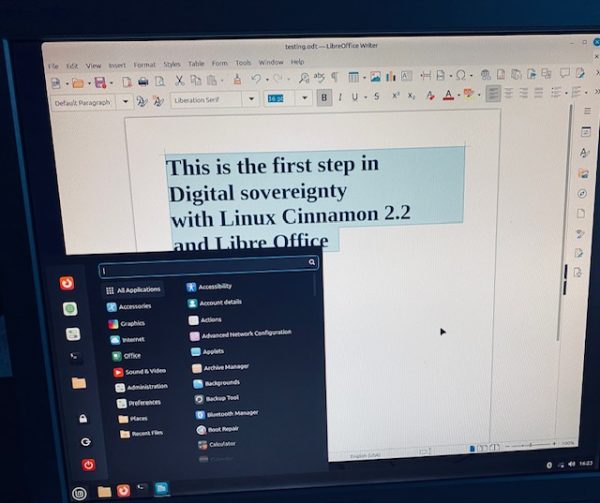
We have become rather lazy and sometimes even ignorant when it comes to what kind of operating system we use on our computers. The phasing out of security support for Windows 10 based computers creates worldwide a huge pile of computers that cannot update to 11 due to limited hardware 4Gb of active memory only. However, for many simple tasks these computers work perfectly fine. Browsing through the internet or just drafting texts or spreadsheets doesn’t ask for larger sizes of memory. Most AI applications run on the web and not locally on your computer. No need to throw away these devices and spend, spend, spend on the latest technology. It takes a bit of time and effort to read through the guides for such a shift. Maybe you need to come back several times between documentation and a bit of trial and error, but the learning of digital skills is always a rewarding experience as well. My fanless computer will serve me for many more years as a quiet companion in drafting blog entries and research. Additionally, it is a step towards digital sovereignty so many people talk about these days. (Image: Computer Screen with Linux cinnamon 2.2 and Libre Office in background).
Sovereign data spaces

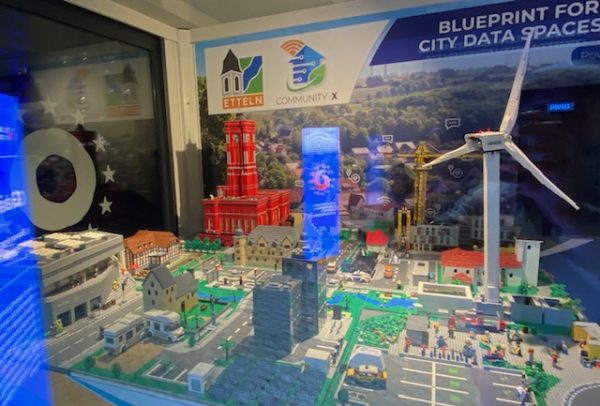
Data is the new gold, petrol or diamonds. In order to bring this message home to all people in the EU, the European summit on digital sovereignty had a small exhibition of projects that address these issues. City data spaces is such an initiative which has been running for quite some time now. In fact, from a city planner and data scientist perspective cities collect already huge amounts of data and can offer them to service providers, businesses and each and every one of us to organize our energy consumption, improve mobility patterns or any form of data or video streaming services. The amount of data captured and to be stored is growing rapidly. Just think of the Internet of things (IoT), maybe that’s only your wifi-connected coffee machine, oven or heating. Now add AI to this which allows the system to learn about your daily patterns to start the device in time for you to focus on other tasks. As we would like these data to stay confidential, the need for European digital sovereignty becomes sufficiently clear. It will take a huge effort to provide an adequate digital infrastructure for this “brave new world” and many people to work towards this objective. Train the trainers already, cause otherwise this is going to take ages before we can harvest the benefits in safe and sovereign manner.  

Multilingual aging

Some myths, for example about the effects of multilingual competencies on brain health, continue to hunt people. The proponents of a monolingual world are widespread and have in some countries fatal historical heritage. The study by researchers  (Amoruso et al. 2025) use data from 86.000 persons in Europe  (SHARE Database, waves 1-9) from several countries. They show the better aging of brains for bilingual persons and even more so for persons practicing multilingual 2+ languages. The “domain-independent protective effect of multilingualism” for healthy brain aging is very robust and works after statistical accounting for other potentially intervening factors like socioeconomic or institutional factors. Some known stressors like migration, however, which operate often as psychosocial stressor, can have similar negative effects just as alcohol consumption and sleep disruption. Multilingualism and the correlate of multiculturalism keep a brain “on its toes” and contribute significantly to our healthy brains.  

Cut it short

The “Revue des sciences humaines” (Demanze and Gleizes, Nr. 355, 2024 pp. 7-16) provides an interesting reflection on the widespread practice to find (new) ways to cut long stories or insights short. Short by itself, this introduction to a longer special issue on the topic “Faire court” stresses 4 elements of the contemporary impetus to cut it short:
(1) The creative process may be subject to condensation of content, similar to the process of a “reduction” in the culinary vocabulary. The speed of creativity, inspiration, freedom of expression are exemplified by the twitterization of and aphorisms in literature. Roland Barthes, in his analysis of the “haiku”, raises awareness to the different associations of the short text forms in different societies.
(2) The observed shortening of time spans of attention and the competition and economy of attention have raised the stakes for longer formats and explain to a large extent the success of shorts in the digital age.
(3) The short format works to increase the intensity of the literary experience.
(4) In deconstructing the associations of long formats as “monumental” versus short formats as ephemeral, the “cut it short“ tendency serves to “demonumentalize” the big shots of literature, science and the humanities. Well, about time to cut it short, “hic et nunc”, here and now!

Home Wind energy noninvasive

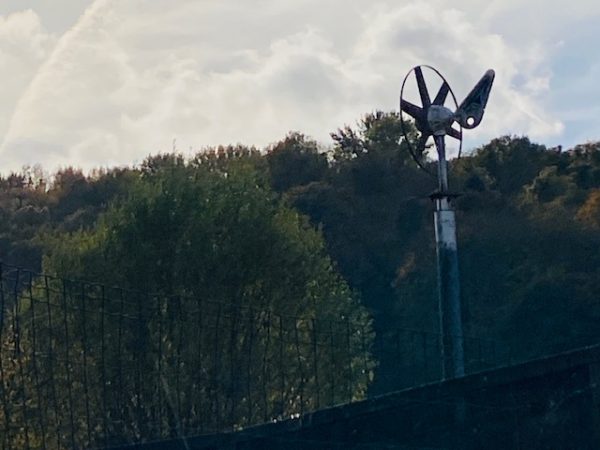
The abundance of wind energy in some regions has made the use of this source of energy more popular. During long winter nights the harvest of wind energy is a wonderful source of free energy. Regulations and oversize wind turbines have tarnished the image of wind energy in some regions. However, even in France and not only in this small village of Asterix and Obelix who resist the Roman empire, that we can find tiny wind turbines providing small amounts of energy. For all those households that have a battery they can use this power whenever they may need it. Suddenly, we are looking forward to the stormy autumn season.  

All electric again

The “all electric society” has been identified by Dan Wang and Arthur Kroeber (2025 p.48) as one of the underlying driving forces of “The real China Model”. Despite the heavy reliance and pollution caused by China’s use of coal, the large share of electricity  (30%) of energy use is unmatched by the rest of the world except Japan. Investment in electricity grids and innovative ways of mobility around electricity will allow China to buzz rather than steam ahead. Solar cells, batteries for electricity storage and innovative ways of distribution of electricity through AI enhanced “learning” devices will widen the gap between China and other countries that suffer from inefficient path dependency.
Taking the advent of the “All electric society” seriously will free resources through the focus on future-proof technologies. We should not be afraid of the sparks of a short-circuited “All electric society”, the environmental challenges ahead for all of us, particularly China, ask to shift to high voltage solutions urgently. 

Sponge Mofs

Many people might have come across “SpongeBob” as a TV-series. Well, in 2025 it is time for an update. The Nobel Committee has awarded the Chemistry prize not to SpongeBob, but the research linked to the sponge-like Mofs, i.e. metal-organic frameworks to Kitagawa, Robson, Yaghi. These Mofs have in fact properties  similar to a sponge or cages in some applications. They consist of porous materials, which have large surface areas in relation to their apparent volume. Due to the modelling of network structures the surface of a grid can be expanded drastically.
Due to the application of such modelling techniques, the combinations of materials/organics and, thereby, the applications to modern technological challenges have increased tremendously. The exponential growth of research papers based on these foundations largely justify this honourable award. Not only the potential of carbon capture, but also the storage capacity of batteries as well as medical applications might benefit from this basic research and findings, eventually.
Playing around with a sponge, doing your dishes – also for men, or watching Spongebob might be considered differently from now on. Maybe, just start with a virtual visit of the Nobel museum for further inspiration.

Passing barriers

In quantum physics the real trick is not the rebound of electrons like the rebound of droplets, but the passing of electrons of an insulating barrier. The experiment of the ”Josephson junction” has set a precedent to research the surprising macro-effect of “quantum tunnelling”. The 2025 Nobel Prize has been awarded to Clarke, Devoret and Martinis who observed these effects on a macroscopic scale. The applications in the most advanced quantum computers of today shows the enormous potential of this demonstration in pushing computing speed boundaries. The international competition to develop such, ever faster computers, based on quantum physics, is running on high development speed. In combination with the artificial intelligence (AI) developments, these types of combined machines are likely to outpace the development of human-based intelligence. It becomes even more important to define the limits for those machines by us. Subsequently, we shall have to make sure that such combined machines stick to the rules, we define(d).

Deus ex machina

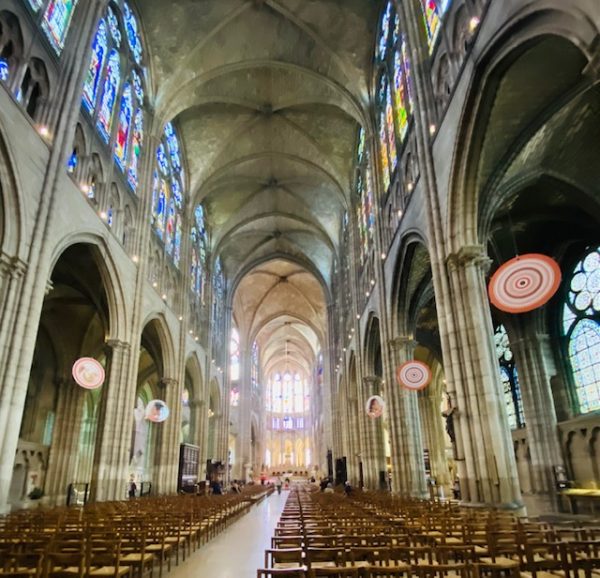
The term “deus ex machina” used to be applied more in its figurative meaning. With the rise of digital tools like chatbots, facilitated and enhanced through AI, God is speaking to us not only in multiple languages, but also from our pockets through our smartphones and headsets. This is a rather recent form of “deus ex machina”, which we did not expect some years ago. The bible as e-book or pdf-file has been around for some decades, but only more recently we can enter conversations with God through chatbots as another version of “deus ex machina “ about almost everything (and pay for it via digital credit card). Programming of such an AI-tool is easily achieved. AI will prepare a weekly or daily sermon or prayer for you, following your predilections of your favourite quotes of the bible. An interesting twist to the programming is to use authorized as well as unauthorized translations of the bible across several centuries.
Another interesting enlargement of the input data base is the inclusion of interpretations and discussions not only within your own religious community, but beyond. Maybe the discussion of several different religious chatbots with each other could prevent aggressions due to differences in basic beliefs. These “dei ex machina” might further our understanding of what makes us humans different from machines and machine-based solutions of human conflicts.
As genetic clones of ourselves have become already technically more feasible, our digital alter-egos (the comprehensive collection of traces in the internet and digital images, plus social scoring) help to empower those “dei ex machina”.
This kind of “Brave New World” asks us to be rather brave ourselves.
(Image: interior St Denis Basilique Cathedral Paris 2024)

Sink / Rise

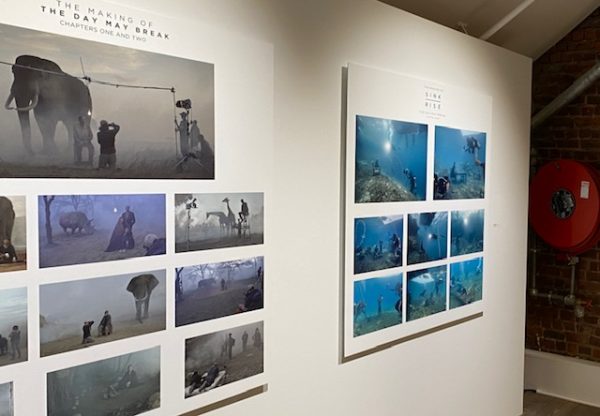
Nick Brandt presented his engaged photographic projects “The day may break” in Brussels at the Hangar Gallery space in Brussels (2025-9-21). The photographic work spans the globe to document and tell the story of a an endangered planet. The environmental and social fabric is at risk of an unprecented scale in the 21st century. Rather than producing hours of documentation, Nick Brandt focuses on images that stick. His “mise en scene” is meant to haunt us. And it succeeds in it. In the best sense of a tradition of a “photographe engagé” he intends to convey messages, even whole narratives to us about and from people in remote places, who are endangered through our inaction or paralysis in front of the challenges posed by global warming and climate change as well as the social and societal consequences.
We can save people from drowning in floods and rising sea levels. The chapter Sink / Rise of this project was produced with people from the Fiji islands who participated in the futuristic scenario of a sunk island. Without accusations, these people question us. Why? How? What for? Where to? – without speaking a word. They spend time in on a sunk island, surrounded, submerged by beautiful, but morbid, turquoise water and the graveyard-like remainders of a broken coral reef. These are photographs not of these people, but about them, about their likely fate, and (very important) produced with them as empowered actors. May they have a chance to rise like a phoenix from the ashes from these photos.
The documentation on the “Making of …” (image below) as part of the same exhibition allows transparency and additional insights into the artist’s work and proceedings.
(Image: Hangar Gallery, Brussels 2025-9-21, On the making of Sink / Rise by Nick Brandt)