
Time that has passed, is subject to evalution and re-evaluation. Our memories work continuously on various representations of time in our mind. Memory management is one such example. Artist have also coined a phrase for a particular form of time management. “The assault of the present on the rest of time” Alexander Kluge had chosen this as the title of a movie on film-making and Katya Inozemtseva had chosen this as the title for the exhibition in Berlin 2023-24. Pieces of art may serve as evidence in court as testimony for war crimes. This is one of the challenging issues of this exhibition. The present uses evidence from the past to illustrate what happened. Re-interpretations are part of this process as well. It is not too rare, that in the present a reframing of the past may occur. Some try to alter the representation of the past (crimes committed long ago) as of minor importance. Such intentional misrepresentations represent the assault of the present on the past. It may eqaually be attempted to limit the scope of future options. The diesel engine is not the best technical solution for mobility of 8 billion people living on this planet in 2024. The reflection on time needs to take care of the “back shadow” and “forward shadow” of the present. On the individual level, today’s action might be largely determined by past events, experiences and transitions, but they pre-determine to some extent also future events.
Conditionalities shall occur and accumulate, for some more than for others. Some call this scar-effects, others the narrowing down of options. Life reviews may apply a reframing exercise, sometimes even to liberate yourself from the boundaries of the past to open up new or more future options. The time-space subject which ranges from experience to fiction is the matter of literature and cinema. Some people seem to choose to live in a fictional world for whatever reasons. Rather than a linear concept of time, the artists appear to imagine time in some form of a spiral: from the present you turn backwards in time to project yourself into the future. Maybe, we are caught up in some unresolved narration of the past, to try another projection into a different future. We see one or many movies grow out of this fictionalisation of the present.
The study of the life course remains a formidable challenge. Testing the reliability of sources to separate fact from fiction has overriding importance. Biographies derived from facebook or instagram entries over decades have to deal with this fictionalisation of the self even more than we were used to from other data sources. The basic challenge of the representation of time throughout the life course, however, remains the same.
Source: Kluge, A., Evans, T., & Liebman, S. (1990). The Assault of the Present on the Rest of Time. New German Critique, 49, 11–22. https://doi.org/10.2307/488371 (Image: Exhibition Brücke Museum, Lea Grundig, Unterm Hakenkreuz: die Hexe 1935, Zentrum für verfolgte Künste, Solingen). 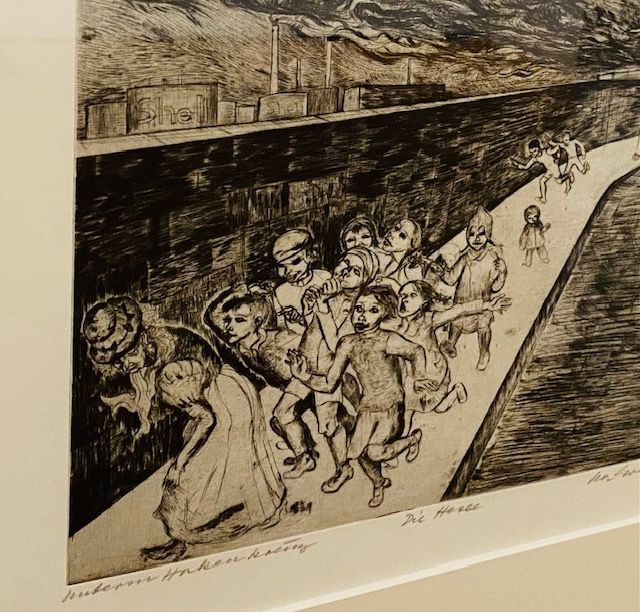
Richter
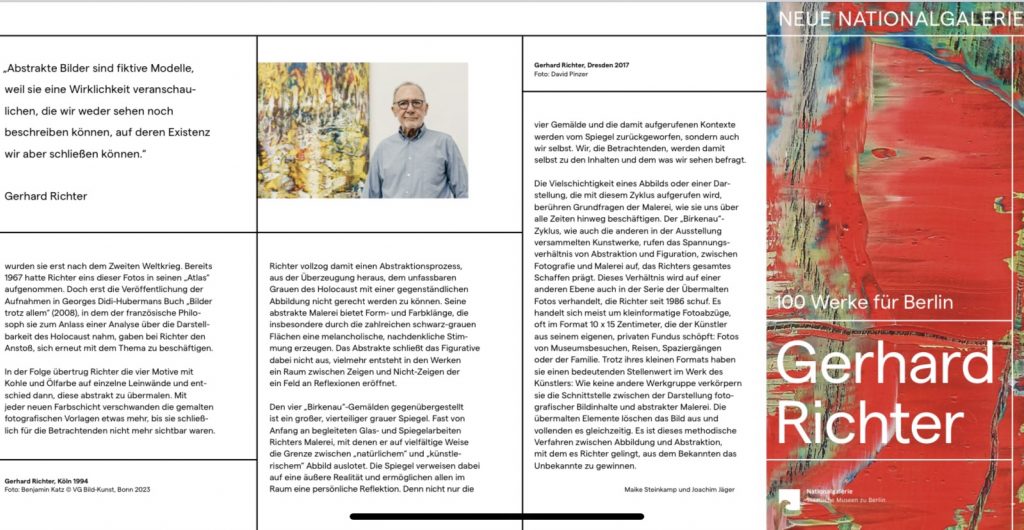
Gerhard Richter ist kein Richter. The painter Gerhard Richter is of cause not a judge. But somehow he is. In the representation of his 100 works for Berlin in the Neue Nationalgalerie he judges the horror beyond imagination of the Nazi concentration camps, reflects on the role of his own family in this and finds his own way to deal with it. Colors cover the black and white documentary fotos as if a new imaginary has to grow again to overcome the painful memories. He deals with the most difficult kind of confrontation with evil in an astonishing way. The horror as underlying fact remains present in our mind and at the same time we open up to light at the end of the tunnel and abundance of colors. Color is the way forward. Underneath, we tend to or like to forget about the many killing fields. Scratch a bit on the surface and you’ll find lots of unresolved issues again. All those fancy colors might just cover up the demons of the past and present. Maybe this is a grossly biased interpretation of his Auschwitz Buchenwald series of paintings, but only time will tell if we are successful in 2024+ to stem the tide of right wing extremism (again).
Renewables
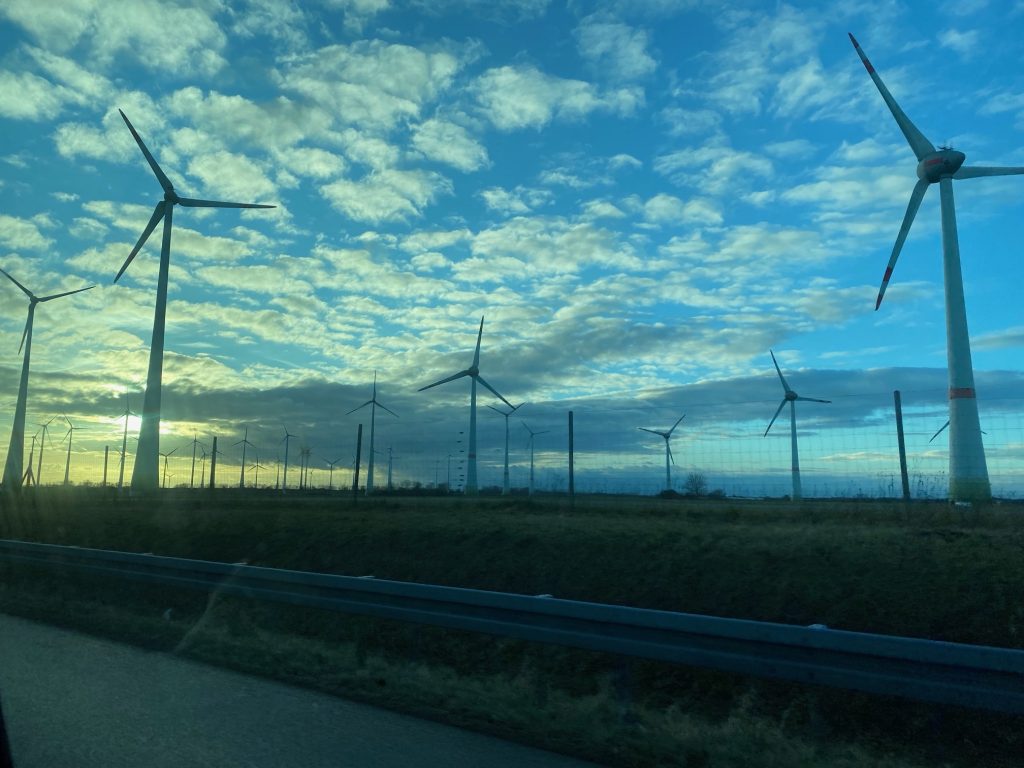
Renewable energy has reached for the 1sr time a share of more than 50% in Spain and Germany in 2023. This is an astonishing milestone in the energy transition of both countries. For Spain a report from Red Energy Espanola attributes the Spanish success story to the expansion of mainly wind energy (Link). The increase of renewable energy in Germany is due to a more rapid expansion of solar energy (Link). In any case a continued expansion of both forms of renewables allows to reduce the share of fossil fuel even more rapidly than previously estimated. Good news for the planet particularly to phase out energy from coal due to its highly polluting side effect. Countries with faster trajectories shall serve as examples that it is feasible to manage the energy transition also for large countries. Political instability might be a price worth paying considering the positive effects for future generations. Managing the transition in a just way which means to assist poorer households, ensures the respect of social policy targets at the same time. With this in mind the energy transition can be perceived by all as an opportunity rather than a threat to their welfare and wellbeing.
Museum Orga
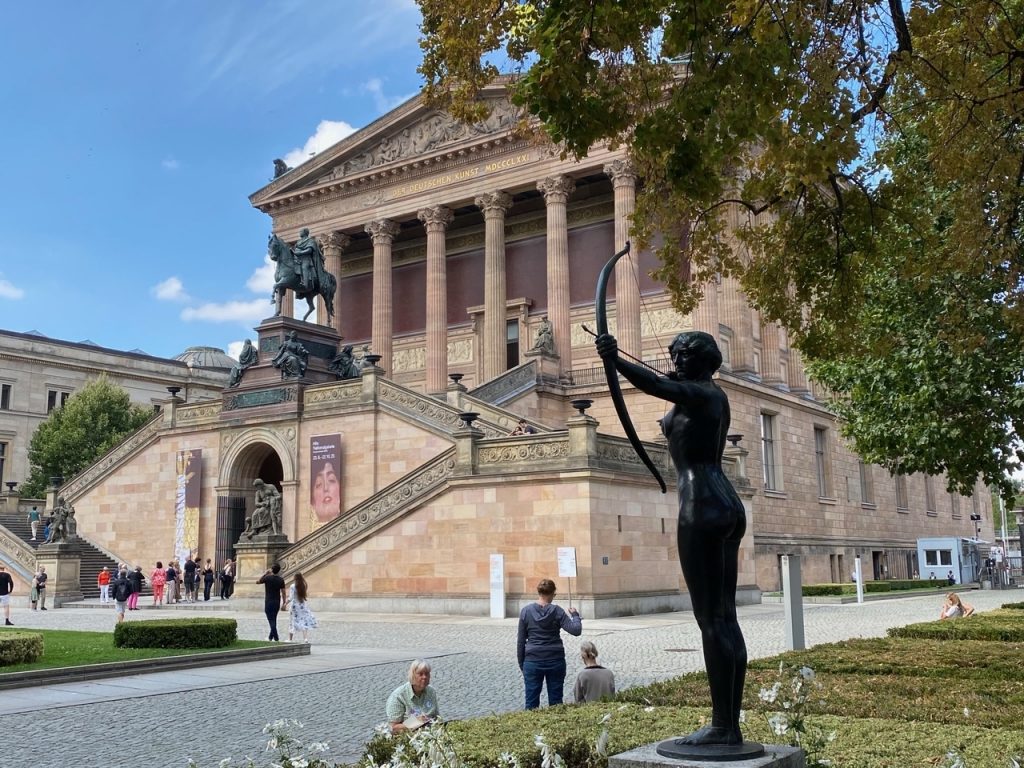
The cathedrals of modernity are under permanent scrutiny. The discussion in Germany was sparked by a recommendation of the scientific advisory council to the federal government (Wissenschaftsrat) to separate the Prussian heritage museums and institutions (SPK) in Berlin into separate entities that have higher autonomy to shape their individual profiles. Too much hierarchy blocks innovation and openness to new approaches that might not fit an overriding instance of decision making. The arts and sciences as well as their libraries need substantial degrees of freedom to flourish in their specific cultural and societal environment. The same discussion is currently occupying Paris and France, since overall the visitors after the Covid-19 crises have not yet come back to the same levels. Digitalization has opened up new opportunities and potentials to reach new audiences. This needed new resources even at a time of budget constraints. Museums have started to take their social functions more seriously besides their role to preserve the cultural heritage. Economic thinking in terms of scarcity of art works, competition between museums and cities or countries for tourism have entered the stages as well. Prices of entry and quantities of visitors have become additional concerns in the organization of the museum landscape. A lot to cope with and to balance multiple policy targets. Accessibility of those treasures is key. Opening up to broader audiences is costly but crucial to provide the justification of the public funds allocated. Great to see more complementary private investment in this exciting field. The prominent archers in front of the Berlin museums have moved ahead into a new round of competition in the organization of museums.
Sleeping
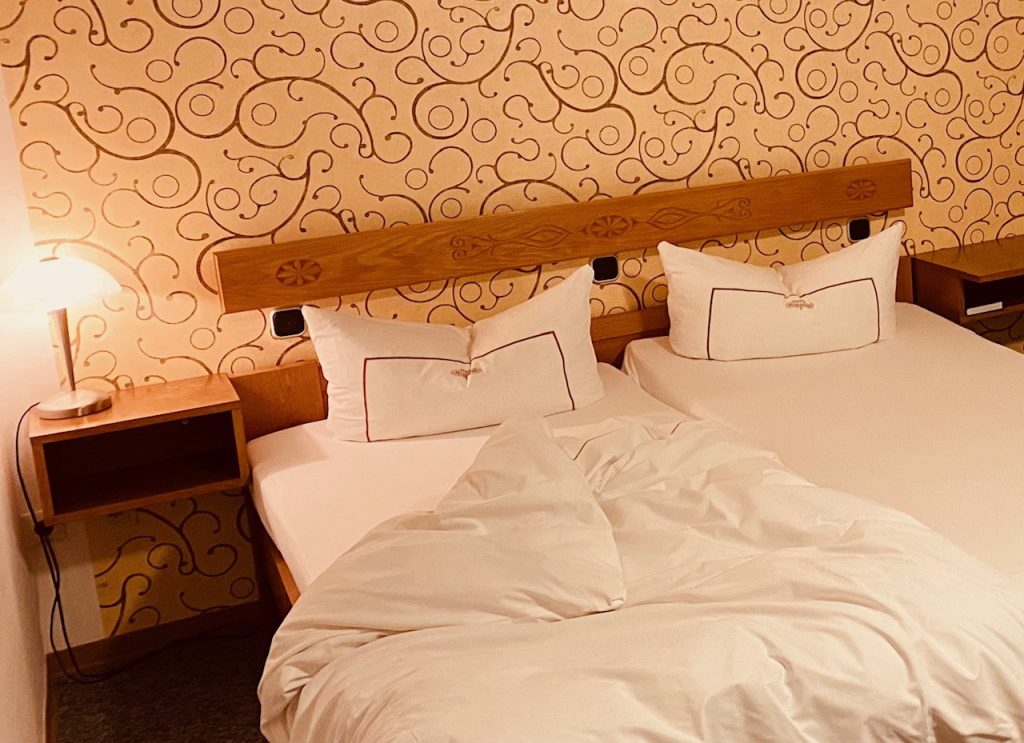
Sleep is a process. That is why it is best to talk of sleeping rather than sleep. There exists abundant research on sleep and more and more acknowledge the process-like characteristics of sleep. The medical literature deals a lot with sleep apnoea, which constitutes a serious health condition. Time use surveys establish links between daily activities and sleeping for example. The social context is another influence on sleeping. Friends and family co-determine sleeping patterns as well. The latest better understood impact on sleeping depends on the use of technological devices before and during sleeping. Smart phones reveal themselves as not so smart if it comes to the quality of your sleep. At least this the result of the study on „bedtime technology use on sleep quality and excessive daytime sleepiness“. It yet another field in which technology is slowly creeping under our skin and we have to learn how to handle negative side effects before they endanger our physical as well as mental health. Bedtime routines or reading without a screen before falling asleep appears to be a worthwhile way to improve sleeping. Worth trying out again and again.
Flotow Hund
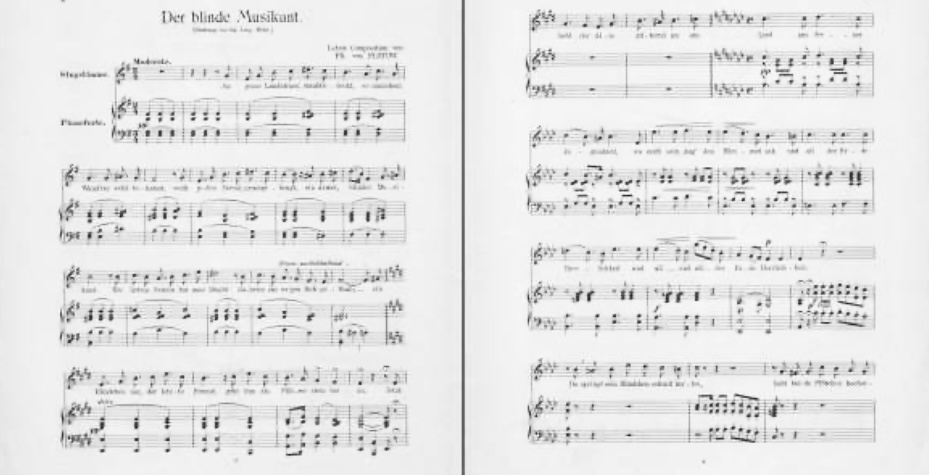
F. v. Flotow hat seine letzten Jahre in Darmstadt verbracht. Seine Kompositionen und Aufführungen seiner Werke haben ihm ein hinreichendes Auskommen an seinem Lebensabend ermöglicht. Als früher Streiter für Autorenrechte an kompositorischer Arbeit wusste er wie wichtig solche Bezüge im höheren Alter waren. Für viele in der damaligen Gesellschaft galten Komponierende als Künstler mit hohem Verarmungsrisiko. Bis kurz vor seinem Tod hat Flotow noch neue Werke komponiert. Das Lied „Der blinde Musikant“ von 1884 wird als das letzte veröffentlichte Werk bezeichnet. Den sterbenden Musiker begleitet sein Hund, der ebenfalls Teil der Aufführungspraxis war. Die einleitende und abschließende Komposition im 3/4 Takt hat eine tänzerische fast humoristische Prägung, die vielleicht eine Anspielung auf seinen Hit „Die letzte Rose“ darstellt. Eine irische Melodie zu einem vom Hund getanzten Begräbnis hätte eine opernhafte Leichtigkeit erzeugt, die nicht vielen im Angesicht des Todes gegönnt ist. Hunde mag ich nicht, aber den da schon. Flotow vertraute sicherlich selbst bis zu seinem Tod auf die Macht der Musik. Sich selbst dabei nicht zu ernst zu nehmen, nachdem sein Freund Jacques Offenbach kürzlich vorher verstorben war, lässt sich hier erkennen. Da bleibt ein gewisser ironischer Begleitton oder zumindest ein Augenzwinkern. (Image Digitale Sammlung der Staatsbibliothek Berlin Auszug Flotow Musiknoten 2024-1).
Memory Management
It seems a strange combination of words: memory management. In computing it has the function to allocate sufficient memory to specific tasks and has substantial implications for software performance (Yves Younan et al. 2010). It is also a security issue as what is stored somewhere might get accessed from other persons or programs with harmful intentions. Historians have a completely different approach to the issue. Individual as well as collective memories are frequently subject to memory management and manipulation. Therefore, it is necessary to critically deal with neglect and purposeful management of collective memories. In Germany we had numerous incidents of rectifying collective memories about the role of diplomats or the Wehrmacht during the Nazi period. Huge efforts were necessary to correct wrong representations of professions during and immediately after the 2WW. They are still necessary today. All children have to learn the concept of time, the past times and the concept of future. Periods after wars particularly generate a narrow focus on the present and the bare necessities of survival in societies. Dealing with and reworking the past and cherished memories is rarely attempted. It appears to be a paradox that without a coherent concept of the past the imagination about the potentials of the future are narrowed down. ‘Burned fingers’ cause additional restrictions. Literature for children and young adults has an important role to open up fictional spaces or laboratories for imagination. Freeing yourself from past restrictions while being aware of responsibilities due to the past allows a conscious way forward and human development. Sebastian Bernhardt (JuLit 3/2023) emphasised this and the Deutsches Historisches Museum had an exposition on this topic as well. Memory Management is a bit about the past but much more about the future. This is why we have to address it.
Survivors
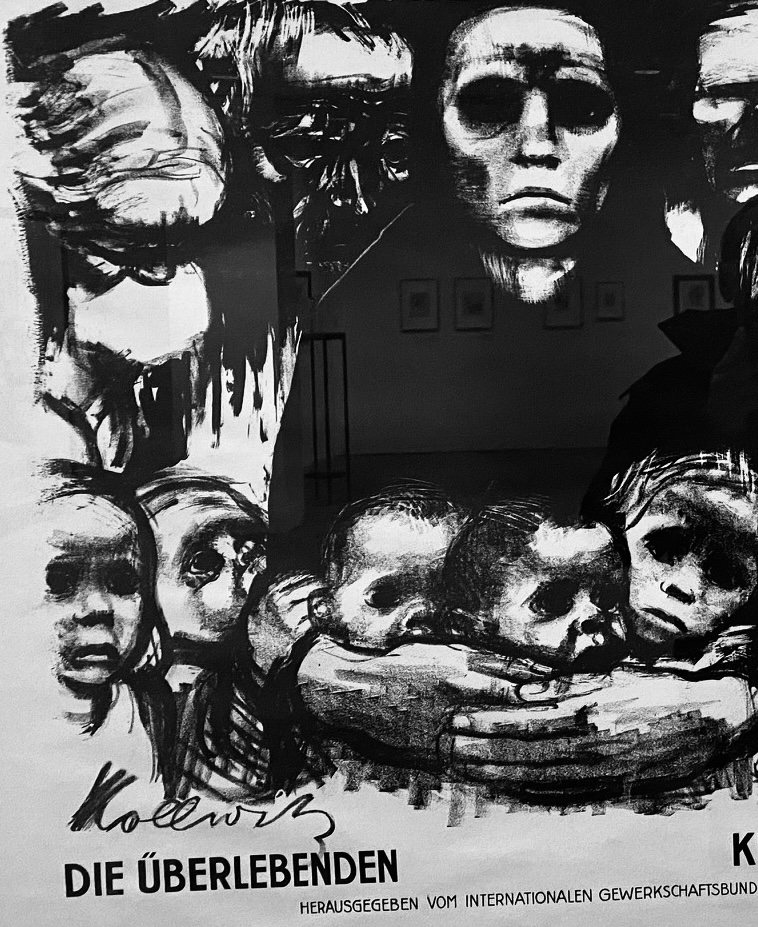
The survivors of war have experienced unimaginable violence and suffering. Once fighting ends the horrors of war live on in the memories of all survivors irrespective of which side they have been fighting. Almost all have lost someone or something they cherished before the outbreak of war. Käthe Kollwitz has depicted these horrific experiences in many examples of her art work. They speak to us today just as much as in the past. Berlin is a great place to learn more about her art. The image below is an extract from a drawing in poster form edited by the International Trade Union Federation from 1923 shown in the Brücke Museum in Berlin Dahlem in 2023.
Continuity in 2024
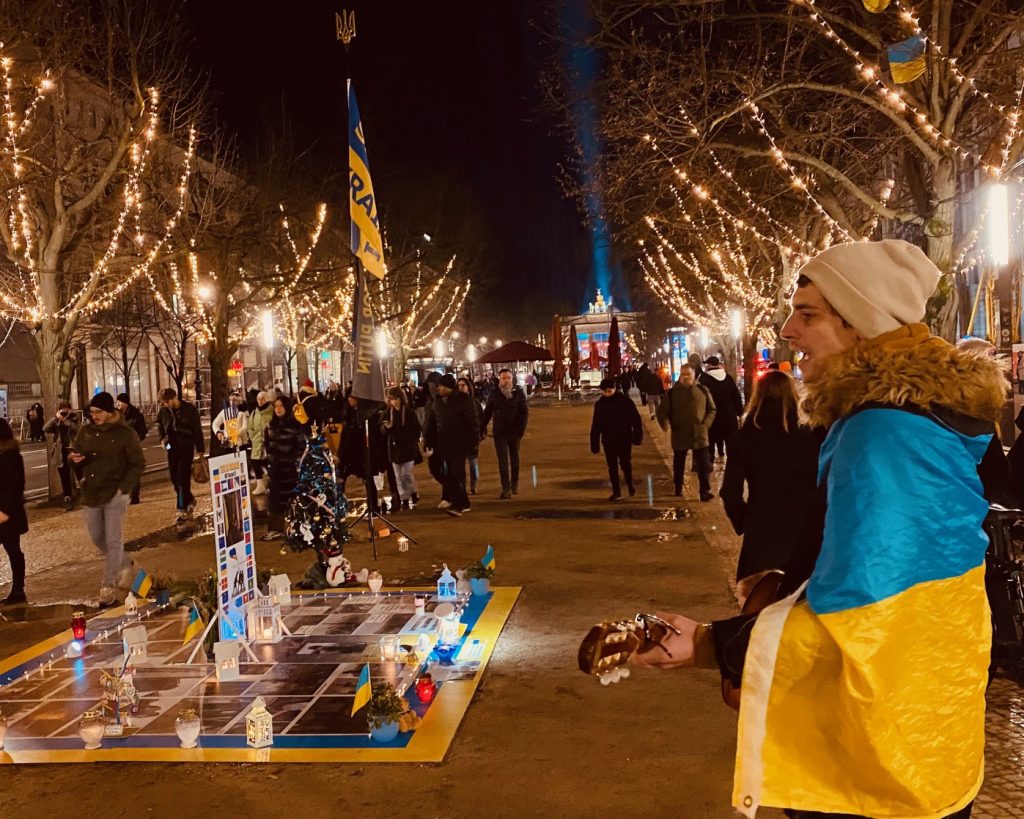
The Russian aggression continues on Ukrainian territory also in 2024. Based on false allegations and stories about a supposed Russian heritage based on Ukraine territory the ongoing war is once again fought more about the past than the present. The future is entirely disregarded by Russia as if it is clear to them that they do not have a future of the dictatorial regime. If a country does no longer care about future perspectives or future generations even, this country is likely to become very dangerous for neighboring countries and beyond because of the high discounting which implicitly applies to all its investments. Western companies who moved out of Russia had immediately high losses. At the same time Russia continues on a daily basis to destroy lives and property. We just shall not stop to support the fight for freedom and democracy in Ukraine as long as it takes. It fighting for our future rather than demons of the past.
Berlin Moscow
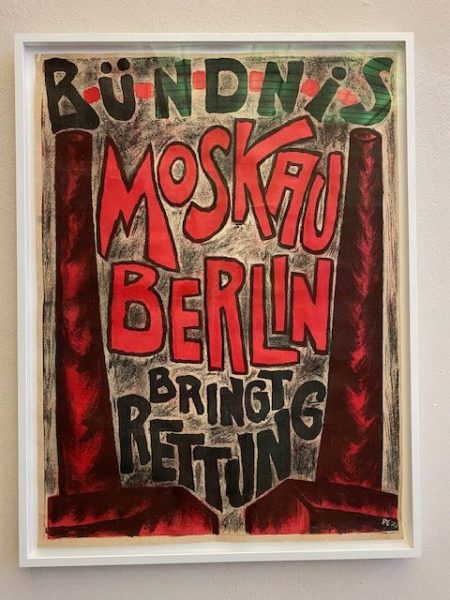
Some historians have a hard time to sort long-term relationships between countries into adequate periods. The ups and downs between Berlin and Moscow are a peculiar example of this. The artist Peter Laszlo Péri expressed this unease in a poster where both cities stand for the dictatorships presumably in the name of the working class. This alliance between Berlin and Moscow, Hitler and Stalin led to occupations of several neighboring countries and war in the following years. With an uncritical stance after German unification the Berlin Moscow link has again facilitated the land grab of Russia with Ukrainian territory. Buying complacency of Berlin in return for cheap oil and gas from Moscow has ended for most European countries now. Great to see Europe united with few minor exceptions and that alliances with other European cities reveal strong and powerful in hope of a more peaceful Europe.