POSSE

for a German speaking audience POSSE stands for a farsical popular drama of the 18th and 19th centuries. Nowadays POSSE has particularly in the English speaking world a completely different meaning. POSSE is short for Publish on your Own Site, Syndicate Everywhere. In other words publish your own creative work, text, tech or melody on your own website first before spreading the content on other platforms. By this strategy you make sure your content stays your content even if a platform like eXitTwitter disappears or the hype has passed like with facebook. And if at any point in time you decide the whole internet is a farce, you will be able to edit the content from your own webpage as a book or audio version as an edited volume. Do not make yourself a modern slave of tobacco, drugs, alcohol or platforms for whom you create (mostly unpaid) content they use to sell advertisements with huge untaxed profits. With POSSE you can make an end to this farce. We still rely on search engines like QWANT, Ecosia, duckduckgo or Mozilla’s Firefox, to name a few less well known web searching tools. They ensure that other people find your webpage beyond the elephant in the room called Google.

Examples of search engines of the internet

Tobacco

The documentation on tobacco slaves has already been told many times. It is astonishing that the medical journal The Lancet just published another short article on the tobacco industry and slave trade. In fact it is the enslaving practice of only buying tobacco leaves from farmers who previously had taken out a loan from the tobacco company. The control of the tobacco supply chain creates a slavish type of relationship between buyers and sellers. The dependency created leaves most tobacco farmers with no choice but to accept the conditions of the big multinational companies.

Taking the issue of slavery even further we might go as far as condemning the advertisement of tobacco and smoking in the neighborhood of schools as an attempt to enrol tobacco slaves. Only few young people manage to give up tobacco smoking later on with already acquired serious health conditions. Helping to break the vicious circle of dependency as a form of slavery to a drug is hard to accomplish. Specialized medical centers are rare and expensive. Pathologising smoking would be worthwhile rather than other diagnoses where easy to perform physical exercise could do a lot for prevention. Helping people to quit smoking or never start with it would be such a big step ahead.

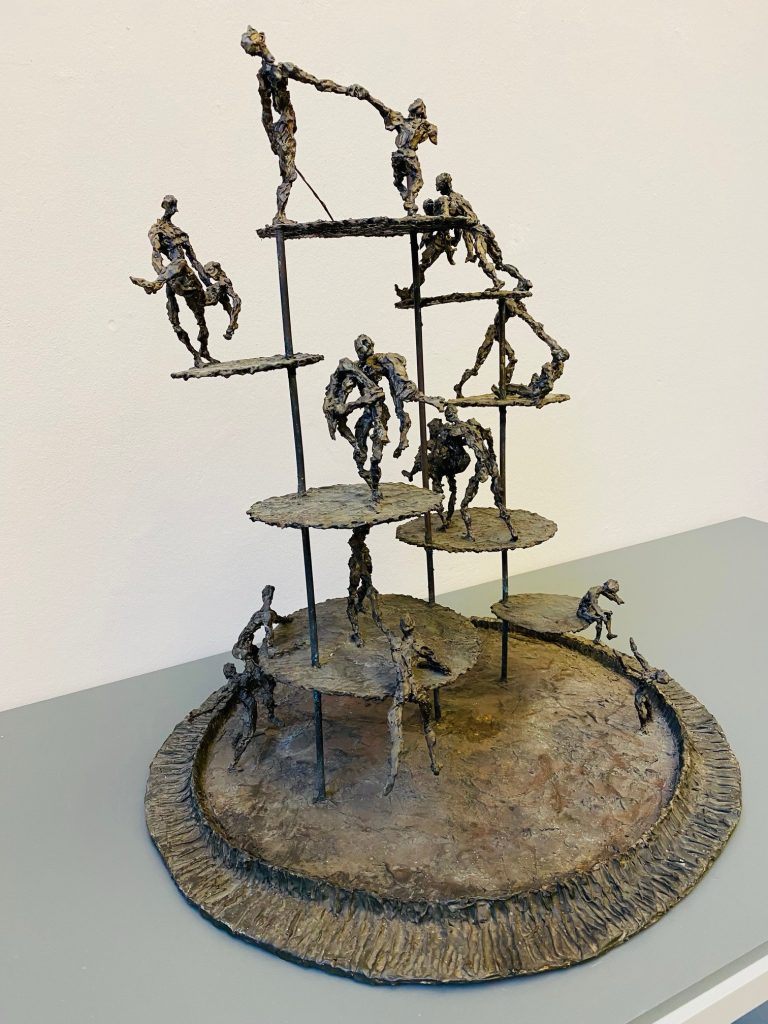
Peter Laszlo Péri 1960 Help your neighbour

Helplessness

Learned helplessness is another which we have to be aware of as social scientists. It is far from surprising that for example giving birth has been transferred from the professional care and exercise of midwives to medical doctors and hospitals. This creates a kind of maximal security around the most natural of events that of child birth. Over the last few decades we have witnessed a pathologising of birth as high risk event. Additionally an emergencification has pushed costs upwards for social security systems as well. In numerous other domains like breast feeding industrial interests have pushed for replacement solutions which are worse than second best solutions.

In other domains like shopping we tend to believe that we need a car to assist us in the endeavor. It is mostly a choice of the least effort to use a personally owned vehicle to replace other solutions which demand more effort of organization like car or bike sharing options. The frequent result is “learned helplessness”. After years of getting used to the debilitating ease of use of navigation systems in cars and bikes we find it hard to put effort into a little self-organization. Learned helplessness will be a substantial burden on our health and social systems if we do not manage to reverse this trend. At times of increased skill shortages we shall no longer have the many helping hands needed to stem the powerful trend of learned helplessness.

Communicate Broadly

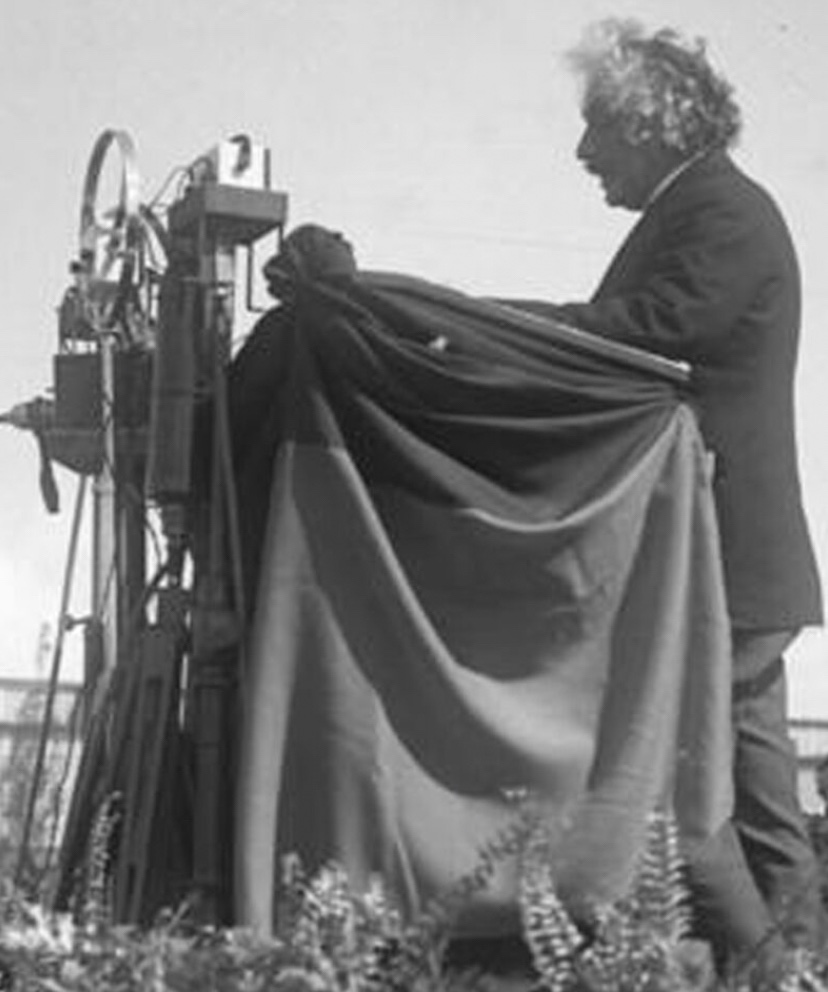
Broadcasting before podcasting has been a kind of revolution in communication technology. The potential of mass communication was promising at the beginning with cultural practices spreading to wider groups in society. Let us take the example of the Rundfunk-Sinfonieorchester Berlin (RSB). Suddenly the audiences grew enormously and it became a public duty to allow the participation of the masses in so-called high art. The foundation of the Rundfunk-Sinfonieorchester Berlin had and has again such a mission. In a memorable address to the foundation of the radio Albert Einstein gave an historic address (Link). He praised the scientific method of discovery and the engineering skills that allowed the new technology to serve all people. The fascists in Germany were early in abusing the technology to manipulate society. Albert Einstein was well aware of this danger to society. His speech is a historic testimony before the waves of emigration began fleeing Nazi-Germany. The best brains were the first to sense the power of the new communication technologies to influence the masses. Broadcasting is around with us in even more invasive ways and many praise themselves to be influencers.

Albert Einstein 1923 Speech Radio Berlin

Eco-trees

This time we thought to advance with our ecological version of Christmas. We use LED lighting and instead of advocating real horse riding we opted for the wooden replacement. We reduced the size of the tree by 27.5% to further cut down on the carbon footprint of our event. As we were all feeling pretty confident that we are on the right track now, we learned from the media reports in Germany that the trees usually grown specifically for Christmas are taking away precious land where otherwise food would be grown. Much worse is the fact that pesticides are very often applied to facilitate the production of trees. (Link to study and test results).

We know that there is a problem in Germany to be frank about environmental dangers of diesel and glyphosate, but we did not want to believe that we inhale glyphosate in our living rooms after the diesel disaster in cities. We thought trees were synonymous for nature. Far off the truth. Better check the ecological impact and risks incurred even for trees. Trust and good faith seems to be utterly misplaced when it comes to nature turned into a product.

2023 hazardous tree 🌲 is

Styles are a Changing

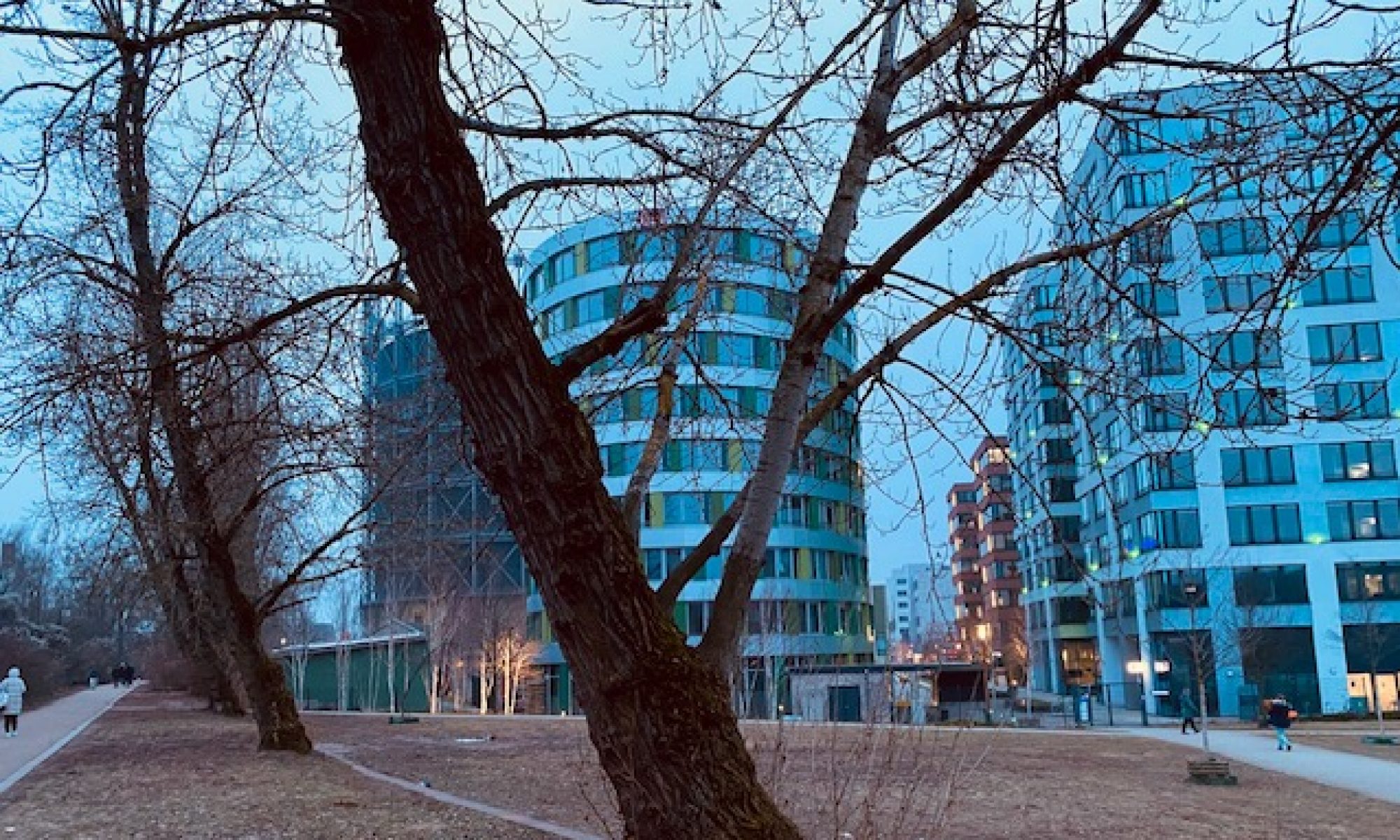
We all have our very own style. Even if you believe you have no style, then this will be your style. Of course, styles are changing continuously and fast fashion tries to make us believe we even ought to change as frequently as possible. Just find your style no matter of age and gender. Yes we can. Young designers test new materials and cuts to make new impressions. As science is progressing with new fibers that imitate the apparently light fur of polar bears, new designs will become feasible and enrich the list of potential fibers in clothing. In addition to seamless 3D knitting the new fiber allows to replace down with light fiber. Going out into the cold will be fun again. Want more of this, visit Fashion in Action! (Image from empty space designers webpage 2023-12-24 Berk and Julien).

Stillness

“Stillness is the key”. This is the title of the American bestselling book by Ryan Holiday (2019). The subtitle tells more about the contents. “An ancient strategy for modern life”. Ancient philosophers and authors have all praised stillness with multiple words. Today we consider people who lived at these times to have an easy time to escape from noisy environments. After all there were no motorways, railroads or other noisy forms of mass transport. However, stillness is more than the absence of noise. Free yourself from external disturbances and you might immediately discover how difficult it is to not have lots of things passing your mind. I enjoyed the shortcut phrase: “stillness is brilliance”. Make stillness the prime time of your day and you will see how it helps you to retreat from the entertainment overload of our everyday life. All religions believe and practice some form of silence as part of their rituals. They all attempt to capture attention and attraction through silent places or cathedrals only to fill them with impressive sounds as soon as many adherents have gathered. Christmas time is a rather sad example of the noisy entertainment function taking over for weeks rather than days. Singing loudly “silent night” is perhaps the most demeaned form.
Take your time to go through the table of contents of the book. Almost all chapters are kept to 6-8 pages before you will find your stillness again. Some examples of chapter titles will suffice to exemplify the road to take: “limit your inputs”, “slow down, think deeply”, “start journaling”, “cultivate silence”, “bathe in beauty”, “say no”, “take a walk”, “build a routine”, “beware escapism”. These are just a few and already too many of the imperatives presented in the book. One for every coming year will do for deep thinking as well.
(Image: what ever comes up when you close your eyes and ears now)

Trending

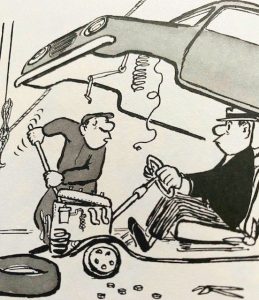
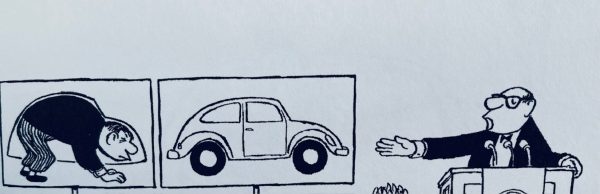
Some cartoonists or scientists have a special capacity to sense and to explain upcoming trends. Put in a humoristic form the audience you are likely to reach will by far exceed the numbers you might reach otherwise. Loriot had a gift in this respect which is much acclaimed in Germany. Taking issue with the obsession of driving a car and all sorts of topics related he foresaw the trend to massive expansion of road traffic and what this trend, if extrapolated, will do to us. Mankind will change, men will no longer be kind. We return to animal-like behaviour and become slaves of the new technologies we create. Bad weather at least makes us rethink our mobility patterns.

Pathology

The definition of disease, illness or disability are a matter of details of definitions. Mostly it is left entirely to medical professionals to define the limits of what shall be considered a disease or not. Pathology is the scientific discipline dealing with this difficult task. As in the scientific endeavor it is honorable to crown your research by finding or defining a new disease not necessarily finding a treatment for it, we have learned about new diseases at regular intervals. Attention deficit syndrome also known as hyperactivity is such an example. Many pupils have received treatments and some made splendid progress in their education due to early recognition of their condition as well as abilities. However, some children have received treatment with questionable diagnostic evidence or just to be able to fit into our modern ways of organizing our schools. We might frame this as a process of “to pathologise” persons or whole groups in society.

The American definition of what constitutes a higher than normal blood pressure or colesterol deviates from the one applied in many European countries so that sometimes the double amount of people should receive medical attention and treatment. From this it becomes more evident that even within the field of pathology there is a societal dimension to it. The “dry january” addresses the pathology of alcohol addiction. Smoking falls into a similar category but no smoke free month has been suggested yet. While it has become normal to overuse antibiotics we shouldn’t reproduce the same mistakes with other medications. We simply need a broader discourse about pathology and the societal origins and implications of it. From the Roman times we have amphitheaters and sacred buildings that we value today. Few sanatoria have survived but a few Roman baths as a preventative approach have survived in the British city of Bath or in the German city of Trier, both quite far from Rome. We should sometimes think more carefully before defining a disease. Not all are pathological. If it seems difficult to stem against the trend of “pathologising”. The ensuing overload of the medical system in consequence is a serious issue. The medical system will degenerate into a system to manage waiting queues with absurd, unequal and unnecessary adverse outcomes. Therefore, sociologists consider the pathologising of societies as just another kind of pathology.

Emergencification

Particularly around holiday seasons across the whole year we observe the “emergencification” in modern societies. This not so new trend consists in the strategy to artificially create emergency situations in which it is considered reasonable to ask for higher prices. It appears to be just another kind of a “greedflation”, whereby extra profits can be reaped due to shortages of food or particular forms of energy. Medical services have also pushed for an emergencification of their services due to ever longer waiting queues for appointments and treatments. The strategy here is easily disclosed. (1) You decline any appointment earlier for inspection of cars, heating systems, office equipment or medical check-ups and sooner or later a “planned” emergency will arise, which allows you to charge higher prices than the routine in time appointment or treatment. This makes prevention of more costly interventions far more difficult. In sum, the costs to society as a whole rise by the simple way of emergencification.
Even using a repair platform, we did not receive a single offer for a more lengthy and costly repair of my 10+ year old car. Hence, we just wait for a breakdown with more serious and costly consequences. Unfortunately, the same holds true for many medical services. If you no longer manage to assure a timely consultation you are more likely to go directly to the emergency services of a hospital. This is then the costly, but only alternative left to you. In the artificially created emergency you have little room for negotiation and a choice of different offers and conditions. It is a shift in negotiation powers to the service provider. The emergencification creates a price inflation of a specific kind. Worryingly, this kind of inflation is well beyond the normal statistical measurement of inflation national statistical offices observe. In addition to the much debated “greedflation” we should deal with the emergencification as an additional price mechanism. Just ask about examples among your friends or in the neighourhood whether they have lived through an example of emergencification. The stories are abundant and full of surprises. The example I heard: “birth and death, both come as a surprise or emergency, and yet we have the whole life to prepare the latter one”. Part of image taken from “Loriot “on the pleasures of driving (2022. Subtitle:” I suppose the screen wipers caused the trouble”.