
The advantage of the goal-setting at the U.N. is definately that the progress or regress can be monitored. To do this, a definition for each goal in words is presented, which has to be translated in all languages. Some notions are subject to conceptual issues. Poverty, for example, in an individualistic society needs to be defined at an individual level. In societies where women and dependent children or elderly persons are part of one household, the household is the unit of definition. After the conceptual clarification the measurement of a set of indicators needs to be identified. How do we measure poverty? Here the focus is either on absolute poverty (lump sum of money available) or relative poverty (relative to others in society). Stability of poverty, poverty as transitional or access to poverty relief programmes as well as charity organisations in a country will play a role here. No simple answers and comparisons here. Timeliness of data is another issue. Data and sampling are costly in itself, therefore not every year the measurement is repeated to gauge progress or regress.
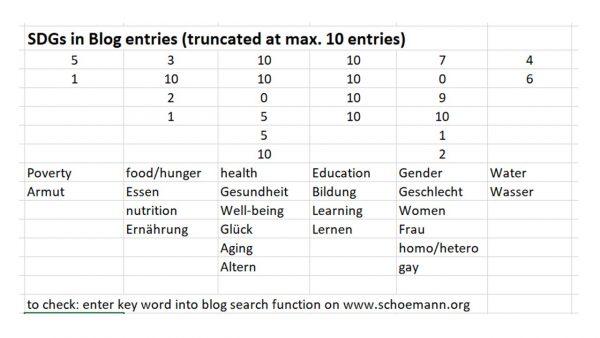
I take account of the SDGs in my own work in the form that the 17 SDGs of the U.N. are part of my work as well. In consulting practice it is a frequent task to check for example a larger enterprise on its contribution to the implementation of SDGs locally, nationally or globally. To start a reflection phase of my blog entries I just used the “search function” of the webpage and entered the first 6 SDGs in English and German to check, whether my webpage is SDG-proof. The result shown below in simple frequencies. Education and Learning come out as top scores. Other areas show fewer entries. In some goals, like gender, the keywords to check for are more diverse and return less precise results. This opens the conceptual box again. The notions summarised under a SDG goal might be numerous or singular – which leads to a bias in results. “Bildung” in German finds also “Weiterbildung” = further or continuous education at the same time, not the English term education. Subtle differences, but potentially huge effects. Overall, an interesting exercise to analyse my/your own mind and business practice. Focused attention versus broad coverage of SDGs, each has its strength and weaknesses. Goal 17 to strengthen the means of implementation and global partnership may build just on many more organisations doing their SDG-homework. Name, Measure, Improve – that is the action. SDGs in Blog1-6
Goals SDGs
The Strategic Development Goals (SDGs) date back to 2015 for their enactment. The goal setting is a routine procedure for the UN and its subsidiary international organisations. This makes a lot of sense, because if you do not name the problems, you are unlikely to address them in a systematic fashion. Quantifying the goals is then a much more difficult task and that then already part of the ensuing discussion about idealist, illusive or realist goals. Most diplomatic exchanges focus on this goal setting and scheduled monitoring as well as more comprehensive evaluations of goal achievement. The SDGs comprise another strategic twist. Rather than concentrating on national governments, non-governmental organisations and businesses were encourages to actively participate in the implementation of the goals. After more than 7 years the achievements of intended improvements should become visible. Well, goal setting and monitoring over the last seven years is likely to reveal failure on several of the 17 indicators. Covid-19, disruption of supply chains, wars causing recessions and high inflation are major factors to explain failure. However, knowing the reasons of failure is a substantial part of improving in the next coming years. Returning to cooperation rather than confrontation could do the trick. Even after wars cooperation to organise relief is the only way forward to come closer to achieving the SDGs.
Bold initiatives like the Marshall-Plan for Europe in the 20th century made it possible to rise from the ashes. Countries that have been in ruins at that time, now have important roles as financial contributors to support other regions. The goals remain the same, the challenges as well. 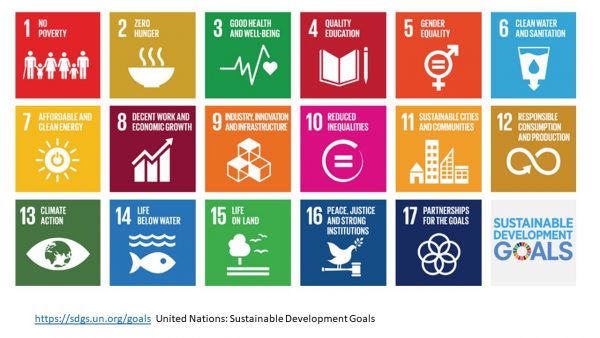
Repair 2
Ever since the visit to the exhibition “Care, Repair, Heal” at the Martin Gropiusbau in Berlin the image of flying protheses rests with me. Repairing the human body is feasible in many fantastic ways. The inner wounds, however, are less visible and sometimes hurting even more. In recognition of the thousands of victims again in the Russian war on Ukraine’s territory and the atrocities causes by mines to injure humans, we have to assist in caring, repairing and healing. This has not changed since the Great War or the Nazi-induced mass murder and mutilations. Humanity is unable to bann such landmines despite international conventions trying to achieve this.
The strong image produced by the protheses as clouds in the sky (Kadar Attia) remind us of the lasting effects of war. Images we had associated with the mutilated soldiers and civilians of the 2nd world war, many still around us in the 60s or 70s, are coming back to Europe. Writing about the 20th century, Aurélien Bellanger described in words a similar traumatising vision of flying protheses in his story of the lonely poet and philosopher. We cannot repair history, but we can work towards reducing useless additional suffering. It is part of the absurdities of our world that technology has created masterpieces to assist us and reduce suffering, but at the same time technology is applied to create the worst suffering as well. Rather than thinking of this relationship as 2 sides of the same coin, I prefer to hope for dialectic evolution towards a better synthesis solution using enforceable international law. Yes, I still have a dream! … 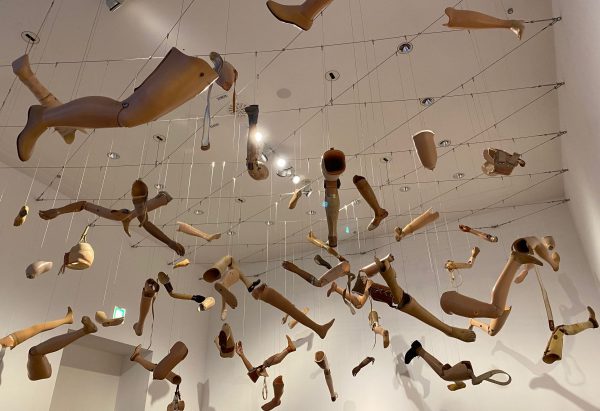
On Noise
The 3 authors Daniel Kahneman, Olivier Sibony, Cass R. Sunstein have published in 2021 the impressive attempt to sell statistics to non-statisticians. The grip on the topic: “Noise. A Flaw in Human Judgment” is a bit misleading. Even the German translation (“Was unsere Entscheidungen verzerrt”), in my opinion, is grossly misleading. The work deals with judgment, or arriving at a sensible judgment. Decision-making is only the next step with a lot of other intervening processes. The German philosophical term since the enlightenment period has been “Urteilskraft“. We are all more or less familiar with the notion “bias” in judgment. Me, originating from the Moselle, will always be biased in favor of a Riesling compared to other vines. In addition to this naive bias I may apply a more professional judgment on wine. Testing several wines even from the same small area from the Moselle valley and then repeating the tasting I might make a noisy judgment. “When wine experts at a major US wine competition tasted the same wines twice, they scored only 18% of the wines identically (usually, the very worst ones).” (p. 80). In addition to the previously defined form of “level noise, pattern noise and system noise” (p.77), we have occasion noise, when judgments vary from an overall statistical perspective.
Having received a second dose of a vaccination yesterday and having spent an unpleasant night my judgment for this review might be biased, because of impatience. So in order to reduce bias and variants of noise I shall repeat the review at a later stage. Let’s see what this returns. But for today, the Epilogue “A less noisy world” (p.377) appears rather odd to me. It is probably an illusion to believe that we can create a less noisy world, even with the best of wishes. The authors abstract from any strategic use of noise to influence judgments. The political form of choosing judges for Constitutional Courts in the U.S. needs to be dealt with. Noise in judgments is an important element, but strategic use of bias might be more influential to impact outcomes. Noise, when faced with a judge who has a reputation to be very tough in sentences might be overturned in an appeal court decision. There are plenty of procedural ways to overcome noise in judgments. I agree with the authors that you better know about the noise in judgments than ignore it. Awareness of random errors and noise involved in grading exams and recruitment decisions have determined many excellent “failures” to leave historic contributions to our world. In music, maths or literature some splendid talents probably have been impeeded at earlier stages of their life to make average or normal careers. Some of them left us with fantastic pieces thanks to the noise in judgment of others.
There seems to be an age bias in the tolerance of noise in the acoustic sense. Noise in the statistical sense has left a strong mark on me when I learned about white noise as error or stochastic process.
Image Kahneman, Sibony, Sunstein 2021. p3.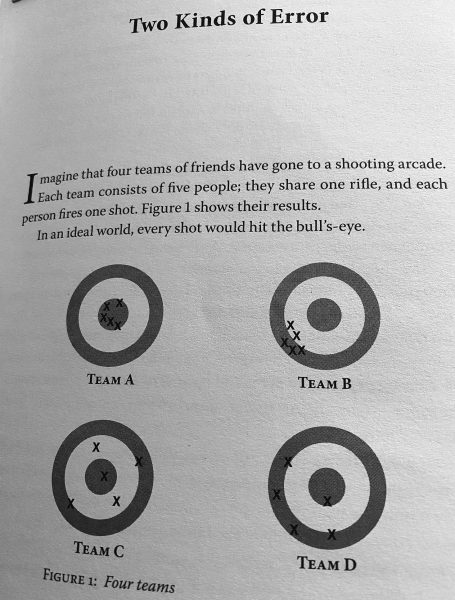
Technology
Over the 20th century technology has pushed forward in many fields. As there were huge investments needed the public campaigns to support new technology without much further reflection of potential consequences have pulled many western societies into risky technologies. Except the Club of Rome there were very few to question the naïve beliefs that technological change will make societies rich and potentially even more equal. The recent report “Climate Inequality Report 2023: Unequal Contributions to Climate Change” has debunked both of these claims. More flying across the planet, particularly short city hopping, has allowed few persons to reap the benefits of the jet-set world, but contributed to climate change in excessive quantities. This is a fact when we compare major world regions among each other as well as within each country. It has to be the wealthy countries that have to shoulder the biggest share of the costs. It has to be the wealthy that pay higher contributions for their pollution. Society has to reign in technology more than ever before. Moreover, we still have to get the income and pollution distribution organised in a better way. It is not only an implementation challenge, but the major question of the 21st century to repair the damage largely caused throughout the 20th century. 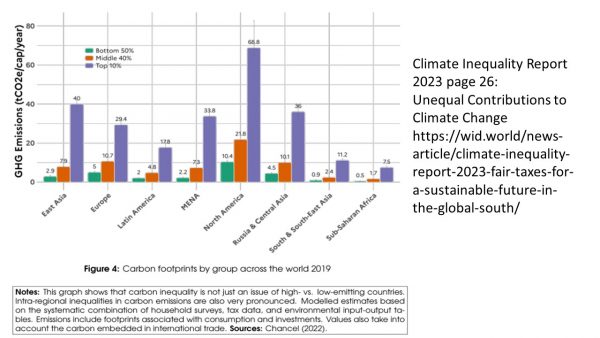
20th Century
The 20th century has told us many lessons. History does not repeat itself, but it appears that new variants of old themes keep coming back. Slowly passing the century like a movie in decades instead of episodes, we witness socio-emotional tides. The first decade, the 00s intensify the beginning of urban planning and social revolutions. The 10s show the arousal and subsequent extinction of masses of people in trenches. The 20s were described as the Carefree Twenties. In the 30s we observed the rising tides of fascist organisations followed shortly afterwards by the disastrous 40s. After the Shoah and the World War the 50s were fabulous viewed from the U.S. and Western Europe. The 60s propagated sex, drugs and rock n’ roll spreading across continents. The wild 70s became almost inescapable through the continued rise of mass media. The 80s were depicted as the colourful 80s as the 2 previous decades had set the scene for psychedelic colours. The 1990s have been coined as the gay 90s by some. Coming out as a gay person became easier and Western societies more sensitive and open to diversity. The back cover of the recent publication by Aurélien Bellanger “Le vingtième siècle” (The 20th century) speaks of the book as “roman polyphonique virtuose”. I look back on the 20th century as “polyphone” in many respects. It would be an illusion to believe we can only keep the nice sounding harmonies without the tensions or dissonances. 
1900s
1900 marks the year of the 5th world exhibition in Paris. The Eiffel tower, built for the 4th exhibition in Paris remains the iconic attraction despite the new architecture that is added to Paris as the Petit and Grand Palais as well as the 1st Metro line. Art Nouveau style adds to already impressive architecture in and around Paris. With the planning horizons of several years in advance of events, urban planning with all its facets of urban infrastructure and architecture becomes much of a defining scientific discipline for decades and for most of the time of the century. Grand urban architecture and design constitute just another form of competition between nation states. Most of them want to show off their imperialist acquisitions and, what they define as “curiosities” at the time.
Habib (2005, pp.502) singles out Arthur Schopenhauer and Friedrich Nietzsche as “heterological thinkers” who coin major thoughts in the late 19th century that shall influence the beginning of the 20th century right from the year 1900 onwards. “The world should be formed in your image by your reason, your will, and your love! And truly, it will be to your happiness you enlightened men!” (Nietzsche. Thus spoke Zarathustra 1978, p.110). In retrospect from the 21st century we shall doubt this overly positive approach to human intentions and their will to form the world according to their abstracting ideas only. Tensions between technology and society became visible and it took many decades before society became conscious that it is up to society to choose technologies they preferred.
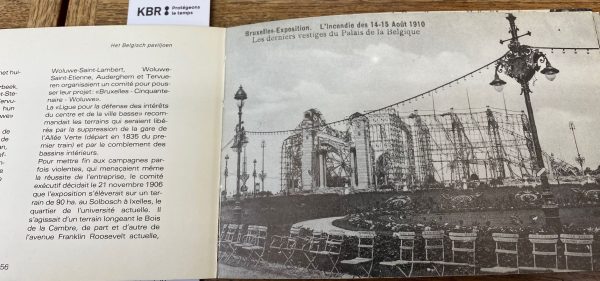
The planning for the Brussel Expo 1910 started right after the previous Expo 1905 in Liège. Protests in Brussels accompanied already the choice of terrain for the Expo, but the governors and shareholders of the enterprise decided 1906 for a site near the “forêt de Soignes”, where trees had to be cut for access to the construction site and for future visitors under local protest. Women workers were present to exhibit the low pay of women in industries. Child labour was documented with shocking images. Around the globe labour movements started to raise attention. In the U.S. the National Women’s Trade Union League (1903) was founded as well as the National Child Labor Committee (1904). “Bloody Sunday” in St. Petersburg (1905) saw the killing of peaceful protestors in front of the Zsar’s palace, which ignited the Russian Revolution of 1905 and the creation of the Russian Parliament. Some of these issues (child labor) keep returning to our social agenda well into the 21st century.
Einstein’s publication of the theory of special relativity (1905) as well as challenges from social philosophy reflects the huge discrepancy between advancement of the sciences and the living conditions of the masses. Social theories and science advances foreshadow the violent turbulence throughout the 20th century.
(Sources: (1) Max Welch Guerra et al. (2023). European Planning History in the 20th Century: A Continent of Urban Planning. Routledge. (2) St. James Encyclopedia of Labor History Worldwide: Major Events in Labor History and Their Impact, Neil Schlager (2004). (3) Images from I. Van Hasselt(1980) Bruxelles Expo 1910: l’incendie / de brand. J Stevens. 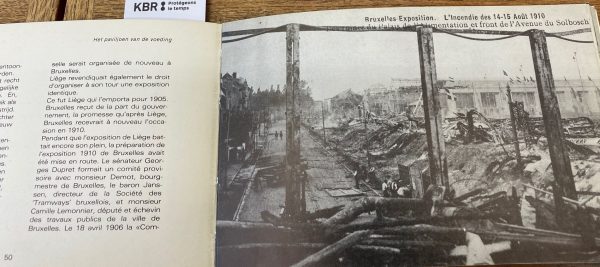
10s
The 1910s have been eclipsed completely by “the Great War” between 1914 to 1918. The 1st world war certainly was the most horrific period of the decade of revolutions and mass arousal. From a global history perspective the years preceding and shortly after the humanitarian disasters deserve more attention, if we were to derive lessons for prevention of other world encompassing wars of imperialist states. The numbers 1st, 2nd, … 3rd (?) world war suggest an unescapable numbering of events. We no longer can think in this trivialising logic of war or historical determinism. Empires go to war more easily than democracies. This was the social scientists’ consensus after the Great War. It took several years for many European states to turn more democratic, allowing women to vote, or introduce more robust health and social security systems. Powerful aristocracies would not cede power easily, only the widespread poverty after the Great War and the human losses discredited many aristocratic regimes throughout Europe. The imperialist dominance of the beginning of the 1910s produced a spirit of ruthless conquest and exploitation of colonies around the world. It took another global war and almost half a century to dismantle these regimes. To understand global alliances and impediments of wars in the 21st century, the early 1910s are instructive as they inform the restitution of artefacts debate in the 2020s. In the history of ideas, the 1910s are probably best characterised as the period of attempting to turn “grand ideas” into political facts on the globe. The rise of Marxist ideology, liberal and fascist counter movements started to take powerful roots at the end of the 1910s. All these ideas and factual changes of the maps of power still seem to govern a lot of international politics even today. 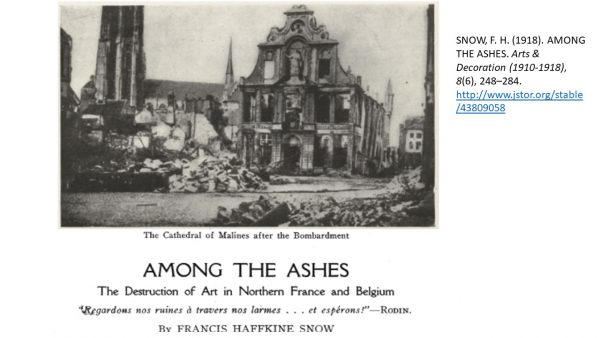
Construction
Construction as an industrial sector was growing strongly in the last decade. Corona crises, supply chain disruptions have slowed growth in the last two years, but the sector was still growing in terms of employment. The topic of skill and employee shortages hardened from year to year. In March 2023 the sector has more time to reflect on the somehow rapid, if not sometimes chaotic growth of the previous decade. The macro-economic scenario has changed now. Following on supply chain disruptions, we saw the high inflation rates of raw materials. The war of Russia against Ukraine caused energy prices to soar and eventually come down again. Latest worry is the increase in interest rates to finance construction projects of public, private and the business sector.
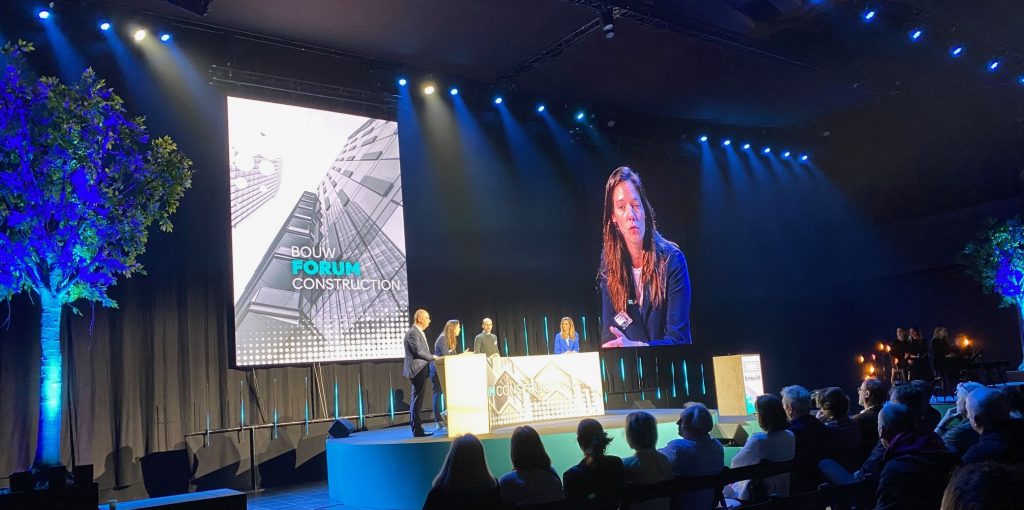
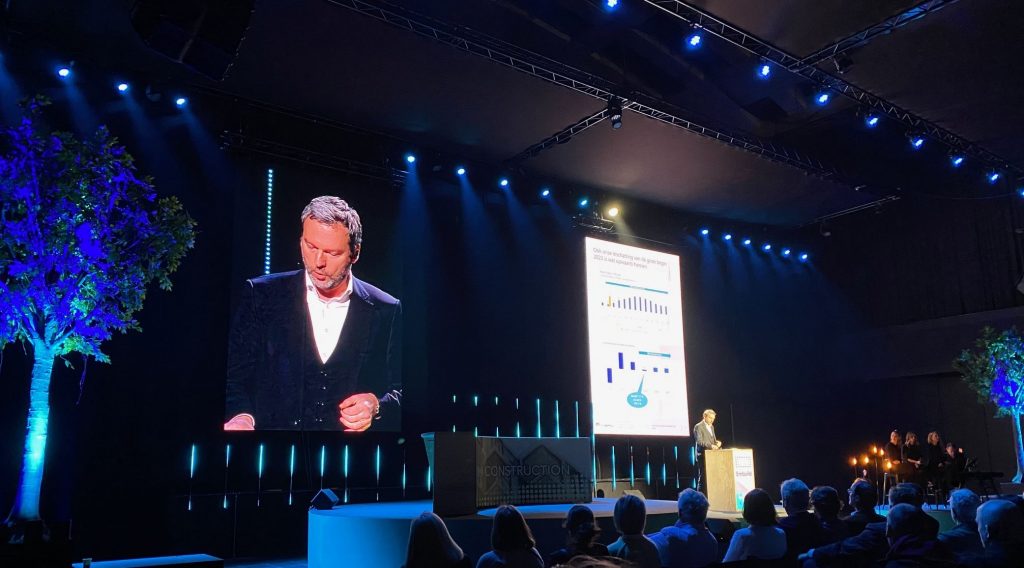
The whole sector is known for its economic role of forerunner of economic cycles, up or down. So, what are the prospects? Not so rosy, as the experts explain for example on the expert forum of the Belgian construction forum. The official from the Belgian National Bank announced a rather bleak outlook for the sector. New construction is stalling, but the renovation of buildings, especially for the purpose of reducing energy consumption is still strong and growing. Long-term reduction of emissions keeps the sector busy, thanks to the EU green deal in my opinion. The public, private and business investments in buildings all keep growth from turning negative. 2 big worries remain: (1) skill shortages and the lack of employees signalled in job openings in the sector is high and still rising; (2) the scarcity of women employed in the sector is still trailing most other sectors. Most companies have seen earnings grow over the last decade, sufficient time to build up reserves for the tougher quarters to come. Skill shortages and gender biases are harder to overcome. The Construction Forum in Brussels addressed both topics and tries to convince employers and the younger generation. Construction companies have to work on their male-dominated image was one of the take home messages Hélène de Troostemberg, the Director of Build Up pronounced.
It is not certainly not enough to have a woman as moderator of a panel and an all-female singers group accompanying the presentations. Women as architects, technicians and builders will make the sector even more attractive for the next generation of men as well. Aging of employees in the sector is another tough issue waiting for innovative solutions. Digitalisation of every step in the value chain is an additional necessary step. The leadership and trade unions in the sector are well aware of these facts. Maybe next year women engineers will pilot the robotics demonstration rather than being in charge of building a nice atmosphere with their songs. I must admit I liked the intro song to the Forum: “We build this city on rock ‘n role”, but I am less sure whether rock ‘n role will solve the gender and recruiting issue of the sector. However, naming and framing the problem(s) is already part of the solution.

Spring2023
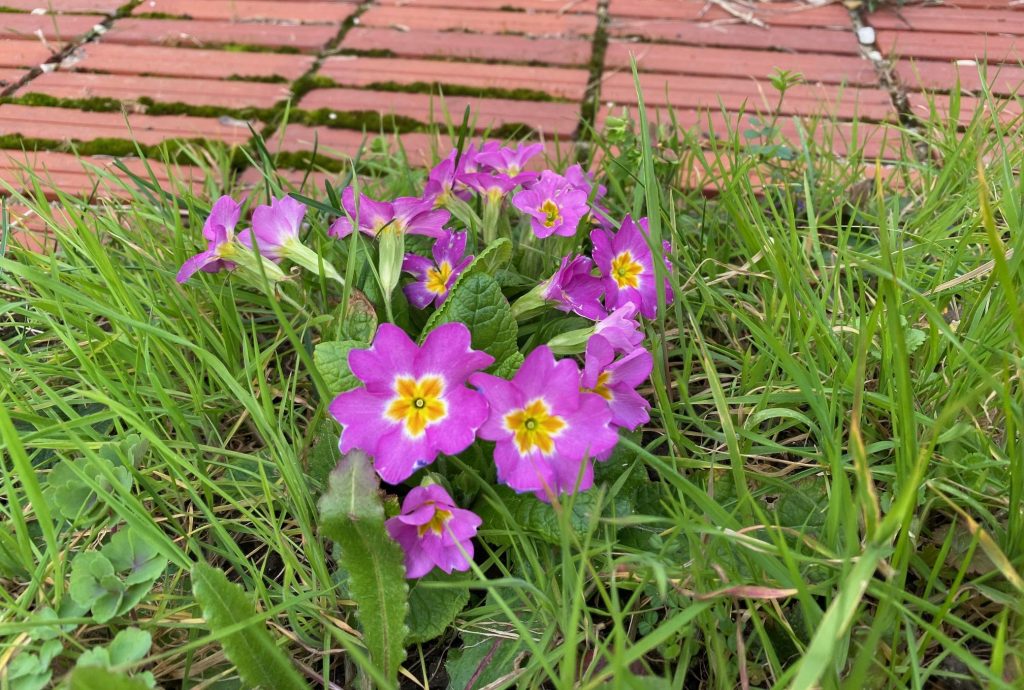
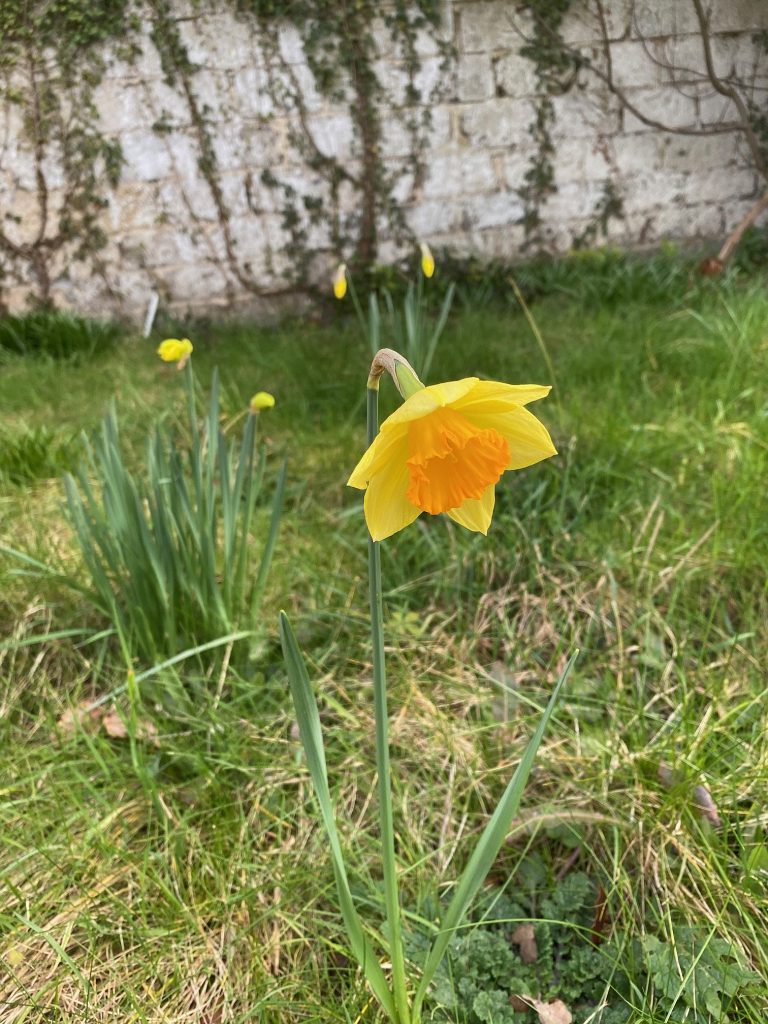
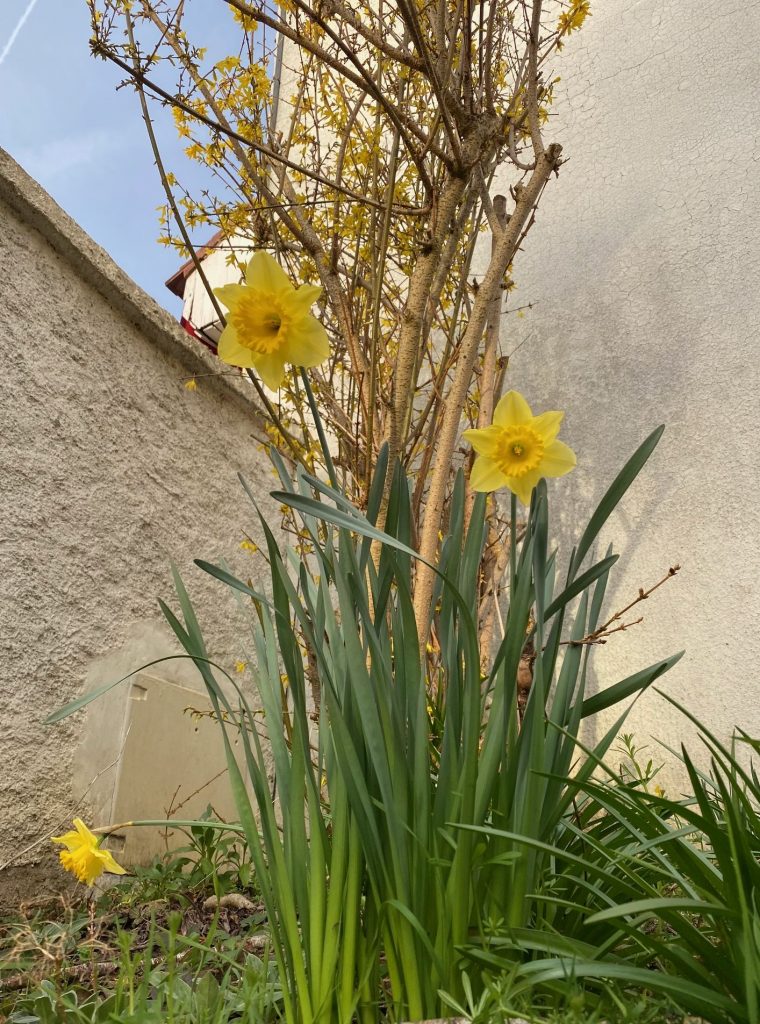
Spring has sprung, a little bit early in 2023. On the 16th of March in the vicinity of Paris, where Caillebotte designed his impressionist garden. It is still 4 weeks until Easter. The spring flowers will hardly survive until then. Hence, we prepare for an early summer, nice because of less heating, but the vegetation is suffering in the region due to the lack of rain. Hay fever for millions of persons will start early this year as well. The damages from a fire in the nearby forest “Sénart” from 2018 have still not really disappeared. It is expensive and needs a lot of workers, equipment and knowhow to avoid the same old mistakes of planting mono-cultures of trees again. When will they ever learn, when will they ever learn.