Rare instruments

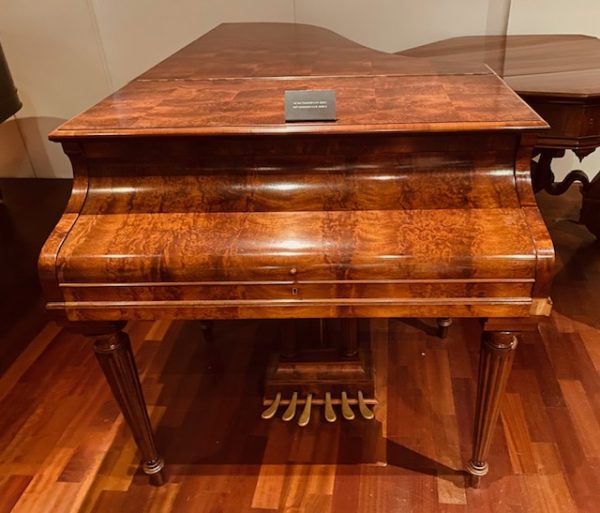
The museum of musical instruments in Brussels features many rare instruments. The collection of grand pianos is a bit hidden on the top floor of the splendid Old England building in the concert hall. The lack of explanations allows you to discover the collection yourself if you happen to be early for a concert for example. Varieties of special features for grand pianos, you might not even have dreamed about, are up there. It would just need a few demonstrations of the technical features to reach larger audiences for these marvelous pieces. The combination of grand piano and harpsichord features has not made it into many concert halls, but special appearances could find their audiences. Maintenance, however, is a costly issue, whiich might have to rely on devoted sponsors in the cultural treasures of rare instruments. 

Exams time

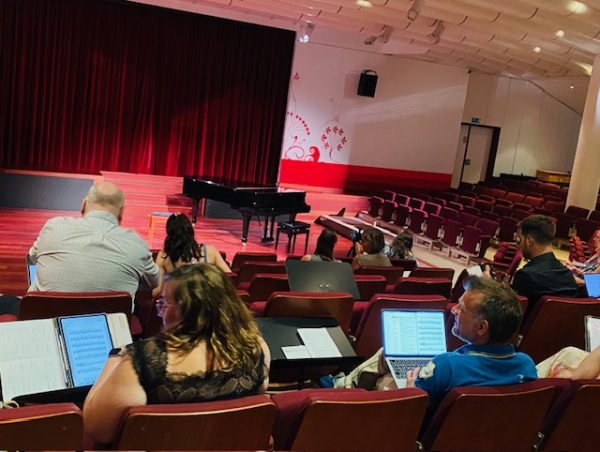
From time to time its exams time. Students of all ages have to face juries or standardized exams. For the credibility and for the sake of transparency, exams of higher grades invite the public to participate in these academic and learning rituals. For profs it is a moment to demonstrate the standards against which accomplishments and yearly progress is assessed. The level of instruction  is, however, still difficult to assess as the prior level, the year or years before is of course a quite influential intervening factor. Recruit the best and you are likely to have the best results after year after as well. The clarity about what is going to be assessed at the end of a Masters degree is essential as various target professional activities might determine a student’s orientation and ambition. Music is a great case to study as many students go into teaching professions afterwards and only a few shall aim for stage performance level or orchestra positions. Even within music exams time is not only just about music. 

Long run

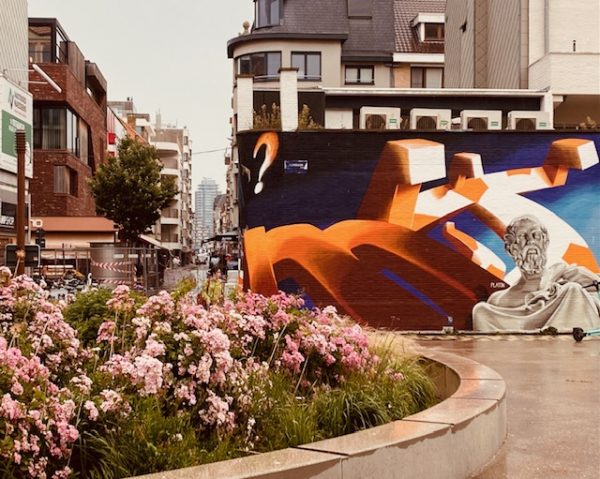
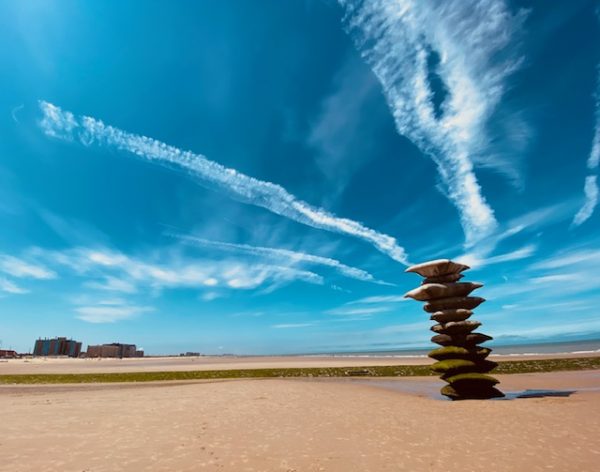
The future orientation is a principal component of any investment. If a society stops investing its impeding its own ability to adapt and grow. Investment costs today will likely generate returns in the medium or long run. A caveat applies. Some investments may cause long running liabilities, like nuclear energy. The choice of which investment to choose, therefore, is crucial. The investment in people is likely to have a positive return in the long run because it remains an investment that has a high potential to adapt to changing circumstances rapidly. Training as scientist allows to do both fundamental research or to choose an applied field with little reorientation. A focus on the long run has advantages of likely stable returns if previous forecasts in what to invest were correct and reliable. This is the point where besides the difficulty to make good (technological) choices, probabilities enter the equation. The longer the time horizon, the greater the probability that relevant changes, which impact the future returns, shall occur. At best, some of these may cancel out each other in the long run. The potential that some risks are “too big to fail” does not mean that shall not occur (zero probability does not exist in technical nor human decisions. A sound theory of social investment would be a great step ahead for humanity in the 21st century. (Image: Ostend street art 2026-6) 

École buissonnière

In 2026 the “École buissonnière“, the outdoor schooling has become a viable alternative to the schools that are overly hot during summer. But far beyond being an alternative out of necessity, schools as well as kindergardens adopt a form of schooling close to and in nature. It can be so much more than a simple interlude or excursion. Learning from nature is a precursor of bionics as well as compassion. After all nature offers ample examples of diversity and coping mechanisms. It is an option not only for learning purposes restricted to the young, but it is underexploited in continuous learning and lifewide experiences as well. There have been abuses also in history, most notably by Nazis in Germany for purposes of indoctrination. The learning opportunities to encourage a critical perspective of our modern, technology- and screen-dominated learning and life, are huge. They just need experienced guidance on the way of discovery, comparisons and collective experiences. Children open up and have fun, the more the pressure of classrooms is alleviated.  Learning about the importance of biodiversity from different angles is a very human value and includes our responsibility for other species.

Internet pain or gain

Billions of people are forced to lose time when clicking through webpages. Instead of the default  to deny cookies, we are forced to “opt out” in most instances to a collection of random data-hungry, largely in-transparent and more or less risky cookies. It could be simple. It just needs a consensus to make the no-cookies rule the default. By such a simple measure the open information part of the internet is strengthened again. All for pay or “pay-with-your-data” offers on the internet would have to make you to confirm your “opt in”, thereby alleviating the burden for search of information. Huge corporate interests that rely on advertising profiles are, of course, an obstacle to such changes, but search engines of the internet would gain importance again before generative AI and AI-agents shall make own search and clicking on cookies denial a different routine again. For the time being we keep wasting our precious time to deny cookies. Just changing the default shall bring back a better internet and the focus on ease of access, diversity of information and better privacy. Make the internet fun again! Choose your browser consciously as well. 

Gardening culture

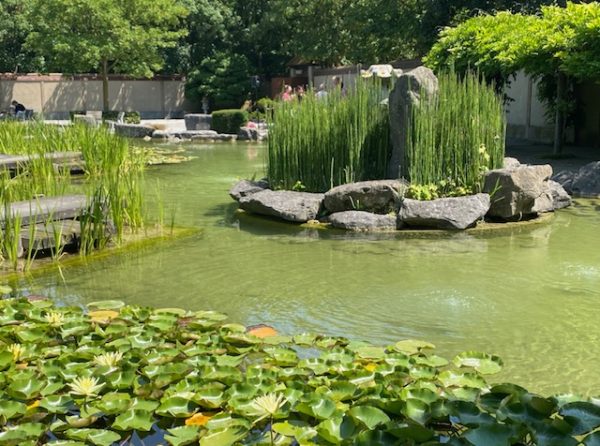
There is a specific set of skills attached to gardening culture. You do not have to travel continents to experience the pleasure of gardening from more than just your own culture. Beyond the tradition of the French garden “à la Le Nôtre”, the English garden including the short precisely trimmed lawn and blooming arrangements, the Japanese gardens have a wholistic approach, which pay attention to broader human experiences of nature. A garden is a kind of sanctuary. It resembles more an internal journey rather than a showing off to others. Walls serve to enhance privacy to be able to open-up again later to others rather than a symbol of distinction and exclusion from the less privileged. Small places suffice to give room to a Bonsai experience. The very busy seaside resorts and port of Ostend on the Belgian coast has reserved a small spot for inner peace in its Japanese garden. (Image: Japanese garden “Shin Kai Tei” in Ostend created by Takahashi Sawano) 

Ensor Home

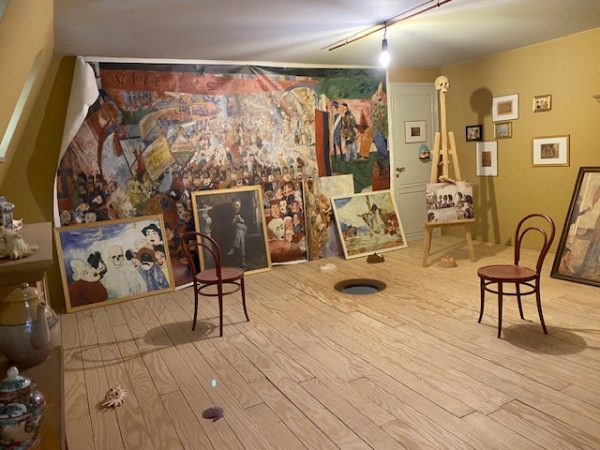
There are few artists who stayed in their home for almost all their life. James Ensor was a personality who was profoundly attached and continually attracted to his native city of Ostend. After a short and unsuccessful spell at the Brussels art academy, he returned to his parents’ home and due to a heritage from an uncle, he could live in a nearby house, which also served him as his atelier. Although I did not come across documents that showed he had traveled a lot, nowadays his art work is spread across the globe. The seaside resort of Ostend was a real tourist destination and, therefore, many famous people of the 1st half of the century passed by and met with Ensor there. Not only fellow artists, but also scientists like Albert Einstein. Critical minds and people searching beyond the trodden paths must have been attracted to him, a personality who dared to challenge conventional painting and techniques of his time. A reconstruction of his atelier and several animations give a lively modern touch to his work and living style. My take home message from the Ensor Home: The search for inspiration might be just around the corner. 

Autonomous Agents

We all have seen more or less autonomous robots somewhere, maybe in a garden silently doing its job or doing more demanding tasks like in playing table tennis against a human. Even the evolution of polluting fireworks to swarms of little light-emitting drones designing figures on the sky have become quite popular. The AI-world is similarly advancing rapidly and proposes more and more “autonomous agents” to assist us. It seems crucial to distinguish the 2 Ds of autonomous agents: Degrees and Dimensions. As with job quality or job satisfaction, there are several sub-dimensions, which need to be considered when dealing, in a summarizing form, with such encompassing terms.
You might allow an agent to order missing food for a meal and pay for this autonomously. You might even be assisted in financial choices to a large degree, but you might not want an autonomous agent to make far reaching decisions concerning your health or partnership(s). Besides such dimensions, the degree of autonomous decision-making needs to be calibrated according to your (perhaps changing) preferences. Booking a table in a restaurant, with a single other person, might not just be a friendly, nice assistance, but it might get you into severe trouble. However, managing conference bookings, a family event or a birthday party might allow you to concentrate on other issues or specific details. Additionally, there are underlying and cross-cutting topics like trust, risks and security that enter the “2 Ds of autonomous agents”. A 2-dimensional matrix plotting levels across dimensions might work as a behavioral guideline in the development of autonomous agents. More dimensions may be added during the implementation.
Autonomy in swarm

Swarm behavior is a fascinating research area. Almost all scientific disciplines feature some interest and publication in this area. The biological origins have been associated a lot with the marvelous behavior and patterns formed by fish moving about in swarms. Some species of birds show similar patterns of collective and somehow coordinated swarm movement. It appears to be tricky to safeguard some form of autonomy in the overriding mass behavior and mass movement.
Recent advances in this field by Li, Li & Zhao (2023) model such behavior within a predator-prey framework to explain the evolution of overall swarm behavior. Whereas “prey” strategies consist in “flocking” and “swirling” to irritate predator(s), the predators make use of “dispersion”, “confusion” as well as “marginal predation tactics”. Additionally, several assumptions go into the modeling of swarm behavioral evolution: agent observation, agent dynamics, and the environment. The mixed cooperative-competitive multi-agent setting applies reinforcement learning, additionally. The framework of evolution has 5 driving forces: (1) homogeneity of a swarm (parameter sharing); (2) actor with decentralized critic network; (3) replay buffer to enhance learning; (4) rewards for predator and loss for prey; (5) learning algorithm.
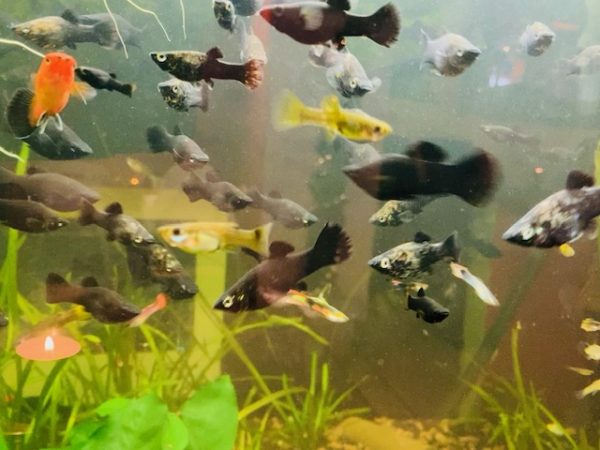
The modeling approach reveals the impact of an agent-critic network (potential of autonomous behavior) for protection of a swarm in a predator-prey scenario. (Image: fish in fish bowl 2024)

Autonomy in Peripherals

The knowledge associated with the term autonomy has entered for a long time already the IT-world. In order to safe energy and computing power, peripherals can do some number crunching before entering the main CPU. So-called autonomous peripheral operations (“APO”) can run in external devices. The degree of autonomy from the main computing system becomes a matter of design.
We have imagined networks in sociological research mostly in terms of strong and weak ties. Theoretical models of networks have largely neglected the features of autonomous peripheries as we learn from IT hardware design. The autonomous peripheries have entered social science research more in form of “sleeping cells” or individuals who understand themselves as part of a larger network, but act in an autonomous fashion, which makes it difficult to detect them. Core and, or versus peripheries opens a whole additional research agenda.