AI earnings effects

In the first few years of wider adoption of AI in an economy, there is the expectation that this might lead to substantial productivity gains for enterprises which use it as well as for employees who are early adopters of the relatively new technology. The study by the Stanford Digital Economy Lab by  Chen, Chandar and Brynjolfsson (2025) showed that so far there are no significant earnings effects for employees. Based on millions of recent payroll data from US companies productivity gains have not trickled through to the paycheck in terms of monthly salaries. Participation of staff in a company’s overall turnover or profit might change this as time evolves. For civil servants the adoption of AI might mean increases in cases dealt with as some tasks can be executes faster than before with the use of AI.
The evidence points to employment effects of AI rather than earnings effects so far. A hypothesis is yet unresolved: senior employees using AI might employ fewer junior workers at entry positions, if these “hallucinating” young professionals can be replaced by hallucinating AI. In science the hallucination has sometimes lead to disruptive new approaches and findings. It is a tough choice to pick the young entrants with high productivity potential and eventually high remuneration for this in terms of labor earnings.


AI employment effects

The first robust empirical evidence about employment effects of AI in the USA has been published by the Stanford Digital Economy Lab by  Chen, Chandar and Brynjolfsson (2025). A previous paper by Wang and Wang (2025) highlighted the comparative advantage of persons who use AI in their work compared to others and the authors coined the term “learning by using technology”.  The prediction of the model was that there might be job losses of more than 20% in the long run and half of this already in the first 5 years of the introduction of the technology. The Stanford economists have estimated with real world data these effects in the USA and find quite surprisingly that the negative employment effects of AI have the strongest impact on young labor market entrants with few years of labor market experience. Middle-aged and more senior employees seem to benefit from “tacit knowledge” about the work, which is more difficult to replace with AI, at least for the time being of the early days of AI. This evidence is based on recent payroll data from the largest payroll processing firm “ADP” in the USA which has firms overrepresented from the manufacturing and services industries as reported in another paper  (Firm size maybe another source of bias).  However, the effect that youth 22-25 years of age suffered the most calls into question the common belief that older workers are more likely to suffer the consequences as during in the rise of the digital economy around the year 2000. (AI Image created with Canva)

Vacation or Workation

Vacation or Workation, that is the question. Remote work and outsourcing of work have  created the opportunity for more people to work from distant places. Logging into the firm’s or the administration’s secured intranet enabled to work from where you prefer to work rather than on the premises of the firm. After the technological shift to enable secure remote work, the acceptability of remote work is a societal issue. Whereas bosses worked or had to work while on travel for many decades, the same has become feasible due to reduced costs for many other employees as well. The Covid-19 pandemic has forced another shift in the need to accept and advance remote work as well. Taken together the option of a “workation” instead of a vacation became equally more feasible. The borderline between remote work, “workation” and vacation has become more and more blurred. It remains to be seen, whether these options enhance an outsourcing trend by firms or whether  more “back-sourcing” or “in-sourcing” will be the consequence.
Employers with their associations and employees with their trade union representatives have a need to include such topics in their bargaining agenda in addition to pay, health and safety, as well as working time adaptations.
(Image created with Canva 2025-9)


Vacation money

The budget for a vacation, depending on your destination, is subject to exchange rate adjustments. If there are several months between planning and traveling the exchange rate like between the US $ and the Euro € has fluctuated recently by 10% in favor of the €uro. Nice for those receiving salaries in € and who spend their vacation in a region using the US $ as main payment currency. International tourists frequently calculate in $ and therefore might find Europe a bit more expensive than before the return of Donald Trump in the USA.
However, for all those who live in the Member States of the Euro-area and take their vacation there as well, they no longer think in exchange rate risks to their vacation budget. Additionally, there are almost no risks to be subject to fake money transactions like in unfamiliar currencies.
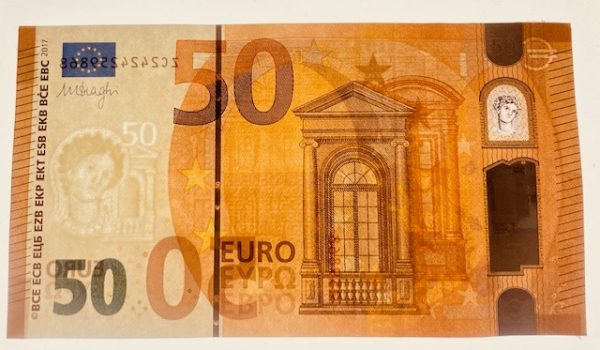
In the Euro area we can use for example backlight to make sure a 50€ bank note is a real one. Happy vacation! 

Vacation Waves

One of the most popular choices for a vacation is in connection with waves. There seems to be something mystical or romantic related to waves, which touches many people irrespective of their background and across continents. This goes much beyond what we know about waves from physics or maths and this is already a fascinating scientific story in itself. Sailing adepts will be able to tell marvellous tales about waves, too. Coming back from a vacation near the sea or a lake, you surely may add another story to the already rich inventory of waves in art or literature. The imagery about waves started early as well, ever since sailors started to conquer the world.

Vacation time

According to statistics from INSEE about 20% of the French population reported in 2024 that they could not not go on vacation due to financial reasons. Another additional 20% did not go on vacation for other reasons based on another survey mentioning other reasons, like psychological or logistical issues as being of overriding importance.
Openness to new experiences is a well researched concept of psychology and vacations can be a challenging time for established convictions. Meeting people from other cultures particularly allows to reflect on one’s own values and behavior. Some people may just want to avoid being challenged or even potentially destabilized. Destination time and place involve choices and decision making often within families or with friends.
The topic of vacation is much like an evolutionary process. Towards the end or some time after the vacation time, there is” evaluation time” and the preparation of the next experience. 

500 years Motherhood

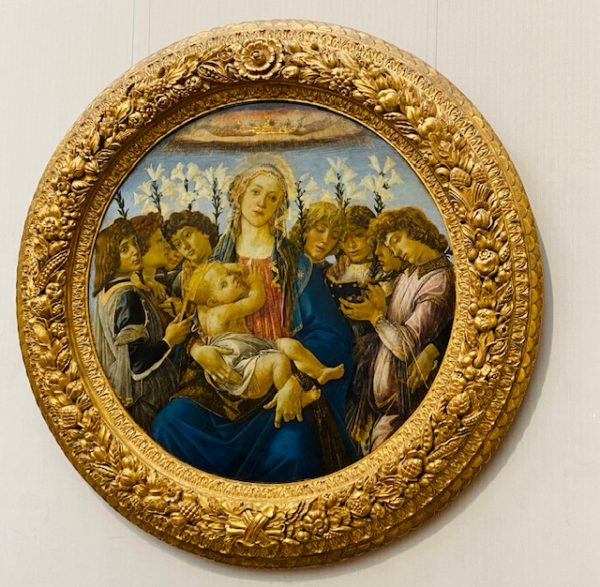
The history of art is full of depictions of motherhood. The catholic church has largely contributed to this phenomenon. Sandro Boticelli created in 1478 his painting of Maria and the child surrounded by singing angels. As Maria is said to know about the tragic fate of her child, her facial expression is rather sad or apprehensive than full of joy. The public acclaim has lasted already for more than 500 years. The women and people who sympathize with this depiction seem to share some of the worries about the future of both mother and child. Apparently, this has not changed over the course of the centuries. In the 21st century such concerns still have a co-determination effect on women to lead to lower fertility rates in most parts of the world. Fertility depictions in art history might serve as early indicator of behavioral changes. Some take centuries to play out. Technological,  medical devices or social policies can amplify such seminal trends. (Image: Sandro Boticelli and disciples , 1478, Gemäldegalerie Berlin)

Raffael Madonna

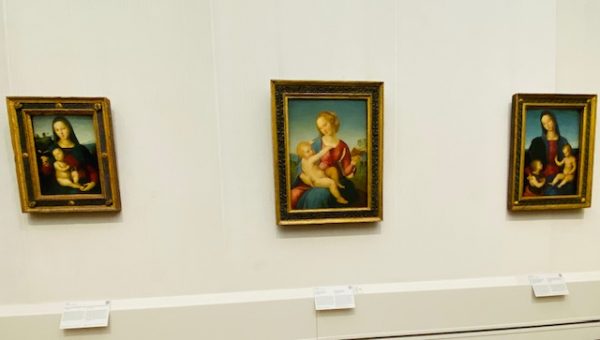
„Mary and the child“ has been the success painting of Raffael around the years of 1500. 3 variants on this topic are presented at the Gemäldegalerie Berlin. Each pose varies only slightly, but each tells a very different story. The Madonna changes the regard from beyond the child, on the child, then to another child. An interesting sequence as such, which puts the relationship with the child also in perspective. The child develops over the sequence from the fast learner into the person with „power grip“ to the one that is spreading benevolence. The different stages of the life course are somehow taking place within a short period of the child. (Image: Raffael, Mary with Child, Gemäldegalerie Berlin)

Gentileschi Gentileschi

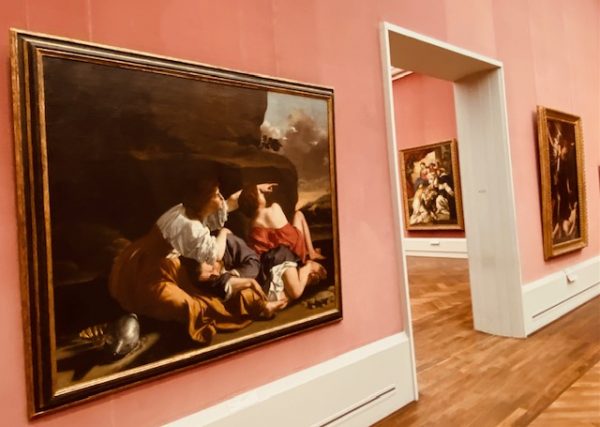
There are 2 Gentileschis that entered the history of art. Orazio the father and his daughter Artemisia. Orazio painted many scenarios based on the bible. The incestuous relationship between Lot and his daughters is difficult one to portray and to do justice to the moral concerns involved. Artemisia, similarly, did not shun away from difficult stories of the bible and added a personal twist to these stories in putting her face into the biblical depiction. The cruelty of the stories become more explicit this way and maybe also her deviant position to the biblical narrative. (Image: Orazio Gentileschi‘ (1622/23) „Lot with his daughters“ Gemäldegalerie Berlin)

Caravaggio Gentileschi

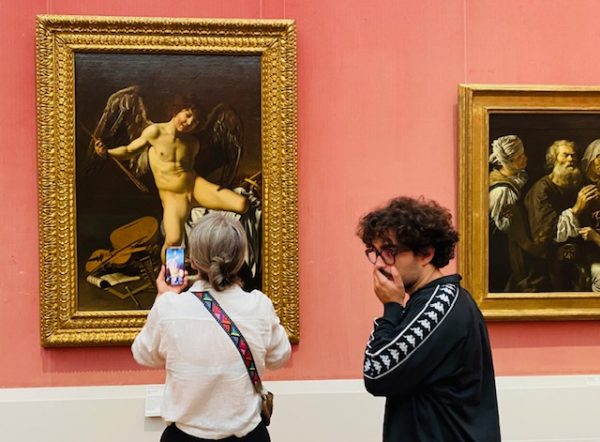
The „Gemäldegalerie“ in Berlin features in the permanent exhibition the famous Caravaggio painting of „Cupid as Victor“ (1601) in the same room with  Orazio Gentileschi‘ (1622/23) „Lot with his daughters“. The paintings show the same technique of painting with the stunning effects of light and shade. Gentileschi‘s own daughter became equally successful as painter applying the same technique and maybe even more recognized as her father. Berlin and Paris jointly allow to trace interesting new perspectives on the history of art from a gender perspective. The male domination in art of the 16th and 17th century was pervasive, but Artemisia Gentileschi a formidable exception. (Image: Caravaggio „Cupid as Victor“, 1601, Gemäldegalerie Berlin)