Philosophy in consulting

What has consulting to do with philosophy? How much philosophy in consulting? If we think of business consulting, there is very little philosophy in most of it. Some ethical considerations might enter the consulting with respect to mass lay-offs, ethical considerations in supply chains or handling waste. The philosophy of consulting, however, deals with one of the oldest philosophical practices (Stegmaier 1993). Since Plato and Socrates the dialogue of persons is at the foundation of philosophy. Throughout the history of philosophy the dialogue as the basis of exchanging ideas and controversies can be regarded as a philosophical practice particularly if it deals with topics beyond daily concerns. The consulting by philosophers has taken the form of speeches as well as book publications. Marc Aurel or Montaigne have written famous accounts of their consulting advice to political leaders. Rousseau for education or Kuhn for science have been influential with their philosophy intended as consulting beyond the inter-individual, dialogue-oriented form. The dialogue with a reader used to be rather exclusive until the invention of the printed press. Apelt introduced the “ethics of discourse” followed by a theory of communicative action (Habermas). Even modern governance structures “incorporate” committees as institutionalized consulting to advice with multiple and at best diverse perspectives as guidelines to persons in leadership positions. In order to counterbalance individual leadership of prime ministers, judges or university presidents, institutionalized internal consulting has been implemented (Stegmaier 1993). Consulting resistant leaders probably had some of the worst fates if we think of Julius Caesar. Seeking advice is only one side of the coin. Giving advice is the other one. Now we leave the “why” of philosophy in consulting and move to the questions of “what” and “how” to consult.
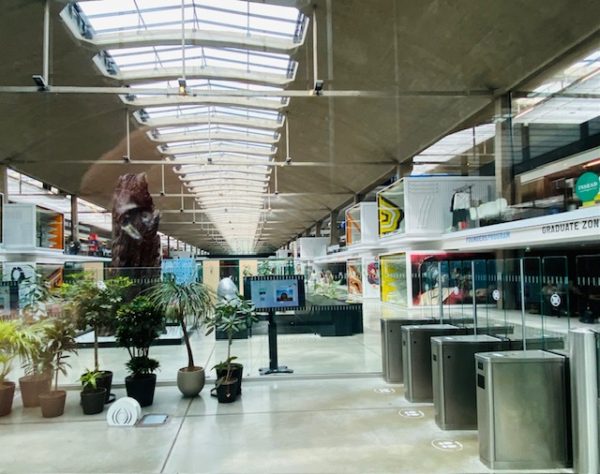
Paris start-up 2026 Station

Autonomous drones

The weapon industry is shifting rapidly. Beyond slow moving tanks, modern warfare has adopted and applies autonomous drones in the battlefield. On the title page of the NYT of 2026-8-26 we learn about a Russian autonomous drone with US hardware technology (Nvidia Jetson Orin microPC) to kill 3 civilians without them being really the target. These drones are trained to select their target autonomously without a human in control. It is the pre-trained machine which decides on the target and whether to “take-out” the target. Disguised objects may survive for longer. People disguised as useless objects have a higher probability to escape detection if you do not fit into the drone’s visual identification. Autonomy based on artificial intelligence has its limits too. Military intelligence will continue to rely a lot on human intelligence to protect us from the realities of autonomous drones.  

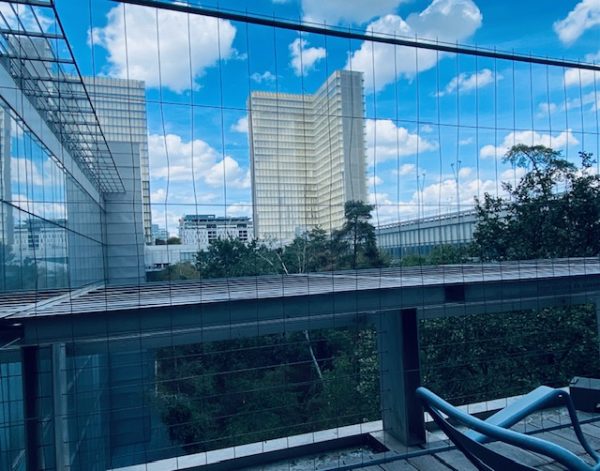
Hiding from drone attack at BNF Paris 2026-8

Loss of green

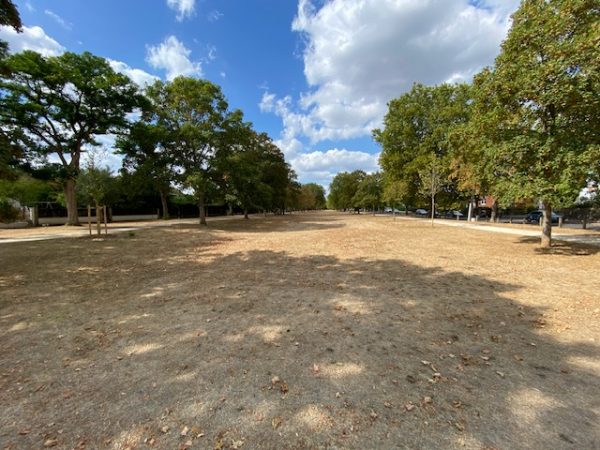
In many instances we learn only if we have lost something. The loss of biodiversity is rather abstract. The loss of a favorite green, allay or park due to a severe drought, however, is fairly visible. The point of departure of the Tour de France more than 100 years ago in Montgeron and the green alley which was built to allow to ride through the Forêt de Sénart to Fontainebleau has suffered from the 2026 repeated heatwaves and droughts. The scientific evidence accumulates to the manmade responsibilities over time. What used to be a fantastic area for leisure and walks after work has turned into a dusty place. Even the recent efforts to improve the greenery further has been surpassed by the unexpected lack of precipitation, although forecasted by some scientists. The costs of climate change, global warming and therefore more difficult water management become pressing policy issues. 

Green loss due to heat and drought 2026 France

Activity and dementia

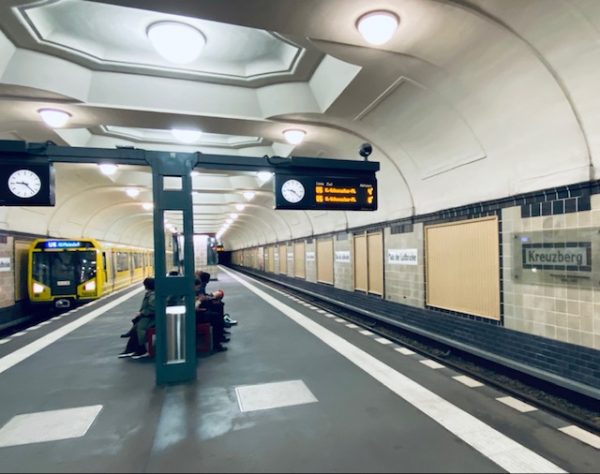
In view of the huge challenge of dementia to people and the public health systems, it is primordial to test potential remedies with high precision. So far general measures of just any physical activity like walking were considered beneficial. Recent and more comprehensive data on domain-specific physical activities by Feter et al. (2026) emphasize the importance to differentiate between walking for leisure or walking rather stressed to work. The former contributes to a delay of the onset of dementia, whereas the latter bears higher risks of dementia due to the “negative” stress involved. However, as Kivimäki and Hamer (2026) point out dementia itself has a long gestation period in which persons might reduce physical activities because a “silent” onset of dementia is not yet diagnosed but inhibits already more activities. Commuting to work or leisure might already be a challenge in early dementia particularly if public transport has to be organized independently. 

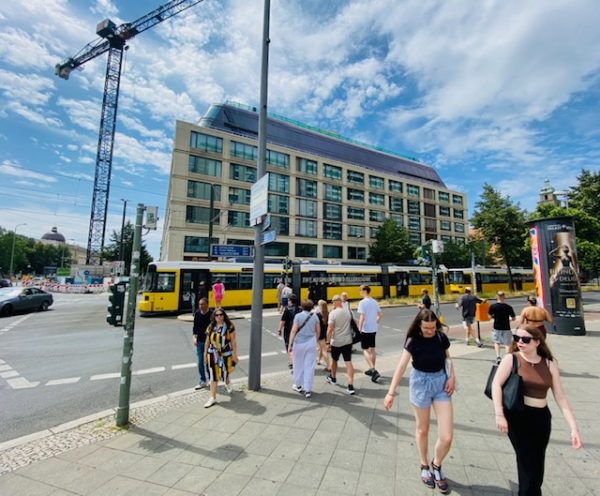
Commute in Berlin by underground U-Bahn

Painter influencer

In modern terminology we could say Edgar Degas has been an influencer for many other painters, gallerists, art collectors and our way to look and interpret paintings or drawings. Max Liebermann wrote an appreciation of the work of Degas for a German audience in an attempt to bridge the gaps in the understanding of modern art between France and Germany towards the end of the 19th century. Cassirer as editors facilitated the publication and jointly they achieved to build a remarkable collection of impressionism before the atrocities of war took over in the first half of the 20th century. Fates can change quickly and painter influencer may become discredited due to more forceful political influences. (Image: Booklet by Max Liebermann 1898 on Degas in Cassirer exhibition in Berlin) 

Max Liebermann on Edgar Degas published by Cassirer

Splendid networks

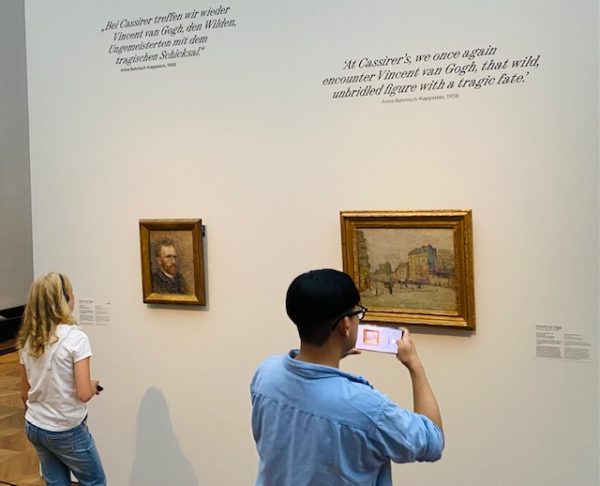
The art of gallerists is to blend networks. Some of them manage to create splendid networks that make history in the best sense of the words. The exhibition on the gallerist Cassirer made this argument in a forceful manner. He had a large network of persons interested in art and modern ideas as well as access to a network of artists who challenged the conventional arts of the time, later coined as the impressionists. The overlap of interests created a special market of art which met in his gallery in Berlin Tiergarten. Lots of take home lessons for us. 

Cassirer exhibition Neue Nationalgalerie Berlin 2026-8

Sleepless sleep

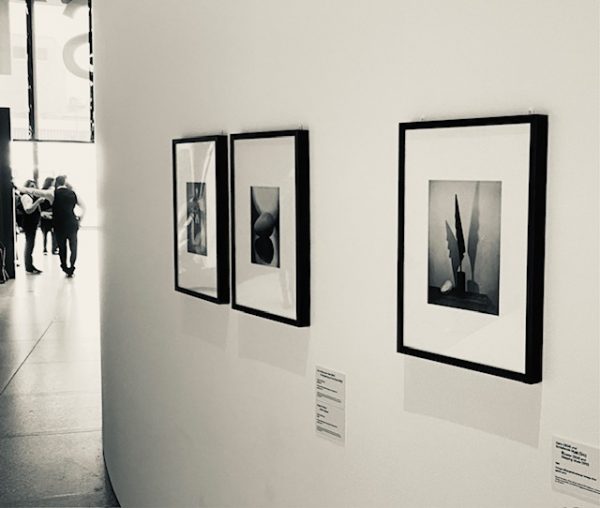
The reasons why we pass an almost sleepless night or sleep are manifold. Too much to drink, eat or partying are just among the more social ones. The neighbour’s cat or cock may be another one. A recent comment by Pixin Gong (2026) outlined a whole research agenda on heat and sleep deficits. What is the threshold of bad sleep? Do we accumulate over days and how do we recover from it? Which measures and metrics are important? How to determine the social gradient of sleep deficits? The research base is largely missing due to neglecting the link of temperature as crucial impact on sleep in addition to melatonin levels. The implications of expected results can be far reaching like re-organization of homes, urban planning and architecture. (Image on the right: Rooster 1924 and Sleeping Muse 1910 by Brancusi, Centre Pompidou Paris in Berlin Exhibition Neue Nationalgalerie 2026-5)

Countryside warming

During summer inner cities heat up more than the rest of the country. This is largely due to the well-known urban heat island effect. However, on top of this effect scientific evidence based on high resolution climate data show that the nowadays countrysides are heating up faster than cities. Catching up with negative climate evolutions is a worrisome recent development. The usual “wealthy person’s climate refugee strategy” to leave the inner cities in summer and move to the cooler countryside becomes more elitist. The global space of cooler refugee regions is shrinking just as biodiversity is reducing at a fast pace.

flower in countryside France iridaceae iris 2026

Urban heat island

Heat in the city, is a real problem. Of course, some like it hot and that’s why they move to inner cities and specific quarters in a city. However, this is not the scientific definition of the “urban heat island effect”. The former issue is more a socio-legal-moral concern, whereas the latter has physics or geophysical effects at its origin.
More concrete and asphalt instead of leafy islands in inner cities create hot micro-climates as sunlight and warmth get stored during the day and feeds back into homes during nights. If the cooling effect of wind and humidity become trapped outside of building blocks an urban heat island can reach very uncomfortable levels. Add underground car parking, tunnels for traffic and public transport to the scenario and the unhealthy limits of heat over the summer are exceeded for months rather than weeks. Geophysical factors like altitude, mountains, river or seaside proximity are additional factors to consider, but the narrow urban heat island effect is a rather robust finding across the world even if the precise measurement and potential remedies of it are under scientific debate.

Ocean Acidification

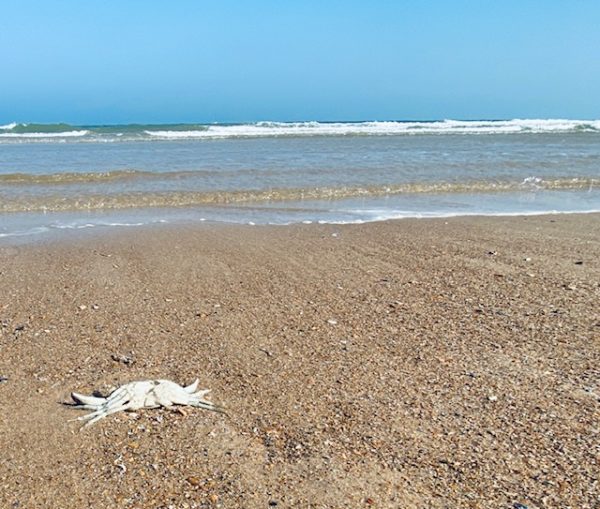
No, the abbreviation of acidification is not AC/DC. Acidification stands for the process that our oceans turn more acid due to the absorption of CO2 from the atmosphere. This has several harmful consequences. Lower calcification, slower growth of corals and mollusks (oysters and mussels) for example, shall reduce biodiversity in the medium term of species with calcium-based skeletons. The UN highlights this in several reports, but action upon this evidence (Ifremer 2026) is slow or even absent. Besides the acidification, the oceans have increasing temperatures. Some researchers frame this process already as the “tropicalisation”, the warming of sea water and migration of fish according depending on their preferred or necessary temperatures of sea water. Some move to cooler water, other species move into or “invade” due to higher temperatures.
This can be observed and studied in citizen science projects across the globe and by tourists with a little interests in what is happening near the beaches. Just take a litmus-strip with you to test the basic or alkaline pH-value of the sea water in a glass of sea water. Then add a bit of soda water and test again. That’s a bit exaggerating, what acidification of oceans is about, but the underlying mechanisms is the same.

asidification-of-ocean-skeleton-Ostende-2026-beach