Fountain of youth

The fountain of youth is such an old dream of humans that we are no longer surprised to witness perpetual reincarnations of the same theme again and again. The painting by Cranach the elder (1646) “Fountain of youth” (image below, Gemäldegalerie Berlin) sets the scene for what has become a billion dollar business nowadays. Whereas the old dream was about rejuvenation and cure from disabling diseases, we have become a bit more moderate in ambition to be happy about a halt to aging. Promises are reiterated and made in building on an army of influencers who push many remedies that lack rigorous scientific tests. Two studies published open access in “The Lancet Healthy Longevity” (Witham, McDonald 2026 and Duremdes Nava et al. 2026) provide evidence that in case of obesity and diabetes there are no easy or quick fixes available yet. Healthy longevity still relies mainly on lifestyle (changes), more exercise and careful nutrition rather than additional medication. Medium and long-term consequences of inactivity and unhealthy diets are to easily disregarded or their value discounted. How much are you willing to pay for an additional year of healthy living at age 30 or 70? Simple economics, but quite a successful business model as well.


Healing in museum

The topic of healing has a long tradition in museums. For example, in the Paintings Gallery (Gemäldegalerie) in Berlin “The healing of Tobit” (1630) by a follower of Caravaggio depicts the healing of eyesight with the aid of angel Raphael (extract of image below). The Bode museum also in Berlin in the vicinity of the Charité hospital proposed workshops to test or experience the healing through meditation techniques in the museum sitting on cushions while focusing on a statue for a while. Guided mindfulness workshops or own meditation sessions could be held during the visit. Museums can work as healing places to calm anxiety or release from stress.

Cool Cooling

The human body has a pretty cool cooling mechanism to protect our functions. This ranges from the brain to our toes. Even we are usually not to keen on sweat, it still is our best way to achieve cooling for our bodies. Physical, for some also mental exercise can heat us up quite a bit. Water on our skin allows to extract most of the heat from our bodies due to the evaporation effect. This is our natural survival mechanism during heat waves or exhaustive exercise. Not all people sweat easily nor similarly in all areas of their bodies, but externally applied water for evaporation reasons does the same trick. Fever reduction through a humid cloth is another well known example of a proven “medical” cooling device. In architecture or home cooling we might exploit the evaporation cooling mechanism to create ambient temperatures in our home, office or home office. Multiple layers of humid structures or a special dice shape can create vast cooling surfaces even in tiny spaces (Stavric 2026). Cool cooling solutions can assist us in many ways without negative impact on global warming.

Medication adherence

In the broad range of medico-pharmaceutical science the topic of medication adherence is an uncomfortable issue. In the ideal scenario people would adhere 100% to the prescription. In the real world of not-optimal behavior and circumstances, people deviate substantially from what is best for or even good for them. Even in the tax-based health system of Denmark with relatively easy access to medication, a long-term study revealed the difficulties encountered to adhere to essential medications for persons with Type 2 diabetes. Nielsen et al. (2026) analyzed a cohort of 80.000 persons who newly acquired Type 2 diabetes of which about 25% showed a low adherence to medication plans with hazard rate of 1,27 to suffer a cardiovascular event. High adherence persons did not suffer such an event in the following 220 days over the 10 years of observation. A sedentary lifestyle or obesity increase the risk of type 2 diabetes and beyond medical treatments additional behavioral challenges like medication adherence make it clear, we do not live in the best scenario to fight type 2 diabetes.

Stinging issues

Sometimes a topic can make it into the headlines only if it is a stinging issue. The fact that certain mosquitoes travel and survive further north due to global warming is indeed such a stinging issue. As the living conditions for mosquitoes depend on warm weather conditions particularly during (tropical) nights as well as water availability for breeding purposes, the spread of mosquitoes can already be observed studying the spread of dengue fever, malaria and chikungunya in some southern European and American countries. Climate change, especially the warming parts of it,  shall bring home a number of stinging issues and consequences to people who didn’t seem to know or care about the spread of spread of infectious diseases.  

Green land in summer between Priesterweg and Südkreuz Berlin 2026

Fire engines

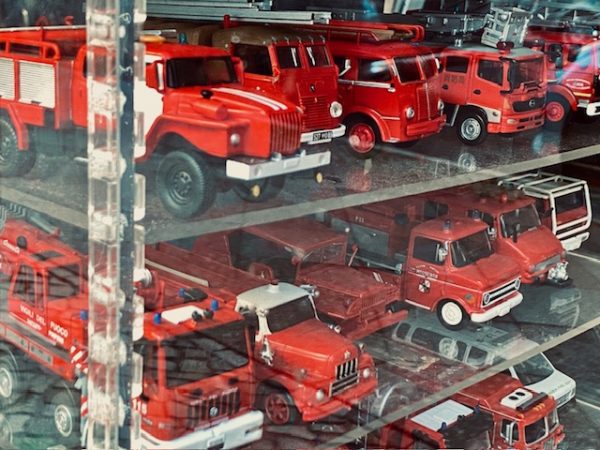
The collection of fire engines model cars on display in a Berlin antique shop reveal the whole dilemma of fire fighters across Europe. Lots of different models and technical specifications mean lower potentials for synergies. European cooperation is such a strong statement of hope and solidarity during emergencies. Better coordination in joint acquisitions would allow fire fighters from each Member State to be operational in other units. The power of the many could be a significant advantage to fight the fast progression of fire we have witnessed in 2026-7.

Fire engine models in window of antique shop in Berlin

Fighting fires

In our homes and offices we are used to have electric, digital and chemical devices to assist us in fighting fires. Fires can have multiple origins ranging from faulty technical devices to human errors, behavior and volition. Some countries have terrible experiences with city fires engrained into their history. The scale of wild fires in forests in Europe, the USA, Australia or Canada have reached a new dimension. With global warming fires known in southern parts of Europe reach further north and become more intense. The fire near Fontainebleau (Forêt de Sénart, France) in 2018 destroyed 9000 hectares forest. In 2026 the fires near Bordeaux burned 10 times the size (Link). There were about 8 years to get prepared between the 2 large scale incidents. The technocrats’ answer usually is just limited to the immediate surroundings of the fire. Instead larger scale actions have to be prepared and enacted to prevent the next incidents. The technocrat’s answer is more technology like aircrafts and yet bigger aircrafts(still largely insufficient in 2026-7). Satellite and drone surveillance with infrared cameras additionally can go a long way, but the human factor remains a hard to fight beast in all such technical fire fighting scenarios. This setup seems to be somehow like a constant to take into account in all technological propositions.  

Cercis siliquastrum Jardin des plantes Paris, planted 1785.

Social learning

The process and mechanisms that drive social learning are still not well understood. Beyond social psychology and sociological theory and evidence, neuroscience has made progress worth taking note of. The paper by Maciej Winiarski et al. (2025) offers a key insight into the neuro-biology of learning about social structures and the behavioral consequences. In their study of mice in the EcoHAB supervised group housing, information sharing through scent was the driver of learning about the social structure and the ensuing social behavior. The various experimental settings show that 1-2 mice became the most relevant informants about social structure and rewards. The “exploratory activities” are an interesting underlying parameter as well. The mus musculus model does not tell us much about humans yet, but we get a gist of important factors to consider for social learning in groups or organizations. Information seeking, informants, reward structures and “housing” have to be considered based on such research from neuroscience.

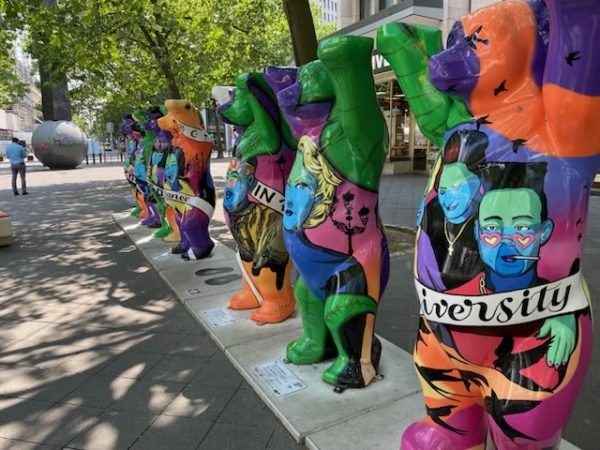
Berlin bears as statues decorated to demonstrate freedom and diversity in 2023

Preventable Asthma Burden

The global burden of disease data, analyses and projections allow us to identify more clearly the parameters to influence and prevent rising global burdens of disease. Among the so-called non-communicable (i. e. not infectious) diseases Asthma plays an important role.  Heat waves (wild fires) and air pollution (road transport, heating emissions) are major contributors to the burden of disease. In addition to the health related suffering of a population, the economic losses for groups of countries have been estimated by a recent study (Chen et al. 2026).  For the UK another study showed that 2/3 of asthma attributed deaths were preventable. This raises our awareness to the fact that adequate health care systems and the distribution as well application of asthma medications can help a great deal to lower also the economic impacts due to uncontrolled asthma. The labour-induced costs (lost years of production) are likely to be higher in the low-income countries, whereas capital-induced costs (in form of opportunity costs of health expenditure) accrue more in the higher- income countries. With the successive heat waves in 2026 and continued global warming, the estimated global burden of asthma is most likely a lower bound estimate of the economic impact. A focus on asthma prevention becomes a pressing concern today to prepare for the future.

Road injuries

Road injuries are a serious matter. The lives lost and people suffering from lasting injuries continue to be a major health hazard on a global scale despite significant reductions over the last 3 decades, mainly in wealthier countries . The Global Burden of Disease study (Ng et al. 2026) shows that between the ages of 10-39 fatal road injuries are the main cause of death for young men. The study has no data to speak to causal effects, but the basic statistics show a clear pattern according to gender. Several factors need further exploration:
1. Men are known to have a much larger share of the total amount of road traffic in most countries, which leads to a higher risk exposure.
2. Men seem to take higher risks when driving, which puts them at higher overall risks as well.
3. Responsibilities for road incidents are not investigated, which leaves other causes or contributions to road injuries (like alcohol or drug abuse) unaccounted. (Source: Ng et al 2026. Global, regional, and national burden of road injuries 1990–2023, p.7)