Gone Home

There are at least 2 perspectives on going home. For the person away from home, it could be understood in the sense of returning home. For the community still living at a place associated or idealised as home, it is often interpreted as a home coming. In view of the powerful global social trend of urbanization, many people associate with “going home” as if migrated persons from rural areas would return home to the countryside, maybe just for a short visit. However, a home is to be interpreted much larger than just being a place, a location or a regional idiosyncratic feature, like the sea, the river, the banks or mountains. You might go home to a familiar sounding dialect or language. For some it is the idea of freedom or liberal values which they have moved to, that became their home. For others it might just be the possibility to practice a rather unique sport, which determines where they would feel at home. Home could just be a “state of mind” rather than a location.
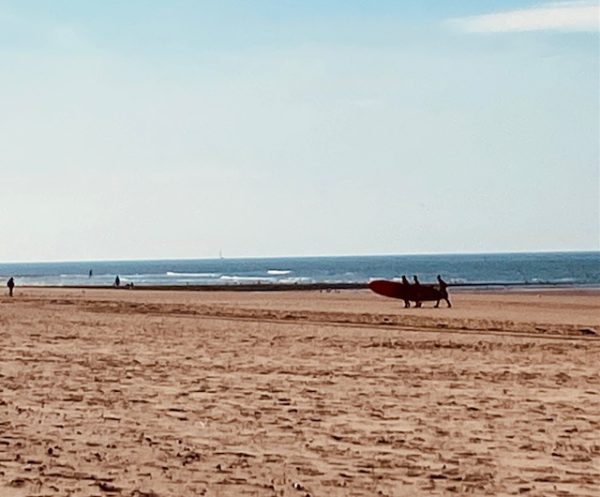
Ostend-SUP-paddle-board-on-beach-2026-9 e persons walking with board after practice

Fountain of youth

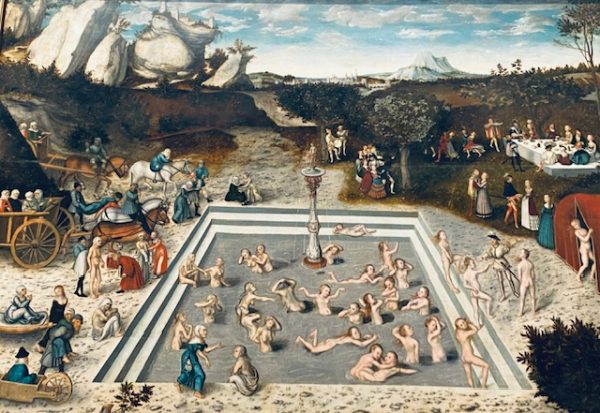
The fountain of youth is such an old dream of humans that we are no longer surprised to witness perpetual reincarnations of the same theme again and again. The painting by Cranach the elder (1646) “Fountain of youth” (image below, Gemäldegalerie Berlin) sets the scene for what has become a billion dollar business nowadays. Whereas the old dream was about rejuvenation and cure from disabling diseases, we have become a bit more moderate in ambition to be happy about a halt to aging. Promises are reiterated and made in building on an army of influencers who push many remedies that lack rigorous scientific tests. Two studies published open access in “The Lancet Healthy Longevity” (Witham, McDonald 2026 and Duremdes Nava et al. 2026) provide evidence that in case of obesity and diabetes there are no easy or quick fixes available yet. Healthy longevity still relies mainly on lifestyle (changes), more exercise and careful nutrition rather than additional medication. Medium and long-term consequences of inactivity and unhealthy diets are to easily disregarded or their value discounted. How much are you willing to pay for an additional year of healthy living at age 30 or 70? Simple economics, but quite a successful business model as well.

Berlin moves it

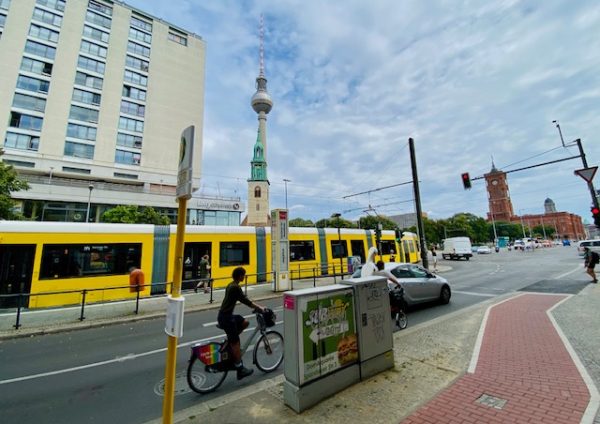
Yes, we like to move it. Investment in infrastructure follows a long-term economic rationale. In urban areas space is a scarce and, therefore, an expensive resource. In order to use the current space for mobility more efficiently, the use of a longer tram or train is an effective way to increase capacities. Rather than to increase the frequency, which is no longer possible without safety risks, a longer vehicle allows to bring more, and more diverse, passengers on board (kinderwagen and wheelchairs included).
It is a long-term objective to make urban areas liveable for all ages. Tramways which allow a low or, better, no barrier to entry is a necessary condition in this respect. The new “Urbanliner” in Berlin (image below) offers such essentials of access and urban mobility. A single tram is 50m long with 88 seats and 215 standing persons in larger corridors. 300 tram passengers can be compared to about 12 average length cars with at best 15-20 passengers.
A consensus of “how best to move it” in cities pays off in the long-term. Planning has to start about a decade before delivery and needs to survive political cycles going back and forth.

Autonomy in literature

As we might imagine, autonomy has been and is a huge topic in literature. From the foundations of democracy to the autonomous state building, historical accounts are full of treaties on autonomy. Literature has taken similar steps by asking can we really be autonomous in our decision-making as we are social beings embedded into varieties of Throne, families and networks. There are ever larger parts that we are conscious about, but the realm of unconsciousness or sleep remains substantial. Maybe in literature, the author Samuel Beckett has gone furthest in dealing with human autonomy in his writings. The search for autonomous action might lead to far-reaching inactivity in “Waiting for Godot”.
However, Beckett’s view about autonomy can also be interpreted as a continuous battle of mankind as demonstrated in the often cited expression by Beckett (“Worstward Ho”, 1983, p.7) “All of old. Nothing else ever. Ever tried. Ever failed. No matter. Try again. Fail again. Fail better.” Our strive for autonomy remains a lifelong struggle. The path to more autonomy is not linear over the life course. In fact, much evidence from gerontologists suggests that it might follow an inverse U-shape, being low at birth and low before death. Literature has guided us in such questions just as much as religious, philosophical, legal and social concerns enter into the underlying concept of autonomy and autonomous decision-making across the life course.

Mammalian Aging

Mammals share a lot of similarities with respect to aging. The researchers Alexander Tyshkovskiy and Vadim N. Gladyshev et al. (2026) spearheaded multiple research to identify similarities across humans, macaques, rodents and mice. The outcome of this overarching study of mammalian aging and mortality is a set of biomarkers that can serve to predict time to death.
Why is this interesting? With the rise of the longevity interest in the 21st century, the need increases to use robust biomarkers that can assess any presumably miraculous innovation to smooth human aging or prolong the time to death. Steps towards “universal transcriptomic signatures” including CDKN1A and LGALS3 (compare across species), which proved to be important in mortality predictions based on the large UK Biodata.
It is the accumulation of damage, which drives  processes of aging . However, “inflammation, replicative senescence, metabolic inhibition and γ-irradiation” can be attenuated or occasionally even reversed. The aging of cellular components has been demonstrated using “modular-specific clocks”.
With these biological advances in the field of biomarkers, the BPS nexus (biology-psychology-society links) could receive more attention as well in order to enlarge the society-wide research into the causes of human aging.
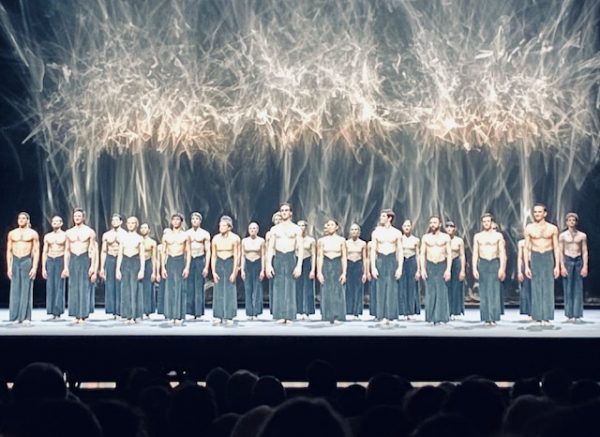
(Image: Staatsballett Berlin, Choreographie Crystal Pite, Gods and Dogs, Angels’ Atlas performed 2026-5, final applause)

Time Response

Time enters in many studies of behavior as response time. It could be summerized under a mechanism defined as “action – reaction” in many instances. In the animal model this is studied not only from external stimuli and bodily reactions, but with direct brain or nerve stimulation and subsequent reactions in other parts of the body.
Within humans the same rationale is widely acknowledged as well (Kimura2023). In many processes it is not no longer a question, whether a response will occur, but the differences in response time play a crucial role, for example in processes of aging. In many mental processes, response time is a fairly reliable indicator of aging as response time increases and the reaction is slowed down. The focus then shifts on strategies how to keep response times within usual boundaries. Eliminating or at least reducing disturbing peripheral influences like noise or light as distractions become an issue. In jazz music, the “call – response” mechanism has entered as a successful element in composition and improvisation. Time and response or response time is a highly passionate, physiologic and emotional issue.

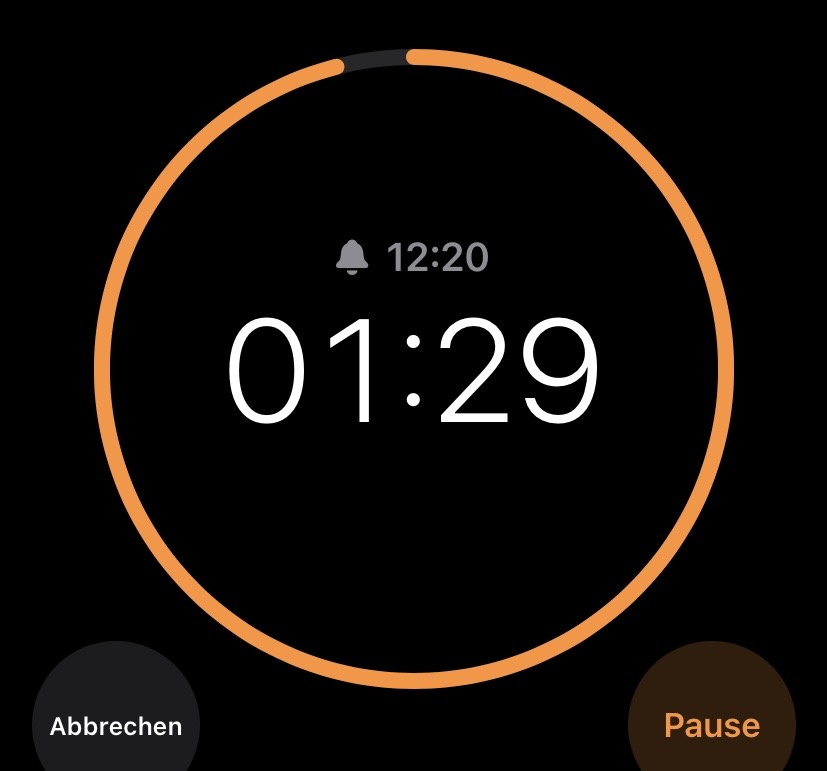
Screenshot

Dual Task Processing

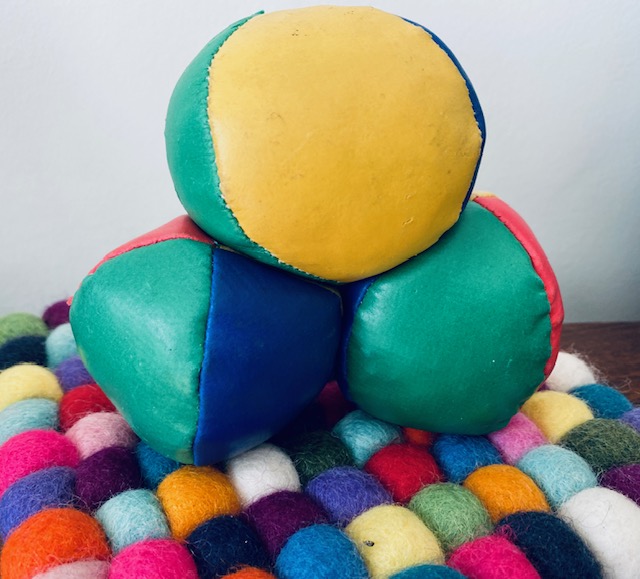
Extensive research into dual task performance shows that training of 2 tasks simultaneously can indeed enhance performance. New research by Schubert et al. (2025) indicates that there latent and persistent bottlenecks to the brain’s processing of such dual tasks, let alone multi-tasking. Out of own anecdotal exercise with “object tracking and touch” (gaming on tablet) a learning effect arises. However, it is unclear, whether this exercise translates to normal traffic situations in inner city situations for pedestrians or cyclists. The experiment of a dual task, combining a visual-manual and an auditory-verbal task, indicates also training effects, but the brain appears to return to sequential processing rather than simultaneous processing as much as it can. Such a dual task test may consist in juggling while singing a song or even leading a conversation with somebody. Quite a challenge or exhausting mental training even for those with a history of juggling objects.

Unexpected effects

It is, unfortunately, a rare event in science to publish unexpected effects of an experiment. Sometimes, results even turn out to be the opposite of what to tried to show with the use of an experimental setting. The learning for the science community, however, is bigger in such cases. Why? A carefully designed experiment (Oliveira et al. 2025) to measure the effects of 2 different 12 month long yoga trainings to prevent falls in 60+ persons (mean age 67) revealed that the less challenging “seated yoga” was better in preventing seniors from falls.
Participants in the more challenging Iyengar yoga-based sessions reported more falls in the 12 months follow-up period. Due to Covid-19 the trainings took place as an online course, which might have reduced the influence of a coach in correcting positions and observe other physiological or psychological issues with participants.
However, the insights are a great lesson for experiments to produce opposite results of expectations with the lesson that human beings can be rather complex. From a health psychology perspective, it might be the case that participants in the more challenging yoga classed became also more daring in balance as well as other exercises.
Just being overly confident compared to their positive improvements, which might turn around an initially positive effect on balance and falls. From a socio-economic perspective, we would question the implicit assumption of the study that participants have a random distribution or underlying tendency towards risky behaviour. The longer the observation window (post-intervention) is, the more intervening socio-economic factors enter into the physiological-behavioural equation. Hence, expect unexpected effects.

Age of maturity

The bronze statue by Camille Claudel „L‘âge mûr“ is her most famous works. It is part of the exhibition Claudel & Hoetger in the “Alte Nationalgalerie“ in Berlin. Usually the statue is part of the permanent exhibition in the „Musée d‘Orsay“. With the depiction of different stages of the life course and somehow revealing the emotional trajectories of the persons the scene of human joy and tragedy becomes tangible beyond her personal fate. The scenario and arrangement in the Alte Nationalgalerie allows to focus on this particular work with an emphasis on the trajectory and the evolutionary path. A unique arrangement does better justice to the particular message of the artist than being surrounded by too many other works of art. (Image: extract of Camille Claudel‘s „L‘âge mûr“ in showroom Alte Nationalgalerie, 2025-8)

Beethoven Home

The home of Beethoven in Bonn is nicely preserved and full of objects related to his life and his creative work. For the musician and composer musical instruments have accompanied him throughout his life. The visit of his home of birth offers a chance to dive into the extraordinary accomplishments of this great figure of the late 18th and early 19th century. His 9th symphony is strong as ever and the European anthem has just more than 200 years since the first performance now. The visit of the museum is still the highlight of Bonn and the App of the Beethoven House offers unique insights into and listening of his manifold compositions. Handwritten notes and a pocketbook of preparations for the symphony demonstrate the all encompassing nature of music for Beethoven. From romantic letters to the romantic music pieces, the museum has it all. Even it is a rather tiny house from the outside the inner life is as huge as it can be. It is advisable to take at least half a day for the visit much more than you would usually take for visit of a museum. The link between the biographical information and listening to linked musical pieces with a chronological context are a unique experience. This spurs the interest to listen or listen again to some of the romantic masterpieces. The App is great also to listen directly to some of the music.