
AI employment effects

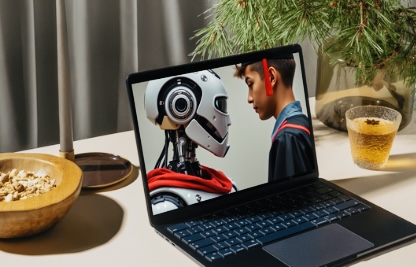
The first robust empirical evidence about employment effects of AI in the USA has been published by the Stanford Digital Economy Lab by  Chen, Chandar and Brynjolfsson (2025). A previous paper by Wang and Wang (2025) highlighted the comparative advantage of persons who use AI in their work compared to others and the authors coined the term “learning by using technology”.  The prediction of the model was that there might be job losses of more than 20% in the long run and half of this already in the first 5 years of the introduction of the technology. The Stanford economists have estimated with real world data these effects in the USA and find quite surprisingly that the negative employment effects of AI have the strongest impact on young labor market entrants with few years of labor market experience. Middle-aged and more senior employees seem to benefit from “tacit knowledge” about the work, which is more difficult to replace with AI, at least for the time being of the early days of AI. This evidence is based on recent payroll data from the largest payroll processing firm “ADP” in the USA which has firms overrepresented from the manufacturing and services industries as reported in another paper  (Firm size maybe another source of bias).  However, the effect that youth 22-25 years of age suffered the most calls into question the common belief that older workers are more likely to suffer the consequences as during in the rise of the digital economy around the year 2000. (AI Image created with Canva)
Scienceploitation

Science can be exploited to make unjustified profits from referring incorrectly to it. Social sciences, like economics may be used by banks to sell you products that refer to science only as part of their arguments if the science based inference fits their purpose. Scienceploitation is very common in the field of para-medicine and para-pharmaceutical products. Health promises sell. The time until an ineffective treatment reveals the unrealistic promise to be unachievable considerable profits have accumulated on the side of the selling company. Science has a hard time to counter the perils of scienceploitation. Advanced knowledge can be used and abused as any other method of convincing people to buy or subscribe to a product. The responsibility of the scientific community consists also in finding ever new ways to counter scienceploitation. AI will pose additional challenges as well as opportunities.  

Bench the benchmarks

In the social sciences as well as in engineering it is common practice to use benchmarks as indicators of performance. Thereby, several countries or regions within a country are compared with respect to quantitative indicator. Let’s take employment ratios. A higher employment ratio, which includes many persons working few hours in part-time work, is different from a slightly lower employment ratio, but hardly any part-time employees.
The same rationale holds true for benchmarks of AI systems or the newer versions of agentic AI that are under construction in many fields. The paper by Yuxuan Zhu et al. (2025) proposes the ABC (agentic behavior checklist) for agentic AI developers. The reporting of benchmarks by such models should include (1) transparency and validity, (2) Mitigation efforts of limitations and (3) result interpretation using statistical significance measures and interpretation guidelines.
The aim of this research is to establish a good practice in establishing benchmarks in the field of agentic AI. The sets of criteria to test for is large and the focus of how the agentic AI treats, for example, statistical outliers much above or below the average i.e. (> 2 standard deviations from the average) assuming a normal distribution, is one case of application only.
We welcome the efforts to bench the benchmarks in the field of AI as is common practice in other sciences as well.

Learning by using

Is learning by using different from learning by doing? In an economic model to test the employment/unemployment impact of AI in the USA, Wang & Wong (2025) suggest an important impact of employees’ productivity due to learning by using AI. In terms of the traditional language of economics the employees who use AI in their work shall have comparative advantage to those who don’t.
In a model of job search in the economy there is the additional possibility, similarly to robots previously, that certain tasks maybe influenced by the, more or less, plausible threat of an employer to replace the employee by training an AI system to perform the tasks. The credibility and acceptability of such threats are likely to impact wage claims and unemployment risks. All these effects do not happen instantaneously, but evolve over time with varying speed. Hence, calculations of effects have high error margins. The resulting model yields oscillations of “labor productivity, wages and unemployment with multiple steady states in the long run”.
Learning by using seems to be a good description of what occurs at the micro level (the employee) and at the macro level of an economic sector or the economy as a whole. Society may guide the use cases of AI just as much as the business case to use AI, for example in the creative industries as infringements of copyrights may occur on a massive scale. However, learning by using is not free of risks to society at large. Just like allowing people to use automotive vehicles has lead and still leads to thousands of deaths annually, learning by using produces external costs. Overall, this is another case for a benefit/cost analysis for businesses, the economy and society.

AI 2nd round effects

The most popular topic currently is AI.
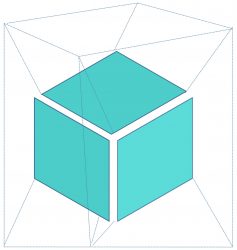
Most writers, assisted by some form of AI, will deal with the 1st round effects of AI. These consist in the immediate consequence of the use of AI in office work, medical and military applications, music and all producing or creative industries. As an economist you take the input – output matrix of the economy (OECD countries) and take AI as an additional dimension of this I/O matrix, for example. The result is an AI-augmented model of the economy. This 3-dimensional cubic view of the economy asks to reflect on the potential short-term and medium-term impact of AI.
Let’s take the example of translation and editing services. AI will in the short-term or the 1st round effects make it easier to offer mechanical translations with fast turnaround. Most likely, this will lead to less translators needed for routine translations of longer texts, which would otherwise be a very costly endeavour. The 2nd round effects, however, will make the expert knowledge of translators of texts, where every word counts, more necessary in order to provide the best version of a translation targeted on specific audiences.
In the legal domain, for example, the precision of words is primordial and errors can be very costly. Hence, the 2nd round effects of AI in this field will increase the demand for high quality translation services more than before the use of AI. The important shift consists in these 2nd round effects of AI, which give a push to multilingual societies as just one medium-term outcome.
Please use AI to read (listen) to this paragraph in your native language or even dialect using your favourite AI-tool.

Hallucinations serious

There serious hallucinations by AI and there are funny hallucinations by AI. Do we want our various AI models, from time to time, to crack a serious or funny joke? Well, that’s a bit the spice of life. However, not knowing when the machine is joking and when it is serious, this is more likely to seriously disturb most of us. This reminds us of our school days were teachers were not amused some pupils not taking them seriously in their efforts to transmit information. Now we know that a good atmosphere is conducive for better learning progress. AI as teaching and learning assistance could well work best in a “fearless“ classroom. Repeating a lesson several times and at your own learning rhythm will help independent of the seriousness of your teacher. Self-directed learning with a little help by AI might do the trick for many to advance how and when they feel ready for it. Hallucinations rates are a standard test for AI models. They range from 1% to 25% of queries.  This is not in itself a problem. It has become tough to find out about the 1% -2% models because you no longer expect them to give wrong information. These are the 1-2 out of a hundred of cases where we are confronted with serious hallucinations, seriously.
(Image: extract from „cum Polaroids“ from Eva & Adele, Hamburger Bahnhof, Berlin 2024-5-22)

Home extension

Most people think of home extension as some sort of extension of the roof, an additional room or the transformation of a garage into an additional room. However, the digital home requires a home extension of a different kind. In order for all rooms to be included into the digital home a range extender of your wireless might be necessary. Yes, this even includes the bathrooms, because otherwise you can no longer sing along your favourite tune under the shower if you are used to the streaming of the musical or orchestral accompaniment. Additionally, the immediate surroundings of a home with or without garden might make it necessary for your robot to mow properly or your digital letter box to send you the mail for the long awaited love letters while you out of home.
Being out of range in your home, is almost equal to not being home at all. Of course, you don’t have to automatically send an out of home message to all your contacts when you are too far away from your digital home for your digital device, but the comfort of a range extender may avoid the new “digital inequality” between adolescents in your home. Room choices are made according to wireless access points and signal strength rather than the room with the best view. Lots of new issues arise we did not even think we would have 10 years ago. Of course, we follow the suggestions of an AI chatbot that recommends the best location for us after we entered images and descriptions of the consistency of each wall into the system. Just a practical advice, install extensions out of reach of any toddler, because a sudden interruption of the connection will create very unpleasant surprises.

testing testing

Before the installation of the new AI chatbots or other agentic AI, they need profound testing. Wise statistics are quoted with the conviction: it is all about testing, testing, testing. Any systems that build on statistical reasoning (LLMs or machine learning) will behave erratically on what is known as an area with stronger impacts of, for example, statistical outliers. On both ends of the “normal distribution” of events or reasoning the statistical models and algorithms used in AI will produce “spurious” errors or have larger error margins on such topics a bit off the 95% of usual cases.
This means, testing, testing and testing again for the programmers of such AI systems before the release to the public or enterprise specific solutions. The tendency to keep costs of testing phases low  compared to developing costs bears obvious risks to the “precautionary principle” applied in the European Union. Testing is most important to check the WEIRD bias of the most basic AI systems. In this sense AI development has become a sociological exercise as they have to deal with “selection bias” of many kinds that could have very expensive legal consequences.
(Image: Extract from Bassano, Jacopo: Abduction of Europa by Zeus, Odessa Museum treasures at exhibition in Berlin Gemäldegalerie 2025-5).

AI Workday

Our workdays have seen considerable changes throughout the last few days. The home office boom has allowed employees to work for extended hours from home. The there is an abundant literature on the effects of home office work on well-being or the work-life balance. Productivity gains could be reaped by employers and a better work-life balance was a lasting advantage for employees.
The increased use of AI specific to some occupations has introduced a new form of added  productivity for some occupations or professions, AI as complementarity, whereas other occupations suffered a higher risk of being substituted by AI applications.
Based on time diary data, the study by Wei Jiang et al. (2025) reports that users of AI have longer work time and reduced leisure time. Competitive labor markets increase the pressure to put in even higher hours of work. Nerds, just like workaholics, are likely to be drawn into excessive hours of work with increased health risks. Enterprises and consumers appear to be gaining more than the employees, who are at a higher risk of loosing out on their work-life balance over time.

AI-assisted

We used to create and use an artificial word to shorten explications in conversations. It is easy to understand for everyone nowadays to describe an online search as “I googled something” without further concerns about the sources used in answering a question. Apple just announced that its search engine Safari was used less than expected recently. The reason might be that more and more people search online by using AI tools or Apps that directly provide answers to their queries. ChatGTP and Perplexity are 2 AI-programs that might replace the other search engines we have gotten used to over the last decades. Particularly “how to …” queries offer reasonable instructions. In Perplexity you get an answer after you specified a little bit your query and, therefore, the answer is more likely to be right to the point offering text, images and sources. In ChatGPT you enter into a dialogue to further specify your query if unsatisfied with the first response. The judgement of an authoritative response is up to you if you want to follow up. The assistance of an AI-system cares less about the source but about the speed of response that it can provide. For sensitive questions or queries with less obvious or clear answers more interactions with the tools is necessary. The pricing and our willingness or ability to pay in cash rather than through the selling of our data for advertising will determine whether we shall “chat-it” or “plex-it” in future.