Puccini Media

In honor of Giacomo Puccini the Media enterprise Bertelsmann features one of its treasures. In cooperation with the “Archivio Storico Ricordi” of Milano, Italy, 100 years of Puccini’s oeuvre is celebrated with this exhibition. Fans of Puccini’s operas will have to visit the archives but the interest of this small exhibition lies in the impressive success story of Puccini and his publisher (part of Bertelsmann). Continuous innovation and adaptation to new media, like disks, accompanied an extraordinary marketing campaign throughout the 100 years. Even today there are cycling tours around Puccini’s hometown for the modern eco friendly tourists. We learn a lot about how the media industry functioned in the 20th century. It was absolutely vital to fighting for the rights of authors, composers and rights to receive royalties for performances as well as for the publishing on media. The exhibition in “Unter den Linden 1” is just next door to the Staatsoper which also gave honor to Puccini’s “Madame Butterfly” in 2024. His uncompleted Opera Turandot closes the exhibition with his rough sketches of the final scene. Merchandising is not an invention of the 21st century, but almost a century old tradition. This exhibition is a great testimony for this. It remains an important effort to allow authors and composers to gain a comfortable living during their lifetime. The gains for humanity as a whole are enormous.

Bertelsmann, Berlin 2024 Puccini.

Infinite Landscapes

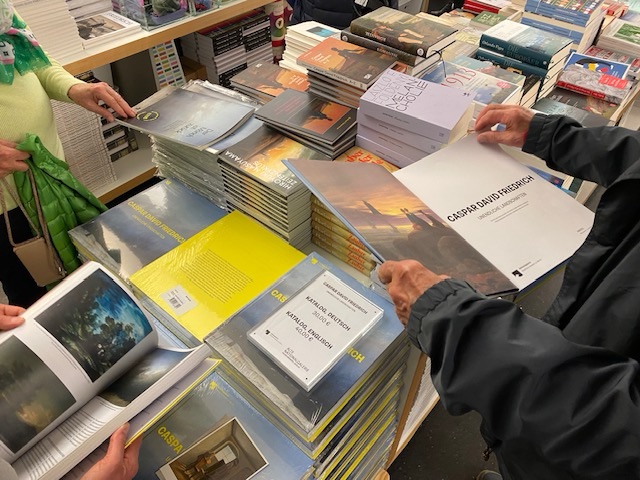
The “Alte Nationalgalerie” celebrates the 250th birthday of Caspar David Friedrich in Berlin. With a considerable effort to unite in one exhibition many paintings and drawings that stem from other collections of public and private origins. This particularly remarkable as a section of the exhibition is devoted to paintings that were intended originally to be seen next to each other (compare catalogue p. 233). Comparing 2 images from the same painter evolve into a narrative. This raises curiosity as in some instances the 2 paintings do not treat the same subject. Your very own interpretations and associations will make for an individual journey through the sheer endless spaces. The exhibition allows to grasp some of the many questions posed by the period of enlightenment not only in Germany. After “God is dead” what will happen? How is mankind defined? What is its relationship to nature? Are we just left alone or what comes after individualism? Even for painters, much like scientists, it is just as important to pose the right questions. Leaving the exhibition with more questions than answers will put you in the “Berlin state of mind” of 200 years ago. Greiswald, Dresden, Rügen and Copenhagen as well as nearby mountains were influential locations and landscapes for Caspar David Friedrich. Berlin 1906 „Jahrhundert Ausstellung“ made him famous again, despite decades of being forgotten. Yet another question to ponder and wonder about. An additional merit of the exhibition is the section on painting techniques and the use of his sketches and drawings for the preparation of the oil paintings. The final riddle to be solved is the price differential between the German and English version of the catalog in the bookshop next to the usual merchandising props.

Opera Politics

We know that sports and international politics have ample links. This holds true for Opera performances, either due to the way they are presented or due to the content of the libretto. The opera Jeanne d’Arc (Giovanna  de Arco, Jungfrau von Orléans) by Guiseppe Verdi was composed in 1844 and had its Premiere at La Scala in Milano 1845. The libretto is based on the drama written by the playwriter Friedrich Schiller. Later in the 19th century musical pieces followed that dealt with the court judging Jeanne d’Arc. The opera by Verdi creates a strong female voice and character which outperforms men around her. Obviously, she was and remains for many a quasi-mythological heroine. In short, this constitutes great plots for drama and operas. This is centuries old despite the rare occasions of more recent performances of Jeanne d’Arc in form of Verdi’s opera or other forms.
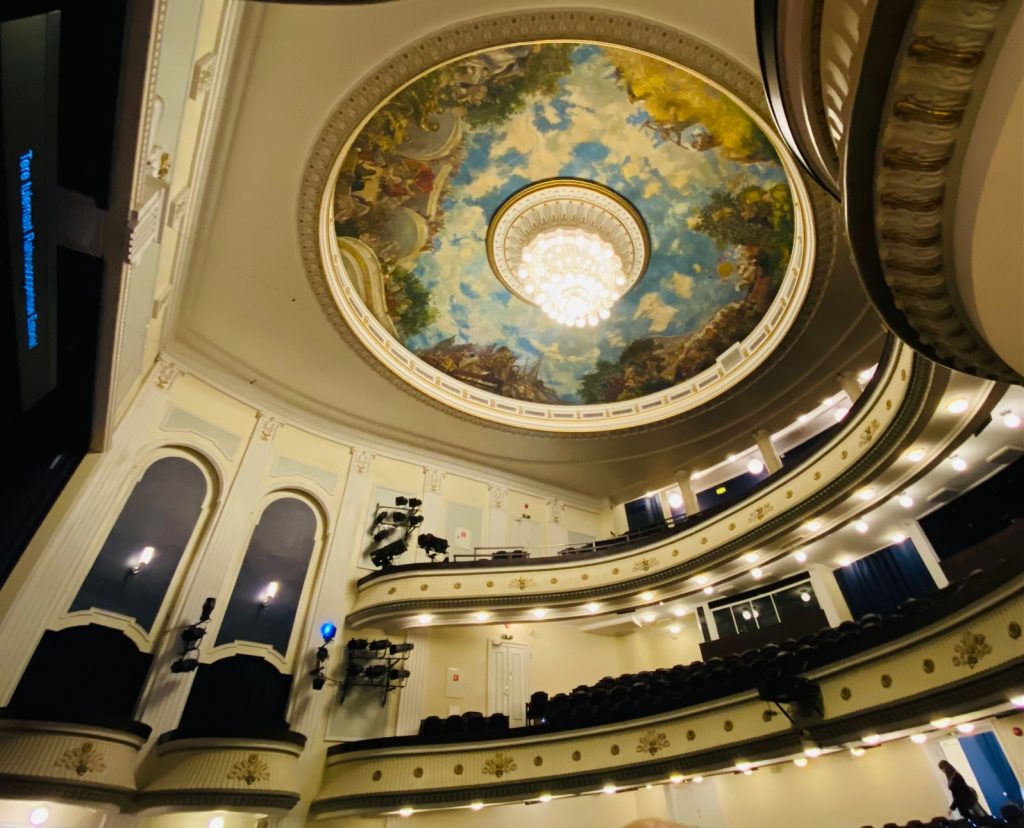
The Opera as arena of politics is currently tested in the Opera at Tallinn Estonia. Due to the aggression and occupation of Ukranian territory by Russia the plot of Jeanne d’Arc regained another European location of potential application. Ukraine pushed back the Russian invasion and struggles to win back its territory from the invaders. The performance of the Opera recreates an impressive Jeanne d’Arc in the person of Elena Brazhnyk who was trained at the National Tchaikovsky Music Academy of Ukraine. The evening inspired hope in many respects. Talents from Ukraine or trained in Ukraine reach out into to the world. Similarly, we have much reason to be inspired by courageous acts. Operas do politics. “Bravi”, as they say in Italian.
(Image: Opera Tallinn-Estonia2024-4-18)

Puppets Museum

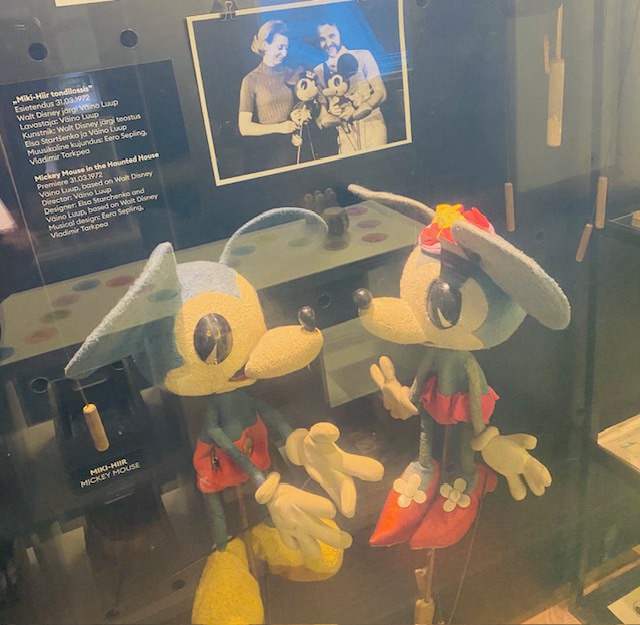
The puppet theatre is still a tiny part of the theatre world. The century old tradition has roots in all cultures across the globe. The Puppet Theatre Museum in Tallinn has a fine selection of puppets to perform theatre pieces from India, China, Indonesia and Europe. Storytelling is part of humanity and learning through narratives distinguishes us from other species. Religious traditions have appropriated these techniques just as modern performing arts. From the carnival tradition of using masks not only children adore playing with characters. The famous founder of the Estonian Puppet Theatre has his small monument outside the historic building in the old town, but a big puppet theatre with 400 seats. The adventures of Jules Verne have been played there just as most well known operas or children’s tales. Puppets comment on puppets (Mickey Mouse) just as they take on political debates. The forthcoming piece on the Ministry of Solutions sounds promising indeed. We envy the puppets that have a Ministry of Solutions rather than lots of ministries and ministers but no solutions.

Theory Literature

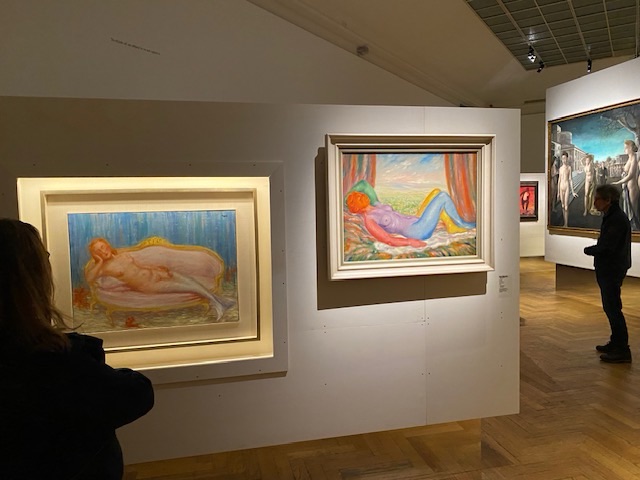
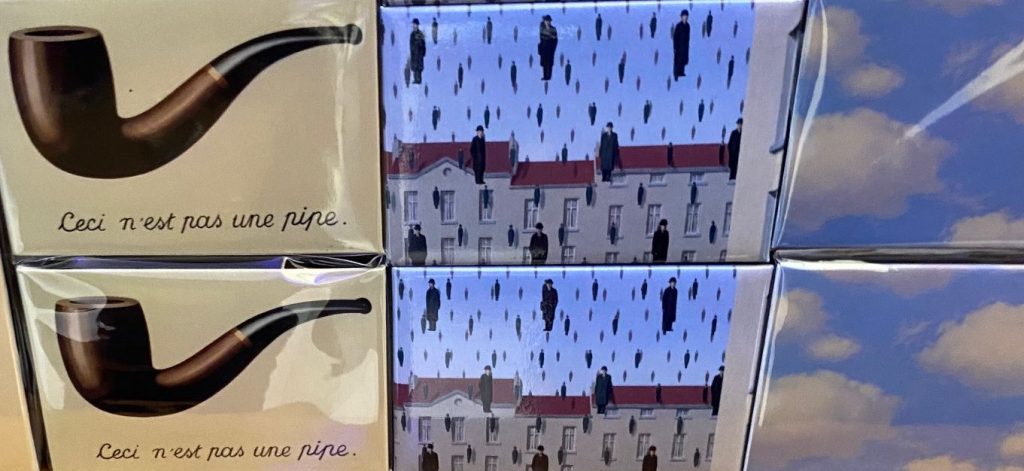
There still is a lively debate at the margins of literature and the commerce around it about theories of literature. Even if the best of years of theories about literature have passed, in 2024 we see several revivals of theoretical perspectives on literature. Travelling in Europe we celebrate, for example, the 100 years of Belgian and international surrealism in Brussels. The French artist and theorist André Breton was preparing in his thoughts the art and literature of surrealist inspiration. Of course, we think of Magritte as one of the eminent figures of the painted surrealism. Franz Kafka, who died relatively young in 1924, was the author in the spirit of the surrealist movement. The powerful impact of literary theory and theory of art to form communities of practice have had lasting effects, which fascinates large audiences in 2024. Exhibitions across Europe reflect the importance of these art movements to understand European culture, inspirations and aspirations.
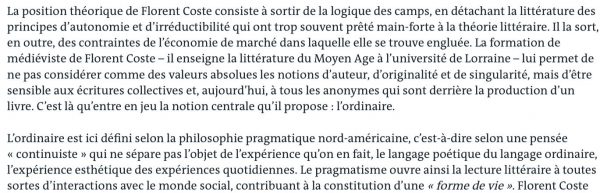
Not least through this revival of the surrealist artists in the broadest sense we are returning to a more theory-driven view of literature a bit like 100 years ago. I find it remarkable to read in “Le Monde Livre” of 2024-4-12 the article on “Défense de la théorie” by Tiphaine Smoyault (p.8 see quote below) with a comment on the book by Florent Coste on the usefulness of a theory of literature to understand the world around us. Reworking of language is the contemporary concern of literature: pluri-linguistic experiences, re-discovering oral performances, irony in language and digging into archives are the major strands of contemporary literature. Theory of literature reflects on the past and allows to synthesize the present. For some it also enables to project into the near future of what is going to be published. In any case the theory of literature provides orientation in a huge ocean of published oeuvres. Writing or painting with ideas ahead of your time has been a painful experience for most of these artists. Some artists or authors are lucky to become famous during their lifetime, but lots have struggled for years or never learned that their contributions advanced humanity for more than a hundred years.

Ne pas rire

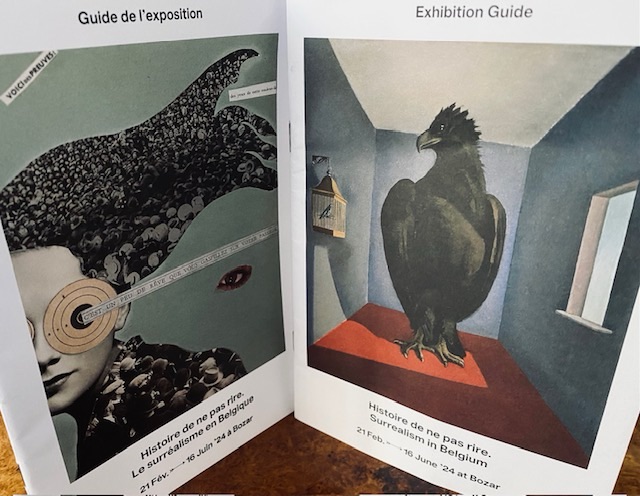
The exhibition of surrealism in Belgium at Bozar has the inviting title “Histoire de ne pas rire”. Even the booklet of the exhibition guide does not translate this into English assuming everybody has at least that much of interest in French and the willingness to learn about these 5 words that are a reference to the understanding of the surrealist art movement. You are explicitly invited to allow yourself to laugh when looking at the images. Reflection comes second. Caught by surprise and making new connections of seemingly unrelated images and words, that’s the essence of it. The comparison of the 2 versions of the exhibition guide teaches language and translations beyond the simple words. Sometimes it is best to not translate the text as in the title of the exhibition guide.

Surrealist 100

Belgium celebrates 100 years of surrealism with a special exhibition in Brussels at Bozar in 2024. The arts movement has much more to offer than just paintings from Magritte. Many other painters and intellectuals that were instrumental to create and perpetuate the movement are represented there. The French philosopher Breton as spiritus rector of the movement contributed innovative ideas and challenged the artists to do further and further on their journey to explore freedom of expression and freedom of association. The exhibition is centered around the surrealist idea to explore the association of words and images. This time the words are on the walls of the rooms and the images put up in the rooms as kind of obstacles on your journey. Keep challenging, keep questioning the sense of things and our imagination. The journey goes on and there are many artists who are still influenced by surrealism, for example Folon. The texts and images take you along on the journey into the surrealists’ world. If you want to challenge your own way to see things and the associative world, this is the place or catalog to refer to.

Bozar, 2024 100 years of surrealism

Korallenriff

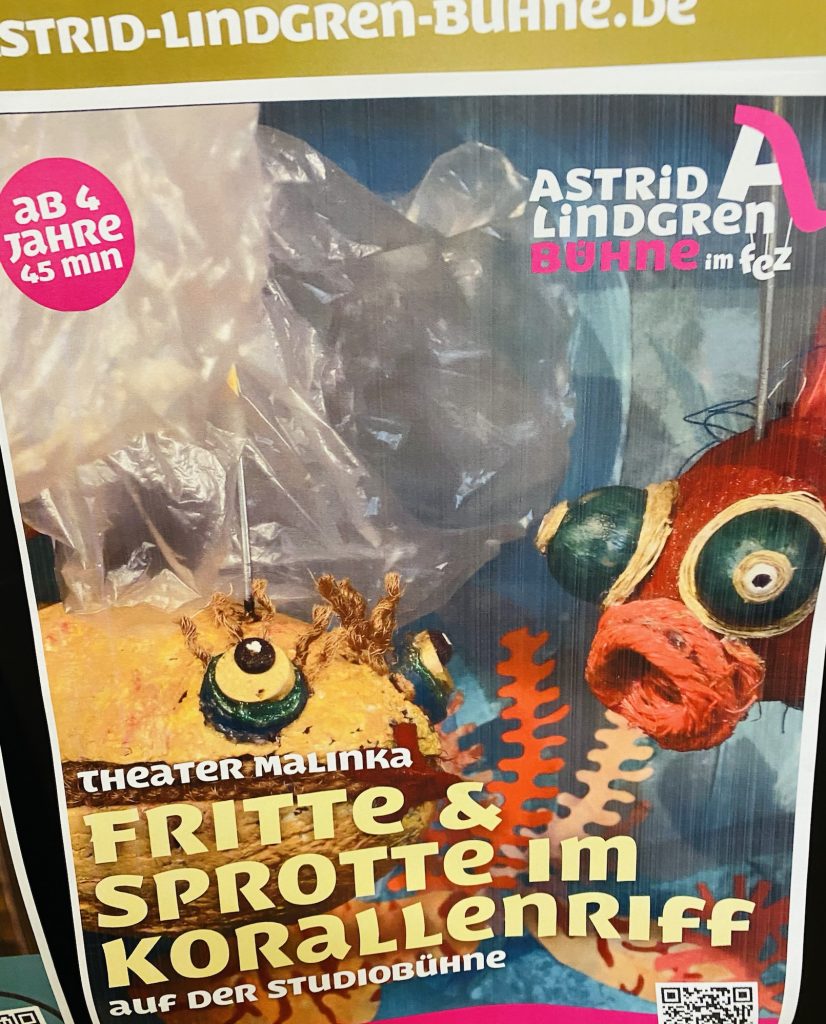
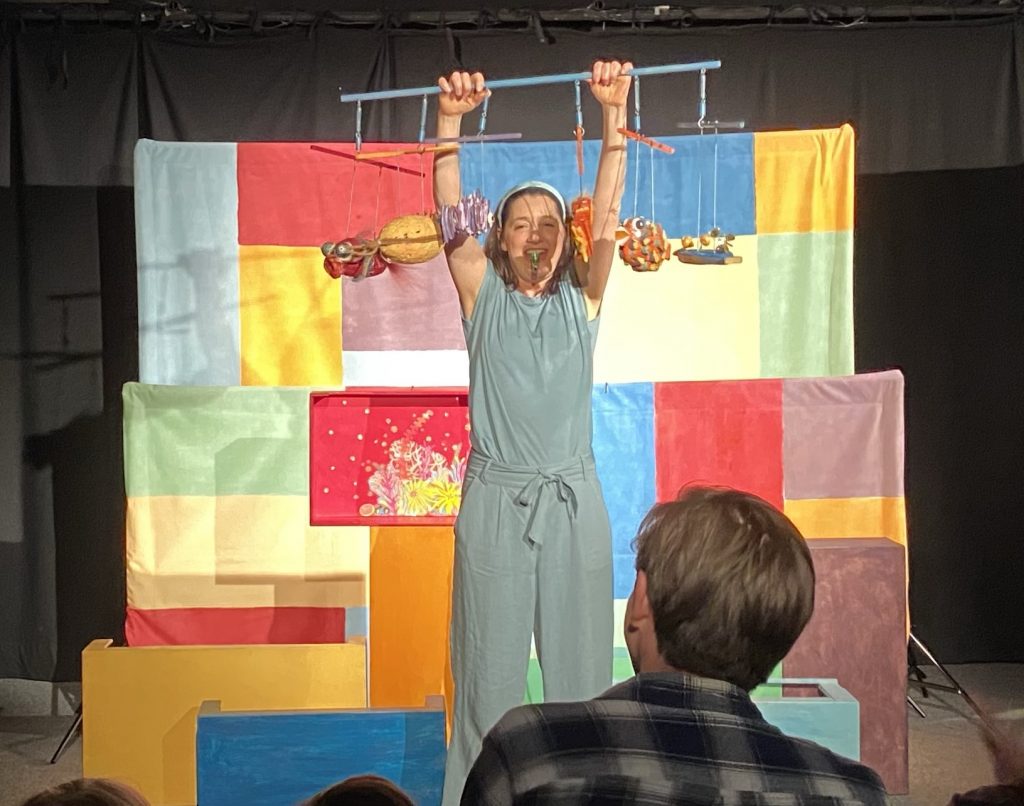
Kinder verstehen direkt, dass es sich lohnt, Korallenriffe zu erhalten. Plastikmüll in den Meeren gefährdet die Korallenriffe und die bunte Vielfalt an Fischen, die darin leben. Ein kleines Theaterstück dazu von Kathrin Brunner begeistert Kinder, weil es sie erleben lässt, wie einfach Lösungen aussehen können. Den großen Leuten zeigen, wie traurig die Welt aussieht ohne die farbenfrohe Pracht der bunten Fische, wird sie schon zu Veränderungen bringen. Das Theaterstück und Buch dazu wurde am 16.3.2024 im FEZ in Berlin aufgeführt. Das Figurenspiel mit überleitendem Refrain, das vom Publikum gleichsam der Promenade in den „Bildern einer Ausstellung“ (Mussorgsky) mitgesungen haben, bildete jeweils eine gelungene emotionale Überleitung und Aufmerksamkeitspause. Wir wünschen uns noch viele kleine und große Besuchende für diese Aufführungen. Die Kinder werden es uns schon lehren, den blauen Planeten noch zu retten.

Magritte Symbol

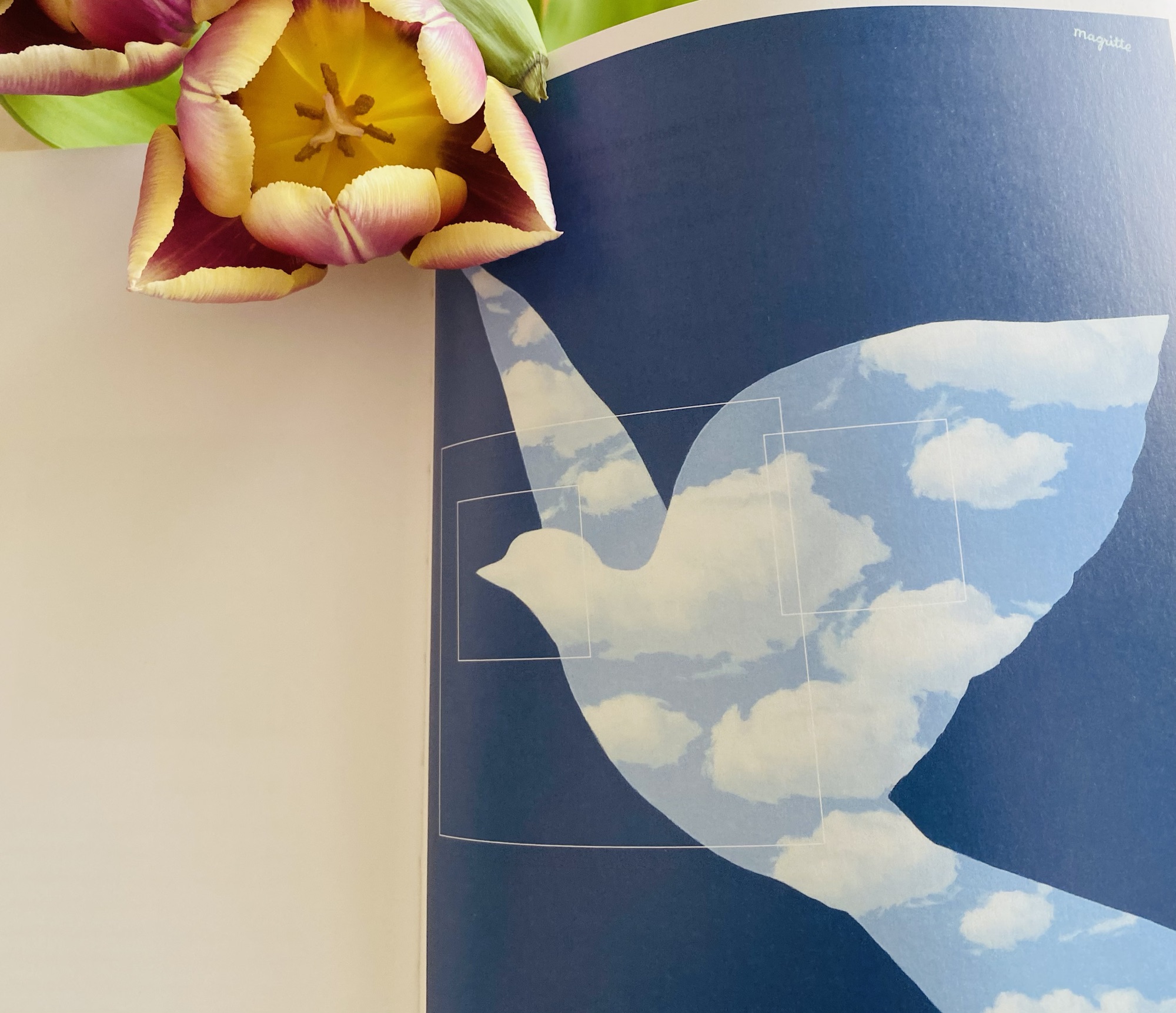
“People always search for symbols in my works. There are none.” For those familiar with the work of Magritte, they know that he means precisely the opposite of what he is stating there. He applies well-known symbols like the white pigeon representing peace in his paintings to represent and make us think about peace. The image becomes surreal in the sense that we go beyond the real world of violence and war to lift our attention to the other surreal version of the world as it currently appears to us.
In times of war, it is more difficult to image a peaceful world and yet, this is the time we need to believe in the possibility of peace beyond the reality of aggression. In 1966 Magritte has painted “L’oiseau de ciel”, the year the peace movements became more than a surreal dream across the world. It remains a challenge to think beyond the cold war at the time and the hot war initiated by Russia in Ukraine. Surrealism helps us to think beyond the real state of affairs.
In Magritte’s own biography the “dove of peace” occurs towards the end of his own life. Whereas at the onset of his career as painter he dealt with depression and suicide in his family, towards the end of his career he moves beyond the autobiographical topics. Globally valid symbols gain the upper hand. The life course seems to have come full circle.


Symbol

What is it that makes an object a symbol? Probably, it is the widely shared perception of the meaning of a symbol that turns an object into a symbol. The etymology of the word symbol refers back to the Greek word σύμβολον. The earliest philosophical refer back to the Greek philosopher Aristoteles who deals with symbols when he writes about interpretations. Written words have become powerful symbols in the ancient world. We still have them all around us today. The interpretations of the words as symbols, however, may change considerably over time. Some symbols keep their designation and significance over centuries. Maps are well known to contain lots of symbols for roads, railways, tunnels or height. We learn about these symbols and interpret them in a specific societal context. Science is making ample use of symbols, e.g. chemistry. Different cultures define and apply their own symbols. Colonialism has been a form to impose symbols upon other societies. Throughout history symbols of power have changed as well. Each of those topics is an interesting field of application in itself. Young generations create their own symbols to establish a specific cultural identity or subculture. Urban spaces have been invaded by graffiti that tend to spread symbols as messages or symbols for their own sake.
Sociology has taken up the challenge to identify “status symbols” of groups of society. Possession of gold and silver have long ago been symbols of being rich. Maybe, even today such easily visible symbols play a role in how a person’s role is perceived in societies. Not only for priests etc. dresses have been applied as a symbol. Modern fashion is full of symbols as well. Interpretation of the meaning or even no meaning is an act of becoming conscious of the world around you. From the seriousness of symbols, we have come to the playing around with symbols as expressions of ourselves.
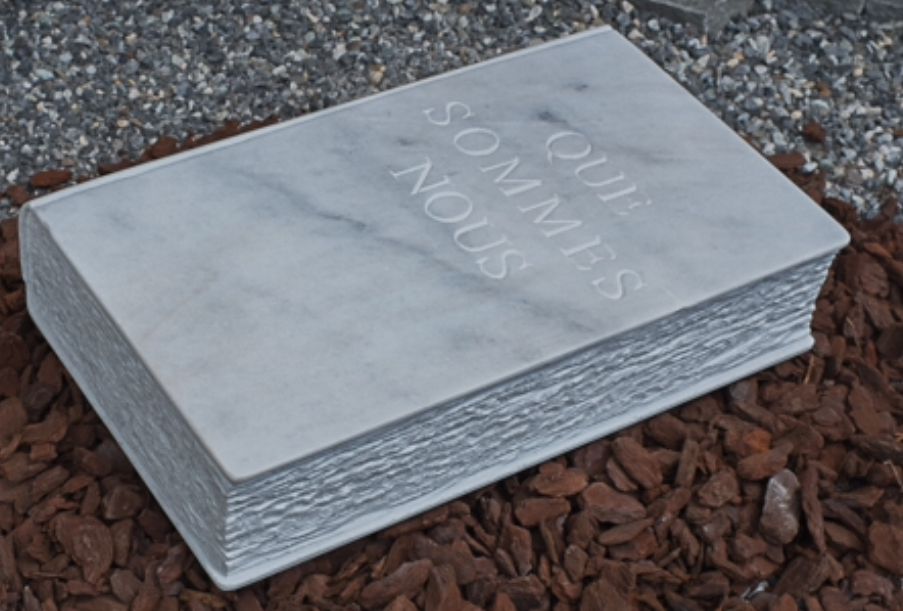
No matter whether we use the word, like water, we all know the chemical symbol H20. An image or art work using the symbol in whatever form will be decoded by us accordingly. However, the meaning we attach to water depends on the environment as well as specific context we (or the artists) are using it in. Cross-cultural competences consist in the awareness that symbols grow out of contexts and need to be interpreted accordingly. It needs a lot of openness, willingness to learn about differences and careful consideration in our everyday world to handle symbols. Doing culture is doing symbols.(Image of art work by Anderegg, Andi taken in 2016)