The biographies of painters, composers or artists in general can be reconstructed by use of their major works. The biography of René Magritte by Eric Rinckhout (2017) has chosen this way of a retrospective in images and explanatory texts. The biography is built around 50 major images starting with the first one by Magritte at the age of 28. “Les réveries du promeneur” (see below) deal with the confrontation of Magritte with death, suicide and the difficulty to find rational answers to all those questions of why this happens and what becomes of people who experience such a tragedy.
His own childhood was affected by such an event concerning his own mother who suffered from depression. Coping with the evolution of psychic illness over years and the absence of a supportive father have posed a steep challenge for the young person. Creation of art became a coping strategy as well as a relief for those who manage to eventually cross the bridge into their own life leaving behind the bad experiences. J.J. Rousseau was an influence on Magritte as well.
Finding your own destiny and your own style is a process. This process evolves over years. The chronological sequence of 50 images allows to follow the path taken. Thereby, it becomes possible to open up the personal learning and working trajectory of the artist. In retrospective perspective it seems often logical that one style or period of painting follows on from another one. However, in the forward living of the creative life many choices are heavily contingent on other circumstances. Influences of friends, exhibitions, reading, cinema, private or financial situations may determine the creative choices simultaneously or one at a time.
The chronological path of images writes a biography of a special kind. It allows to think in sequences just like in a sequence analysis as sociological methodology. Description, reconstruction, analysis, causality remain a challenge in our attempts to learn and understand more about biographies or the construction and reconstruction of life courses. 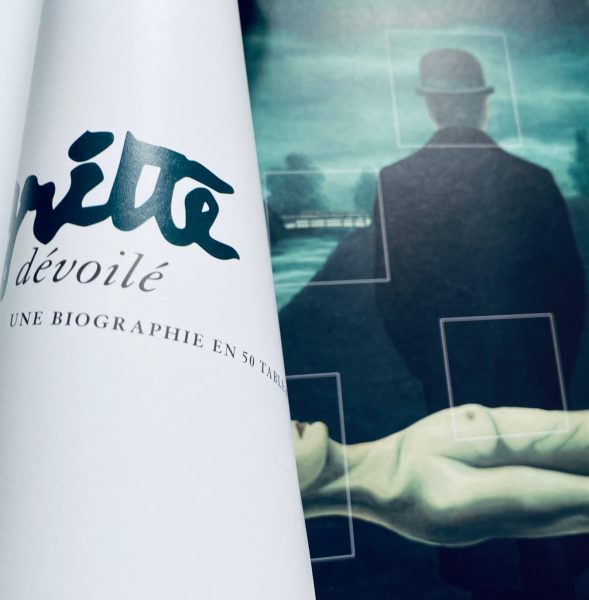
Paris 1830s
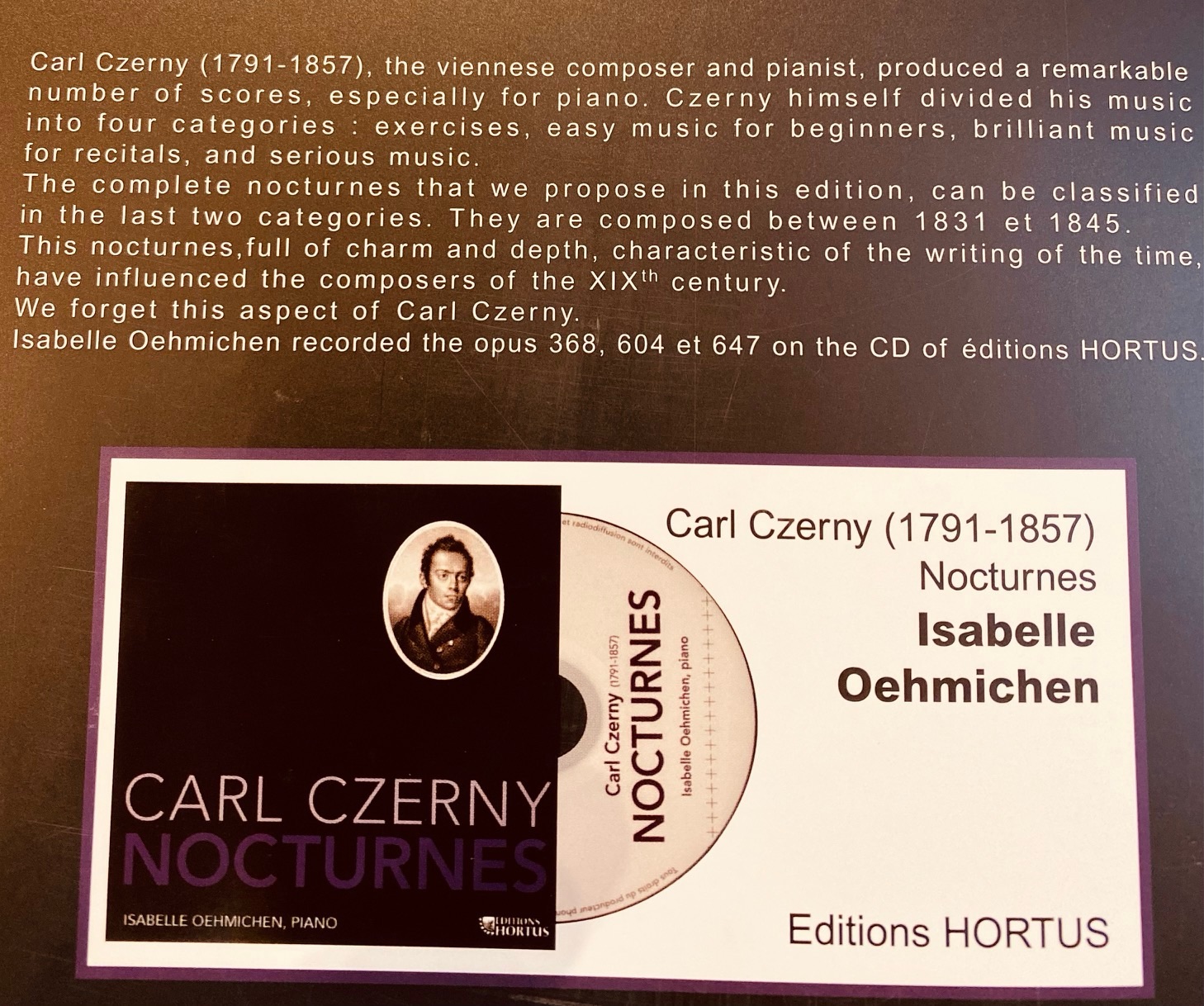
The music life in Paris in the early 19th century, almost 200 years before now, was incredibly rich. In 1828 the young Flotow arrived in Paris to receive lessons. The pianists Liszt, Chopin, Fields and Czerny passed or lived for longer times in Paris. The innovation in this period of romantic music and operas saw also a fierce competition among those talents. It was no easy task to find your niche to thrive in composition or in both performing and composing.
The 1830s had a rich urban bourgeoisie, which animated and indulged in festive events of live music and social life. Friendships of Chopin and Sand are a testimony for this. Similarly, the young Flotow and Offenbach paired to find their place in the Paris music salons and society of that time. The biography of John Field, written by Patrick Piggott (1973, p.73-81) supports this density of musical experience. The period is also characterized by the fast industrialization and the rise of the global trade. The musical life found refuge in the romantic period and more and more artistic performances by musicians. Theatres, opera houses, concert halls and private salons were meeting points of the upper social class which practices networking in rather closed circles with rather rigid routines and admission at the time.
In architecture the Operas became meeting points and a matter of national pride with National Operas contributing even to national identities. The opulent “Palais Garnier” in Paris was started in 1861 to become an iconic place in the new Paris with the huge boulevards à la Haussmann. The wealthy citizens cultivated a new lifestyle of a networked upper class that had the leisure to participate in the masses of modernity. Cultural events of all kinds filled newspapers and specialized editions. There were inner and outer circles of influence in the economic, military, political and cultural spheres.
Recommendation letters were a real currency for entry in each of these circles. Some of these social practices, have still a lot of currency even in 2024. In short, in the 1830s Paris was the place to be. Compositions of that time still fill concert halls today and their music is abundant on the new music platforms and streaming as well.
Folon Magritte
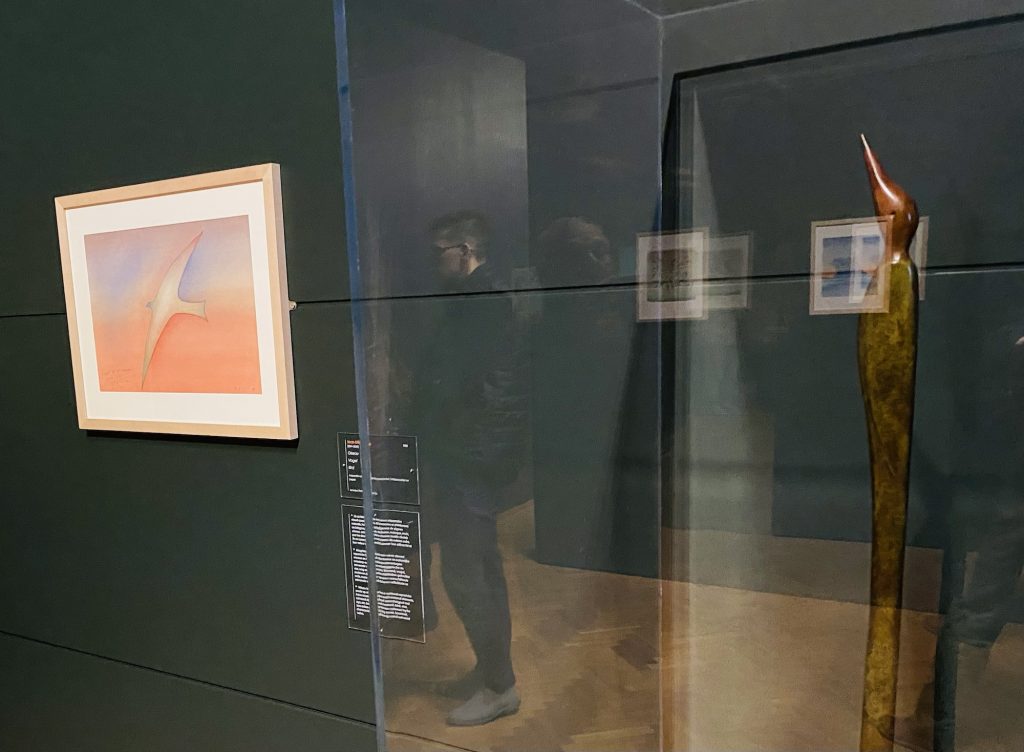
The exposition in Brussels on Folon and Magritte demonstrates the impact the latter had on the former artist. Both developed an iconic style of painting. Folon paintings apply pastel colors on paper. This style transforms images through the softened sometimes slightly blurred representations near a dream like realization. On the contrary in his sculptural work he uses hard materials to stimulate imagination and abstraction from reality. The side by side representations of Magritte and Folon is more a study in tracing influences and motifs across decades. The honor is just as much to Magritte as it is flattering Folon. Magritte had changed the life of Folon with his paintings and perspective on life beyond realism. Magritte‘s legacy lived on and Folon developed surrealism into a widely recognizable style with his paintings as well as sculptures. In walking around Brussels in 2024 you will inevitably come across some of the sculptures reflecting the work of Folon. The Folon foundation is continuing the pedagogical journey of the surrealist art movement well into today and tomorrow.
Paper and Pastel
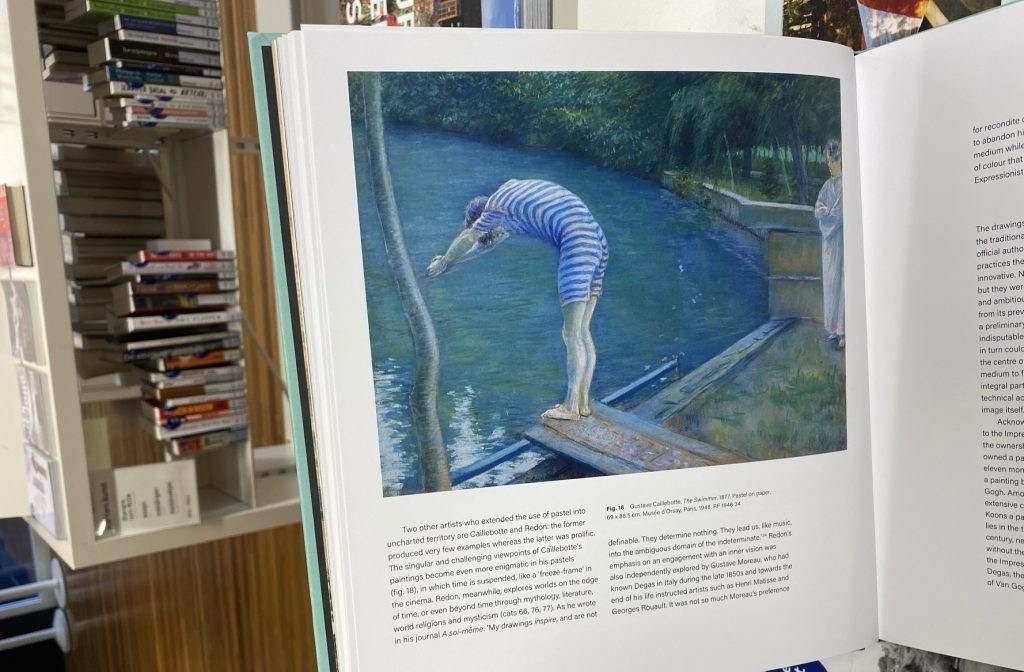
Sometimes the art is in the material. At least this could be a rapid conclusion of the exhibition presented in London at the Royal Academy of Art in 2024-1. From the informative Catalogue the importance of material is demonstrated. The ease of taking your equipment with you, like a sketchbook and out into nature have been an important feature of the impressionists’ movement. With artists challenging traditional techniques of painting and paintings as such even the apparently less noble material as paper had become a statement of being different from the established art academies making use of more noble materials. The impressionists made a convincing point with their additional use of materials accessible to all. Capture the moment and capture your very own impression of it. This is one way to immortalize the emotion and essence of the scene. In the catalogue of the exhibition I spotted “The Swimmer” drawn by Caillebotte with pastel on paper. Freezing the moment, freezing the motion and emotion is evident here, too. Testing different materials is part of the journey to find your artistic impression, expression or materialization of imagination. The ways and means are manifold.
Memory Flashes
The title of the exhibition in the Museum of Photography in Berlin was “Flashes of Memory”. The collaboration of the Kunstbibliothek with the “Yad Vashem – The World Holocaust Remembrance Center” prepared a photographic memorial of the murder of 6 million of human beings with Jewish origin or family ties. The images represented in the exhibition constitute a carefully curated selection of the photos taken as part of Nazi propaganda, the secretly produced photos by inmates and the Sowjet and American soldiers who prepared documentation of the horrors. It becomes clear throughout the different sections of the exhibition that the motivation of the photographer introduces more than just an individual perspective on the scene.
In the age of fake news and fake images it becomes more and more important to be able to read and interpret photos, taking into account the motivation of the photographer and its influence on the photo taken. In order to limit the spread of mischievous representation of the past, it is good to know that the use of AI as image creation does not allow with simple prompts to produce false documentation. It needs more sophistication and more human intervention to trick the algorithms. Additional use of photoshop will, however, increase the risks of abuses. Hence, it will be more important as of now to be able to differentiate images according to sources and authors. Our trust in photos has been shattered, and this is an important lesson in itself. It is a huge task for schools and adult learning to re-build the competence to distrust photos and images at first, then deconstruct the messages and motivations.
“Flashes of memory” is in some way linked to the “struggle of memory” exhibition. Both, obviously deal with the way historical events are and have to be present in our “collective” memory. Memories come back in flashes, sometimes, certainly for victims. Conscious and unconscious selections of images might come back at times and haunt victims for years. The correction of biased messages, is an important task for historians, social scientists and artists alike. It is all too easy and common to forget (Luhmann, 1996 Reality of mass media) and the difference between “Documentation” and “Decoration” (Lewis, 2001) or simply illustration needs to be scrutinised always anew. “Bildung” has some common roots (only four letters really) with “Bilder” in German language. It may be “une liaison dangereuse”, but the spurious link can also be turned into an educational or learning approach.
A permanent exhibition based on the material used in the exhibition would be a real asset to accompany and learn about the flashes of memory. A reading list of literature was also available at the exhibition (see image below) encouraging to dig deeper into this immensely important topic. 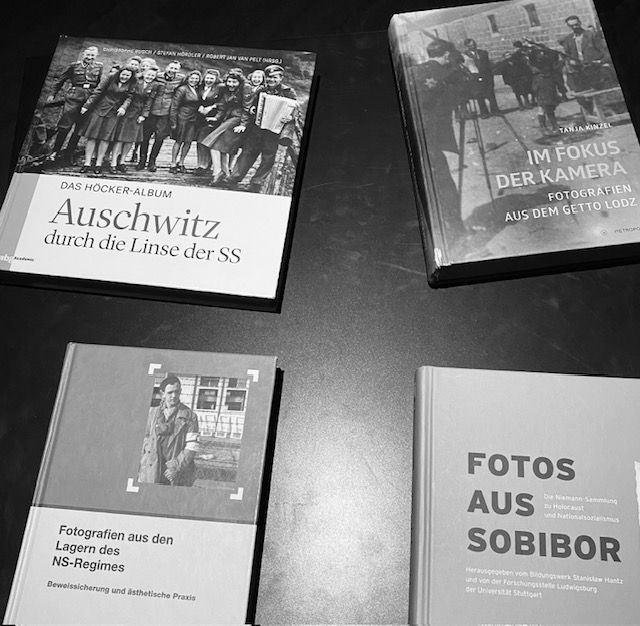
Postmodernism
The grand narratives of the modern world, like modernism itself, are under serious criticism. Deconstruction of the modern way of thinking has become philosophical mainstream. Economics as a science is in the middle of the behavioural shift and changing or at least complementing its narratives. Sociology has embraced postmodern thinking in theoretical as well as empirical forms (Mirchandani, 2005). The empirical measurement focuses a lot on the groups and people who hold postmodern beliefs and values. The discussion in the social and literary sciences continue. In the arts reading on modernism and postmodernism is a must in order to understand much of contemporary art or art from the 19th and 20th century.
Bookstores in art galleries that cover long spells of history can make surprising links between historical periods of art. Books of postmodernism appear next to books on romanticism. A lot of the ideation of postmodernism rejoins romantic depiction about nature, re-naturalizing or the emotional connotations of wildlife, isolated places and stillness.
On the other hand, we are confronted with the brutal world of war, drugs and crime. Classical warfare and strategies are back in Europe with tanks and rockets killing like in previous wars. The Russian empire of a specific version of modernism strikes back as if it were to stop the postmodern turn of the 21st century. Neo-fascism tries to build on the losers of the transitions to the socio-ecological economy and society. There are manifold backlashes of modernism, but the postmodern world is under continuous construction, most of in our mindsets. 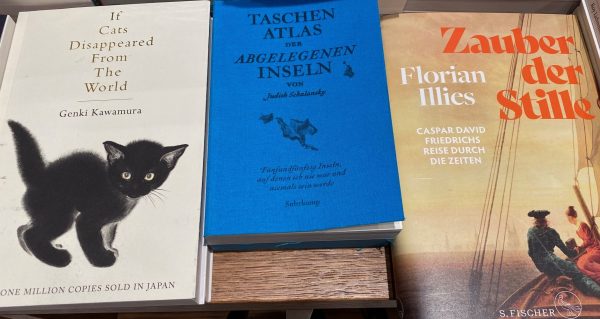
Memory Struggle
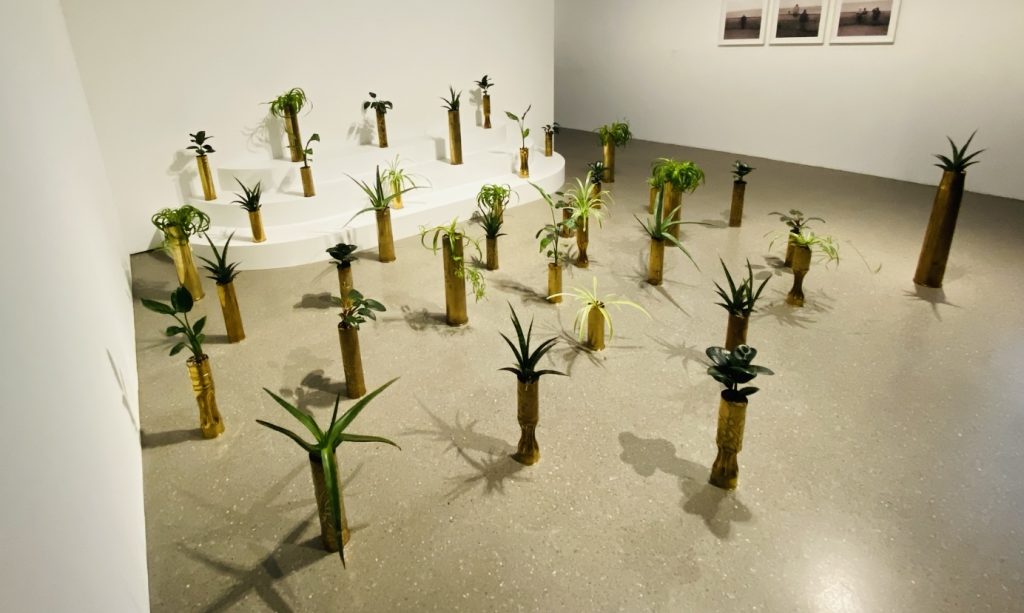
The struggle of memory is also the memory of a struggle. The exhibition in the Palais Populaire in Berlin doesn’t leave spectators untouched. It is a struggle to recover memories which were attempted to be eradicated. This is the univeral message of this exhibition. The colonial past and crimes are part of the struggles of artists from these cultures to re-establish their rights to their own views, traditions and memories. Grass and plants may cover the shelled soil and people, but traces or mortars are often left behind. Light from different angles needs to be shed on these places to reveal the shadows of the wounds. The atrocities and exploitation linked to colonialism and imperialism keeps us struggling with those memories. Just before we jump to the conclusion that it is a memory of a past struggle, we are reminded that consequences are still haunting the present and with the Russian aggression in Ukraine we have to realize the fight against imperialism continues in the 21st century. Thanks for memorable moments and impressions in view of a global arts and history experience. (Image of art work installation by Sammy Boloji, untitled 2018, exhibition Palais Populaire, Deutsche Bank foundation)
Ideal City
Ideal City
Even beyond humans the issue of what constitutes the ideal city is a matter of historical as well as experimental significance. Science has recently uncovered a city like organization of habitats in the Amazon region (Link Science.org). The organization of the Greek city states has been the model for the development of democratic ideation. The Roman imperialism has thrived through the splendor of its cities and city lifestyle. No surprise that this continues to be a constant concern for humanity.
Rapid urbanization continues in Africa and Asia. Europe also struggles to keep pace with infrastructure development in every growing cities. Whereas the ideal city in the early Italian Renaissance was imagined without trees, we witness a renewed interest to bring back nature-like environments and architecture back into cities. Combining the best of 2 worlds seems possible. Redesigning inner cities remains a continuous challenge. It is much more than thinking about bricks and mortar. It is mostly about how we want to live, work and communicate together. Therefore, it concerns all of us. Paintings help us along in our ideation about where and how we want to live together. The linear views of the Renaissance appear hardly convenient after the experience of the 20th century.
(Image Gemäldegalerie Berlin, 2024-1, Raum XVIII, Ident Nr. 1615 “Ideal city” from ca 1490 attributed to Francesco di Giogio Martini and next to well-known ideal “Venus” painting by Sandro Botticelli 1490). 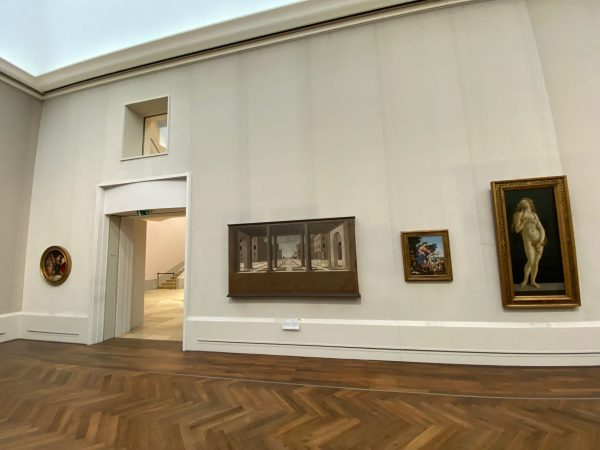
Stock taking
From time to time it is necessary to take stock of production and to review the material that has accumulated. As I have been working in archives, official book depositories and libraries for years, it comes almost naturally to deal with questions of how to keep track of all that content. Digital solutions are excellent devices in this regard. I do not have to deal with digitalisation, a huge issue for all historic archives and many recent small museums as well. I have to deal with backups at regular instances. To be sure, each engineer will assure you, better make a backup of your backup … . Yes, I do this as well. Now the ultimate backup of digital work is ? Got it, a printed copy of your digital work. The best advice I received on this comes from a computer magazine “ct” gadget mug with imprint advocating “No backup, no mercy“. To facilitate my printed archive I start with monthly collections of blog entries (Link to pdf-file December 2023 ->Brainstorming 23-12). The simple conversion yields 63 pages, a printer friendly version 56. Hence the expected yearly volume (60*12) will be somewhere near 720 pages. That is for the archive only or in case my eyes do no longer support online reading on screens for too long.
Digital archives have, of course, many other advantages. It is possible to reassemble my collection of entries by subject through a more thorough editing. Specific edited volumes will surface from this, which I have in my mind but only careful long-term followers of the entries might see already. Political economy and sociology are obvious candidates. Public health, labour, the world of arts and music could constitute other edited volumes. Lots of branches grow out of the trunk of content. 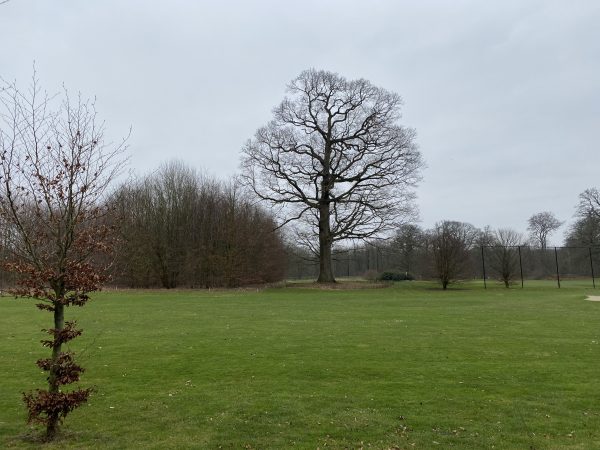
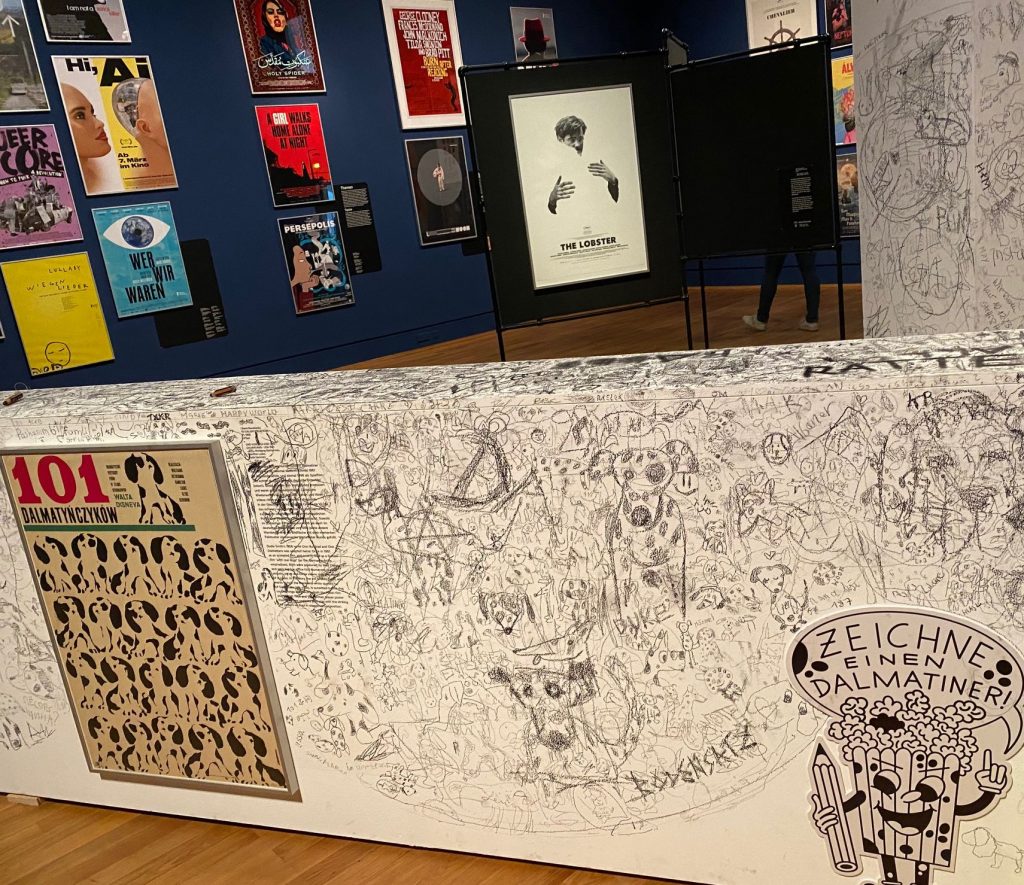
Poster Design
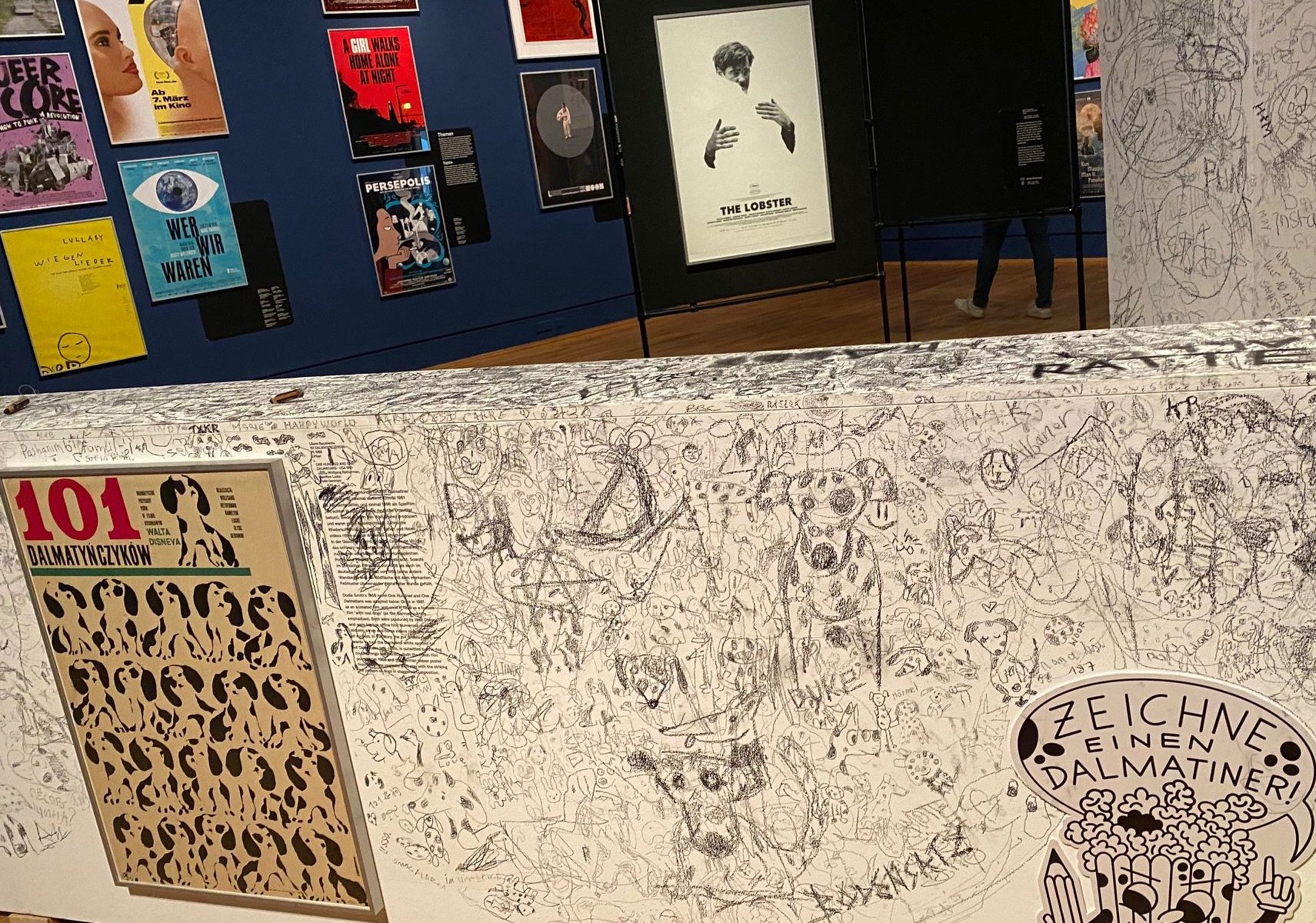
The effective use of posters in visual communication is a specific craft. Artists have been associated with poster design for more than a century. Cinemas continue this practice. For each movie produced there is an announcement posted in print or digital form. In combination with the Berlinale 2024 film festival the Kunstbibliothek in Berlin shows milestones of the history of movies and their representations in form of posters. Besides the historical approach there are many hints how to interpret the design language of posters throughout the 20th century. The encouragement to try to produce one yourself not only reserved to children is an additional activating feature of the exhibition (Link here). Cats and dogs will always catch attention and the playful approach chosen might be a start into a graphic design interest. Overall the exhibition offers a low threshold entry into the world of art and design. Instagramable image on posters evolved into short preview clips, just like instagram paved the way to tiktok video clips. In retrospect posters also provide shortcuts for our memories to recall whole movies that have accompanied us growing up and growing older.