
Rare instruments

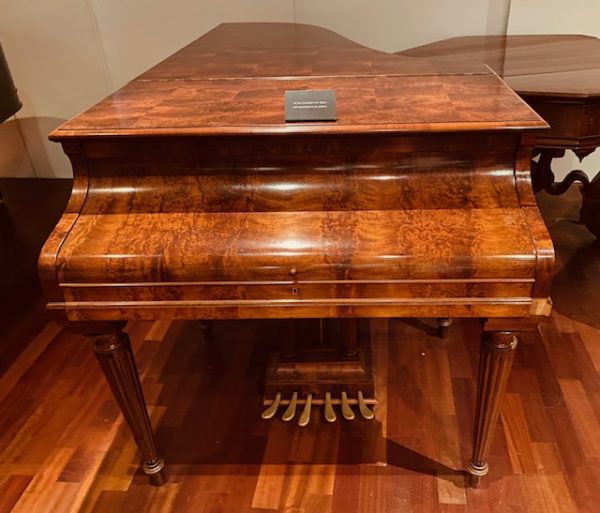
The museum of musical instruments in Brussels features many rare instruments. The collection of grand pianos is a bit hidden on the top floor of the splendid Old England building in the concert hall. The lack of explanations allows you to discover the collection yourself if you happen to be early for a concert for example. Varieties of special features for grand pianos, you might not even have dreamed about, are up there. It would just need a few demonstrations of the technical features to reach larger audiences for these marvelous pieces. The combination of grand piano and harpsichord features has not made it into many concert halls, but special appearances could find their audiences. Maintenance, however, is a costly issue, whiich might have to rely on devoted sponsors in the cultural treasures of rare instruments. 
Ensor Home

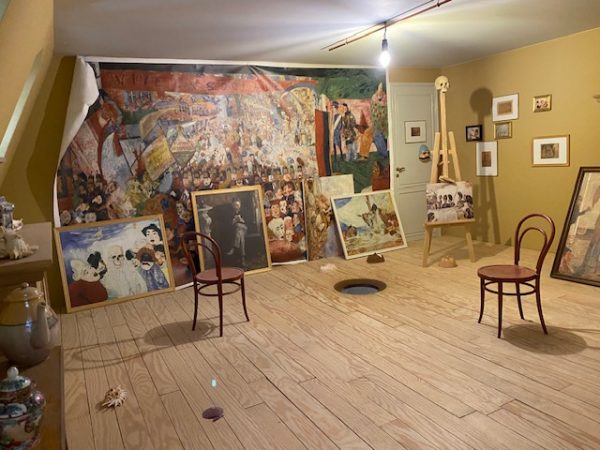
There are few artists who stayed in their home for almost all their life. James Ensor was a personality who was profoundly attached and continually attracted to his native city of Ostend. After a short and unsuccessful spell at the Brussels art academy, he returned to his parents’ home and due to a heritage from an uncle, he could live in a nearby house, which also served him as his atelier. Although I did not come across documents that showed he had traveled a lot, nowadays his art work is spread across the globe. The seaside resort of Ostend was a real tourist destination and, therefore, many famous people of the 1st half of the century passed by and met with Ensor there. Not only fellow artists, but also scientists like Albert Einstein. Critical minds and people searching beyond the trodden paths must have been attracted to him, a personality who dared to challenge conventional painting and techniques of his time. A reconstruction of his atelier and several animations give a lively modern touch to his work and living style. My take home message from the Ensor Home: The search for inspiration might be just around the corner. 

Hybrid art

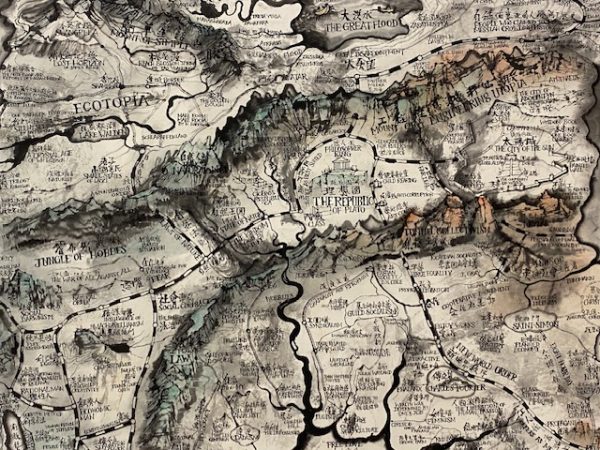
Bringing together 2 kinds of art makes hybrid art. Just as other fields of art have combined for example music with text to create the art form of songs as of the medieval ages, for example, the emancipation of another form of hybrid art is gaining prominence, text incorporated into or in cooperation with painting. The incorporation of text into paintings, sculptures or installations represents a drive to ise multiple channels of communication with an audience. Each might be sensitive to a specific word or sound, which creates an entry to gain attention or enlarge awareness for some cause. The “Palais Populaire” in Berlin displays the combination of the collection of the Deutsche Bank Art collection and the “Written Art Collection” to make this point with some forceful pieces of hybrid art focusing on text in art. (Image: Extract from “Map of utopia” by Qiu Zhijie, shown at “Seeing words, reading imagesSeeing words, reading images” at the Palais Populaire” in Berlin 2026-5). 

Valuable Donations

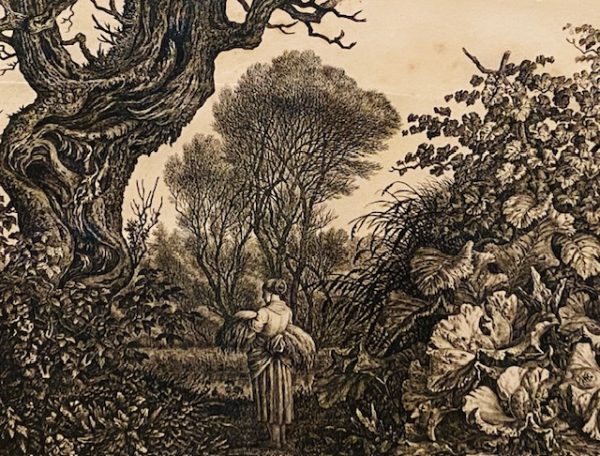
The of a donation to a national gallery is often a curse but may reveal only much later as a blessing. More galleries across the world give due credit to their generous donors. The collection of impressionist paintings by Caillebotte figures today very promising in the Musée d’Orsay in Paris. The fine collection by Chistoph Müller endowed to today‘s “Kupferstichkabinett” exposed in the Gemäldegalerie in Berlin has been on display in a small room. The „Kräuterblätter” (herbes on paper) by Kolbe 1815/1824 are fine pieces of etching with a focus on what might get lost in our biodiversity in coming years. Old trees were surely on his list (Oak trees 500+ years old). A collection of depictions of herbs and flowers a part of an ecological treasure which the generations after the painter and eventually the collector Christoph Müller began to value a lot. Some collectors are far ahead of their time by treasuring the past. (Image: Extract of „Kräuterblatt mit Schnitterin“ Kolbe 1815/24 Donation Christoph Müller shown in Gemäldegalerie Berlin 2026-5)

Portrait of or about

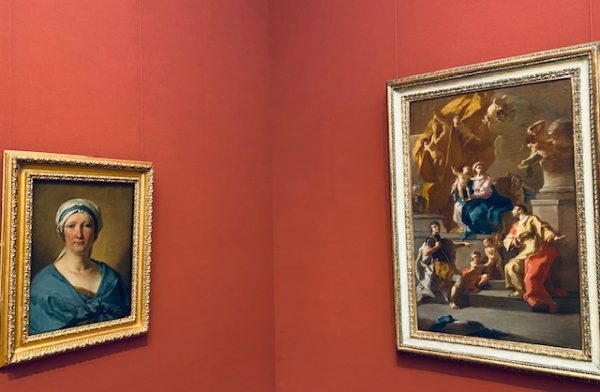
In some galleries or for curators of an exhibition, the crucial question is not only the overall message, but the best positioning of artworks in the available space. In many national galleries what hangs next to another piece is rarely seen as an opportunity for exploration and experimentation. A recent visit to the “Gemäldegalerie“ in Berlin allowed to explore the vicinity of 2 paintings, which are very different in appearance. The one (by Pierre Subleyras 1740) is just entitled “Portrait of a woman”, the other one next to it, “Virgin and Child Enthroned, with Angels and Two Saints, Domenico Mondo 1773). The former portrait has almost a modern touch to it as the beauty consists in the simplicity of the person depicted, whereas the latter painting portrays a rather empty message of splendor and power. The conscious confrontation of portraits or paintings with each other is the high art of curatorship. It is even more pointed than a guided tour of a gallery as the simultaneous rather than the sequential confrontation is the issue. 

Woman artist scandal

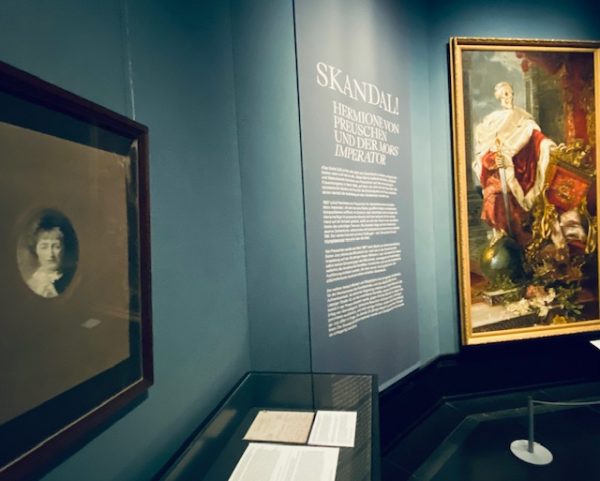
The painter Hermine Schmidt-von Preuschen, little known today, had to face strong forces in the established art community of her time. The skills and audacity she displayed at an early stage of her career as painter is epitomized in her work “Imperator Mors”. This painting dates back to 1887 and was rejected by the art academy in Berlin for their official exhibition. The woman artist was already at that time confident enough that her painting was of sufficient quality to deserve to be not only considered in the exhibition, but also to be seen by larger audiences. Similar to the refused painters of the impressionist movement, she decided to mount her own exhibition. The turnout to this proved to be quite a success according to the press cuttings presented as part of the exhibition in Berlin at the “Alte Nationalgalerie” 2026-5. Maybe it was the intended philosophical topic or message that killed the chances to be part of the art academy exhibition. “Imperator Mors” shows death or a skeleton to be the ultimate ruler of our fate. For all those who believe in some sort of life after death, this can be viewed as a “Scandal” in itself. The scandal created with such a depiction probably overshadowed the fact that the provocation came from a woman artist. Still very avantgarde for the end of the 19th century. (Image: Hermine Schmidt-von Preuschen and her painting Imperator Mors 1887)

Brancusi polyartist

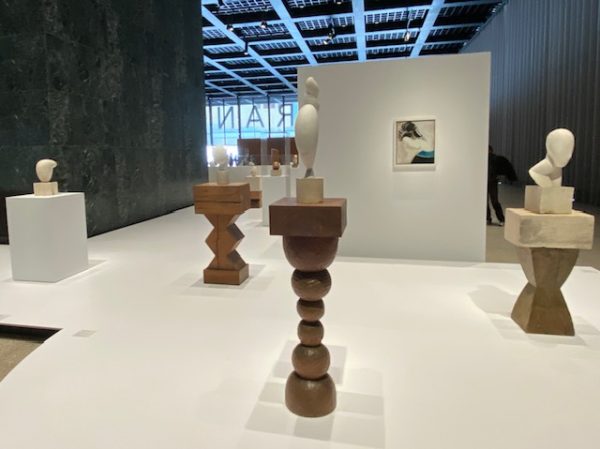
The joint exhibition by the “Neue Nationalgalerie” Berlin and the “Centre Pompidou” Paris has the simple title “Brancusi”. The name of the artist Brancusi stands for a very singular approach to take sculpture into the 20th century by way of abstraction. Brancusi used all sorts of materials like lime stone, bronze, wood and marble. Additionally, he was very conscious of the fact that especially for sculptures the “mise en scène” plays a vital role. Brancusi excelled in this in a rather unique way, mostly by confronting different materials with each other. Sculptures, for him, were architecture in miniature. Such a polyartist approach to sculpture pushed him to use photography and video to not only promote his own work, but to exploit these relatively new techniques to enhance the effect of his sculptures.
Maybe it took almost 100 years that by means of the “not-so-social media” not-instant, anytube and tikytok, this “modus operandi” would capture a whole generation of youth to follow in his footsteps without knowing it. The polyartist Brancusi is a unique milestone, not only using lime stone, on the trajectory of sculpture beyond the early 20th century. The links to other innovative artists chosing abstraction, Picasso or Modigliani, as well as musicians like Eric Satie, reflect the importance of social networks for mutual encouragement when treading new paths in art.

Random randomness

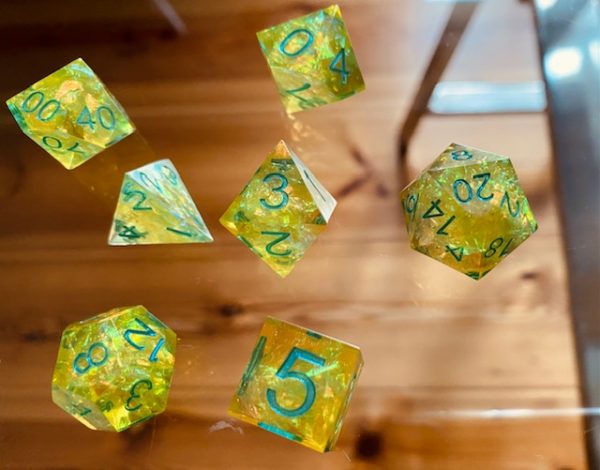
In textbooks or courses of statistics, just as ordinary experiences with throwing a dice, we assume the perfect dice. This means the dice is assumed to have equal probabilities to roll on each side. Further, each throw of the dice of a sequence has an independent equal chance for each number to come up. To determine a “fair” dice we would throw the dice a thousand times to check, whether the probability of each side is about equal. However, the world of dices is not perfect and temporary or persistent margins of deviation are part of the real world. The weekly lotteries demonstrate this over and over again. Playing around with different shapes of dices makes the issue of probability tangible. Well worth to explore further empirically as well as a topic for inspiration of new approaches to learning about statistics. (Image: Dices produced by “devinsdice” Berlin 2026-5-5)

Forgotten but Unforgettable

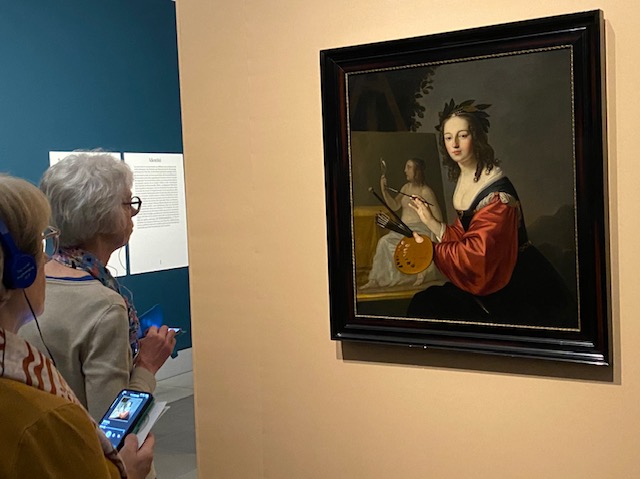
Many women painters and artists who worked during the 17th and first half of the 18th century have been forgotten until recently. The galleries of the time and many years later gave little attention to the women artists of that time. Most of them were relegated to be of minor importance in the course of art history. The exhibition of the Museum of the Fine Arts Ghent in Belgium has accomplished to rectify this place of women painters in art history. The fine pieces of art, ranging from painting to sculptures, were frequently signed by men, probably to achieve higher market values and become visible in the public sphere at all at their time.
The exhibition is a kind of a revelation of how difficult it was for women to move from an “object of art” to be the subject painting including painting themselves. This also dealt with the view or regard of others towards women. Additionally, the exhibition features a section on “Social Expectations”, which deals with the expectations of the Flemish and Dutch societies towards women. Family values, marriage, wealth and social status were of utmost importance.
These women painters were forgotten far too long, but have staged their comeback as “Unforgettable” in the 21st century.
(Image: “Pictura at an exhibition” taken in the MSK Ghent 2026-4)

Before and After

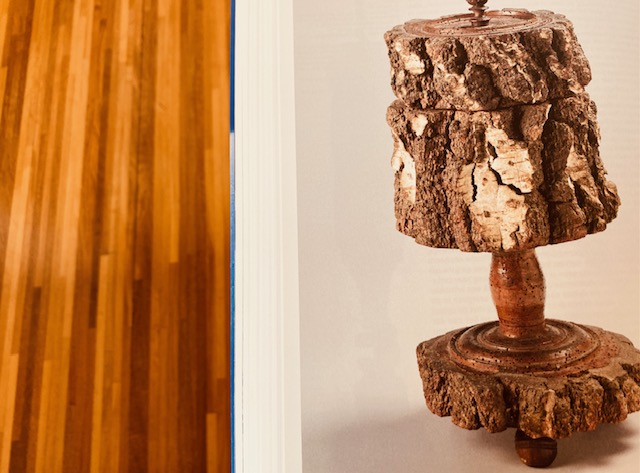
It is not always easy to precisely identify the state of before a transformation from the state of after a transformation. In human developments we can observe lengthy periods of for example puberty. Other transformations of biological changes might be more obvious to identify like a broken bone, but a broken heart transformation might be less obvious as it might occur gradually and progressively rather than abruptly. Much the same can be said about illnesses like diabetes or cancer. The task of science is to study the whole process and this includes the theoretical model of such transformations. The arts have dealt with this complexity before and many artifacts take care to show or make explicit the kind of transformation they have undergone. The woodwork by Birkenmaier (before 1687, in catalog of Metamorphosis exhibition, Amsterdam 2026. Image below) is an early example of being honest about original piece and the evolution of the piece of art into the transformed “oeuvre”.