Peak AI

Many scholars, economists and politicians have predicted peak oil production before and were wrong in the estimate of the timing of the turning point. At the occasion of the Frankfurt book fair #fbm26, the sector’s coming to grips with the use of AI is all over the place. AI is the elephant in the room which threatens jobs and complete business models, but also creates new opportunities. On the Global Stage on 2026-10-7 the panel on innovation and experimentation in publishing discussed the issues based on first experiences. When I asked Chat-GPT for an opinion on, whether one of the presenters gave a realistic assessment of the potential of AI in publishing, it came up with a rather  sobering statement (see below). “Yes — the overall approach is realistic, but the slide makes it sound easier and more universal than it actually is.” A great opportunity for AI consulting to the sector subject to rapid change (again). Maybe the AI knows from my track record of prompts that I am a social scientist and favor critical thinking. Pleasing me, it ends by a suggestion that indirectly AI is less universal than is currently the dominant opinion. We might see a reckoning of AI that it (hopes) for its own sake, to be less universal than what the hype suggests. Peak AI could guarantee sufficient margins to survive comfortably, just like other not-so-social or not-so-sustainable sectors and technologies. 
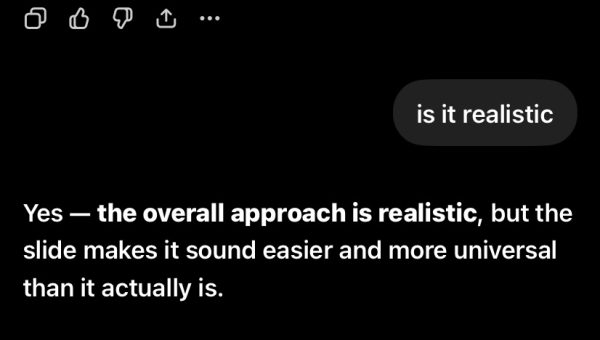
AI on AI - it is not so universal 2026-10
AI on AI – it is not so universal 2026-10

Loss of green

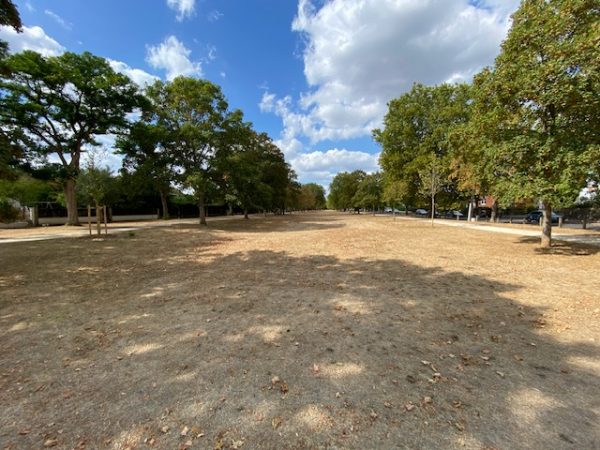
In many instances we learn only if we have lost something. The loss of biodiversity is rather abstract. The loss of a favorite green, allay or park due to a severe drought, however, is fairly visible. The point of departure of the Tour de France more than 100 years ago in Montgeron and the green alley which was built to allow to ride through the Forêt de Sénart to Fontainebleau has suffered from the 2026 repeated heatwaves and droughts. The scientific evidence accumulates to the manmade responsibilities over time. What used to be a fantastic area for leisure and walks after work has turned into a dusty place. Even the recent efforts to improve the greenery further has been surpassed by the unexpected lack of precipitation, although forecasted by some scientists. The costs of climate change, global warming and therefore more difficult water management become pressing policy issues. 

Green loss due to heat and drought 2026 France

Sleepless sleep

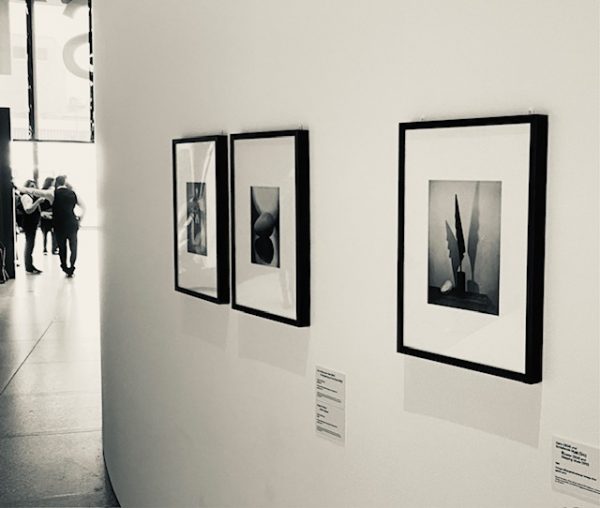
The reasons why we pass an almost sleepless night or sleep are manifold. Too much to drink, eat or partying are just among the more social ones. The neighbour’s cat or cock may be another one. A recent comment by Pixin Gong (2026) outlined a whole research agenda on heat and sleep deficits. What is the threshold of bad sleep? Do we accumulate over days and how do we recover from it? Which measures and metrics are important? How to determine the social gradient of sleep deficits? The research base is largely missing due to neglecting the link of temperature as crucial impact on sleep in addition to melatonin levels. The implications of expected results can be far reaching like re-organization of homes, urban planning and architecture. (Image on the right: Rooster 1924 and Sleeping Muse 1910 by Brancusi, Centre Pompidou Paris in Berlin Exhibition Neue Nationalgalerie 2026-5)

Urban heat island

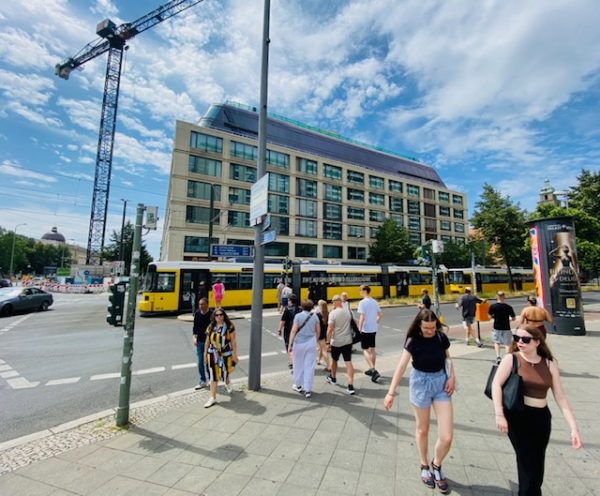
Heat in the city, is a real problem. Of course, some like it hot and that’s why they move to inner cities and specific quarters in a city. However, this is not the scientific definition of the “urban heat island effect”. The former issue is more a socio-legal-moral concern, whereas the latter has physics or geophysical effects at its origin.
More concrete and asphalt instead of leafy islands in inner cities create hot micro-climates as sunlight and warmth get stored during the day and feeds back into homes during nights. If the cooling effect of wind and humidity become trapped outside of building blocks an urban heat island can reach very uncomfortable levels. Add underground car parking, tunnels for traffic and public transport to the scenario and the unhealthy limits of heat over the summer are exceeded for months rather than weeks. Geophysical factors like altitude, mountains, river or seaside proximity are additional factors to consider, but the narrow urban heat island effect is a rather robust finding across the world even if the precise measurement and potential remedies of it are under scientific debate.

Ocean Acidification

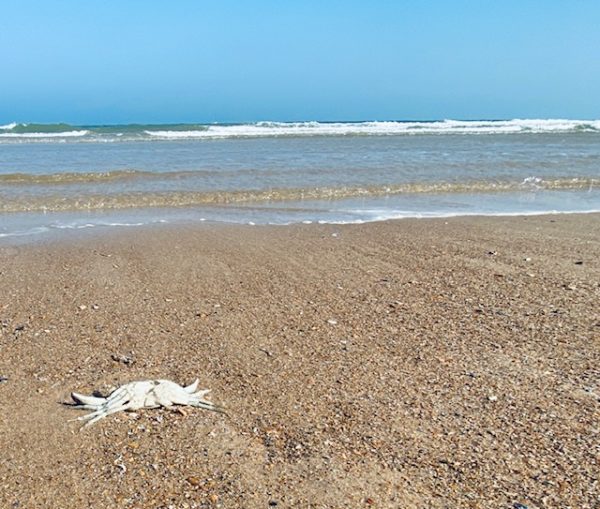
No, the abbreviation of acidification is not AC/DC. Acidification stands for the process that our oceans turn more acid due to the absorption of CO2 from the atmosphere. This has several harmful consequences. Lower calcification, slower growth of corals and mollusks (oysters and mussels) for example, shall reduce biodiversity in the medium term of species with calcium-based skeletons. The UN highlights this in several reports, but action upon this evidence (Ifremer 2026) is slow or even absent. Besides the acidification, the oceans have increasing temperatures. Some researchers frame this process already as the “tropicalisation”, the warming of sea water and migration of fish according depending on their preferred or necessary temperatures of sea water. Some move to cooler water, other species move into or “invade” due to higher temperatures.
This can be observed and studied in citizen science projects across the globe and by tourists with a little interests in what is happening near the beaches. Just take a litmus-strip with you to test the basic or alkaline pH-value of the sea water in a glass of sea water. Then add a bit of soda water and test again. That’s a bit exaggerating, what acidification of oceans is about, but the underlying mechanisms is the same.

asidification-of-ocean-skeleton-Ostende-2026-beach

Heat Mortality

Heat waves can be deadly for humans, animals and vegetation. According to the cumulative estimates by the RKI (Robert Koch Institute) in Germany up until 2026-7-26 there were 11.900 deaths within the confidence interval between 10.700 to 13.100 of the estimates. About 6.000 of the people who died due to the heat waves were aged 85+. 1.140 were attributed to persons younger than 65. Chronological age appears to be a significant factor as frequently chronic diseases accumulate in older individuals as well as poly-pharmacy. Hydration levels and deficiencies are associated with the increased mortality, but we have few or no precise measures of hydration readily available for people before it becomes an emergency (cognitive impairments). We know a lot about precision medicine. However, precision hydration for people remains rather arbitrary. 

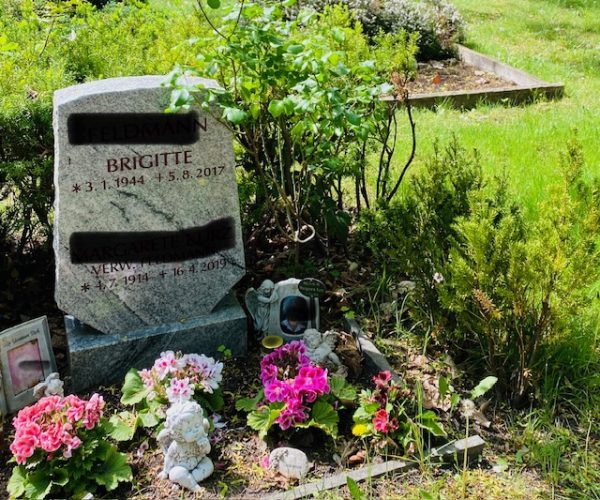
On graveyard inscriptions

Climate Anxiety

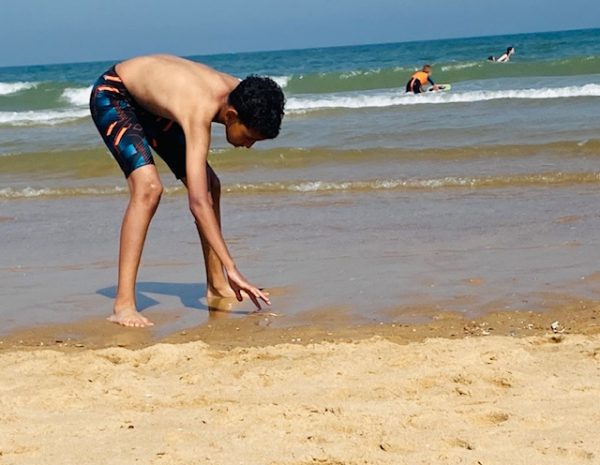
The events of several wildfires and a too hot summer in 2026 have raised the level of anxiety related to climate change for many people. From the field of economics we know that the fear of an economic recession can be as bad for the economy as a statistical economic downturn. The anxiety about climate related bad events can trigger or worsen symptoms of depression. The research by Zacher and Kühner (2026) shows that psychological evidence supports this hypothesis. The 1 year follow-up clarified, that the opposite direction of causality is not supported by the data analysis. A pre-existing depression is not worsening due to climate change. The consequence of these results is that the total number of persons with depression is likely to increase with an additional source of depression, for example after experiencing a wildfire. Oceans are warming and the number of injuries on beaches due to poisoning from algae or medusaes (jellyfish) become more frequent as well. Lots of sources for increasing climate related anxieties. In the economic costs of global warming and climate change we frame this as second round effects of climate change.

young curious boy touching jellyfish on beach

Stinging issues

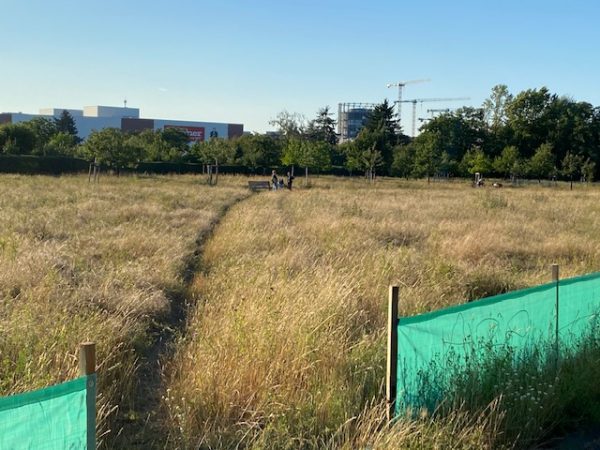
Sometimes a topic can make it into the headlines only if it is a stinging issue. The fact that certain mosquitoes travel and survive further north due to global warming is indeed such a stinging issue. As the living conditions for mosquitoes depend on warm weather conditions particularly during (tropical) nights as well as water availability for breeding purposes, the spread of mosquitoes can already be observed studying the spread of dengue fever, malaria and chikungunya in some southern European and American countries. Climate change, especially the warming parts of it,  shall bring home a number of stinging issues and consequences to people who didn’t seem to know or care about the spread of spread of infectious diseases.  

Green land in summer between Priesterweg and Südkreuz Berlin 2026

No mow May

For the sake of biodiversity we have learned how important it is to allow our gardens to grow during the month of May. Lots of insects shall benefit from the larger diversity of our greens. Equally, it is the perfect time to “collect” “pollen” from lots of neighbors’ gardens and fields, which will eventually show up in another garden. It is a bit similar to sharing flowers and plants in your local environment.
We just have to be careful about invasive species that have been quite successful to “surf” on the “No mow May” gardening wave.
In May 2026 the effects of global warming have been particularly felt in France. “Meteo France” has reported the very warm French month of May in 2026. Similarly, for most parts of Germany, particularly in the South West, the average temperatures were well above the 2° target already (Deutscher Wetterdienst).
With quite some rain before, the climate throughout May 2026 has favored rapid growth and advances in the blooming of the whole vegetation. You might have seen gardens in your neighborhood that looked very different from previous years for those who tried a “No mow May” in 2026.

Before and After

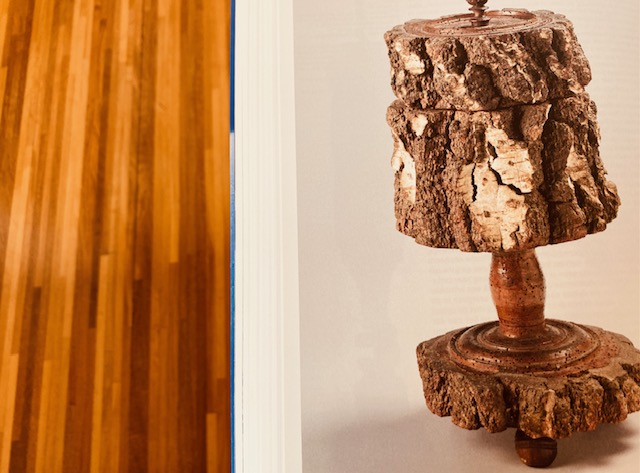
It is not always easy to precisely identify the state of before a transformation from the state of after a transformation. In human developments we can observe lengthy periods of for example puberty. Other transformations of biological changes might be more obvious to identify like a broken bone, but a broken heart transformation might be less obvious as it might occur gradually and progressively rather than abruptly. Much the same can be said about illnesses like diabetes or cancer. The task of science is to study the whole process and this includes the theoretical model of such transformations. The arts have dealt with this complexity before and many artifacts take care to show or make explicit the kind of transformation they have undergone. The woodwork by Birkenmaier (before 1687, in catalog of Metamorphosis exhibition, Amsterdam 2026. Image below) is an early example of being honest about original piece and the evolution of the piece of art into the transformed “oeuvre”.