Autonomous regions

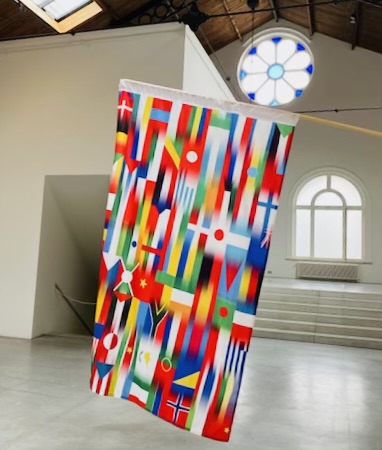
In political science, autonomous regions have a hybrid legal form. Autonomous regions are a part of nation state, but have rights of own administration beyond what other regions have. The status quo of an autonomous region is more defined by the historical evolution than current political controversies. The hybrid state as being part of a larger nation on the one hand, but giving the impression of enjoying more autonomous decision making. The actual test of autonomy is in day-to-day decisions, particularly those that have cultural or financial implications. In order to preserve an own language and folk traditions the status as autonomous region is quite helpful. Whereas an own television channel or decisions about school curricula were essential for autonomous regions, the access to the internet and, for example, AI-assisted translations have made the preservation of cultural autonomy a bit easier in the 21st century. In view of a pervasive globalization we witness at the same time an increasing local attachment of people. The “glocalism”, which combines global humanitarian values with a locally routed personal identity. This mechanism seems to be on the rise and continues to pose a threat to an outdated vision of a nation state. Beyond hybrid cars and hybrid war, we live more and more in hybrid nation states.
Embedded Artists

The Brussels districts have their specific identities. 

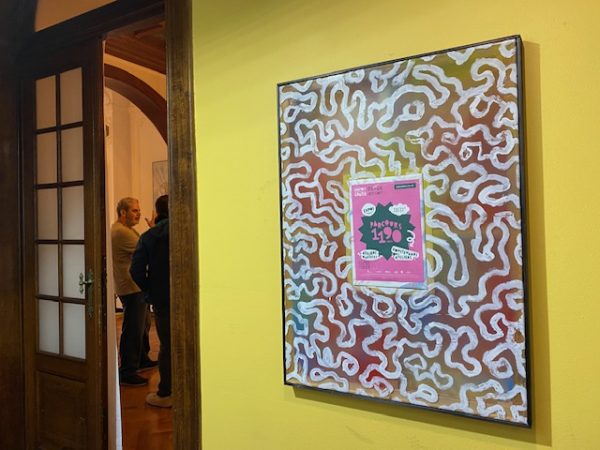
The Forêt district is reconfiguring itself rapidly. In addition to the Modern Art Gallery Wiels, It hosts a multitude of diverse artists. Many of them opened their doors to the public as part of the 4 days of Parcours 1190. It turned out to be a truly Inclusive experience in the broadest sense possible. The immersive experience of seeing the work and the artists, some of them in their private homes, created a sense of an embedded connection to their work and personalities. The artists are embedded in the district around them nd the people of the district might feel a bit more connected to the artists surrounding them. The artist has integrated the pink poster of parcour1190 into one of his works under the overarching theme of inclusion. Social inclusion can take many forms, The Brussels district Forêt has added new dimensions to it. (Image entry to Hassan Bouzougarh‘s exhibition on 2025-10-5, Brussels Forêt). 

Citizen Walk

Capitals like Paris and Berlin make great efforts to improve the walkability of their cities. After decades of focus on automotive traffic and mobility and the detrimental effects on health for several generations of people, the awareness that walking citizens are part of the solution is spreading. Citizens of Paris voted in a referendum to stop circulation of cars in 500 more streets. In Berlin pedestrians unite to mobilize more people to take to the streets as well and reclaim walking space. In high density spaces like metropolitan areas it is possible to reach all major amenities within a reasonable walking distance. The more spread out suburban area, however, leve fewer options to walk and carry your shopping or do your dily commute to work while walking. Fewer cars and pharmaceutical products sold would mean less „artificial economic growth, but more healthy and happy citizens. It will take decades again to realize such visions.

Memories updated

In Berlin and many other German cities it is a regular practice to scrutinize the memory inscribed into street names. In order to correct the honors given to persons with a past as fascist or responsible for mass killings street names were changed at several points in the history of the city. Streets named after battle fields, for example, are a continuous point of discussion. It is important to keep the perspectives of victims in mind. Therefore, changing street names is a little contribution to rethink the role of places and persons. Such changes are sometimes very controversial as people become accustomed to names, some might even not care much at all. Recognition and responsibility, however, have a lot of currency in historical perspective. Overpainting like in the paintings from Gerhard Richter has an important function in society and can be one way of coping with the demons of the past.

Berlin Mind

For a long time now, I have been asking myself the question: What is like to be in a „Berlin state of mind“. The exhibition of the 2 photographers of the Berlin Landesarchiv as part of the Berlin activities of the EMOP contributed to understanding and more precise description of the „Berlin state of mind“. As we shall celebrate in 2025 the 80th anniversary of the liberation of Europe, Germany and Berlin from Nazi rule and terror, we have seen endless reconstruction and reshaping of the city. The ever growing need for housing and space-grabbing office buildings bring about a permanent feeling of change, of becoming, of under construction. The years of the separated city as well as the building and taking down of the Berlin wall created many new opportunities for developers of the city and its structure of quarters, arrondisements or „Bezirke“ and „Kieze“ within the districts. 

Due to the continuous urban renewal also of basic infrastructure Berliners have the impression that there is construction work all around us all the time. With the abundant construction works come the construction fences. They too have changed. Some fences show digital prints of virtual worlds of the Berlin living in some future time. However, the promises often mask the reality that fences will be replaced by concrete walls and inaccessible buildings for most people of the neighborhood as gated business space or city blocks grab the space to form and reform the metropolitan landscape. The construction fences themselves become the contested areas where different strata of society interact or intersect. The „Berlin state of mind“ is one of becoming. Longing to become something else, something aware of the overwhelming historical duties, but still rising from the ashes. The experience to see a wall come down between cold war enemies liberates a belief that we can overcome frontiers. However, this in-between state of mind has brought us multiple fences of all sorts. Construction fences are only the most visible ones that surround the many spaces under construction. In the imagery of Berliners and visitors beyond the wall, fences are continuously on our minds in the „Berlin state of mind“.

Paris Experiment

The Olympic Games 2024 were prepared years ago. Already the application procedures to prepare “un dossier” has to bring in lots of ideas and imagination what is desirable and feasible. Paris opted for a celebration of sustainability in a city proud of its medieval heritage and the Haussmann tradition of radical transformations of a city with large boulevards and representative buildings. From the “Arc de Triomphe” the major axes of communication between “arrondissements” become visible. 100 years ago the city had already been transformed according to this master plan. At that time sanitation of a city meant different things than today. The invasion of inner cities by Diesel-driven cars made life unhealthy again. Now, the Olympics gave reasons to restrict cars and lorries passing the inner city and the great boulevards. More tourists need more space and shall keep a much better memory of how pleasant Paris was during the Olympic Games. This could be a game changer for urban development in general. The proportion of pedestrians versus cars has to be shifted in favor of the walking population for many reasons. Tourists will flock to the city, if the overall and shopping experiences are great. Back to the future sounds crazy, but it has an interesting flavor to it for urban renewal and residents as well. (Image Paris 2024-8, b/w color filter applied, enlarge to see vasque)

Einfahrt freihalten

Wir alle kennen die Schilder „Einfahrt freihalten“ auf dem Lande und in den Städten. Alle Personen, die eine Art von Garage oder Einfahrt für ihr Zuhause, Firmengelände oder Grundstück haben, sehen sich früher oder später gezwungen andere Personen auf die Einfahrtsmöglichkeit extra hinzuweisen. Ohne Hinweisschild könnte sich jemand die Freiheit nehmen, genau an dieser Stelle sein Vehikel abzustellen und die Ein- und Ausfahrt zu blockieren. Derartiger ziviler Ungehorsam oder einfach Faulheit eine andere, weniger anstößige Parkgelegenheit zu suchen, verleitet ständig zu leidenschaftlich geführten Streitigkeiten. Einsätze vom Ordnungsamt, der Polizei und einem Abschleppdienst gehören zu den üblichen Folgewirkungen. Rechtlich verbriefte Eigentumsrechte gehören in vielen Ländern der Erde zu den höchsten Rechtsgütern.
Interessant sind die verschiedenen Spielarten von „Einfahrt freihalten“ in der deutschen Sprache. „Ausfahrt freihalten“, beispielsweise, suggeriert die Bedeutung des raschen Verlassens, eventuell zu einem Einsatz. Zeitdruck bei der Heimkehr oder beim Wegfahren lassen auf die Begründung der Nachdrücklichkeit der Aufforderung schließen, bitte Ausfahrt freihalten.
Die neueste Berliner Variante der Aufforderung, bitte hier nicht parken, heißt „Freiheit aushalten“. Können wir die Freiheit der Person aushalten, jederzeit dieses Gelände zu verlassen oder zu befahren. Das ist anscheinend eine große Herausforderung an der viele Personen ständig scheitern und ihre eigene Parkfreiheit über die Freiheitsrechte der anderen Personen stellen. Gesellschaftliche und rechtliche Prinzipien lassen sich manchmal an alltäglichen Kleinigkeiten verdeutlichen.

Citizens Gardens

There are multiple ways to link citizens to gardens. Most people would link citizens to the property of their own garden. This is more the perspective of people from the countryside. The aim of citizens who can afford it have a garden, many others wish to have one and all of them enjoy public garden spaces. An intermediate version of the public versus private property of citizens’ garden is the joint ownership of groups of like-minded people to work together in the shared property or rented garden space. The recreational and health effects are well documented, if care is exercised with utensils etc. Spring is the ideal time to join projects again as the results of a little bit of gardening will be visible and enjoyable for several months afterwards. Gardens are also meeting points for people of all walks of life as in the vicinity of the European Parliament in Brussels. The Citizens’ Garden has a different function to people gardening there. When you puzzled about Europe after a visit to the Parliament or the Museum of the History of Europe, then it is time for a stroll and relax in the garden nearby.
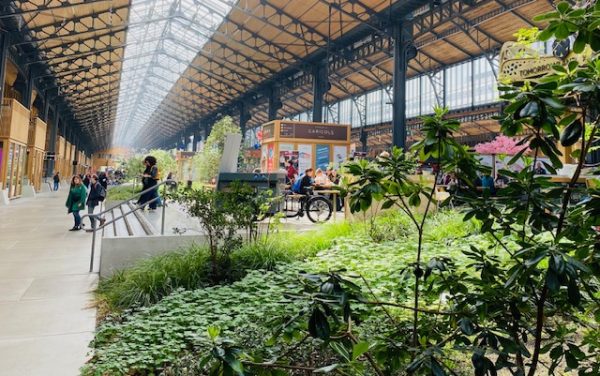
Alternatively, the Exhibition Centre of Tour & Taxis in Brussels not too far away from the North train station has an impressive indoor garden for the times of rough weather conditions. At the time of the book fair culture in the indoor garden made a splendid combination. There is a green version of Europe. It is like a small plant. It needs a lot of time and care to grow.

Paris 1830s

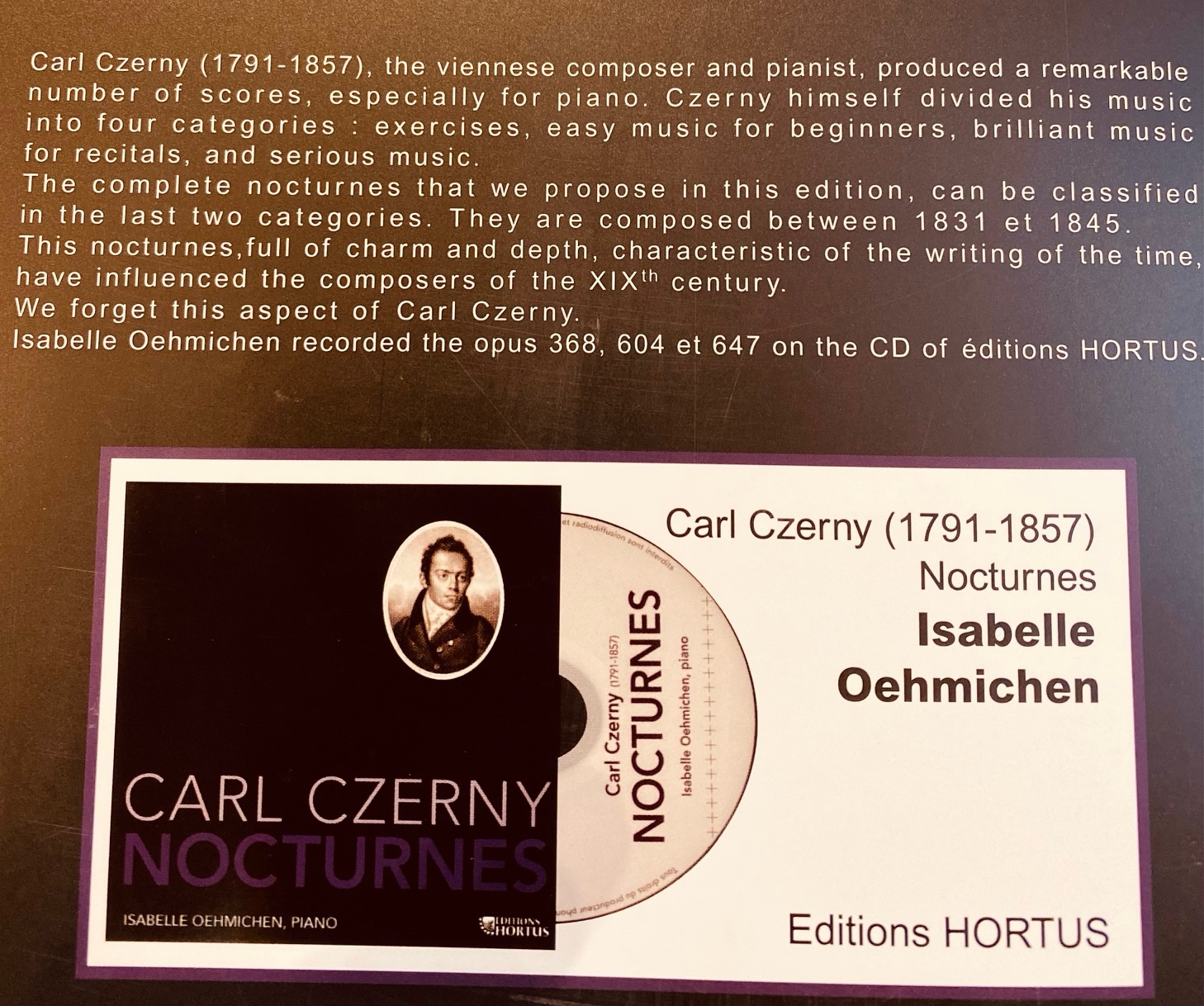
The music life in Paris in the early 19th century, almost 200 years before now, was incredibly rich. In 1828 the young Flotow arrived in Paris to receive lessons. The pianists Liszt, Chopin, Fields and Czerny passed or lived for longer times in Paris. The innovation in this period of romantic music and operas saw also a fierce competition among those talents. It was no easy task to find your niche to thrive in composition or in both performing and composing.
The 1830s had a rich urban bourgeoisie, which animated and indulged in festive events of live music and social life. Friendships of Chopin and Sand are a testimony for this. Similarly, the young Flotow and Offenbach paired to find their place in the Paris music salons and society of that time. The biography of John Field, written by Patrick Piggott (1973, p.73-81) supports this density of musical experience. The period is also characterized by the fast industrialization and the rise of the global trade. The musical life found refuge in the romantic period and more and more artistic performances by musicians. Theatres, opera houses, concert halls and private salons were meeting points of the upper social class which practices networking in rather closed circles with rather rigid routines and admission at the time.
In architecture the Operas became meeting points and a matter of national pride with National Operas contributing even to national identities. The opulent “Palais Garnier” in Paris was started in 1861 to become an iconic place in the new Paris with the huge boulevards à la Haussmann. The wealthy citizens cultivated a new lifestyle of a networked upper class that had the leisure to participate in the masses of modernity. Cultural events of all kinds filled newspapers and specialized editions. There were inner and outer circles of influence in the economic, military, political and cultural spheres.
Recommendation letters were a real currency for entry in each of these circles. Some of these social practices, have still a lot of currency even in 2024. In short, in the 1830s Paris was the place to be. Compositions of that time still fill concert halls today and their music is abundant on the new music platforms and streaming as well.

Urban Living

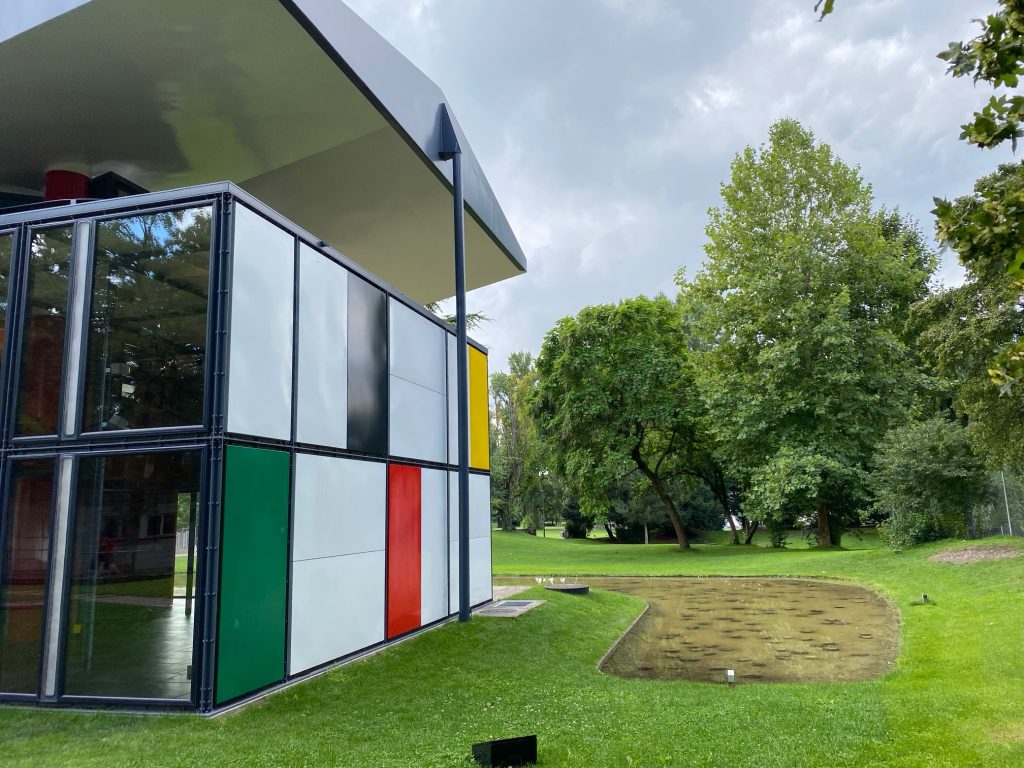
Each time I pass by the closed airport in the middle of Berlin I am amazed by the crazy idea to have built this and maintained throughout the 20th century. Paris is desperately trying to re-naturalize small areas and roads, while in Berlin there is now still the huge park to enjoy for all. Sports activities benefit the most. What an amazing asset in the neighborhoods for so many in need to walk, run or cycle a bit to keep their exercise level up throughout their life course. It has still a huge potential to activate people. It just needs a bit more organizations and volunteers to embrace the opportunities. Only in comparison to other cities you realize what an asset this is now. It will remain a challenge to preserve this centrally located treasure for the benefit of all. In Paris the deconstruction of concrete is taking shape and 300 new sites have been identified for re-naturalization, as reported in LeMonde. In Zurich green spaces in the center have been saved and renovated with a lot of money to allow more people to enjoy the benefits of a green environment near the city center. The house and park by architect Le Corbusier is a fine example of this. Image below. The garden around the house is publicly accessible. As air pollution is threatening more and more and heating in cities is a serious health threat we would really like to welcome more preservation and re-naturalization in inner cities.

Le Corbusier house Zurich 2023