
Philosophy in consulting

What has consulting to do with philosophy? How much philosophy in consulting? If we think of business consulting, there is very little philosophy in most of it. Some ethical considerations might enter the consulting with respect to mass lay-offs, ethical considerations in supply chains or handling waste. The philosophy of consulting, however, deals with one of the oldest philosophical practices (Stegmaier 1993). Since Plato and Socrates the dialogue of persons is at the foundation of philosophy. Throughout the history of philosophy the dialogue as the basis of exchanging ideas and controversies can be regarded as a philosophical practice particularly if it deals with topics beyond daily concerns. The consulting by philosophers has taken the form of speeches as well as book publications. Marc Aurel or Montaigne have written famous accounts of their consulting advice to political leaders. Rousseau for education or Kuhn for science have been influential with their philosophy intended as consulting beyond the inter-individual, dialogue-oriented form. The dialogue with a reader used to be rather exclusive until the invention of the printed press. Apelt introduced the “ethics of discourse” followed by a theory of communicative action (Habermas). Even modern governance structures “incorporate” committees as institutionalized consulting to advice with multiple and at best diverse perspectives as guidelines to persons in leadership positions. In order to counterbalance individual leadership of prime ministers, judges or university presidents, institutionalized internal consulting has been implemented (Stegmaier 1993). Consulting resistant leaders probably had some of the worst fates if we think of Julius Caesar. Seeking advice is only one side of the coin. Giving advice is the other one. Now we leave the “why” of philosophy in consulting and move to the questions of “what” and “how” to consult.

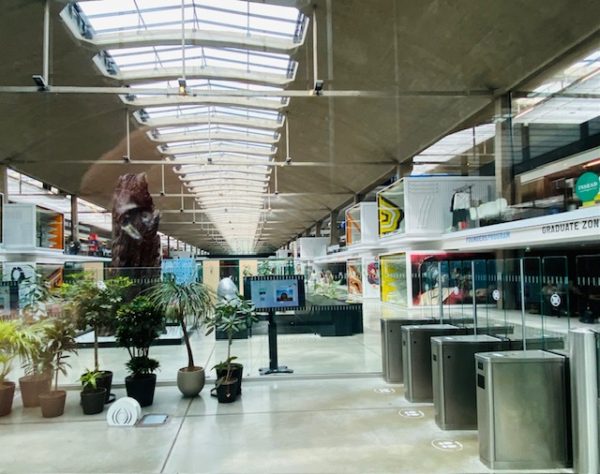
Paris start-up 2026 Station

Deep reading

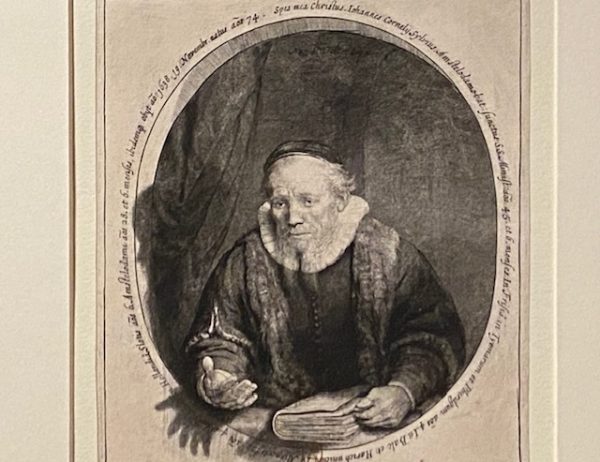
Rembrandt depicted in the 17th century not only the university professor Sylvius, but the reader and presenter based on his readings as well as professional experience. The combination of studies in medicine and philosophy have confronted the lifelong reader with lots of unresolved issues at that time. Nevertheless, he seems ready to argue with his profession, students public or the public. His hand is shown with an outreaching gesture. The scientist is not depicted in the reading pose next to lots of other books in the background or in a library. The image chosen by Rembrandt stresses the discourse and discussion as part of the scientific or research and teaching process. (Image BNF, 2025 exhibition “L’Europe partagé”). 

On Woke-ability

The past particle of “to awake” is “woke“. As early as the 1960s the term woke has appeared in a New York Times article to reflect the idea that in the African-American History movement you woke up to a new movement, leaving behind discriminatory practice and rhetoric. The definition of woke in dictionaries refers to an awareness of social facts and injustices. Additionally, the use of woke has implied a need to act upon injustices due to social and/or ethnic origin. Elements of the woke movement were the use of more general non-discriminatory terms like people of color (POC) in official documents and revisions of textbooks for pupils. Subsequently, the application of the term woke spread to other social concerns like the discrimination of LGTBQ+ people in many societies.
The underlying concern was and still is (1) to recognize the discrimination and disadvantages faced by many groups in society and (2) a call for changing the way we talk about it and (3) a shift of policies to counter social injustices. Societies differ in the capacity of “woke-ability”, i.e. the capability to address social inequalities of various types including intersectionality. Societies have never simply been only homogenous. Heterogeneity, plurality and complexity are much better suited to represent societies, regions or countries.  It is our willingness to deal with these complexities in an open way which includes the “woke-ability” of social phenomena. Acknowdge a social problem and act upon it. Change the way we talk about a problem and the discoursive practice in general are important steps to address old and new social problems. For example, over the last 50years the discourse with respect to handicapped persons has evolved and the Paris 2024 Paralympics have made this clear to the public on a global scale.
(Image: Installation of Daniel Boyd in the Martin Gropius Bau, Berlin 2023)

Screenshot

Lotte

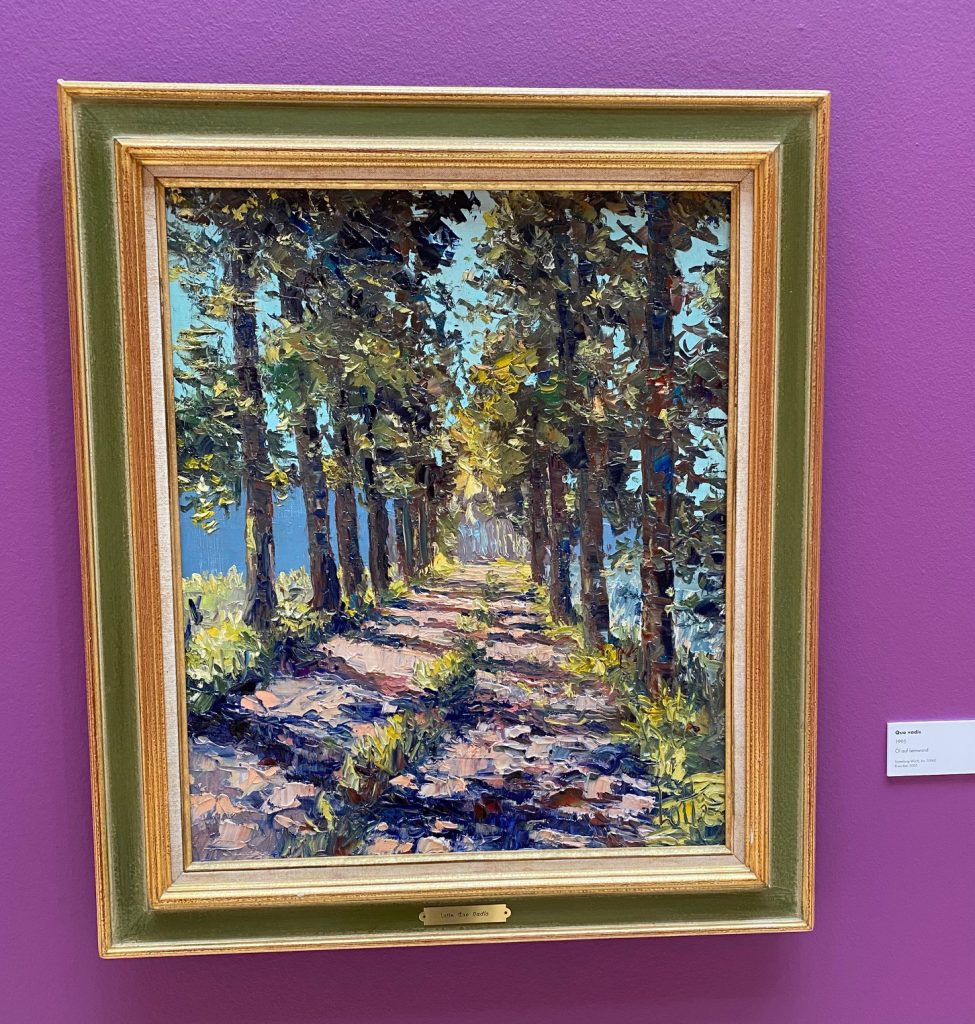
Im Forum Würth in Chur lässt sich in 2023 eine erfrischende Ergänzung zu der ebenfalls in Chur zu besuchenden Ausstellung der männlich dominierten Giacometti Familiensammlung erleben. Lotte, die Malerin, hat ein umfangreiches Werk von erlebten Landschaften hinterlassen. Dem Mäzen Würth ist es gelungen, einen bedeutenden Kontrapunkt zu setzen mit seiner Wertschätzung durch den Ankauf einer großen Sammlung. Weg von der bloßen Darstellung von Frauen durch Männer, hin zu Sichtweisen von Frauen. Im Begleittext zur Ausstellung wird treffend von einer Art bildlichem Reisetagebuch gesprochen. Ein Thema das den Kunst und kulturellen Diskurs in Chur seit Jahrzehnten beschäftigt. Aus der Gegenüberstellung zu den Giacometti Werken ergibt sich die Jahrtausende alte Frage des „l’homme qui marche“ und diese war und ist: „quo vadis“. Das ist denn auch der Titel eines im impressionistischen Stil ausgearbeitetes Gemälde von Lotte. Es ist gut in Szene gesetzt, auf violettem Hintergrund. Mäzene können Impulse geben, die dem oft beliebig erscheinenden Kunstmarkt emanzipatorische Anstöße geben. Kostenloser Besuch im Forum für reisende Familien besser als jeder Stopp an der Tankstelle, obwohl wir vor Ort richtig vollgetankt haben, im übertragenen Sinne.

Lotte Quo vadis 1995 Sammlung Würth