Loss of green

In many instances we learn only if we have lost something. The loss of biodiversity is rather abstract. The loss of a favorite green, allay or park due to a severe drought, however, is fairly visible. The point of departure of the Tour de France more than 100 years ago in Montgeron and the green alley which was built to allow to ride through the Forêt de Sénart to Fontainebleau has suffered from the 2026 repeated heatwaves and droughts. The scientific evidence accumulates to the manmade responsibilities over time. What used to be a fantastic area for leisure and walks after work has turned into a dusty place. Even the recent efforts to improve the greenery further has been surpassed by the unexpected lack of precipitation, although forecasted by some scientists. The costs of climate change, global warming and therefore more difficult water management become pressing policy issues. 
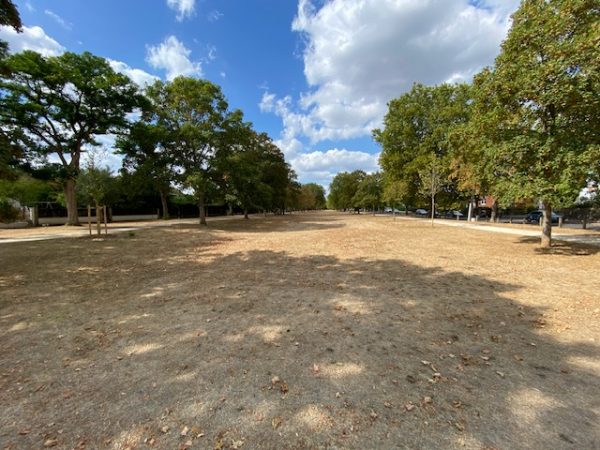
Green loss due to heat and drought 2026 France

Autonomy as Happiness

The French philosopher Émile-Auguste Chartier, better known as Alain, is a proponent of a rational approach towards fundamental issues. Therefore, we should expect from the reading of “Propos sur le bonheur” a thought-based conception of happiness. In his propositions on happiness, autonomous decision-making and autonomous actions play a decisive role. Rather than writing a voluminous “treatise” on happiness, he had chosen in the 1920s, the form of 93 about 2-page long propositions about happiness. These propositions are a bit more explicit than, for example, Nietzsche’s aphorisms, but they remain short without much literary context to the kind of rational analysis based on observations and anecdotal supporting evidence.
In propositions 42 “Agir” and 44 “Diogène” he deals with autonomy as subject. “on veut agir, on ne veut pas subir” (in short, “act, not endure”, own translation), that is his quintessence. “Tous les métiers plaisent autant que l’on y gouverne, et déplaisent autant que l’on y obéit.” (44). (All professions are pleasant if you govern, and are unpleasant if you have to obey). More than 100 years later, empirical studies on job quality, job satisfaction and happiness still build on this rationale.

Opera design

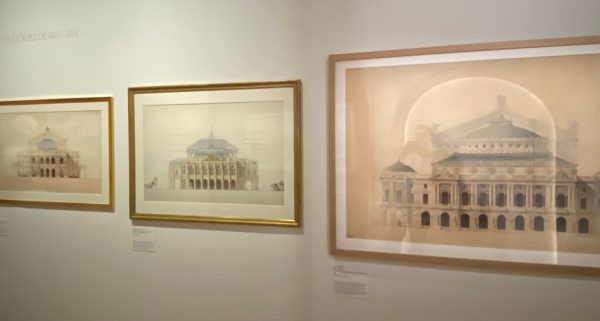
France celebrates 150 years of the National Opera Garnier in Paris. The exhibition in the splendid building traces the history of the building from the competition for the design to the legendary performances and celebrities attending. The stairs outside and even more so inside are built to enhance the glamour around operas and dance. The drawings by Garnier are a highlight as much as the videos about celebrities walking up the stairs of an Opera building.
Charles de Gaulle, as many French Presidents before, dressed and took the famous stairs to impress the official invitees. The image of de Gaulle together with Konrad Adenauer is another interesting example of opera politics showing the authentic friendship after the fierce fighting of the 2 WW, the Nazi-terror and Shoa.
The design of the Paris Opera 150 years ago made for an impressive ritual performance of state diplomacy enhancing international reputation.
(Images: 150 years of Opera Garnier Paris – 3 designs, winning design by Garnier on the right).


Colette Bewitched child

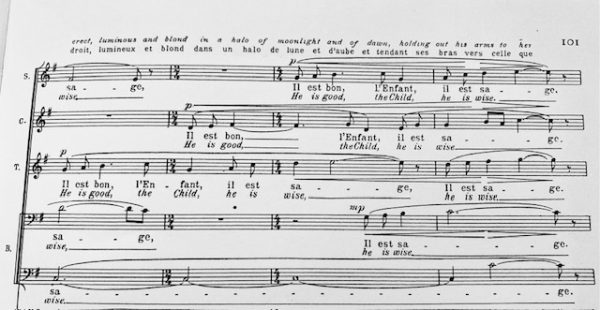
The English translation of the libretto written by Colette “L’enfant et les sortilèges” is translated to “the bewitched child”. The first representation was performed in Monte-Carlo in 1925 before it was represented in Paris at the Opéra Comique in January 1926.  The printed edition of Ravel’s orchestration classified the work as Fantaisie Lyrique based on a poem by Colette. This opus constitutes a forgotten forerunner of the much more popular musical “Cats” . In the end of Colettes narrative the animals call the child her “mama” and praise the good and wise child. It probably remains a forgotten 100’s anniversary, despite the fact that the topic of humans and animals, or nature in more general terms, have become more and more unbalanced over the last 100 years. 

Napoleon legacy

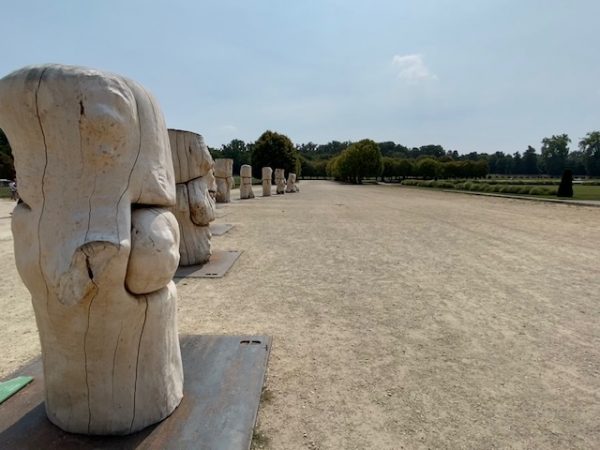
It is huge historical project to try to summarize the legacy of Napoleon Bonaparte. AI is by design less hesitant to come up with any length of a summary statement some with good references on which the statement is based. In combination with a visit at Fontainebleau and a first hand impression of the environment of the autocratic ruler, the remainders like the introduction of a Civil Code to guide also administrations to lawful conduct, we still see influences of this legal innovation in many other countries across the globe. The recognition of Jews as equal citizens and to allow equal access to property and many professions have been influential across Europe mostly in occupied territories. Military service for Jews in Napoleon’s army was another consequence, which spread into the Prussian army and the 1st world war. It is in the 21st century that we see shifts towards more authoritarian governance styles spreading again, we did not want to see this happen until Russia‘s war in Ukraine. (Image: La Chair de la forêt, Frénésie des Géants by  Wang Keping Fontainebleau 2025-8)

Fontainebleau time

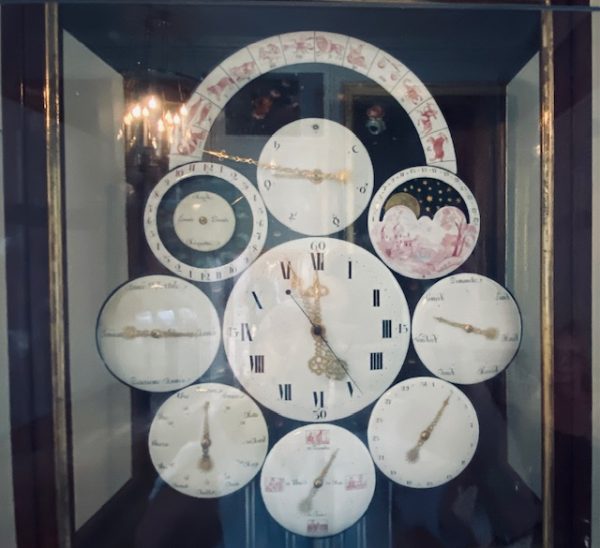
In the Chateau Fontainebleau time seems to pass with a different speed compared to the busy times in Paris. Taking a stroll at the park, boating or horseback riding along the endless paths contributes to the perception of wide, open space and a different space-time experience. The measurement of time shown on a fine craftsmanship of a clock in the castle highlights the fact that there is more to time than just seconds and minutes. The hunch of the time that there is maybe a cosmic time beyond our calendar is a precursor of later scientific discoveries. Time in the early 19th century of Napoleon’s reign had just been restored from calendar of the French revolution. Whether time is counted as 2×12 hours or in 24 hours was also a matter of politics rather than rational decision making. The impressive clock in the Chateau Fontainebleau shows ambitious as much as awareness of defining and counting time, just like an absolute ruler might conceive it. 

Fontainebleau walks

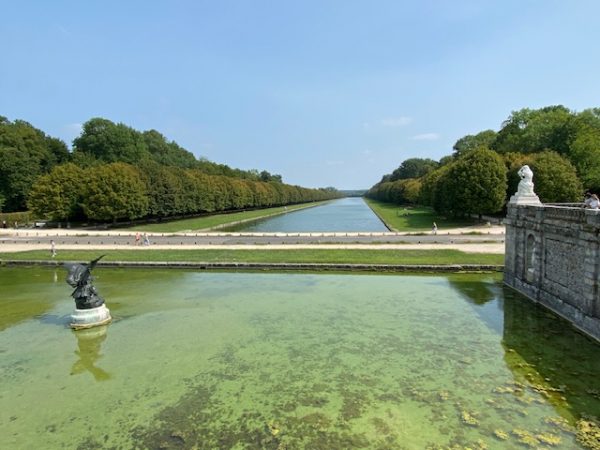
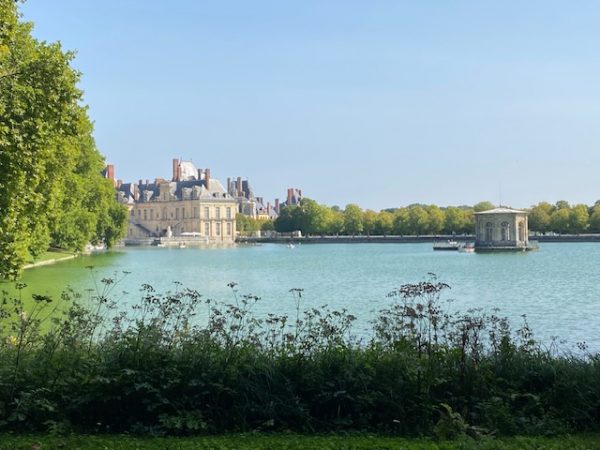
In the Fontainebleau gardens it is easy to reach your daily walking goals of 7000 a 10000 steps/day. Upon entry into the park you walk around the small lake. Towards the far end of the lake you’ll discover a long waterway which takes you beyond your usual walking distance due to the calm and great surroundings. The forests around the Fontainebleau gardens are another great walking or hiking exercise. You might find companions all along the trails. Just take enough water and food with you as there are no shops around, just you and nature. A bit of advance planning is necessary to make it a great experience. 

Fontainebleau garden

The garden of Fontainebleau is huge. The design by “Le Notre” is splendid in its combination of trees, greens and water reserves. Beyond walking in the park you may enjoy a horse ride ora  tour in a carriage, some even today. Boating is an additional amenity rarely available at other castles. In the Belvedere in the middle of the water basin romantic or secretive diplomatic conversations might take place. Politics and diplomacy have always needed special locations to prepare decisions. This is a historical constant. 

Fontainebleau library

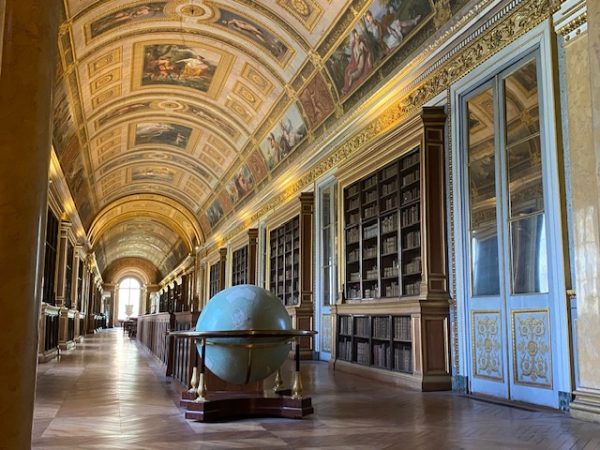
The “Galerie de Diane” in Fontainebleau has been built during Napoleon’s reign. It hosts the library with a large collection of books. The function of the books seems to be more to intimidate the persons passing by rather than ready for inspection. The globe at the entrance reflects the ambition of the ruler. The fact that you have to walk some stairs upwards increases the impression to be little compared to this universe of knowledge. It is great that libraries have flipped this perspective and today we study the period of Napoleon’s reign with our democratic values in mind. The top-down approach was the incarnation of Napoleon’s style of government. Despite the revival of such governance styles in the 21st century across the globe, they are unlikely to last for more years than Napoleon’s fate. A simple reason for this may be the only representative or intimidating role of knowledge in such forms of governance rather than an open mind approach. 

Fontainebleau Throne

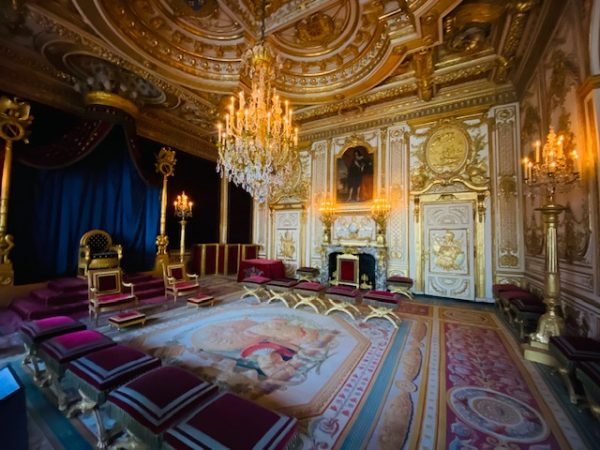
The French history is full of kings and emperors who have ruled the country. The Chateau Fontainebleau has the longest history of kings who lived there and held office, a pre-modern version of “home office”. The most remarkable and distinguished furniture of a king is the throne reserved for office hours. Napoleon created a special throne room at Fontainebleau which is also the only one preserved in its original form until today. It is just one of the home office rooms of the emperor. The antechambers, council room and study had to be passed before to reach the ear and audience of the emperor. The history of the home office and thrones have been intertwined ever since.