Dream Peace

To dream about peace is as old as humanity. However, the people who work on the development of weapons and train to use them vastly outnumbers those who think or dream up peace. The strategies and advice about warfare ranging from Aurel to Clausewitz have been studied carefully and the short-cut summary “if you want peace, prepare for war” sounds like a plausible solution to many problematic war-like situations (hybrid wars) even today. Let’s give it a try and dream up peace. There exits already an extensive literature on peace-keeping (forces) an the difficult role of the UN in these efforts. How about a challenge to this conventional wisdom. Voting in the UN should be weighted. The weights are inverse-proportional to a country’s amount of production and trade in arms measured over the last 10, 50, 100, 251 or 2501 years. The probability to favour peace in such a reformed voting system of the UN would shift further peace rather than arms trade and use of weapons in conflict. Of course, a crucial point is the definition of what is a weapon. Hybrid war and dual-use technologies could undermine the new balance of power at the UN. If countries with no arms production and arms trade get the upper hand at the UN decision-making, the peace-keeping force could still be mandated and delegated to joint forces. This could work as a disincentive for Trump to try to sell arms and enter into large-scale arms trade between the US and China. (Image: Ikarus-by-Picasso-at-UNESCO-headquarters-2024-Paris).
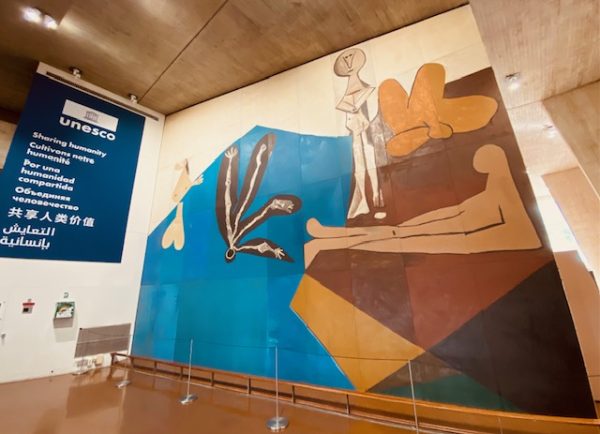
Ikarus-by-Picasso-at-UNESCO-headquarters-2024-Paris.jpeg

Urban heat island

Heat in the city, is a real problem. Of course, some like it hot and that’s why they move to inner cities and specific quarters in a city. However, this is not the scientific definition of the “urban heat island effect”. The former issue is more a socio-legal-moral concern, whereas the latter has physics or geophysical effects at its origin.
More concrete and asphalt instead of leafy islands in inner cities create hot micro-climates as sunlight and warmth get stored during the day and feeds back into homes during nights. If the cooling effect of wind and humidity become trapped outside of building blocks an urban heat island can reach very uncomfortable levels. Add underground car parking, tunnels for traffic and public transport to the scenario and the unhealthy limits of heat over the summer are exceeded for months rather than weeks. Geophysical factors like altitude, mountains, river or seaside proximity are additional factors to consider, but the narrow urban heat island effect is a rather robust finding across the world even if the precise measurement and potential remedies of it are under scientific debate.

Preventable Asthma Burden

The global burden of disease data, analyses and projections allow us to identify more clearly the parameters to influence and prevent rising global burdens of disease. Among the so-called non-communicable (i. e. not infectious) diseases Asthma plays an important role.  Heat waves (wild fires) and air pollution (road transport, heating emissions) are major contributors to the burden of disease. In addition to the health related suffering of a population, the economic losses for groups of countries have been estimated by a recent study (Chen et al. 2026).  For the UK another study showed that 2/3 of asthma attributed deaths were preventable. This raises our awareness to the fact that adequate health care systems and the distribution as well application of asthma medications can help a great deal to lower also the economic impacts due to uncontrolled asthma. The labour-induced costs (lost years of production) are likely to be higher in the low-income countries, whereas capital-induced costs (in form of opportunity costs of health expenditure) accrue more in the higher- income countries. With the successive heat waves in 2026 and continued global warming, the estimated global burden of asthma is most likely a lower bound estimate of the economic impact. A focus on asthma prevention becomes a pressing concern today to prepare for the future.

Democracy or Democrisis

Measured on a global scale, democracy is in retreat. The report by the “Varieties of Democracy Institute” indicates that there are fewer people on the globe who enjoy the freedom and benefits of democracy overall. This is measured in domains like freedom of expression and the democratic quality of elections. The prevalence of democratic decision-making in opposition to autocratic ruling is closely related to the possibility to freely elect a new government in regular time intervals. The V-Dem Report 2026 indicates that 18 countries are on a favourable democratic development trajectory, whereas democracy is on the retreat in 44 countries. The freedom of expression suffered most (44 countries) and the quality of elections suffered in 22 countries. The positive developments (11 for freedom of expression, 7 for quality of elections) were outnumbered by negative ones. The cases of big countries with negative trends towards or tightening of autocratic ruling deteriorates the overall number of countries and specifically the number of people living in democracies in 2025 on the globe.
For all those living in lively democracies this should be a warning message (South Korea), that democracy is not a given. The enemies of democracy are working continuously from external territories to undermine a country’s democratic structures and decision-making. It is urgent to raise the quotas and limits by which fundamental democratic rules can be abandoned before it is too late. Let’s prepare a “defensive democracy doctrine” in Europe and the EU to signal more forcefully our willingness to stand up for freedom and democracy as fundamental values of humanity rather than an “Animal Farm“.

Gone reading

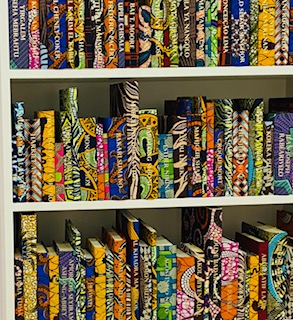
From time to time we should reflect on our scope of reading experiences. Over time, a certain bias for probably predominantly Western European or western parts of the world is likely. Therefore, it is an interesting experience to consciously choose authors from a broader geographical background.  The reading, which originates or takes its motivation from an exhibition, is a good start to broaden reading, particularly if images enliven the reading experience. The art work by Yinka Shonibare CBE on display in Berlin at the Palais Populaire manages to make this point in a colorful, compelling fashion.
It is difficult to assess what we have missed so far without having embarked on a longer reading journey. (Image: extract from Yinka Shonibare CBE, 2022, “The African Library Collection (Poets)”

Interconnected multipolarity

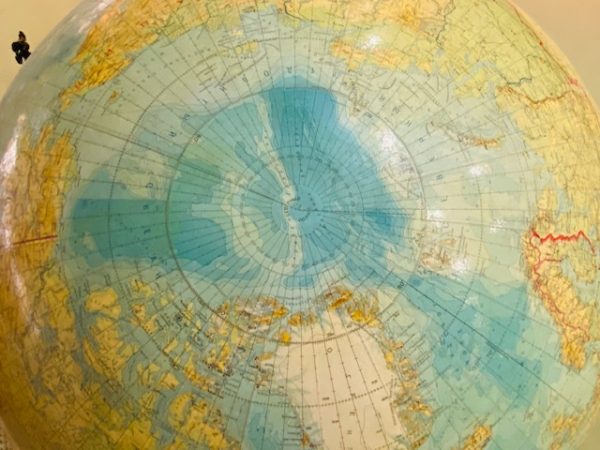
In a very long-term anthropological perspective on the balance of power on the globe, the period that mankind lived on this globe has been characterised by an unconnected multipolarity. People lived in their more or less isolated communities before the Egyptian, Roman, Chinese, Australian, African or Japanese empires and people of the world became connected through new means of transport and communication networks.
In the 21st century the world wide web has broad us closer together and suddenly we realize that unipolarity or bipolarity might be options again through the unipolar dominance in airspace and radio frequencies. Even if unconnected multipolarity has been by far the longest period of mankind, the new developments in international politics resemble more a world of interconnected multipolarity than an American dominated unipolar or bipolar world of the Cold War period until the collapse of the Soviet Union. Stephen Walt (2026) and Raja Mohan (2026) discuss the concept of multipolarity in the same issue of Foreign Affairs (Vol. 105 Nr.2). Whereas Walt emphasises the USA as a “predatory hegemon”, Mohan describes the USA as being tempted and actually currently going it alone in international politics.
The current military image of world politics seems to be dominated by unipolarity again, maybe just before the longer run realities of economic, demographic, financial, trade and productivity developments, already reflected already in such data, take the upper hand again. The spectrum of the unipolar, bipolar, multipolar world privots around multipolarity in the long run, even if bipolar or unipolar intermezzi are part of the historical evolution.
(Image: view of Obzorno-geografceskij globus, Moskau 1994, Stabi Berlin 2026-1)

Holistic public health

Based on case study in Queensland Australia, Boocock et al. (2026) propose the wider application of holistic public health laws. Due to effects of global warming the local burden of disease may rise due to larger scale floods and subsequent growth of for example mosquito populations that transmit infectious diseases. It will be necessary for societies to understand the processes behind the growth of mosquito populations and what can be done to prevent and protect oneself from the consequences. This is not only an environmental issue, but also an issue of continuous learning across all strata of society. Neighborhoods tend to suffer the same impact of chemicals used or the spreading of diseases like Dengue or malaria. The case study makes a convincing argument about the intrinsic relationship between the social and environmental processes at work. 

Future Conflicts

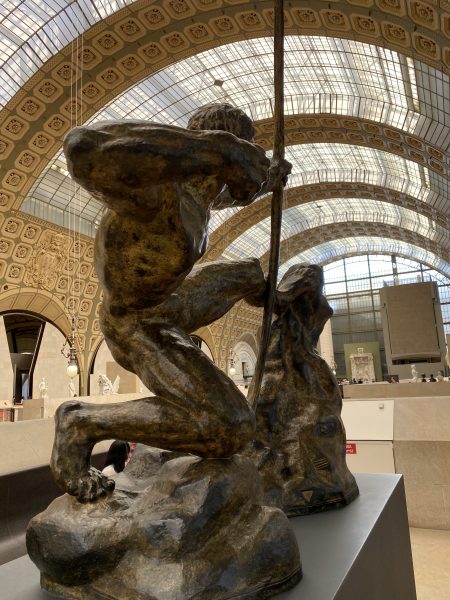
Since 2014-2-27 Russia has occupied the Crimean peninsula. This invasion had started with an undercover mission of unmarked soldiers to take full control of Crimea about 3 weeks later. Russia did not officially declare a war, although the intentions were identical to a land grabbing war. The western world did not react much to this violation of international law. Apparently, this contributed to the next cynical “special operation” by the Russian army to fully invade Ukraine on 2022-2-24 in a failed “Blitzkrieg”, a rapid invasion, which attempted and failed to annex the whole of Ukraine. According to Lissner & Warden (2026) the Russian invasion of Ukraine bears 4 lessons for future conflicts: (1) the risk of using nuclear weapons is real, (2) in addition to nuclear options, prolonged and very destructive conventional wars remain an option, (3) escalation thresholds emerge and evolve over the duration of the conflict, (4) allies and partners in war keep adjusting their risk tolerance as well as escalation options. The authors argue from a US perspective and add a practical comment: “The USA cannot go this alone, but should coordinate closely with allies and partners in time before another conflict arises. Multilateralism seems a valid option and even more so as we move into a multipolar power play on the global scale propelled by AI.
(Image: Musée Orsay, Paris – Archer, Bogenspannende)

Utopian Antifascists

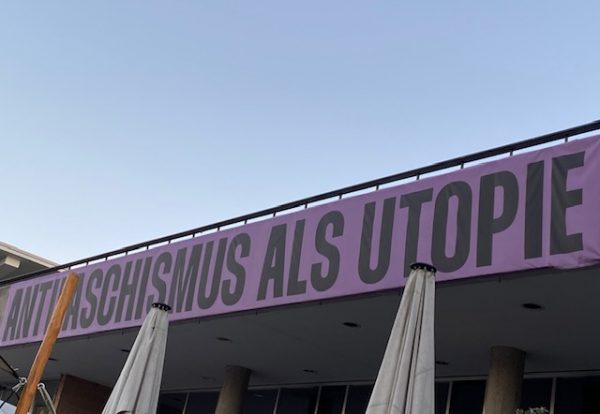
Next to the exhibition on “Global Fascism” in Berlin in 2025-12 there was a banner on the wall, which stated “Antifascism as Utopia” (see image below). This statement invites the question, whether an antithesis can serve as a positive utopian idea guiding large numbers of people. It is certainly necessary that all people who subscribe to democratic principles and human values should be able to unite under the banner of antifascism, but the ways to pursue this goal are manifold. This makes the claim of an utopian objective a bit more obvious and, at the same time, more plausible as a potentially overarching objective. The statement might well turn out to be the defining statement or key visual of the year 2026 with rising nationalist and in some places also fascist ideas and rhetoric. Thoughts and words might be only precursors of more such actions in the coming months. 

Peak Refugees

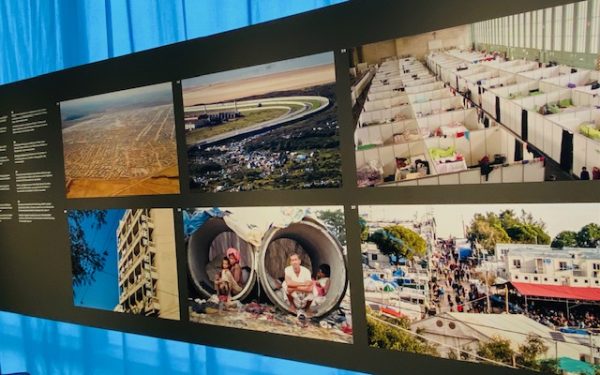
The number of refugees in the world has stabilized at a very high level. According to the data from the UN Refugee agency (UNHCR) until mid 2025 the number stands at 36.6 million people. With slight decreases in the last 2 years, the challenges remain at a high level. The 10 top countries hosting the largest numbers of refugees are Iran, Turkey, Columbia, Germany, Uganda, Pakistan, Chad, Peru, Poland and Ethiopia (compare Fig 4 of report). It is particularly remarkable that this list of countries is relatively little associated with a country’s level of average income. Humanitarian concerns and being a neighboring country play an important role. We all hope that we have witnessed peak refugees and that an assisted and safe return will be a feasible option for many of them eventually. Although we know that many people suffer from authoritarian regimes and, for many years, don’t have a return option in sight. (Image: Documentation Center on refugees in Berlin)