Traveling with-in books

Of course we like to travel or move it. Why not Madagascar? Most people would start to prepare such a journey online for a starting point. On the Frankfurt book fair, the publisher MairDumont reported that very quickly after we zoomed in on a destination, we ask ourselves: what info to trust. For publishers and authors the issue a crucial one as to build a reputation as a trustworthy brand is longer term investment. Holding up trust and to communicate about it, are the next on the agenda. Books or ebooks have this image as most of them are edited in a careful way with cross-checks by several persons. The not-social-media complement rather than replace a trusted source. People navigate between these forms. Authors who have insight knowledge and evidence that links and information have been validated are necessary conditions for success. We still travel with advice from books. Probably even more of us “travel in books”, where the reading of a travel guide becomes a fantasy journey. Traveling with or in books has a great ecologically-minded future, too. 
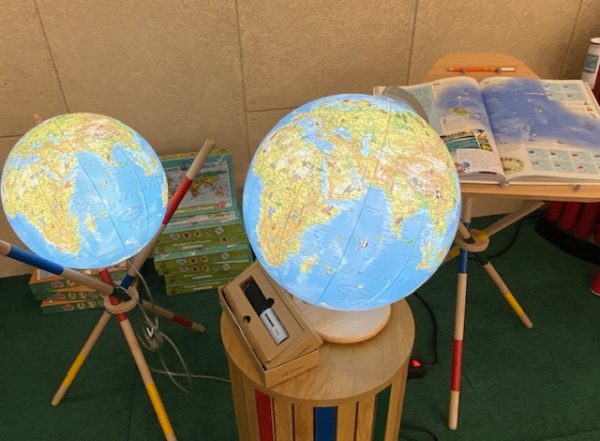
globe travel book imagination

Czechia coast

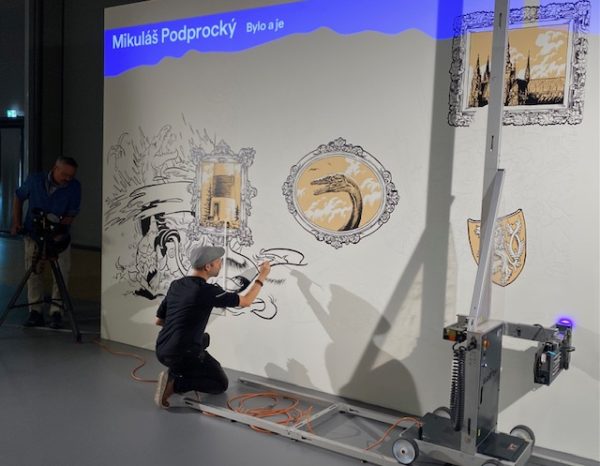
At the Frankfurt book fair we dream ourselves into the imagery of Czechia as a country with beaches and sand castles. The country pavilion of the partnerland of #fbm26 takes us to the ephemeral aspects of literature. While reading we deep dive into uncharted territories and discover unknown landscapes, sometimes even fees. These worlds of imagination become part of us or enlighten sequences of our life course. Taking the perspective of an external viewer widens cognitive and emotional predispositions. There are remarkable ol and new light houses to discover, too. Drawing as performative art, washed away every day like dreams, acknowledges the ephemeral nature of our reading or listening experiences. This message is going to stick with us. 

Images about facts

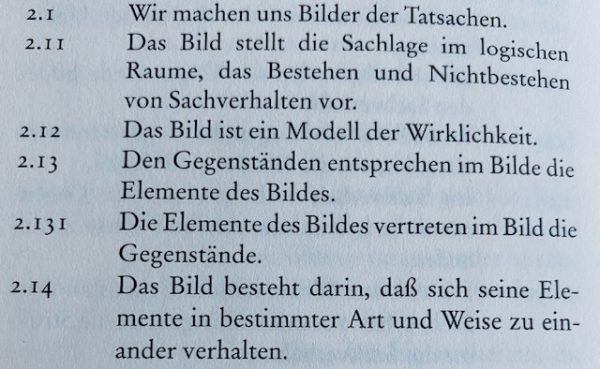
The philosophical writings of Ludwig Wittgenstein are a bit sturdy and and rather complex. 100 years after the first publication we realize that the meticulous order of the “Tractatus logico-philosophicus” follows a logical order of top-down and horizontal lines, which almost resemble algorithmic thinking. In section (1) he defines the smallest unit of analysis, a case, and (2) the existence of settings, which constitute such cases with almost mathematical precision. Already in 2.1 he states “we construct images out of facts” (own translations). In a kind of inductive approach we tend to generalize based on (single) cases or realizations in form of an image of facts. At the same time we have to be aware that an image makes a statement about the relationship of objects contained in the image. But it is just one possible option out of a whole group of potential relationships. Based on this reasoning a true as well as false realization of facts are possible.
In the 21st century the technological possibilities have grown rather exponentially (use of AI) allowing to give false testimony of facts and relationships of objects to each other. Wittgenstein challenges my own versions and daily combinations of text and images as approaches towards reality. (Image: excerpt from Ludwig Wittgenstein Tractatus logico-philosophicus, p. 14 edition suhrkamp)

Fleeting memories

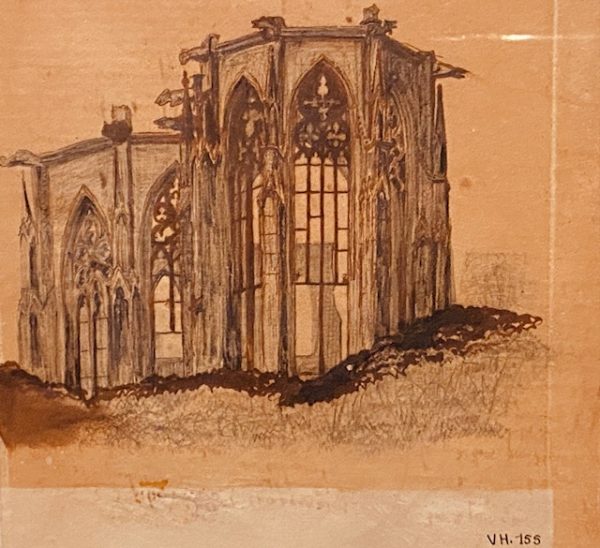
Our memory function is challenged once we travel. There are so many new impressions that ask for prime time in memory, but our capacities to safely store every detail of it is rather limited. On his voluntary travels, less when going into exile, Victor Hugo drew places with astonishing architectural detail and made literary descriptions on the back of the copy. The ruins of a gothic church in Bacharach (Germany) on the banks of the Rhine are a great example of his attempts to beat the fleeting memory. The ink and graphite pencil drawing date back to 1840. The imagery of the abandoned church, itself rich in memories of conflict by way of drawing details inscribes deeply into his own memory. A description in words on the back of this piece reinforces this effect beyond the mental exercise of precision versus dramatic blurriness. Repeating this exercise months later would reveal our fleeting memories when traveling. A great technique which is still valuable 186 years later. 

Church ruins at Bacharach by Victor Hugo 1840 exhibt at Maison de Victor Hugo Paris

Mind mapping

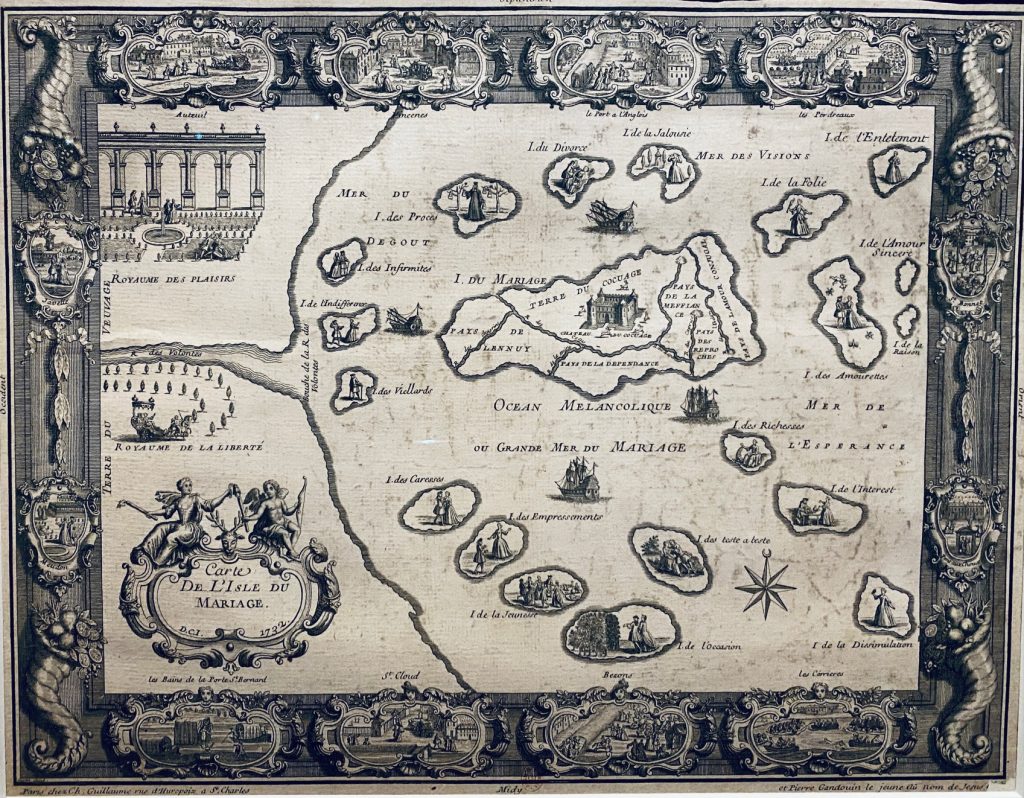
The exhibition in Paris on “Cartes imaginaires” at the BNF regroups treasures of maps across centuries in an interesting way. The technique of putting together elements in a map has been developed and refined over long time spans. Map are mostly in our minds as  depictions of geographical details allowing a broader overview amidst lots of detail. The mind mapping of today as a managerial or pedagogical tool is not much different even if AI might make is believe that it is a modern tool. The exhibit of “The island of Marriage” (image below BNF, “Cartes imaginaires”) in the middle of lots of distractions and potential distractions has a particular charm to it as it tells many tales and storylines for writing lives and novels. Our own lives or the depiction of life courses might be represented in a single map, maybe even comparable to a sequence analysis of events. The history and potential of maps and lives as mind maps is going to accompany us for quite some time as it already did for centuries. 

Critique of Maps

From a sociological perspective on maps we learn for example, that maps are also instruments to reflect property rights. This can be past claims of imperialism or recent claims of independence. A depiction as a map has historical and societal implications. Superposition of maps according to political, cultural or linguistic communities often reveal contested areas of domination and liberation movements. The specialized field of the history of maps can sharpen the senses for a critical view of maps in the 21st century. (Image:  Brankiza Zilovic, Nusquama 1984 exhibition “Cartes imaginaires’ BNF Paris).

Erik Satie Satisfied

The collection of letters from Erik Satie contains more than 1000 letters amongst them some in exchange with the best artists of his time. The range is largely due to the circle of artists who met at Montmartre in Paris before and during the Great War. We discover letters to Maurice Ravel, Claude Debussy, Pablo Picasso or Henri Matisse. For some artists there are 100+ letters preserved like to Jean Cocteau. In the 1920s he composed music for shows at Montmartre, where the scenario was painted by Pablo Picasso and costumes designed by Coco Chanel. The sculpture by Brancusi must have been familiar to him, just as much as the cubist paintings by Georges Braques, as there are also letters or references to such letters in the impressive 1000+ pages collection. Like Ravel he was rejected by the Conservatoire de Musique de Paris in his early days as student. Montmartre allowed to live and create at the same time while living on a minimal budget. Erik Satie signed his letters with ES. In German this denotes a “neutrum”, maybe, beyond male or female differentiation, but also a tonality in music (E flat). There is no trace that this was a conscious choice. It is just another unresolved puzzle about the self-declared “Gymnopédiste” and composer of the “Parade” and the popular piano music the “Gnossienne”. 100 years after his death on 1925-7-1 he (ES) could be rather satisfied with his impact on the course of music in the 20th century and beyond.

Apocalypse Depicted

At the beginning of the 21st century we have a renewed interest in depictions of the Apocalypse. “L’Apocalisse di Giovanni” has been illustrated in various Christian monasteries and some traveled quite a bit. The version of the Apocalypse (Link) which was attributed to Cambrai is a copy of the older original version found in the City library of Trèves, which dates back to the year of about 825. A flemish version of the 16th century is to be found at the BNF in Paris. Throughout the centuries the “Apocalypsis”has been reworked. The version of Trèves has the “carolingish” depiction characteristized by a presentation of image on one page and text on another page. Nowadays we are used to futuristic images and have known even worse experiences of apocalyptic events (Nazi terror). Earth quakes or man-made climate change with heating of the planet, storms, draughts and floods testify for the renewed interest in the Apocalypse. Other man-made technological innovations like rockets. atomic bombs, chemical and biological weapons overshadow even the “natural” ones. The potential of AI to cause destruction is not fully assessed until today. Swarms of drones guided by AI might reach apocalyptic levels as well. We just remind ourselves of the bombing of walls of a water reservoir by Russia in Ukraine. The Apocalypse will remain the original example of a horror story and our strange fascination for such texts, images or movies is likely to stay. (Image: extract of anonymous 1st quarter of 9th century. Trier Stadtbibliothek, Schatzkammer. Wikipedia public domain).

Apocalypse
Screenshot

Text to Image

Long before everybody started to discuss Artificial Intelligence, which in many applications takes the form of transformation of a textual prompt into an Image, Photographers have had literature or quotations in their mind that shaped their images. This was a kind of poetic imagery not always easy to recognize. The exhibition in the „Institut de France“, Bibliothèques Mazarine (LINK), with photographs by Nicolas Fève (LINK) offfers a great insight into this way to conceive of an image and its realization through photography. Exposing the sources of inspiration as well as the photo is like adding textual citations to an image in a much more inspirational and transforming manner than AI is doing these days in 2025. 

Text to image is only one out of the many ways texts might guide imagination, but it is a powerful and gripping one. The history of literature is full of other forms like videos based on novels, comic strips to make classic texts in Latin more accessible. As we shall ask AI products like texts and images to cite their sources and honor authorship, photography as art and science might enhance the literary experience by adding citations to an image. This has the additional advantage that more people will follow up on the sources of inspiration.

Cupid at Work

The last 11 entries in this blog focus on  conceptual thoughts as a contribution to the history of ideas with an extension to modern concepts. Our societies, management of companies and personal  development are conceived under the conceptual framework of these concepts. Take the 1st letter of each term and it reads like “cupid at work“, easy to remember and enumerate.
Take each term as  a prism through which you frame your life course, an enterprise or a society. The 3 levels by 11 concepts matrix is a starting point to scan empirical examples for substance.
Complexity, Uncertainty, Plurality, Intersectionality, Dosage.

Ambiguity, Temporality,

Woke-ability, Organics, Resilience, Keys,
(Image: Peter van Lint, Jupiter embraces Cupid, 1636, MRBAB 2024)