Autonomy in literature

As we might imagine, autonomy has been and is a huge topic in literature. From the foundations of democracy to the autonomous state building, historical accounts are full of treaties on autonomy. Literature has taken similar steps by asking can we really be autonomous in our decision-making as we are social beings embedded into varieties of Throne, families and networks. There are ever larger parts that we are conscious about, but the realm of unconsciousness or sleep remains substantial. Maybe in literature, the author Samuel Beckett has gone furthest in dealing with human autonomy in his writings. The search for autonomous action might lead to far-reaching inactivity in “Waiting for Godot”.
However, Beckett’s view about autonomy can also be interpreted as a continuous battle of mankind as demonstrated in the often cited expression by Beckett (“Worstward Ho”, 1983, p.7) “All of old. Nothing else ever. Ever tried. Ever failed. No matter. Try again. Fail again. Fail better.” Our strive for autonomy remains a lifelong struggle. The path to more autonomy is not linear over the life course. In fact, much evidence from gerontologists suggests that it might follow an inverse U-shape, being low at birth and low before death. Literature has guided us in such questions just as much as religious, philosophical, legal and social concerns enter into the underlying concept of autonomy and autonomous decision-making across the life course.

History as Science

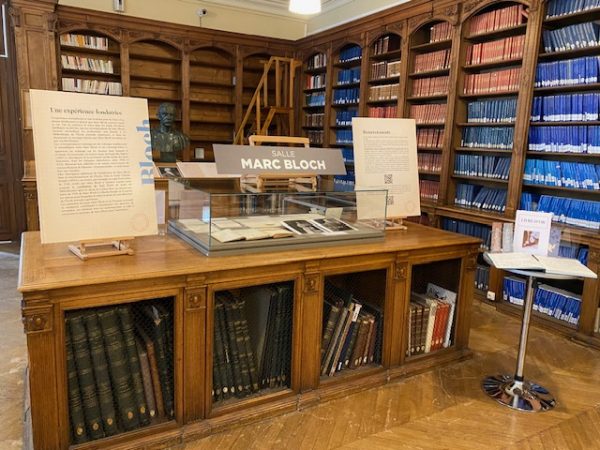
There are persons entering history and there is the science of history. Whereas the former persons may sometimes enter for very dubious reasons into history, responsible for killing people, the science of history draws on a whole lot of evidence, social, economic or demographic, to evaluate a person’s legacy or the merits of an epochal change. In the development of this scientific approach towards history, rather than a purely chronological, family structure or narrative-oriented approach, Marc Bloch has been a central figure. His research and exemplary own biography as student of history at the ENS in Paris, teacher and later Member of “La Résistance” is honored by an exhibition on his life and time at this formidable French institution of teacher training. In an exhibition in the ENS library you can even inspect a list of the books taken out by Marc Bloch as a student as well as his experiences as a student in London or Berlin before the 1st World War. A strictly science-based approach to history made him an influential historian and social scientist beyond his lifetime. (Image: Salle Marc Bloch at ENS Library Paris 2026-5) 

Random randomness

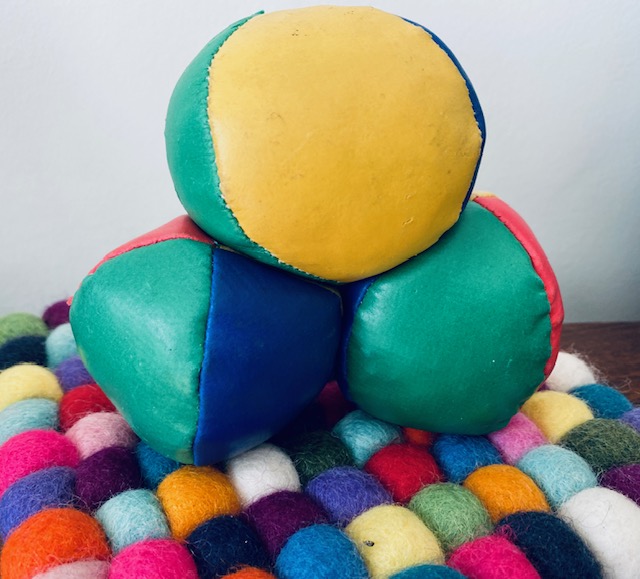
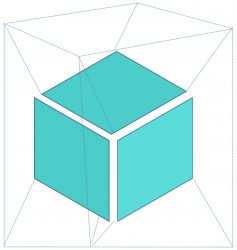
In textbooks or courses of statistics, just as ordinary experiences with throwing a dice, we assume the perfect dice. This means the dice is assumed to have equal probabilities to roll on each side. Further, each throw of the dice of a sequence has an independent equal chance for each number to come up. To determine a “fair” dice we would throw the dice a thousand times to check, whether the probability of each side is about equal. However, the world of dices is not perfect and temporary or persistent margins of deviation are part of the real world. The weekly lotteries demonstrate this over and over again. Playing around with different shapes of dices makes the issue of probability tangible. Well worth to explore further empirically as well as a topic for inspiration of new approaches to learning about statistics. (Image: Dices produced by “devinsdice” Berlin 2026-5-5)

Digital Sovereignty Practice

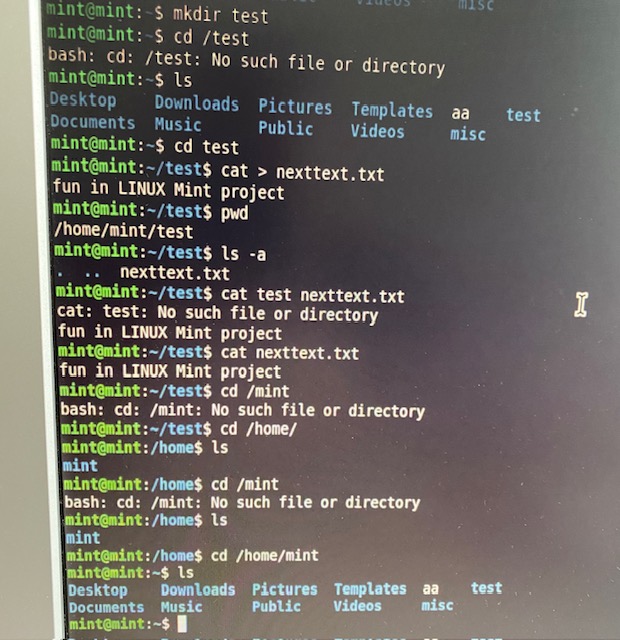
The claim to enhance digital sovereignty has to build on basic digital literacy skills. This is not difficult to learn but it does take some time and effort even if there are many learning tools free of charge available on the internet. The learning platform “labex.io” has taken me along on many of my first steps.
No matter which learning tool you prefer (maybe Linux foundation), just get started and practice a bit regularly. Progress will come and you’ll find using LINUX on one of your older computers or laptops rather fast again. Additionally, I find the large parts of black screen so relaxing to my eyes that I tend to write larger junks of text directly into small files again before use on the blog-editor elsewhere.
A nice side-effect is that this feels like years back when coding was an emerging skill. Learning has become so much easier nowadays, only the learners seem to still perceive many psychological barriers to get started.

Fail collection

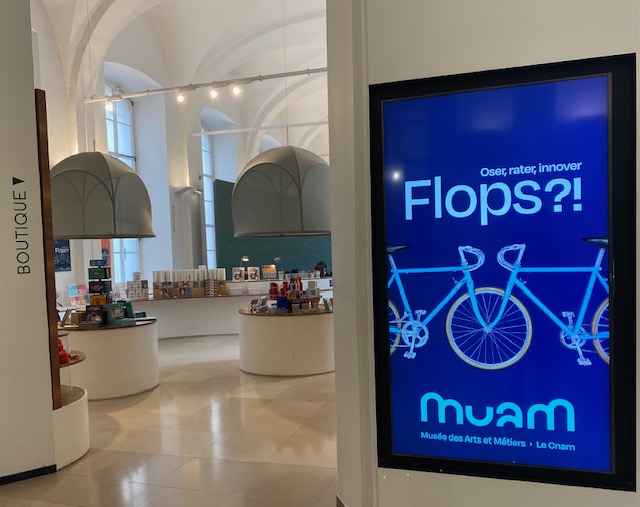
The not-so-social media have been flooded with collections of failures. The success of this short video format is mostly due to its entertainment value. A quick laugh is guaranteed if a certain intention is turned into its opposite. You want to take a witty shortcut but effectively you end up with a lengthy or painful lesson of the opposite. The fail collection of the CNAM in Paris has a similar attraction. The “Flops” exhibition in 2026 exposes a larger number of technical innovations that either did not reach the mass markets or that were “flawed good ideas”. In fact to put an innovative idea or design into practice it takes a lot in addition to engineering intelligence and professional competence and experience. The collection of documentary evidence invites us to explore the topic of what constitutes a failure and why failure is an intrinsic part of the creative process of trial and error, fail, fail again and fail better. (Image Musée Arts et Metiers 2026). 

Master AI

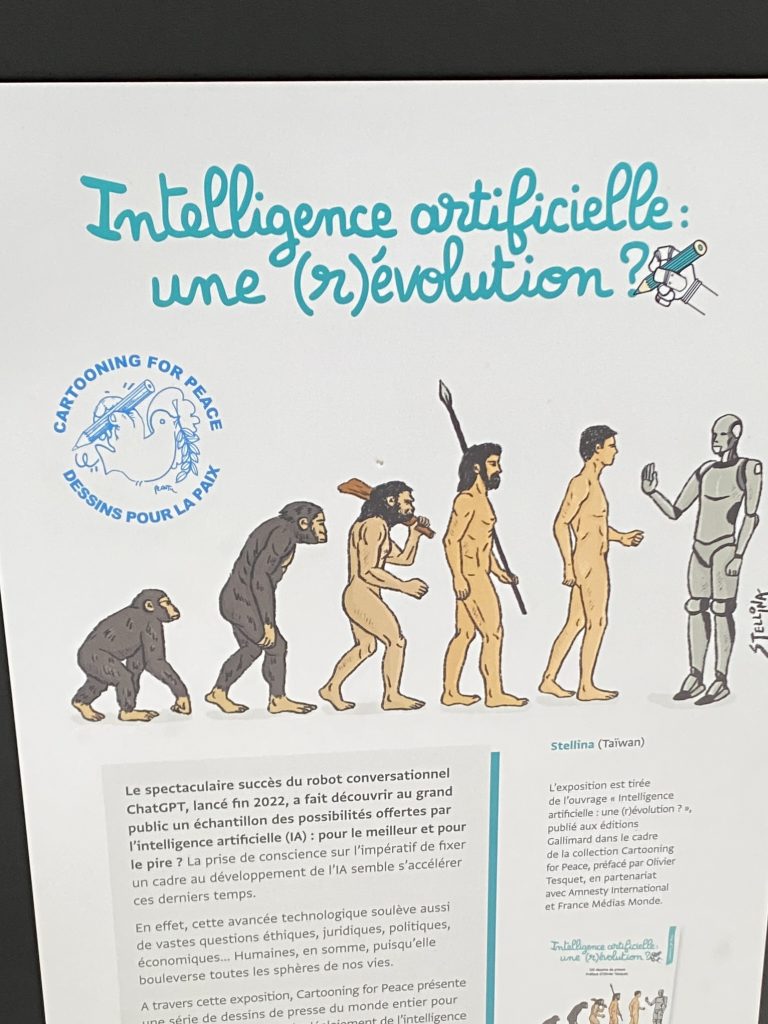
In 2025 the exhibition “Cartooning for Peace” at the BNF in Paris had already an exhibit authored by Stellina Chen from Taiwan, which summarized the evolution and projected the consequences of an all encompassing AI revolution (Image below taken at exhibition 2025 BNF). Currently we exercise ourselves in using various forms of AI or learn how to program them ourselves. It is our aim to master the new technology so it becomes a helpful tool. However, there are already many instances where it is no longer us mastering AI, but the AI has turned around the table and has started to master us. The applications of AI have entered our work tasks, tries and frequently succeeds in improvements of our routines and processes.
In private life a similar revolution is happening, when AI offers advice, which is hard not to follow and very convincing most of the time. Since getting involved in a conversion with AI tests your logic and debating competences, we find ourselves more and more in situations where AI is telling us what to do in the best of a convincing manner. After centuries of humanity to find freedom from oppression and the freedom to what we want ourselves, we seem to be ready to hand over control to AI. We are just like toddlers in this respect, willing or obliged to follow our master.

Dual Task Processing

Extensive research into dual task performance shows that training of 2 tasks simultaneously can indeed enhance performance. New research by Schubert et al. (2025) indicates that there latent and persistent bottlenecks to the brain’s processing of such dual tasks, let alone multi-tasking. Out of own anecdotal exercise with “object tracking and touch” (gaming on tablet) a learning effect arises. However, it is unclear, whether this exercise translates to normal traffic situations in inner city situations for pedestrians or cyclists. The experiment of a dual task, combining a visual-manual and an auditory-verbal task, indicates also training effects, but the brain appears to return to sequential processing rather than simultaneous processing as much as it can. Such a dual task test may consist in juggling while singing a song or even leading a conversation with somebody. Quite a challenge or exhausting mental training even for those with a history of juggling objects.

БЪЛГАРИЯ Bulgaria

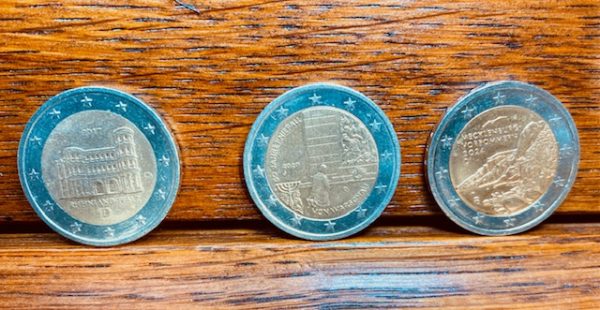
The expectations of the entry of Bulgaria into the EURO-Zone are high towards the end of 2025. On the 1st of January 2026 we have new coins circulating in the Euro-countries. The addition of a country to the European currency yields insights into this country’s own cultural heritage. Piece by piece we learn, if we want to, to take a closer look into the more and more obsolete practice to handle currency in form of coins.
I cherish some of the coins with specific meaning to me (see image below, city of Trier, Willy Brandt, Chalk coast on Baltic sea). My small collection of coins from Greece allow me to refresh my Greek alphabet, words and historical landmarks of democracy. The circulation of Euro-coins with Bulgarian inscriptions in the Cyrillic alphabet will broaden our horizon again. Beyond the national features, we cherish the regional or federal organization in some countries, that feature their regional hotspots within this European cultural heritage. With a highly mobile Bulgarian population, not only within the EU, we shall soon see more Eastern Euro-coins with Cyrillic letters in our pockets and collections. … can’t wait for it … Ukraine in 202x, maybe 203x. 

Digital Environment

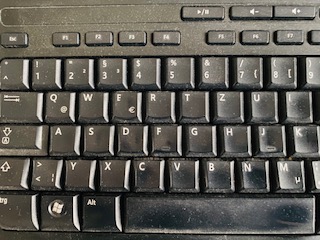
We get accustomed to our digital environment through the routine use of applications without even thinking about it. Over years of just using only one browser or office package, we forgot to make conscious choices in companies and our private computers. However, digital sovereignty asks us to take back our control of these computer systems before they take control of us. The AI-boom will make a lot of things easier for us, without knowing much about the technology behind them. Just talking to your smartphone you will be able to achieve many tasks or searches without many of the other steps that were necessary before. The knowledge to command a typewriter or keyboard will be more and more obsolete unless you really need to change something profound on your computer, like the operating system or an expensive office program. Keep exercising yourself with alternative and new software and you’ll stay the master of your digital environment. 

Installation Guide Linux

Use the info available in various help forums, maybe videos.
Optional: Check size of your hard disc for backup.
Why not renew your backup on an external drive or USB-stick now?
Test your system loading interruption key combination.
Upon RESTART on most systems you use press Power-up key, follwed by either ESC or DEL or F1, F2, F10, F11 key, while power-up runs to load your BIOS.
Have an empty! USB sticks (4 GB+) ready.
Download the for example the latest Linux Mint 22.2 on it (and flash it using etcher on USB from hard drive, if downloaded to hard disk).
Power-up computer with loading system from USB-key not hard drive. (Select option!)
Remember it has English keyboard as default when you connect your WLAN.
Basics are ready!
Keep starting from USB or after some further tests of components install Linux to the hard disk and say goodbye to a slow and costly Windows and Office packages.
Donate to whoever supported you. Perhaps your local repair shop.
Spread the word and help others.