Stress in the City

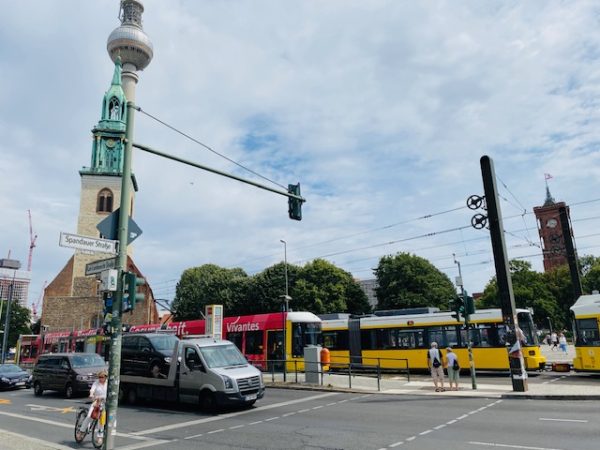
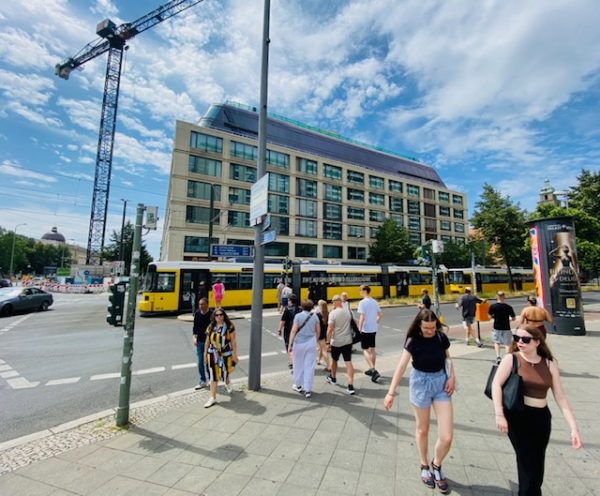
Before the stress in the city makes you sick, try new coping strategies. Of course, you cannot avoid the stress of hotspots like busy crossings or noisy construction sites. And these are only the visible stressors not to mention fine dust particles or mixtures of fragrances. Scientists have started to address these issues under the title of neuro-urbanism. This topic is part of a broader agenda on public mental health which addresses the rise in mental disorders globally. Expanding urbanization is considered a major driver of an often overwhelming cognitive load in cities. Growing into it helps, but many move to cities for professional reasons or simply a job being largely unprepared to the practice of daily commuting for years. Several potential stressors tend to cumulate: High Social density, broad diversity in aesthetics as well as social structure, relationships, social participation or public transport as part of mobility make cities interesting or hard to cope with.

Urban heat island

Heat in the city, is a real problem. Of course, some like it hot and that’s why they move to inner cities and specific quarters in a city. However, this is not the scientific definition of the “urban heat island effect”. The former issue is more a socio-legal-moral concern, whereas the latter has physics or geophysical effects at its origin.
More concrete and asphalt instead of leafy islands in inner cities create hot micro-climates as sunlight and warmth get stored during the day and feeds back into homes during nights. If the cooling effect of wind and humidity become trapped outside of building blocks an urban heat island can reach very uncomfortable levels. Add underground car parking, tunnels for traffic and public transport to the scenario and the unhealthy limits of heat over the summer are exceeded for months rather than weeks. Geophysical factors like altitude, mountains, river or seaside proximity are additional factors to consider, but the narrow urban heat island effect is a rather robust finding across the world even if the precise measurement and potential remedies of it are under scientific debate.

Cool shelters

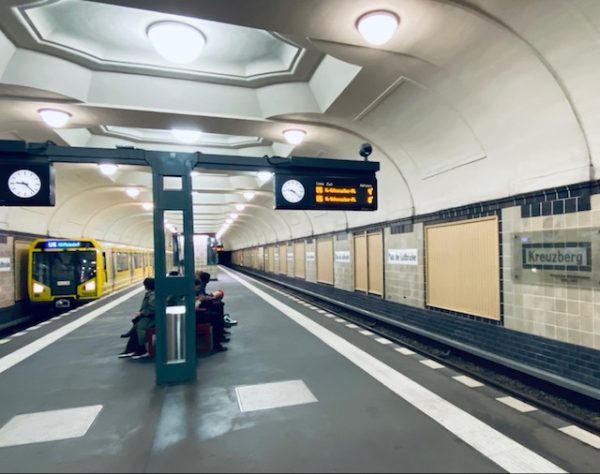
In many big cities the metro lines and particularly some of the stations can provide cool shelters during hot days. Reducing the speed of traffic reduces the airflow and heat of acceleration and braking. More home office work if employees have adequate cooling at home reduces emissions additionally. The historic Kreuzberg-Metro-Station, nowadays called “Platz der Luftbrücke” is big enough to accommodate many people who are in need of shelter for whatever purpose. Underground you do not even hear much from the busy traffic above. More efforts to brighten up the station could create an urban space which invites to rest in hot days rather than rush around the city. Climate change will ask us to come up with many innovative and unorthodox solutions as part of public health initiatives.

Waterfront Paris

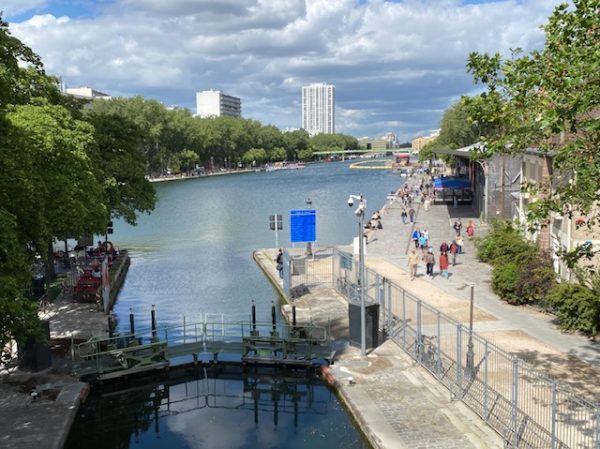
Most people enjoy the banks of the river “La Seine” in Paris. Ever since the Olympics in Paris 2024, the temptation to go swimming there or to do some other kind of water related activities, is high. Fewer people are aware of an other splendid location near the Gare de l’Est. The canal Saint Martin and the nearby end of the Canal de l’Ourcq ( image below) have much to offer for stressed people to take some time off and relax. From cinemas, cafés and bars you can choose your favorite to pass time with friends or family, alternatively just keep walking for miles to get your exercise as needed to sustain your body in good health and shape. The health impact of such cool and more humid areas has a high value to the benefit of all without forcing people to travel long distances for recreational activities or normalizing weight or heart rates. 


Place of the Church

What is the place of the church(es) or religion in society? Some would answer that the answer depends very much on the historical period which you focus on. Social scientists would zoom in on the changes that have taken “place” and the reasons as well as major actors of these societal changes. Churches are highly symbolic places with exposed visibility and demonstrations of power. Therefore, it is interesting to follow the changes in the architecture of churches. Whereas biblical communities gained in wealth and power over the centuries, they moved from the backyards to the city centres and the market places for centuries.
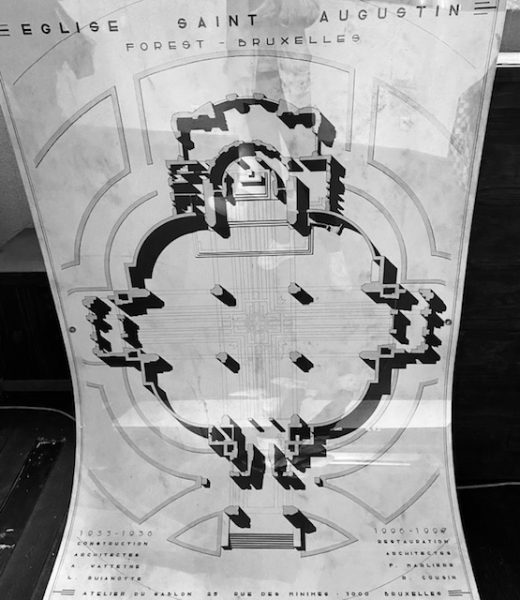
In the early 20th century many cities have grown so rapidly that in newly built suburbs new churches were considered an obvious extension of the places where churches belonged as well. In several instances the planning of a city’s extension was still being organised around the idea that a church should be the (new) focal point. At the same time the ideas of democratisation entered into churches as well leading to the deviant choice of round shapes rather than the traditional linear structures. The hotel became visible from all angles and was positioned as the mid point and rayons or beams could be imagined to reach into the newly built suburban areas. Frequently the road traffic was organised accordingly. Saint Augustine church in Forêt Brussels is a prominent catholic architectural example of this.
Another example of a round shape church with a place defining architectural function is the evangelic Königin Luise Gedächtniskirche in Berlin. Much smaller in size and in the axes that originate from there, the “Place of the Church” aims to fulfil a similar function, a central place in the new suburbian area.

Modernist Urban planning

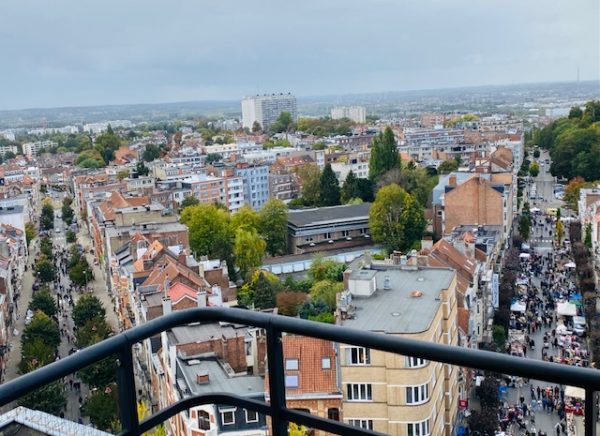
Saint Augustin in Brussels is one of the lesser known defining architectures in Brussels. It is visible from far away much beyond the immediate surroundings. Situated on Altitude 100 it is on the highest hill in Brussels with a 58 meters high Campanile built out of concrete in 1933 in a predominantly art nouveau style. The order of the St. Augustines in the center of Brussels was terminated and at the outskirts of Brussels as a new city suburb was being built starting in the late 19th century An appropriate way to demonstrate continuity despite discontinuity was the placement of the church in the middle of a roundabout and a star-like organisation of roads des descending from the top. The form of an equal length (orthodox) cross is in the spirit of the unity of the Christian churches. Even despite the prominent and exposed situation, most people pass by with little concern for the innovative, architectural features of this edifice. (Image: View from capanile St Augustin Brussels). On a small scale this urban planning concept resembles the Paris of the « Arc de Triomphe » and the views and corridors which we designed and implemented.


Paris History

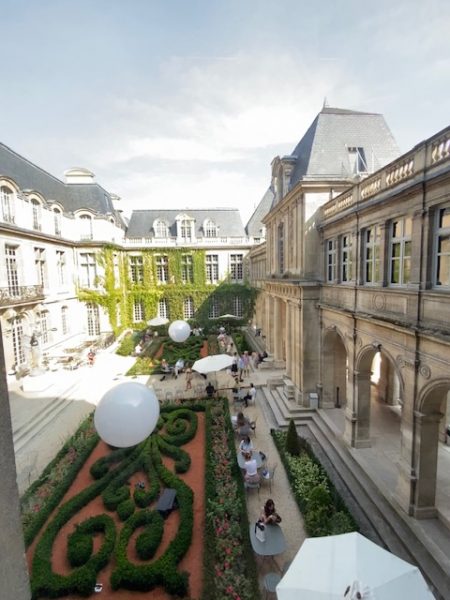
The “Musée Histoire de Paris Carnavalet” is the starting point for visitors of Paris and social scientists to better understand the making of this metropolitan city throughout centuries. The only common factor over the years is the astonishing determination to reinvent the city every 100 years whilst the best features of the previous periods are preserved. It is the concern for the very long-term time horizon that makes the city quite unique. Even a social revolution (1789) unlike most other countries managed to preserve most buildings, churches and royal palaces. Restorations are undertaken with a careful approach to shield its architectural and social heritage. Even the radical transformation by Haussmann over almost 20 years until 1870 to build large corridors in the city is subject to revision in modern visions of the future of Paris. The app of the museum is very helpful to learn more details about each chosen object of the permanent exhibition. The social fabric of the city can be studied further through app’s feature when representatives of local social organizations speak about their personal piece within the huge collection on display. The larger the “fundus”, the more the rationale for selecting pieces becomes an issue. (Image: Musée Histoire de Paris Carnavalet inner court 2025).

Retirement Plans

There are debates about the best organization of retirement. The major fault lines lie between public pension systems and systems that are built based on mainly private provision. Retirement plans in either system are subject to constraints. The recent stock market turbulence has increased the amount of uncertainty people face who invested in 401K plans in the US. Some had to take an unannounced hit to their retirement savings due to the loss after Trump’s back and forth policies on tariffs (OECD Pension Outlook). High volatility of stock market prices creates an additional constraint that you are less inclined to retire when your retirement investments have overall a reduced value. You are a bit at the mercy of capital markets even in your retirement decision, irrespective of the difficulty to predict what your retirement funds will yield as returns. Quite an important lesson to keep in mind when comparing retirement systems in OECD countries. It has been all too easy to blame public pension systems for maybe lower short term interests on pension savings. Being subject to an American president concerning your retirement plans is probably not what many countries would like to have. Trump’s choices on tariffs may have consequences we did not expect to affect us so directly.

Corridorisation Connectivity

In some cities, “I love Paris” (Jazz Song), we admire the “breath-taking” large corridors, right in the centre of the city. This has been the outcome of the urban planning in the 18th century. Haussmann designed large parts of Paris with huge corridors despite the medieval narrow streets in some of the arrondisements”. Ease of traffic, fewer riots and representative housing became the new mantra of urban planning and superb boulevards.
In the 21st century it is about time to question the notion and social process of corridorisation. This has been accomplished in a paper by Fatima Tassadq et al. (2025). Modern infrastructure like fibre-optic cables, energy or water networks are easiest to deploy in urban spaces with large corridors than the complex narrow inner cities with supposition of different kinds of network layers. The grand ideas of the 18th century should be questioned from time to time and some districts that have escaped the corridorisation might well have a particular charm about them, maybe just because they seem to escape the rational approach of making and structuring space by means of large corridors. Large corridors separate city districts and they are a major driving force of gentrification.
The rationality of corridors has some roots in maths or physics of complexity. A recent paper by Shanshan Wang et al. (2024) reports the surprising finding that the transport corridors in several cities across the globe allow for a 1.3 times the distance of transport networks compared to the so-called direct linear “bird’s flight line”. Hence, corridorisation is (has been) a rather pervasively applied model of urban planning.
Alternative approaches advocate in favor of the 15-minutes walking distance city. All amenities like shops, schools, maybe work and services should be reachable within a 15 minutes walk. This does include “walking corridors” that facilitate (social) connectivity in inner cities. Cyclists also claim their corridors or fast lanes across cities, which underlines the pertinence to take corridorisation seriously and apply the concept with care.
In any case, social connectivity is key. The big social media platforms operate similar to the traffic infrastructure in the 21st century and provide huge corridors to knowledge and people. We only realize this once a service (for example tiktok) or the internet altogether gets disconnected. We have moved from (social) categorisation to (social) corridorisation as technology and rationalisation have taken the upper hand to structure our (social) lives.

Paris Vision

You got to have a vision in urban planning. Long term visions are best to then realize them step by step. The center of Paris has been restructured since the time of Haussmann at several places. The previous commercial center of Paris with « Les Halles » and the building of the commodities exchange « La Bourse de Commerce «  have been turned into a pedestrian area long ago. This axis runs nowadays from the home of the Pinault Collection to Les Halles almost to the Centre Pompidou (in the background of the image below). Whereas Les Halles is usually very popular and crowded with people the art museums are a bit less busy. Walking around in the area is offering amenities for people of all walks of life. It is an area, better called a pedestrian boulevard, where the wealthy and the poor may meet or at least pass by. Social urban planning is in high need to be considered as a vision not only for Paris, but many places and cities again. Inclusive societies also begin with a rather simple vision of togetherness putting people first.