Commuters dissatisfaction

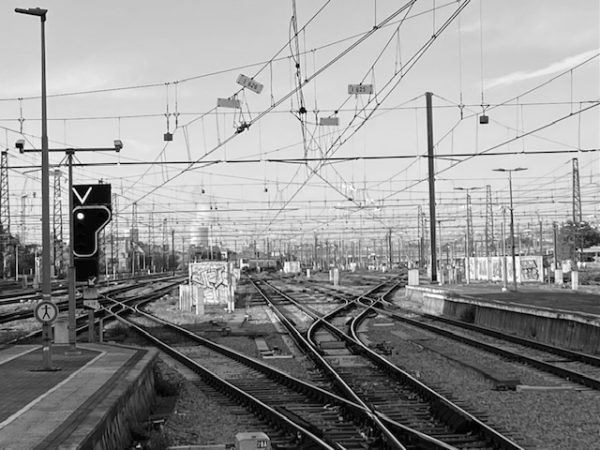
Commuting to work is only in few cases a choice. The stress associated with commuting is not negligible. Most employees report low satisfaction levels with commuting to jobs and subsequently this has a negative impact on overall satisfaction with one’s job. A study on urban China shows that employees on formal work contracts can often compensate with shorter weekly working time or higher earnings from work, but only partially. The negative impact of commuting on job satisfaction is rather sticky and substantially higher for employees on informally employed workers in urban China, who do not have resident permits in urban areas. With millions of workers commuting daily to work beyond China, the evidence suggests to take commuters’ dissatisfaction more seriously. Public transport infrastructure has to keep pace with more people working in urban areas, but willing to accept long commuting distances. If we add commuting time to working time, the long hours of work over years constitute a considerable health hazard.
Gone Home

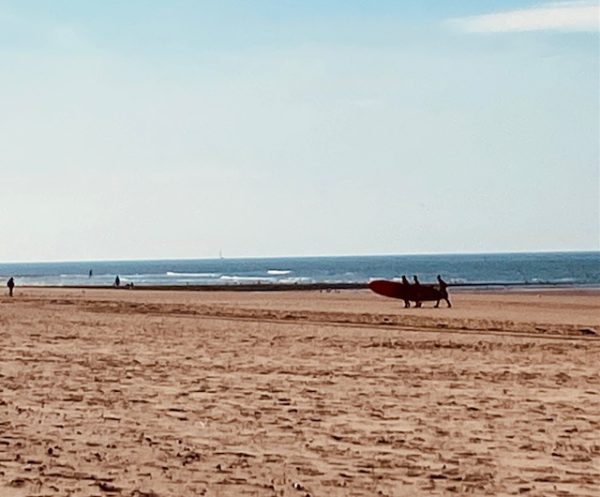
There are at least 2 perspectives on going home. For the person away from home, it could be understood in the sense of returning home. For the community still living at a place associated or idealised as home, it is often interpreted as a home coming. In view of the powerful global social trend of urbanization, many people associate with “going home” as if migrated persons from rural areas would return home to the countryside, maybe just for a short visit. However, a home is to be interpreted much larger than just being a place, a location or a regional idiosyncratic feature, like the sea, the river, the banks or mountains. You might go home to a familiar sounding dialect or language. For some it is the idea of freedom or liberal values which they have moved to, that became their home. For others it might just be the possibility to practice a rather unique sport, which determines where they would feel at home. Home could just be a “state of mind” rather than a location.

Ostend-SUP-paddle-board-on-beach-2026-9 e persons walking with board after practice

Rural urban interrelationship

Cities are no isolated microcosms. They rely on being delivered a huge range of products. Cities have been markets, hubs or platforms for exchange with their surroundings, neighboring communities as well as distant ones. Historically, quite many cities have built walls to limit access and strictly regulated access. In the 21st century with low levels of fertility, the demographic pressure to leave the countryside for jobs is less pressing, but many regions face the shrinkage of the countryside’s population. The interrelationship between the urban centers and the rural surroundings has to be studied and addressed due to the far-reaching consequences for both. Transportation into cities needs public infrastructure which can handle the necessary flows and exchanges of people and products. For too many decades we have focused on an either/or cleavage of an apparent dichotomy of urban versus rural. It is about time to correct this bias and take the rural-urban interdependence more systematically into account. 

uri urban rural interrelationship in food and drink

Healthy intervention

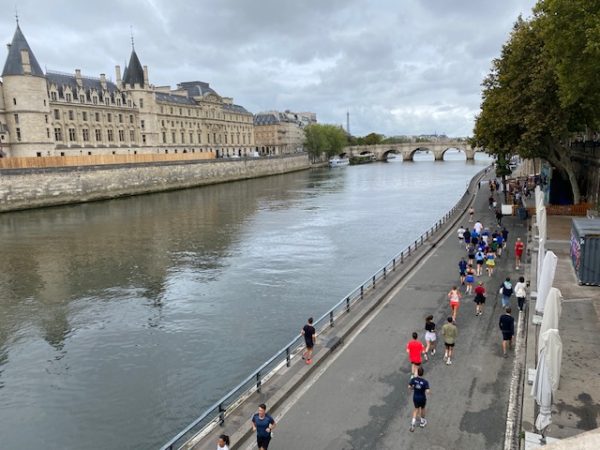
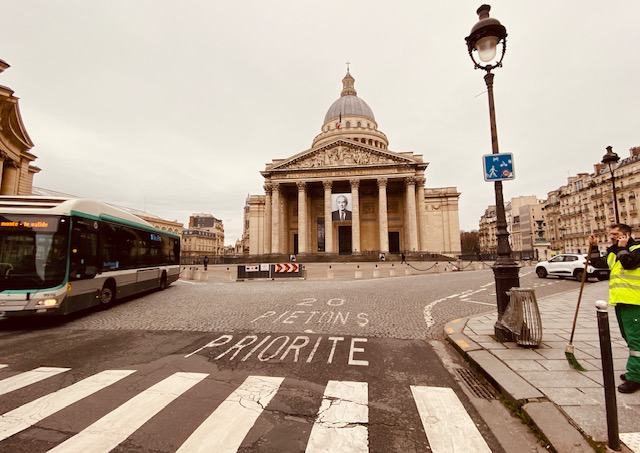
The shift back from a city which favors mobility on wheels to a city where more people move using on their feet is healthy intervention. Paris has succeeded in many inner city areas to improve the „walkability“. On Sundays joggers pass in groups where previously cars were rushing across the city. Noise levels and pollution have been reduced which attracts even more tourists. Many more than the city could handle with too much space occupied by cars and trucks. Security levels are increased by restrictions to car access to some roads and people feel safe and relaxed even in the city center of a metropolitan city. Besides the effect that more tourists come to enjoy this atmosphere, those living and working in Paris feel less forced to leave the city over weekends due to unhealthy pollution levels. Access from suburbs by public transport runs at high frequencies also on weekends. This brings people into the center for events, shopping and event shopping.

Palais de Justice Paris Seine 2026-8

Countryside warming

During summer inner cities heat up more than the rest of the country. This is largely due to the well-known urban heat island effect. However, on top of this effect scientific evidence based on high resolution climate data show that the nowadays countrysides are heating up faster than cities. Catching up with negative climate evolutions is a worrisome recent development. The usual “wealthy person’s climate refugee strategy” to leave the inner cities in summer and move to the cooler countryside becomes more elitist. The global space of cooler refugee regions is shrinking just as biodiversity is reducing at a fast pace.

flower in countryside France iridaceae iris 2026

Fire engines

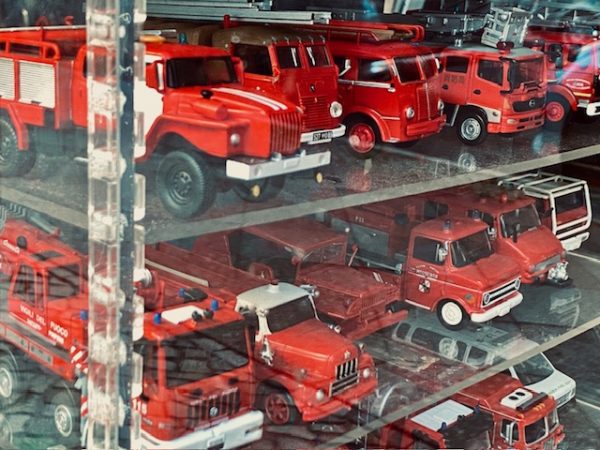
The collection of fire engines model cars on display in a Berlin antique shop reveal the whole dilemma of fire fighters across Europe. Lots of different models and technical specifications mean lower potentials for synergies. European cooperation is such a strong statement of hope and solidarity during emergencies. Better coordination in joint acquisitions would allow fire fighters from each Member State to be operational in other units. The power of the many could be a significant advantage to fight the fast progression of fire we have witnessed in 2026-7.

Fire engine models in window of antique shop in Berlin

All the lonely people

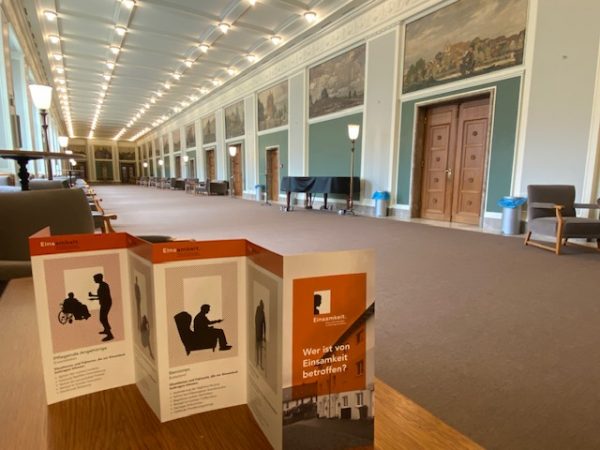
This line of a song by “The Beatles” dates back to 1966. “Ah, look at all the lonely people” is a kind of puzzled outcry to reckon with the loneliness even in busy and charitable places. 60 years later in 2026 we have whole ministries in some countries to deal with loneliness. It is not a niche problem. Tackling the problem needs to go beyond raising awareness. Loneliness occurs at all stages of the life course: children, adolescents, young adult, migrants, employees, single parents, care giving people, even within couples, seniors and very old persons. It is not restricted to urban or rural areas, but changes from one to another phase in a person’s life course carry the risk to encounter loneliness. It may well be only a temporary phase before new relationships can be established or previous contacts revived. There is a role to reach out to people who might be lonely for all of us. Public policies should be scrutinised on all levels whether they manage to break barriers or raise new ones for persons to feel lonely. In Berlin, the local level in each district is taking measures to facilitate informal meeting points open to all ages and walks of life. The “Wüstenrot foundation” sponsors many initiatives where public policies are short of funds. Projects enhance networks of people and organisations eager to assist “all these lonely people”, wherever they all come from.  (Image: Conference on loneliness at Berlin city hall Schöneberg 2026)

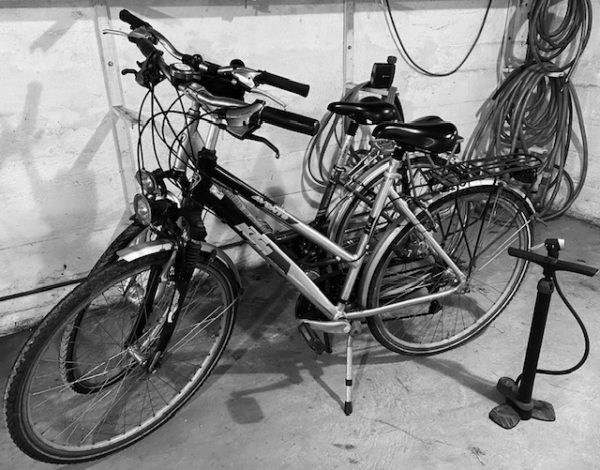
Bicycle Garage

The 2020s are the years to explore sharing concepts. Beyond car sharing we have become used to share scooters and bicycles for intermodal transportation. The concepts are subject to continuous evaluation and the choice between free-floating versus fix point stations remains a hotly contested topic. Despite using either one of both sharing concepts, families and friends might practice their own sharing of modes of transportation. Whereas for cars the driving licenses and insurances might limit the sharing, for private bicycles there are no such restrictions.
A little bit of basic understanding and practice of repairs allows to share family-owned bicycles with little effort. Equipped with a GPS-tracker, even free floating might be an option in addition to theft protection. With less space taken up by cars in household garages, bicycles can occupy, at last, sufficient space including a little corner for maintenance and repairs.

Urban rural voters

On Sunday 2026-3-22 local elections of the 2nd round took place in France and some parts and cities in Bavaria. The voters have in both instances confirmed the hypothesis that voters have very different preferences for political parties along the cleavage of urban versus rural voters. The sociological issue consists in the different socioeconomic as well as educational backgrounds of the populations. Across the 2 countries inner cities have environmental issues, safe transport and rents as major concerns. In rural areas a feeling of being disconnected and left behind is frequently the predominant concern, often in terms of lacking transportation infrastructure. Voters on the local level have a more direct connection to their elected politicians and scrutinize implementation as well as promises more closely. This is a much more complex issue for voters on the national level as more topics enter the equation. The political agenda, therefore, differs substantially for urban and rural voters. This is a tough challenge for the nationwide campaign teams to test the validity of their agenda locally as well. 

Jewish Heritage

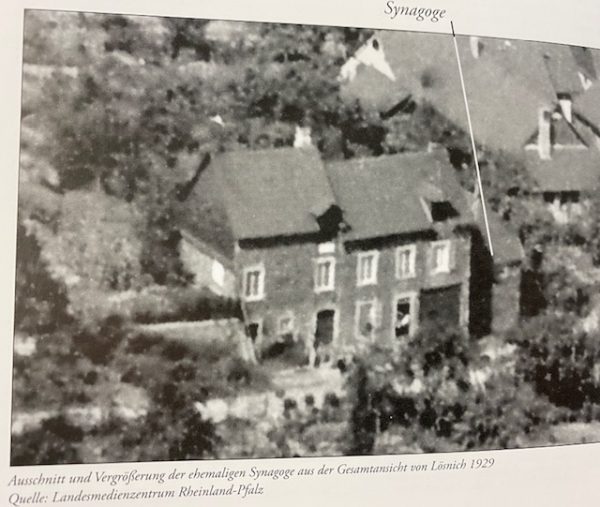
In the Germany of the 21st century, we have to dig deeper into history to understand the Jewish heritage due to the horrific terror of the Nazi-regime and it’s millions of supporters. The traces can be found in some historic photographs even in the countryside. Marie-Louise Conen and Hilde Weirich (2010) have thoroughly studied such documents for the Moselle village of Lösnich. The little annex to a house served as a Synagogue (image below). The village has a history of Jewish settlements which extended to neighboring villages as well. Interestingly, the heritage of Napoleon’s occupation of the Rhine and Moselle regions brought equally for all men (not yet women) and the separation of the state and religion making Jewish life, property acquisition more easy. The tolerance of the 19th century was then reversed by Nazi Germany again. History is present in many places, where we do not seem to expect it nowadays.