Glass wall

A glass wall remains a wall even if it is transparent. The glass and steel construction of the Neue Nationalgalerie by Mies van der Rohe has large windows which allow light to flow into the building and create an illusion of transparency as well as openness. However, for most exhibitions “paywalls” are erected to limit access. The Cattelan installation in the gallery erected another light barrier before the official opening in form of the ribbon barring entrance. For those who had experienced the real wall in front of or behind the Brandenburger Tor”, a certain allergy against walls is probably a leftover from those days or years. Hence, Klaus Biesenbach and Maurizio Cattelan tear that wall down!
Thanks go to the Volkswagen Group “Art-4-All” sponsorship which allows free entry on Thursday evenings already. Public-private partnerships are way forward and “Mäzene” can accompany such journeys in multiple ways. 

Cattelan Maurizio at Neue Nationalgalerie Berlin 2026-9

Brancusi polyartist

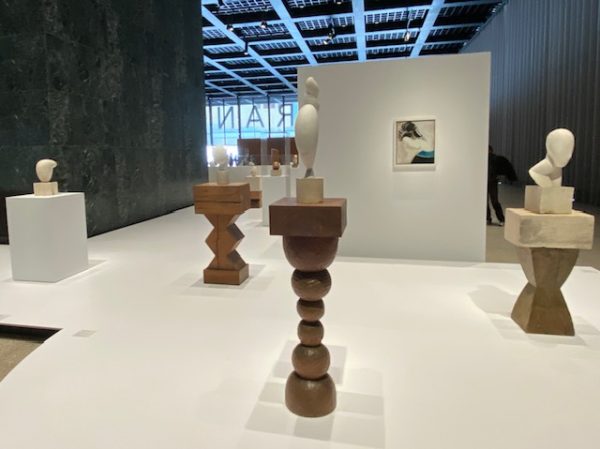
The joint exhibition by the “Neue Nationalgalerie” Berlin and the “Centre Pompidou” Paris has the simple title “Brancusi”. The name of the artist Brancusi stands for a very singular approach to take sculpture into the 20th century by way of abstraction. Brancusi used all sorts of materials like lime stone, bronze, wood and marble. Additionally, he was very conscious of the fact that especially for sculptures the “mise en scène” plays a vital role. Brancusi excelled in this in a rather unique way, mostly by confronting different materials with each other. Sculptures, for him, were architecture in miniature. Such a polyartist approach to sculpture pushed him to use photography and video to not only promote his own work, but to exploit these relatively new techniques to enhance the effect of his sculptures.
Maybe it took almost 100 years that by means of the “not-so-social media” not-instant, anytube and tikytok, this “modus operandi” would capture a whole generation of youth to follow in his footsteps without knowing it. The polyartist Brancusi is a unique milestone, not only using lime stone, on the trajectory of sculpture beyond the early 20th century. The links to other innovative artists chosing abstraction, Picasso or Modigliani, as well as musicians like Eric Satie, reflect the importance of social networks for mutual encouragement when treading new paths in art.

AI Motion Sculpture

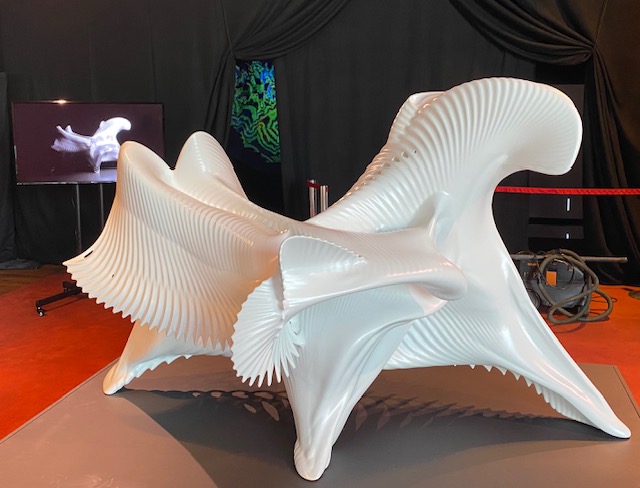
At the Festival Noûs in Paris, the collaboration of AI with artists was a major event. Based on the huge collections of the BNF in form of data bases it is possible to join the 3 worlds of library conservation, technological innovation like AI and the imagery of artists. In the preparation of the exhibits and the parallel documentation of the genesis of the exhibits of the artists, the creative potential and process becomes more evident and understandable to broader audiences. The exhibit by Tobias Gremmler, Anatomy of Motion (2026 see below), captures the motion of a dancing body in a sculpture based on a 3D printing of a series of images blended into each other. with a fast photography camera, known from sports images previously, the dynamics of a motion become a tangible sculpture. The intriguing new form is in fact a motion that has been captured or has cristalized or materialized in a permanent fashion. New technologies and materials enter into art as they offer new ways of expression as well. The collection of art and documentation centers shall enter into new phases as well. (Image: Tobias Gremmler, Anatomy of Motion (2026) at BNF 2026-4).

Claudel & Hoetger

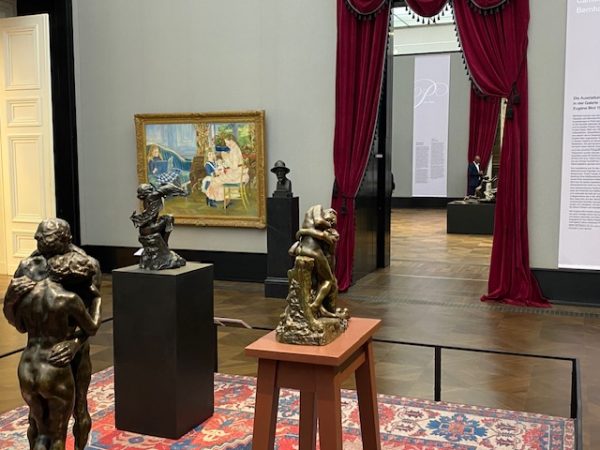
It is well known that artists joined other artists and groups to get inspired. The entangled relationship between Camille Claudel and Auguste Rodin has become a special example of the tricky relationship between learning and co-creation or inspiration. The role of galerists in building a reputation for artists is less well understood. The “Alte Nationalgalerie“ in Berlin opens up this black box a bit through juxtaposition of Camille Claudel, Bernhard Hoetger as disciples of Auguste Rodin. The influences are rather obvious, yet each disciple developed her/his unique style. The emancipation was not without frictions. The galerist Eugène Blot organized a joint exposition of both disciples in 1905 in Paris, which is partly reproduced in Berlin 2025. Great work by the curators of the exhibition Yvette Deseyve and Sintje Guericke who managed to bring together unique sculptures from 3+ museums and a great explanation of the links between the artists as well as the proximity of ateliers. (Image: view of showroom in Alte Nationalgalerie Berlin, Claudel & Hoetger 2025)

Napoleon legacy

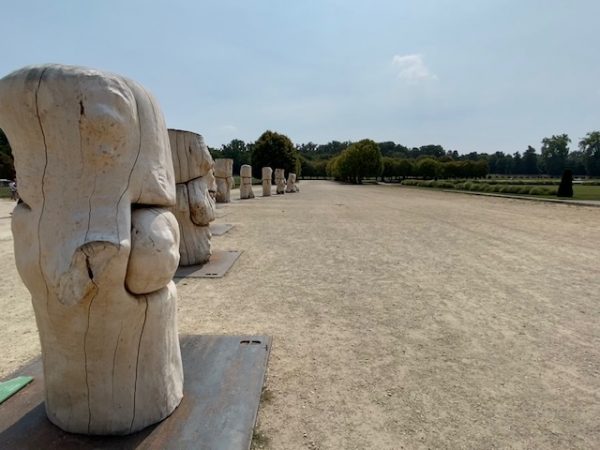
It is huge historical project to try to summarize the legacy of Napoleon Bonaparte. AI is by design less hesitant to come up with any length of a summary statement some with good references on which the statement is based. In combination with a visit at Fontainebleau and a first hand impression of the environment of the autocratic ruler, the remainders like the introduction of a Civil Code to guide also administrations to lawful conduct, we still see influences of this legal innovation in many other countries across the globe. The recognition of Jews as equal citizens and to allow equal access to property and many professions have been influential across Europe mostly in occupied territories. Military service for Jews in Napoleon’s army was another consequence, which spread into the Prussian army and the 1st world war. It is in the 21st century that we see shifts towards more authoritarian governance styles spreading again, we did not want to see this happen until Russia‘s war in Ukraine. (Image: La Chair de la forêt, Frénésie des Géants by  Wang Keping Fontainebleau 2025-8)

Zadkine museum

In the middle of Paris you will find a small former atelier of Zadkine. Transformed into a museum, the place is a cosy place to learn about sculpture and the different materials used. The preparations in form of designs or smaller trials with other materials are common practice to arrive at the sometimes monumental pieces. The visit of the permanent collection is even free of charge. A splendid experience in a surprising spot of silence next to buzzing city streets. Depicting musicians and musical instruments has been Zadkine’s shared passion with Valentine Prax. Great that he managed to reach the USA in time before the Nazi persecution could reach him. However, exile often means hardship as well. 

Zadkine Prax

Ossip Zadkine and Valentine Prax once had their atelier next door to each other at art school. This established a lasting link between the 2. Whereas Zadkine became best known for his sculptures, Prax became famous as a painter. It appears that influences from one to the other are present in the works and several sculptures or preparations for sculptures were collected by Prax and found their way into the permanent exhibition of the museum. Intertwined biographies of artists are an inspiring reminder that art is not created only within a single mind, but many references or inspirations come from joint conversations or just working next to each other for some time. The social part of creating art is visible in this exceptional exhibition. Valentine Prax is honored with a presence in the Zadkine museum as well.

Image: Valentine Prax

Zadkine Van Gogh

Ossip Zadkine has been a sculptor in cubists’ art tradition. He created famous sculptures of Vincent van Gogh after the death of the renowned painter and his friend. The Zadkine museum in Paris allows to get a great impression of these artworks. These sculptures reveal an interesting life course perspective on both artists sensitivity and transformation of their impressions of others or emotions more generally. The first study depicted below by Ossip Zadkine of van Gogh shows how he carefully studied the traits of van Gogh and his personality in order to better understand the evolution and death of the fellow artist. The emotional and broader psychological aspects of a character captured both artists. Doing justice to these inner feelings and society’s judgments about art and artists at their time of creation had strong impacts on both artists. 

History’s Weight

The artist Damien Deroubaix is currently exposed at the BNF.fr in its historic site Richelieu. Together with and next to some of the historic treasures of the BNF collections the unique exhibition allows to experience history’s weight on our current existence. The work of Deroubaix is following and pursuing historic art trajectories with a special historical and ethical consciousness. Techniques of art are insensitive to the moral compass of the painter in history. The collections of the BNF like all major European collections have to handle their colonial past and immoral depictions throughout history. Deroubaix accomplished to liberate techniques of art of their colonial linkages and imagination of emperors focusing on humanitarian values. War is horror, in the past and in the present. Genocide in Rwanda is war crime and dealing with the memories of people an honorable way to look forward conscious of the past. Hybrid forms of art allow multiple contextualizations of his work. In the Galerie Mansart and Pigott of the BNF the historical embedding enriches the art and vice versa. Art allows us to rise beyond the ashes mankind has and continues to inflict on us. (Images: extracts of Damien Deroubaix at BNF, Paris 2024)

Artist Intuition

Artists have a specific kind of intuition. Many artists build their artwork on the competence to sense interesting deviations from standard representations of persons, landscapes, architecture or societal structures. In 2024 the Paris Olympics have demonstrated again the particular strength of American athletes in the competitions. As a renowned sculptor Auguste Rodin had the incontestable intuition that the American athletes had a physiognomy of impressive dimensions. Well worth a sculpture of its own kind. Rodin realised the first bronze statue of the “American Athlete” as early as 1901. In 2024 American athletes are much more diverse, but the impressive strength is documented in the USA still leading the list of countries in terms of gold medals. Rodin’ sculpture of the American athletes is focused on the muscular strength in contrast to most of his other work where gestures, clothing or emotions were immortalized. (Expo: En jeu ! Les artistes et le sport. Musée Marmottan Monet photo below) There is also a stark contrast to Rodin’s famous “ Le Penseur”. The dialectic vision or just visualizing both artworks next to each other reveals the difference to represent simply an athlete or the abstract concept of a thinking person.

American Athlete, by Auguste Rodin 1901