liberté urbanité

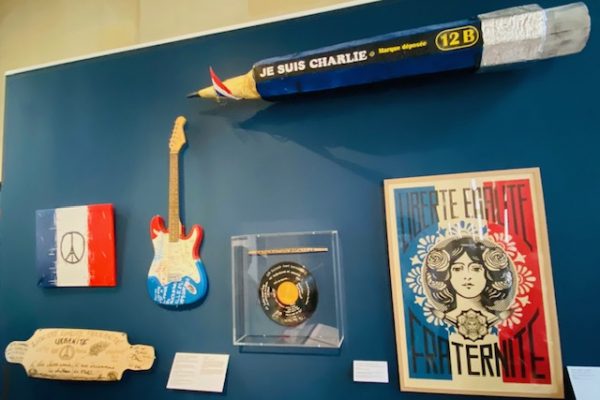
In the museum of the history of Paris “Musée Histoire de Paris Carnavalet” we find a special place devoted to the commemoration of the terror attacks in Paris in the Bataclan event location and the office of the journal “Charlie Hebdo” (see image below”. The skateboard on the bottom left of the wall raises the value of “urbanité” next to liberté, égalité, fraternité. The attack of an urban living style with youth going out as they like and journalists and caricaturists speaking their minds freely had been attacked, but continues nevertheless. This statement is part of the Paris state of mind. 

Le Brun Selfie

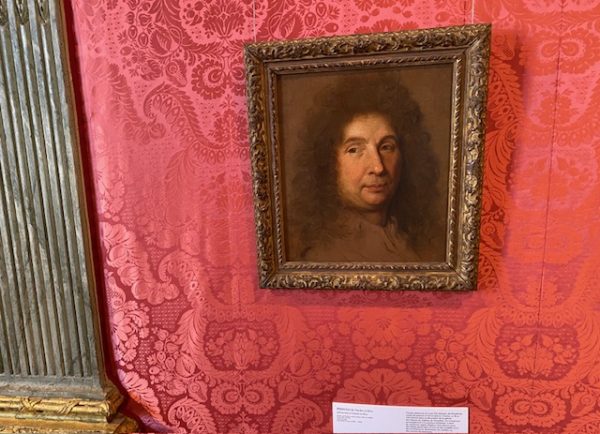
The great painter and decorateur of the French monarch Louis XIV was Charles Le Brun. He was careful about the way he wanted to be remembered in history. His late 17th century self portrait is exposed in the Musée Histoire de Paris Carnavalet. Rightfully put in front of elegant red “tapisserie”, the selfie is remarkable for its attention to details. The hair is drawn with high precision and not a single one seems out of place. The painter does not focus on the person in front of him, but rather on some detail next to or behind the depicted Le Brun. The dress chosen is rather an ordinary person’s one or a person devoted to his work and artistic craftsmanship. No hands, no arms, no shoulders. The sole focus is on the head or should we say the brain and facial expression. Realistic painting is probably the closest you can get to today’s selfie-mania. Le Brun’s decoration and paintings in Versailles and churches ate probably some of the most popular backgrounds of selfiies even in the 21st century.

Home for dog

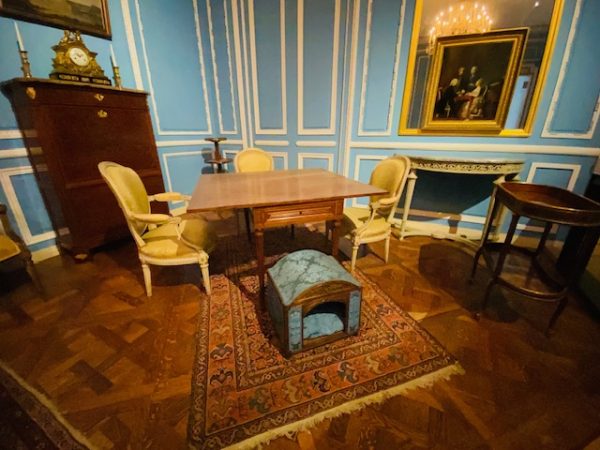
The places where some dogs live can be rather big. But even tiny dogs may enjoy a luxury home like their owners. This was certainly the case for the dog’s niche in a Paris home, a few years before the French revolution (1785). The exhibit is a testimony of the tough inequality of the late 18th century in Paris, where some enjoyed far reaching luxury and large parts of the population were forced to live in poverty within Paris or the suburbs with little access to basic sanitary facilities. The discrepancy between the luxurious homes of pets and the average person might serve as an indicator for income and health inequality. The Musée Histoire de Paris Carnavalet has a great stock of artifacts that can speak to the issue. Image: Musée Histoire de Paris Carnavalet dog niche 1785). 

Paris History

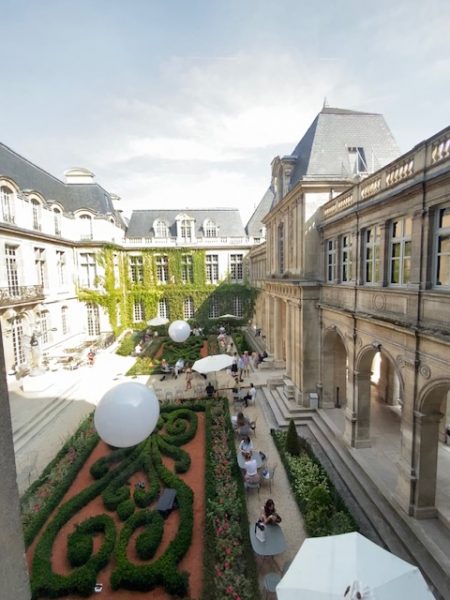
The “Musée Histoire de Paris Carnavalet” is the starting point for visitors of Paris and social scientists to better understand the making of this metropolitan city throughout centuries. The only common factor over the years is the astonishing determination to reinvent the city every 100 years whilst the best features of the previous periods are preserved. It is the concern for the very long-term time horizon that makes the city quite unique. Even a social revolution (1789) unlike most other countries managed to preserve most buildings, churches and royal palaces. Restorations are undertaken with a careful approach to shield its architectural and social heritage. Even the radical transformation by Haussmann over almost 20 years until 1870 to build large corridors in the city is subject to revision in modern visions of the future of Paris. The app of the museum is very helpful to learn more details about each chosen object of the permanent exhibition. The social fabric of the city can be studied further through app’s feature when representatives of local social organizations speak about their personal piece within the huge collection on display. The larger the “fundus”, the more the rationale for selecting pieces becomes an issue. (Image: Musée Histoire de Paris Carnavalet inner court 2025).

Photographe engagée

Marie-Laure de Decker is featured in the “Musée européenne de la photographie” (MEP) as a photographer committed to capture truth in situations of conflict. She started her career with documentary photos from the Vietnam war. Rather than searching for spectacular scenes, she succeeded in her attempt to capture the more emotional and, therefore, relatable moments for her various audiences. With a firm commitment to the human in her work, the photos by Marie-Laure de Decker reach a level of extraordinary sensitivity to what it means to stay human in violent situations and even military conflict. The portraits of politicians, workers, professions and famous actors applied the same approach. Rather than days or weeks Marie-Laure de Decker spent months or years in the regions of her documentary photo series ranging from Vietnam, South Africa throughout the apartheid regime, Pinochet years of dictatorship in Chile, the 2 parts of Yemen to a prolonged stay in Chad.

The exhibition in the MEP in Paris curated by Victoria Aresheva  raises awareness to the additional fact that photo journalism became an affordable profession only after specialized agencies were created that granted authorship rights to photographers, which ensured later use of their work in edited volumes as well as working for several newspapers or magazines. (Image: Marie-Laure de Decker, self-portraits, MEP Paris exhibits 2025-8). 

Emotional history

The making of emotional memories of a city is an art in itself. Many cities have professional photographers who accompany all major events in a city over years. Paris has had the chance that artist photographers and film makers have contributed greatly to the emotional history of the city. Agnès Varda was such a formidable person whose images and movies moved people and allowed to share emotions about the city’s busy and diverse neighborhoods. The « Musée Histoire de Paris Carnavalet » combines an autobiographic perspective with the emotional depiction of live in Paris from the 1950s onwards into the late 20th century. (Image: Agnès Varda, 1950 self-portrait, MEP Paris). 

Femmes Photographers

Paris puts 2 women photographer into the spotlight. The MEP and the Musée historique de la Ville de Paris feature a gender perspective on photography. Both photographers have a common starting point in black and white photography.  Each moved on to develop their art into an additional direction later during their career. Marie-Laure de Decker shifted from the early camera technology from black and white images to color photography in the later stages of her career. Agnès Varda moved from her initial b/w photographic work on to the production of videos for cinema, mainly focused on life in Paris from the early 1960s onwards. An evolution over the professional life becomes evident for both through these retrospectives of their respective work. Technologies evolved and became more accessible for artists’ creative expression. Both moved on to adopt new techniques and challenges. Great personal learning experiences and models for today’s challenges.

(Image Marie-Laure de Decker, L’image comme engagement 2025-8 MEP Paris).

Timeless Nature

The beauty of butterflies has fascinated thousands of generations. It is the boomers’ generation that has increased the risks that future generations will have difficulties to enjoy the simple beauty of nature in their gardens or parks. Preservation of biodiversity is a value that should be ranked much higher than previously. Monitoring of biodiversity needs a generation of people well aware what a rich ecosystem and biodiversity looks like and how to preserve or restore it. Much to do for teaching and learning professionals as well. Curriculum development for biodiversity and sustainability is in urgent need for updates. This has to include the socioeconomic dimension as well.

Gentileschi Heroine

The choice of a woman as heroine in a painting beyond religious topics was innovative in the early 17th century. Artemisia Gentileschi chose Cleopatra as her character in the ultimate scene of Cleopatra‘s life. The heroic act of guiding the poisonous snake to bite her under her arm is the ultimate act of Cleopatra to have served her country and people. As history books are full of male heros Artemisia Gentileschi succeeded in drawing attention to the biased gender stereotypes in art and art history beyond the 17th century.

Gentileschi Selfie

Today the production of „selfies“ is all around us. Selfies are shot almost instantaneously and several times a day by use of modern smartphones. About 400 years ago the first woman to produce a selfie was Artemisia Gentileschi. As (one of) the first female painter in art history to have created a painted image of herself (which is transmitted today) Artemisia Gentileschi made history. Her unique biography, style and craftsmanship of the early 17th century in Italy made herself a renowned painter. Her choice to depict herself rather than somebody nobel or rich was quite unusual for the time. The audacious choice of herself as her „sujet“ became even her trademark. Later paintings by her with biblical topics were also subject to her reinterpretation based on herself as the female character in the narrative and image. In this respect her work appears so much ahead of her time that her impressive work speaks to all generations today. (Image: extract of Jael and Sisera by Artemisia Gentileschi 1620, Musée Jaquemart André“ in Paris 2025-8)