Syntax is just one of the categories of linguistics. Carl Lee Baker (1989) wrote a whole book 500 pages on just English syntax, can you imagine. I like his modesty in the introduction stating that English syntax is just a subfield of linguistics (p.12). Other languages have different structures, some might be very different from our ways to communicate even. The ways how animals or plants communicate is an exciting subfield of linguistics, psychology and biology (Carrie Fidgor, Pieces of Mind). The SPO structure of sentences is only one simple way of constructing sentences. Syntax is much more complex. The sociological aspect of linguistics and syntax lies in the “acceptability judgements”, which are present once we establish rules and sort phrases into correct or incorrect sentence structures. Norms and standardisation as well as authority to decide on correctness becomes an issue. Countries used to many dialects or multilingual populations are confronted with these issues on a daily basis. Linguistics as basis of communication is continuously present even in the mental structure. Bilingualism, tri-lingualism and their effects on minds, competences, behaviour, culture and societies are own thriving research fields. Building a sentence or a phrase, following Baker, is built around a head and their complements. Such minimal phrases are comparable to what we coin in a simplified manner the subject-predicate-object structure of a sentence. The definition of the nucleus of the structure of a sentence is also about conventions and acceptability. Staccato speech and rap-music are examples of forms of speech, which are often considered beyond the normal. Computer voices are becoming more normal as we are faced with chat bots all around us now. The image below reflects the simplified “representation of syntactic structure” (p.48 The Cambridge grammar of the English language 2002 review here). To play around with “Clause”, let us analyse the clause: I bought a shirt; I wonder what I bought. You know what I mean Klaus, it is a clause, or is it Dady gone gaga = DADA? 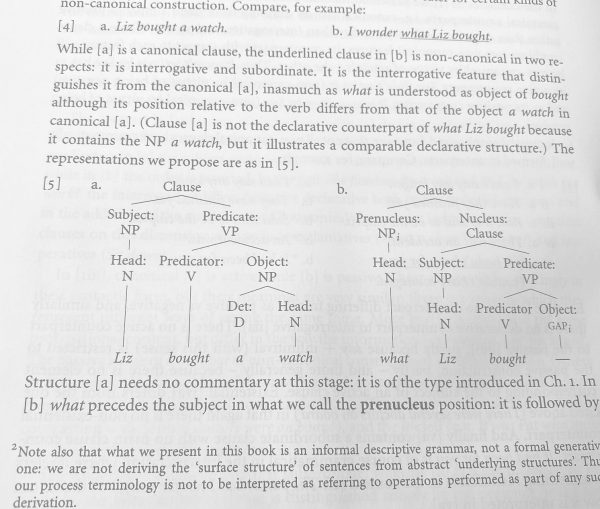
Employment
Employment is back on top of the agenda. Not as we used to think, though. Previously unemployment had dominated societal concerns. Now it is the lack of persons seeking or available for employment. What has happened? The Covid-19 crisis has demonstrated the need of persons qualified to work in the health sector. From health care and urgency care, we are short of personnel in all these fields, everywhere. 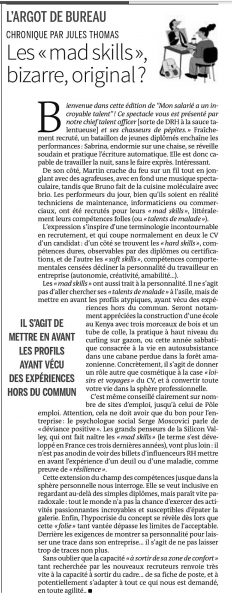 Then we discovered the role of essential services and the need to equip crucial infrastructures like ports, transport, shops, schools and ambulances with service persons resisting despite work overload. Larger cohorts leave employment to retire, some even early due to illness or burn-out. Additionally, war is back in Europe. Military personnel is in high demand again, drawing largely from younger cohorts. The need for conventional weapons. long thought to be oblivious, is forcefully back on the agenda.
Growth potentials are everywhere. However, these pre-modern facts encounter a population in the western democracies that insists on new approaches to employment. Beyond hard and soft skills, recruiters seek atypical skills, competences and trajectories. A parachute jump from an airplane, cooking and dining experiences, caring spells, periods in self-employment, all are directly or indirectly relevant for employment and teamwork. So, what is your specialty? Collecting stamps? Surely you are able to spot tiny differences in images with specific content. Fake news and fake image detection or video surveillance is in high demand, just try an application and discover the employment potential of your MAD skills. Sounds crazy? No joke. Skill needs are everywhere, just give it a start again and again. Read a serious newspaper regularly (here LeMonde 19.1.2023) for inspiration.
Relation
Several inputs from logic will assist us to establish relations between 2 objects, 2 subjects or 1 subject and 1 object as in simple relationships to form sentences. The most obvious is A = B. The most common, depending on definitions, A is not equal to B, hence A >B or B>A. Medieval logic adds the consideration of consequences and suppositions to relationships. A determines or leads B. We might suppose that A is a precondition for B. Logical arguments often attempt to explain. Mathematical proofs chose ways to deduce or induce, whether a statement is true or false. To reduce the number of lines to explain a theorem is a mathematical virtue, just like in a game of chess to find a check and mate in fewer moves.
Leibniz increased the repertoire considerably. In geometry objects are parallel or in the infinitesimal calculus they approach each other without ever reaching each other. With the art of combinations he describes a language than contains groups and elements. The binary revolution, to express numbers, letters, images in form of pixels as multiple assemblies of 0 and 1, has revolutionized our potentials. Beyond these determined relationships there are stochastic relationships, they happen more or less likely. The centre of logic relationships remains deductability = to deduce, consistency = to consist of and completeness = to complete (Encyclopedia Universalis 14, p.653). Time adds another dimension to our concern to exemplify relations. A pre-empts B, or B follows A in time, but not in respect of deterministic logic. Additionally, locations in space of 2 objects allows us to imagine additional abstract forms of relationships, artists play around with this continuously. Some artefacts have created fantastic new ways to challenge our learned ways to consider relations. Last but not least, sound has contributed to how we perceive relations. To superpose, transpose or dissociate relations leaves different emotions. Relations are all around us. They certainly link subject and object in a sentence in multiple ways, copying or imitating nature. For further reading: HERBERT HOCHBERG; KEVIN MULLIGAN. Relations and Predicates. Frankfurt: De Gruyter, 2004. ISBN 9783110326536. Disponível em: https://search-ebscohost-com.kbr.idm.oclc.org/login.aspx?direct=true&db=nlebk&AN=603683&site=ehost-live&scope=site. Acesso em: 23 jan. 2023.
Deconstruction
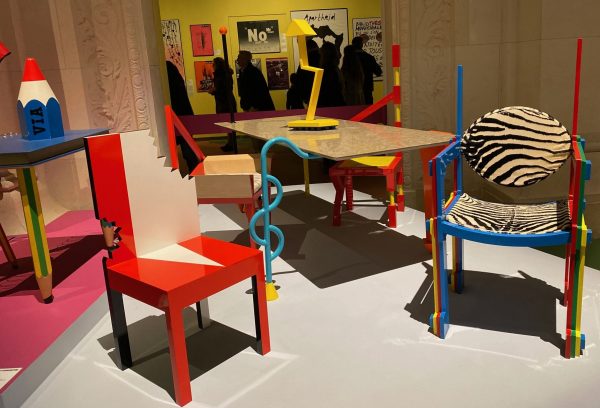
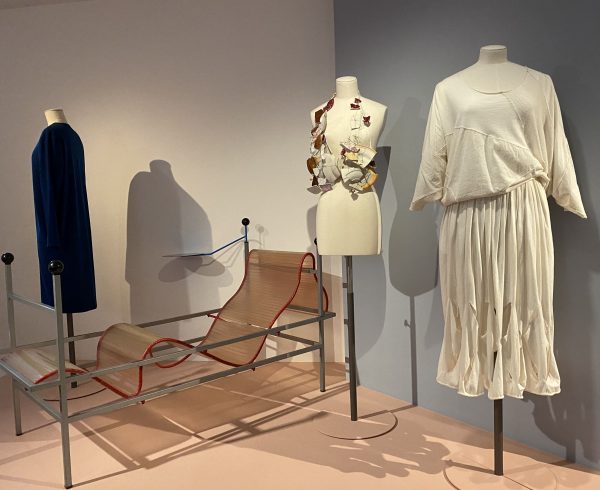
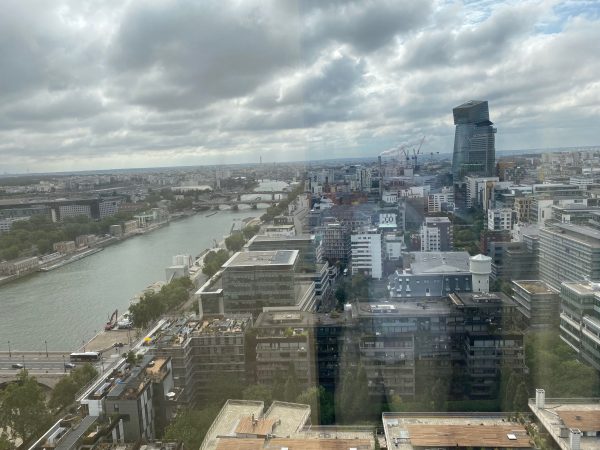
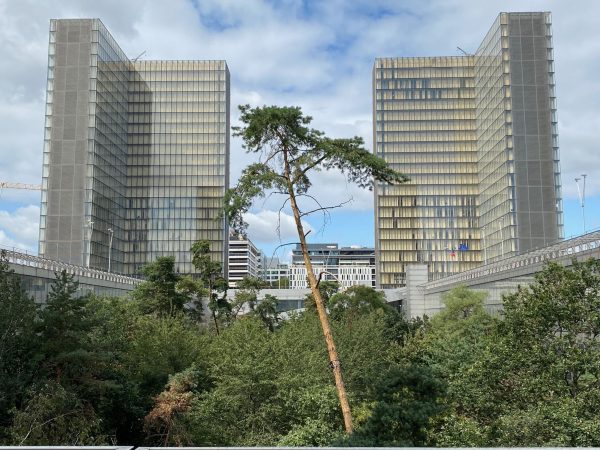
Deconstruction is a powerful tool or even method. Beyond imagineering, deconstruction in the literal sense means take to pieces. In most cases a physical object consists of several objects or parts. By deconstruction we attempt to understand the whole object as the sum of its parts. Before a new product or design is created, many scientists, engineers and artists start to deconstruct existing artefacts. Understanding how the object is assembled, for example, allows you to play around with pieces and maybe come up with an alternative way of constructing the object. The architecture of “deconstructivsm” has left us fantastic buildings. In furniture design there are also nice examples of deconstruction. Paris is a good place to study deconstruction (Explained), perhaps many still read Derrida there. It is a fruitful method beyond its engineering sense for example in law, literature or many other social science disciplines. If you are not mad yet, visit the MAD in Paris to see examples of deconstruction or construct your own deconstruction. Both have a dialectic relationship to each other anyway.
Invent
The nice thing about mathematics is that it asks you to invent new ways of thinking. Numbers, percentages, Venn-Diagramms, infinite series etc. have accompanied us at school. The story is far from finished. Under www.spektrum.de there is a nice introduction to the new theory of numbers, called “condensed mathematics“. Their lecture notes (pdf-file) are a tough read. My take home message simply is, the invention of new approaches to old problems, providing more general answers and/or unifying different fields are particularly rewarding. Maths is a fascinating discipline. You study abstract problems, hardly anybody else has had so far, but you are not considered strange as for example some artists at times. Imagine your new world in music, painting or the arts in more general terms or try to become a mathematician. Finding ways to communicate about your predilection and invention is the next challenge. Many scientist, inventors or artists found very few people to talk to about their new stuff. The internet and social media have changed this. Persons with interests or findings beyond the mainstream find colleagues in other parts of the world. Lighthouses from far away become visible through this. Navigation of other possible worlds turns into reality. These specialisations might turn out to be generalisations. The stretch between indepth knowledge and the polymath approach shall accompany us for a long time. Unified theories in several fields are indeed a step to be able to have an oversight about several, but not all fields. Polymaths probably start with condensed maths to move on to other fields of imagination. There is always a risk to get stuck somewhere on the road in a topological space. 
Sound
Each society has its sound. Each person lives in her/his sound cloud or bubble. Cities are generally noisy places, Lots of traffic, mobility and moves leave sound bytes all over the place. Each city though has its own sound and spectrum of frequencies. Libraries, museums, places of worship, all build their special atmosphere due to specific sound design. The Singing Project by Ayumi Paul (Gropiusbau Berlin) created its own sound environment. Reminding us to consciously design our exposure to and experience of sound is welcome. John Cage started to build his very own language of music, similar to Schoenberg, from scratch. His writings Empty Mind explain his view and techniques a bit. Starting with silence and the time between sounds we recreate our own sound experience. Notation of it comes second in place. only for the potential to repeat the experience notation is useful. But it is only one form of conservation for posterity. Noise canceling is the amazing tool from sound physics which allows you to neutralize noise by adding specific frequencies to noise which cancel out each other. Design your personal sound experience beyond noise if you like. Nature recordings or familiar person voices allow you immersive experiences when and where we want. your home sound can be everywhere nowadays. 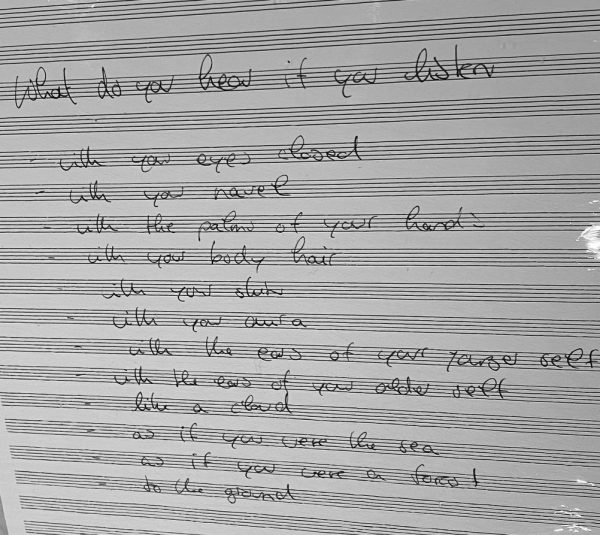
AB with ABC
There are lots of ways to memorize the alphabet. We sing the alphabet with children to trick them from an early age into learning something useful, even if they do not fully grasp the immense power of the 26 signs or letters they are about to learn. It is a tool to construct images and stories of your own and exchange with others in speaking or writing. We have come full circle with the subjects/objects addressed from C to A, more commonly described as from A to Z. With 26 subjects we have a long story already. With each different starting point from the alphabet a new story might be told. Proceeding in reverse order, from any letter, taking couples of letters as in the figure below yields a whole lot of new combinations to be defined. Taking 3 words from the alphabetical list is already a complex issue. Starting from a randomly chosen letter allows lots of additional combinations and topics. We start to grasp the difficulty a computer will encounter when constructing own definitions. Huge data bases of dictionaries will teach the programme to discard apparently meaningless combinations. However, humans might just enjoy creating new combinations. Machines don’t laugh, yet. Teaching artificial intelligence to produce jokes is probably a very difficult task. For the time being, we just continue to construct sequences of words, like the German language is perfect to do so, producing endless jokes with damn serious matter in the “Bundestag“: -Aufwendungsersatzansprüche, -Asylbewerberleistungsgesetz, -Brennstoffemissionshandelsgesetz, -Beweislastumkehr, -BeitragsbemessungsgrenzeUmrechnungswert (okay, I made up the last one). 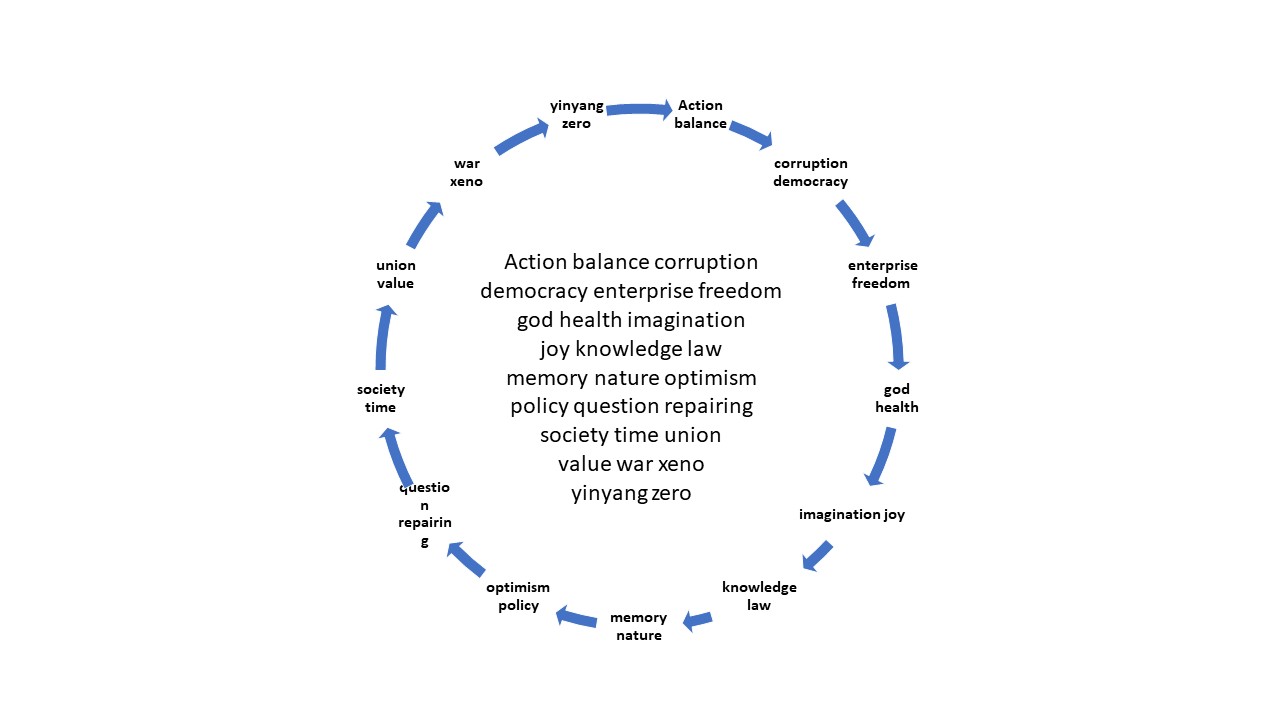
B for Balance
To reach a balance, to keep the balance or one’s balance, this highlights the process nature of balancing. Even the old tool of a balance (scale for weights) very much reflects the evening-out of the balancing process. It seems like a temporary balance most of the time. We might evolve from one level to another one. Especially imagining ourselves on a (body weight) balance in the morning and then throughout the year or years, this appears like a dynamic trajectory. The nature and/or nurture connection is evident. Beware to search for synonyms of “balance” on the internet. You get more than 3000 synonym (Link) meanings and 30 suggestions for definitions (Link) to contemplate on. I like the nice physical experience of balance and the simple (a bit nerdy) explanation of it. Economist get very excited about balance of payments and the ways to achieve equilibrium or equilibria. Balancing personal accounts can be a bit painful at times, but balancing in the arts gets our imagination going. Dancing is about balance most of the time. Playing with your own balance, the balance when 2 or more persons are in action, how not to be absorbed by such experiences. In music, the balance is a primary issue since Bach’s “wohltemperiertes Klavier” and balance and tension are the origin of much jazz. An image or photo might be balanced, certainly architecture is playing with or restricted by balancing acts. Herta Müller’s “Atemschaukel” has thrown us off balance for a while. History we study often with a concern for a balance of power. In peace and war times, the balance of power within and between countries or superpowers are a long-lasting research issue. At times when this balance is at risk or completely out-of-balance we are deeply concerned about the return of a balanced situation. Babies and children draw comfort from being balanced. Adults as well. Let’s try again (chanson). (balance22-venice -video). 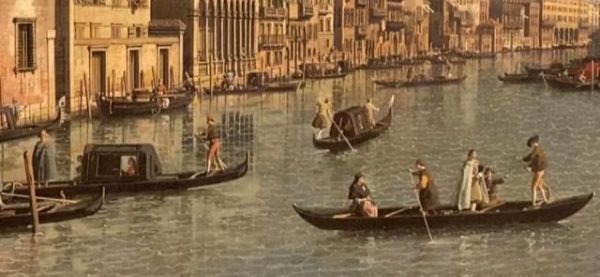
A for Action
The A is everywhere. A is the beginning of the Alphabet, Google is our new Alphabet, we just have not realised it. A simple A-rating in investment is not good enough, AA or AAA is the goal. All this calls for ACTION. Do not be stopped in your action by reading on “Action theory” by Parsons, Rational action is the basis of most economic reasoning before the behavioural turn of economics. It is commonly acknowledged now, that rational action might not always be as rational as we want to believe it is. “Frame selection” as theory to explain our choice of action is fashionable in the social sciences. Transforming values and intentions into actions is a big challenge. Many jokes turn around this issue, like intentions to get up early in the morning. Find out whether you are an actionable leader. You should have at least a few “actionable items” on your to-do-list. Of course, Microsoft recommends actionable items to improve our productivity while spending hours on emails.
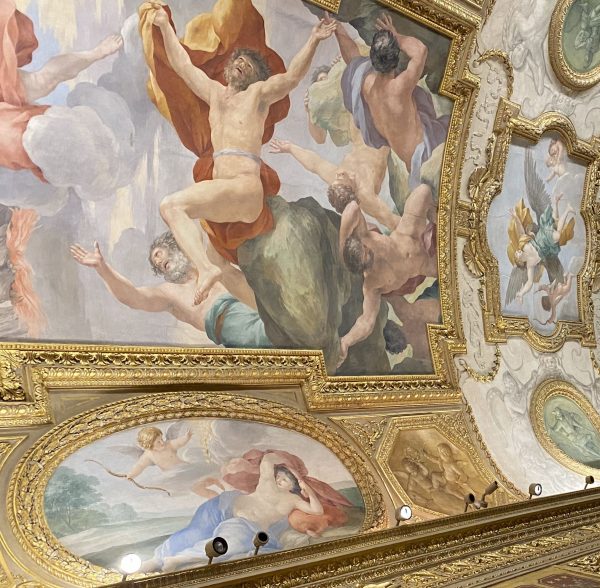
Well, early philosophers already distinguished between “vita contemplativa” and “vita activa“. A lot is about finding the right balance here and Hannah Arendt’s differentiation of active life in labor, work and action. She puts emphasis on action as a way to distinguish ourselves from others. The same thought might lead to very different actions. Hence, acting on one’s belief or values could lead to very different policies for just 2 persons. Action Artists perform even in inaction. We are back to basic questions of democratic procedures as a form to moderate between different opinions or possible actions. Lots of other A-words come up now: ambiguity, anxiety, alienation, affirmation, affect, affection. In Greek, A might be associated with Apollo, In German with the famous “Angst”, but French is overriding all this with “Amour”.
Z for Zero
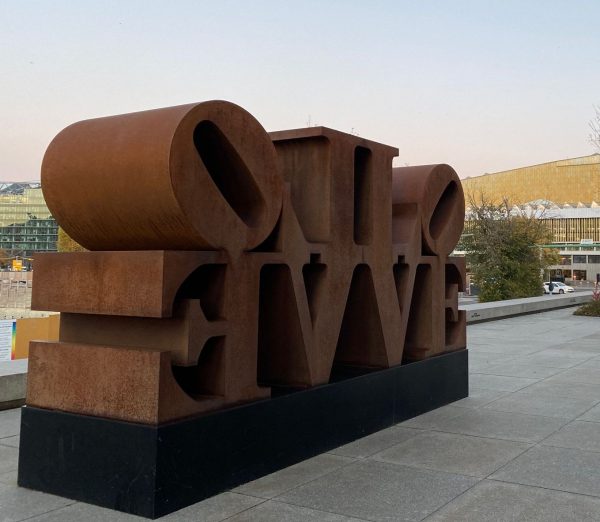
Zero is more than just a number. Originally the Zero=0 was a simple placeholder for higher order numbers. The concept of 0 is useful in calculus. The digital revolution is based on 0 – 1 systems. Beyond this, there is a philosophical sense to it as well. Think of nothing, black holes, empty space, “ground zero“. Emptiness might not be empty at all, as for those filling your empty space (ets) with an empty—log. In Philosophy the nihilists or nihilism reached a lot of prominence. “God is dead” leaves us with a void that asks for alternative solutions. Beware of simplistic answers. Study the origins of democracy and the need for freedom of expression as a basis for new concepts based on fundamental values.
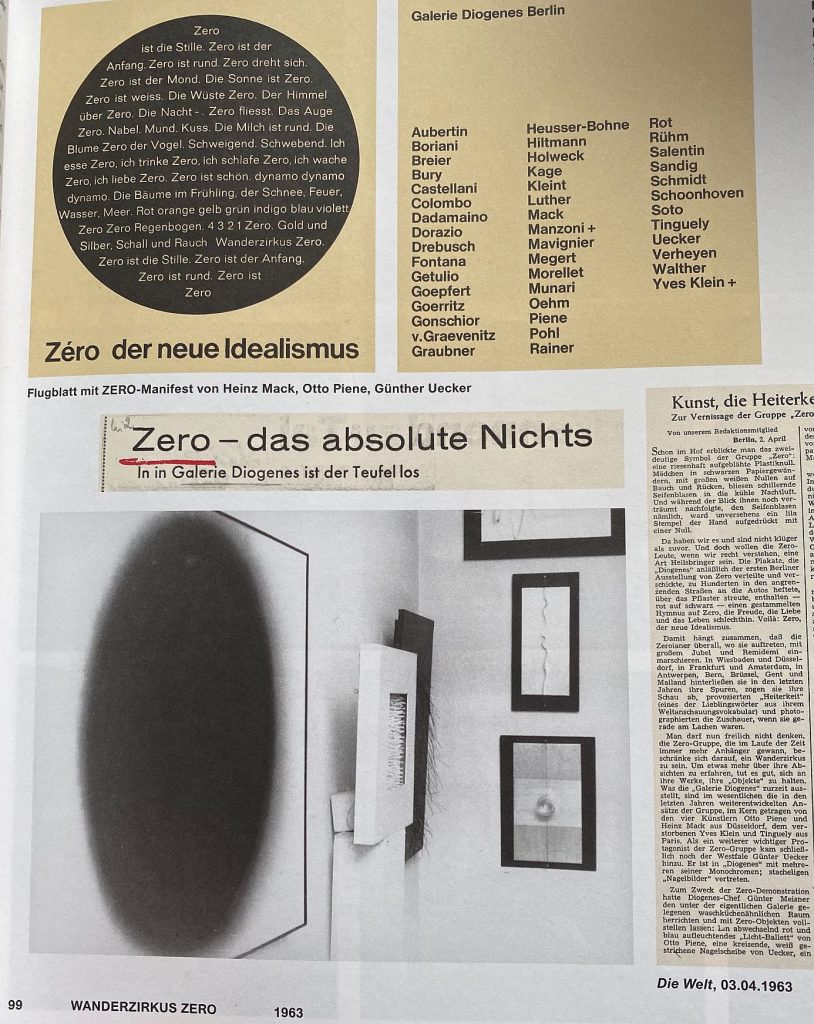
“Zero”, the group of artists in “Zero foundation” have made a significant contribution to the development of art in post-war Europe. The catalogue of the exhibition in Amsterdam and Berlin 2015 inspires imagination beyond today. Time passes on to achieve zero-emissions. Zut alors, the last Z-word to finish the countdown 3-2-1-0, I guess. (P.99 zero catalogue 2015)