In the Post-Twitter-world there is room for other platforms to take over the information function and opinion exchange on an international level. Mastodon has made a good start to fill this gap. The number of registered users has surpassed the 10 million users by large. If the anger about the union-busting and Trump supporter Elon Musk increases further, more and more people will join Mastodon as users and content providers. Advertisers will follow where they can reach their appropriate audiences. If you sell seats on a spacecraft to the moon you will advertise on eXit-Twitter. If you care about responsible investment you advertise on elsewhere or on Mastodon, because that is where your audience will be. Ethically responsible advertisers started to make such moves already. The decentralised structure to potentially filter human rights violating hate messages will need to grow accordingly on this platform. This is a challenge for all platforms and involves costs. To better understand the idea behind Mastodon, think of a platform which connects many other local networks or platforms. Yes, it is a platform of platforms. Decentralised instances provide and can remove access to the local platform. Even whole sub-platforms might be shut out. This increases the potential to build a “caring platform”. Decentralised organisation often incurs higher costs than a central instance that decides and administers a one-size fits all solution. But it is worth a try.
An example makes is more clear, what are the advantages of such decentral organisation to achieve more shielded privacy. For example, a small local chess club targeting primarily youth can open its own server on mastodon and admit only its known members to the network. It is easy to control who gets access to your posts of solutions to riddles or innovative game and learning strategies. Access to other Mastodon instances is an additional option. For enterprises or larger organisations, it needs the communication department to talk to the IT-service to get such a structure on its way. A dedicated person needs to monitor what content gets posted and what kind of “traffic” is generated. But this can largely be automated. In case you know your members of the local platform it is much less likely to occur than on the eXit-Twitter or other centralised huge international platforms.
Many federated structures will find it useful and part of their social-DNA to join the FEDIVERSE. We shall have to wait for some more time to get the so-called social media platforms civilised. These are social investments and learning processes which deviate from the profit-maximising rationale of other platforms. (Image: screenshot from @mastodon-user on 2023-11-30). 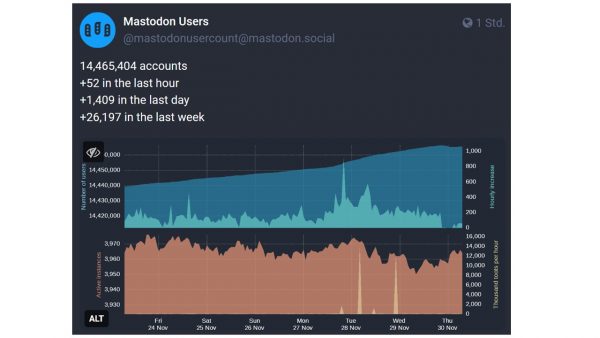
Twitter Retreat
There are many migrating species in nature. Birds form a large part of the them. This follows a kind of annual or seasonal pattern. Depending on the migration experience and dangers some, sometimes many don’t come back. This seems to describe the migration experience of the tweeting bird called twitter. Changing the name from Twitter to X, whereby X for maths-oriented people stands for a variable name that can be filled with any value. For the cinema industry X stands for x-rated adult only content and has rather obnoxious content. This might hold for web content as well.
Online through “https://netzpolitik.org/2023/x-odus-immer-mehr-medien-machen-schluss-mit-twitter/ the disastrous consequences of harsh human resource policies and lack of political sensitivity can be followed. Multiplying biased opinions of right-wing extremists, the platform has been highjacked and many tweeting birds leave or have left already.
Leaving is not easy though. People and enterprises have invested substantial amounts of money into tweeting and software developers have created specialised features to make it easy to spread press releases or info via these add-on services. I myself benefitted from services to show my tweets on my webpage or to easily publish info or links to the webpage. As of now, with migrating away most of these investments will be lost. It was smooth and easy, but now we start this all over again with other comparable platforms and assistance from developers. Mastodon and Bluesky are on the rise as alternative platforms and most likely we shall use both for some time just like Netzpolitik and many others. If already 1/3 of users intend to leave Twitter/X the impact of big advertisers leaving the platform has even more impact. After all they pay for reaching potentially millions of platform users, but now they reach only a steeply biased subset of previous users. Deleting the Twitter/X app saves you from other potential unwanted monitoring or tracking. Only the addresses on Mastodon for example are a bit longer like @mastodon.social@klausschoemann. Decentral monitoring of illicit undesirable content has advantages and disadvantages. We shall have to monitor this a bit ourselves and contribute more actively to save such platforms from bad weather or seasonal migration. 
Beer Temple
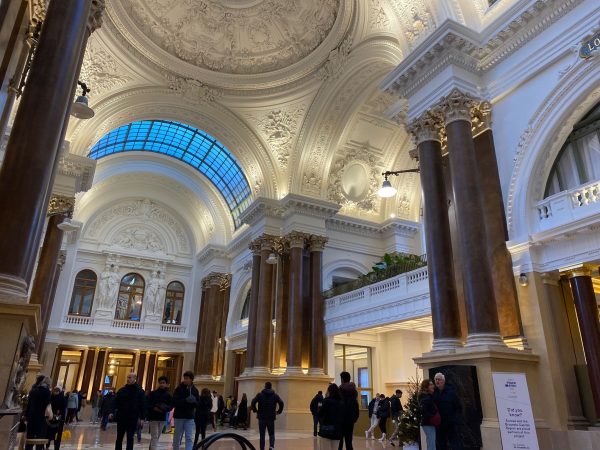
Brussels has recently opened a new attraction. A splendid temple-like building devoted to the unnamed God of beer-drinking. The renovation over several years of the centrally located “Bourse” has created a new popular attraction right in the centre of Brussels. From the outside the building reflects the classical temple architecture from Greek and Roman times. Although the building was for a long time the trading place of shares, obligation and currencies and thereby very closely linked to a country’s wealth and economic fate, it has found a new destination to represent the diverse and spirited culture of the people or peoples of Belgium through the lens of a beer glass. Of course, this is surrealism à la Magritte et al. (Museum and galleries within walking distance). The shifting fate after a financial crash to transform the “Stock Exchange” into a temple of surrealistic experiences is great idea and its realisation as popular move to transform the stock market into a temple to worship beer, beer drinking and conviviality a great idea. Without joking, the restaurant in the temple proposes good food that can be matched with a selection of 30+ kinds of Belgian beer (including 4 non-alcohol-containing beers).
Framing beer drinking culture differently from the image of beer and football hooligans is hard to achieve. Public images of beer drinking on television are all around us, anew every weekend. The Brussels stock exchange is a great place to reflect on shareholder versus stakeholder issues. Brussels has opted for a popular conversion of the building. Paris has gone for the upmarket more exclusive transformation of the previous stock exchange (Bourse commerciale) into a gallery of modern art from the private Pinault foundation.
The museum of beer in the upper ranks of the building in Brussels offers even tastings we were told. Well, beer drinking and stock trading (gambling) have both addictive potentials. Ruining yourself, the one or the other way, is equally disastrous not only for yourself but potentially others.
Know your limits is easier said than done. It is a behavioural phenomenon for individuals as well as regions or whole countries. With the apparent “Limits to Growth” for our planet or our ways to trade, even praying in the renewed beer temple is unlikely to solve the bitter-sweet issue. Perhaps discussions in the new Brussels temple will spur new coalitions and stimulate new ideas to overcome the locked-in political trading positions. Maybe the European Parliament should have a futuristic surreal session in the historic site. The only problem is, they would no longer want to return to their usual forum for debates. 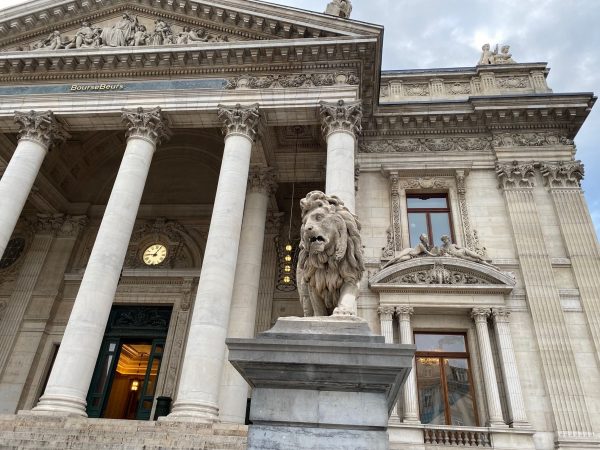
Concorde
„These were the days my friends, we thought they’d never end …“ And yet the Concorde served for decades as a massively polluting aircraft for those paying or had their flights paid be their enterprises to cross the Atlantic ocean. Yes it was the fastest way, but we learned that it didn’t really make sense. After a technical default with an explosion the entire craze got stopped. Now next to Orly airport the remainders of this undoubted design highlight is exposed. It serves more as a warning that not all technical innovations are viable as commercial or ecological innovations. The delta-design as aircraft is still the most common design children play around with as paper models. Wing designs have made progress to adapt the bent end on each wing. So should do our paper models of them. The Concorde is also a perfect example to learn from concerning the link between “Society and Technology”. Similar mistakes seem to occur still today. “When will we ever learn, when will we ever learn…”.

Civil Protection
A lot of important activities do not receive the attention they deserve. During a humanitarian crisis, Europe frequently acts with varying involvement of Member States. This holds true in droughts, inundations, earth quakes, civil wars or imperialist state conflicts. The extent and time of commitment are an additional and differentiating element. Coordination of such activities is important for those wanting to help and those asking or receiving assistance. Efforts, equipment and political support vary enormously as well. There is a need to approach this topic more strategically. The Union Civil Protection Knowledge Network (UCPKN) goes a long way to attempt to find a common language, data infrastructure and responses in this respect. It surely is important to go beyond the piecemeal approach of the past to be able to address emergencies in multiple kinds more effectively. It is, however, also in some instances a highly controversial issue as well. For each term in this old (Tschernobyl nuclear disaster) and still novel field (Fukushima) for joint activities, we have to come up with compromises of definitions.
For example, what constitutes an emergency? Does the climate crisis and disasters related to it already constitute an emergency now? Some say yes, we have to act now to avoid bigger floods and wild fires as of next year. Others, do not want to tackle the root causes, but rather focus on curing actual devastating effects of disasters.
We are back to a well-known topic of preventive rather than curative approaches. In the meantime, we are convinced that we have to commit more resources to both approaches: immediate relief and structural change to prevent an otherwise never-ending sequence of disasters in varying places.
Most important probably is the keeping of address books and fast digital networking facilities to react and communicate with the competent institutions and civil organisations. Beyond the involvement and linking of experts in the field, the larger public and volunteers make up for additional invaluable resources to act.
It is crucial to make it possible for decentral links between cities like in city partnerships to be involved. Building on existing human to human links motivates and mobilises huge additional resources. Of course, continuous training is a very important element in all those efforts. We should embrace it in the private and public sector, at school and in retirement even. (Image: Extrait de Peter Paul Rubens La chute des géants MRBAB, Brussels)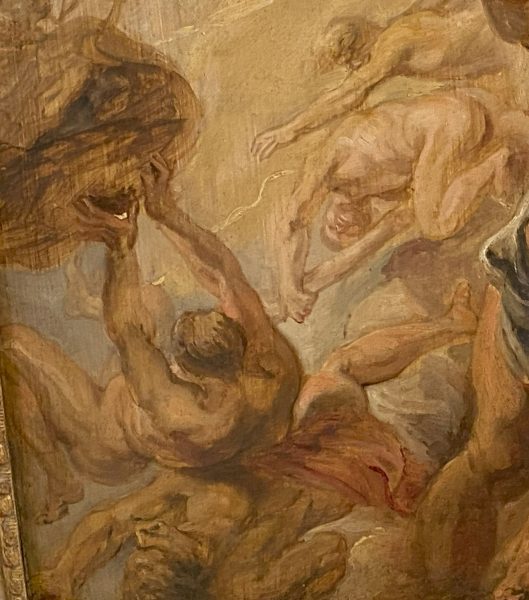
Meta-language
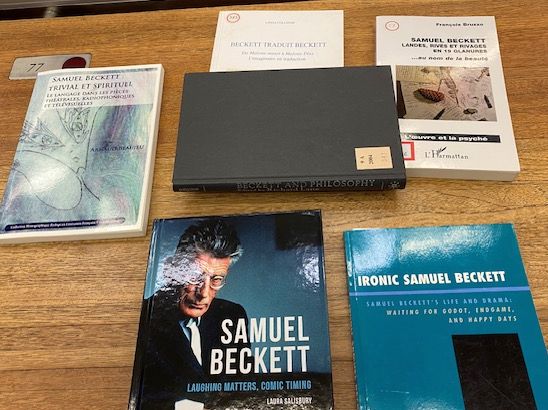
Some writers accomplish the formidable task to draft a text that encompasses more than one language. Samuel Beckett surely is one of them. Arnaud Beaujeu (2011) exposes the meta-language that Beckett creates through his reductionism and minimalist style. It is first a deconstruction of language or languages expressed in French and/or English at times. There is an underlying discourse dealing with the link and sometimes opposition, but always a relationship between at least these 2 languages. Beaujeu reveals 2 other languages: « the trivial and the spiritual ». The reductionism of Beckett leads to a conscious expression of the obvious, the trivial in conversations. This, however, he turns in the theatre piece “cette fois” (original “That Time”) into a ritual, spiritual version of 3 persons A, B, C in a prayer like liturgy. In taking out the sentence structure and obligations of grammar more generally the text becomes a rhythmic reading of words. Today we might say a Rap-version of a text.
The meta-language is the spiritual experience and another kind of access and questioning of memory, eventually even reconstructing a collective memory. Maybe the meta-language is the attempt to collectivise and internalize the dialogue that has turned into a trilogue.
It is out of the memory of persons or historical evolutions that Beckett builds his meta-language. Adorno (1974) put this in a relationship to Shakespeare’s dramatic work and the experience of the horrors of Nazi-Germany. Sarcastically put, the question to Adorno was not ” to be or not to be”, but “to die or to die”. Beckett travelled in Germany extensively in the year 1936 and faught in the 2nd World War with the French resistance.
„Paroles, musique, mémoire“ (Beaujeu, 2011) span a triangle which allows for a profound, albeit mostly empty space. Beckett offers a safety net to bridge the gap by way of reconstructing a language reduced to basics as well as meditative silence. The script lies in the meta-language and poetry is the more common access to this meta or essential level of our existence. Listening to the meta-language is like listening to polyphonic music. Some find it very disruptive, others a spiritual experience. Meta-language is all around us, like it or not. (Image: Französische Friedrichstadtkirche Berlin, Exhibition Princesses, 2023)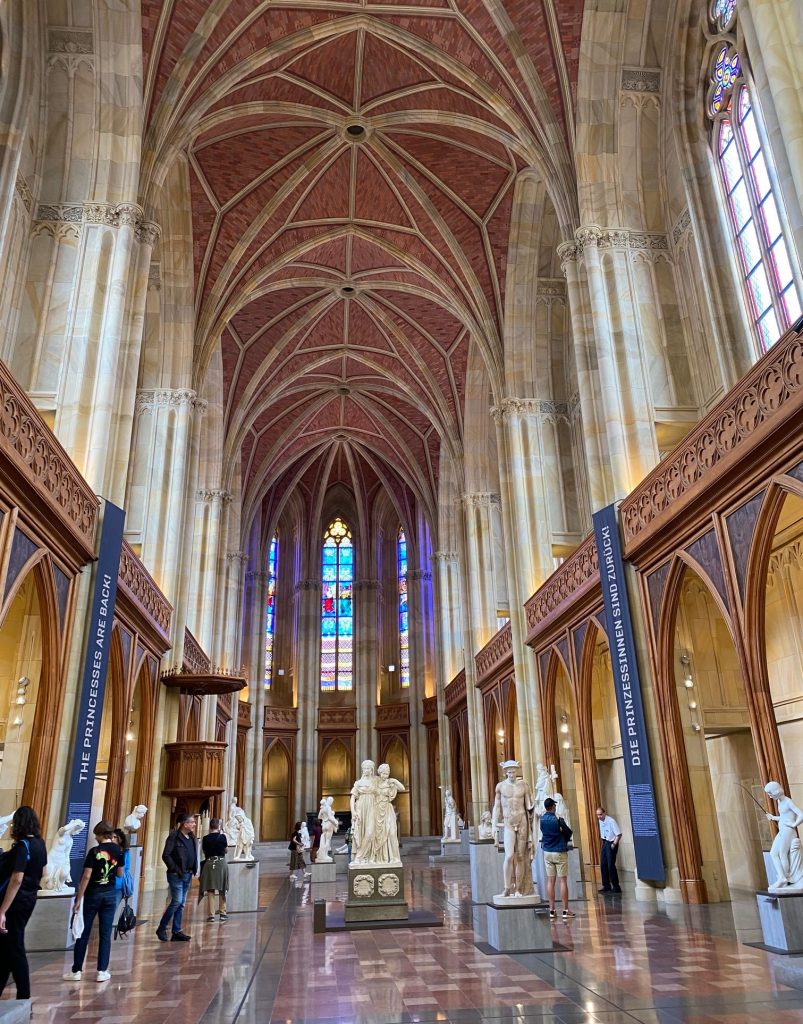
Ukraine Art
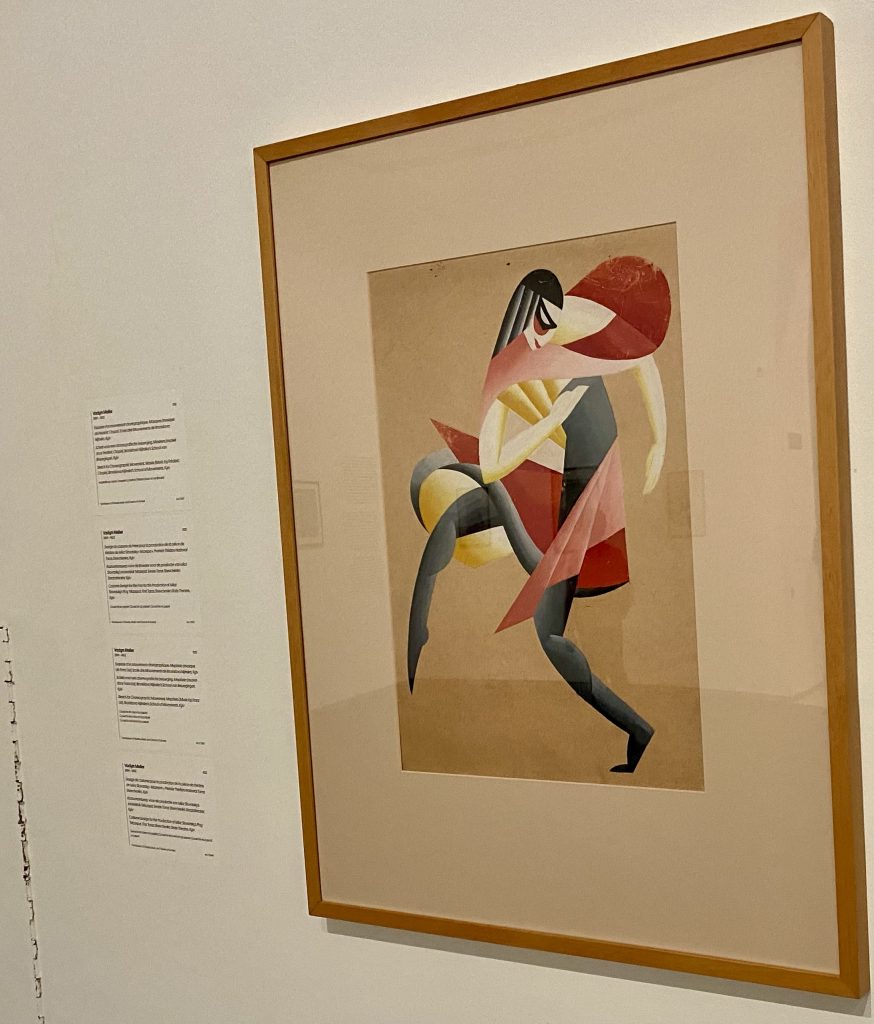
The touring exhibition of art works from Ukraine 1900-1930s is on show in Brussels at the Royal Museums of fine art Brussels in November December 2023. Before Ukraine became swallowed up in the Sowjetunion there was a very active independent artist world that had close links to all capitals in Western Europe. All art disciplines were covered. The paintings of Vadym Meller from 1919 (Aquarell on carton) show designs for a dance performance to the music of Chopin. The modern designs and vivid colors reflect the conscious reference to art movements across Europe. The inspiration from dance to painting is a recurrent theme in impressionistic paintings, abstract paintings and into our own time period. Ukrainian art from early on in the 20th century had a broad scope beyond the narrow focus on art controlled by the soviets. Well worth enlarging our vision to take into account these creative masterpieces from Eastern Europe as independent voices.
Georgia
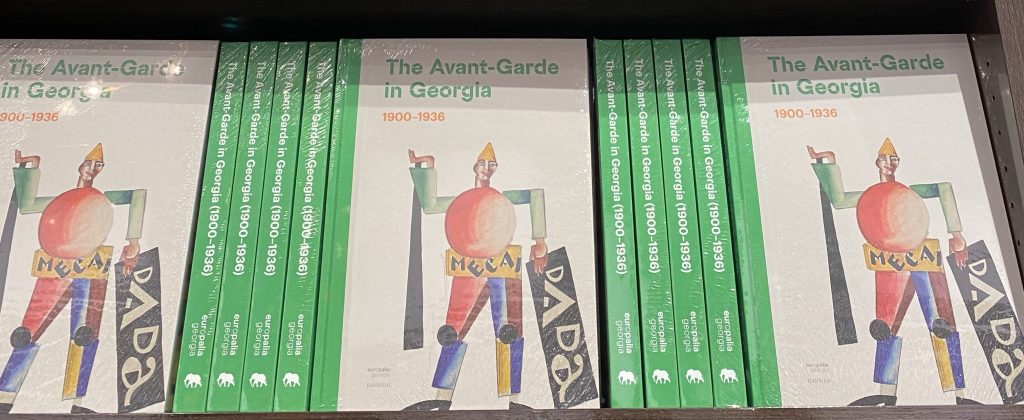
The Republic of Georgia is honored with a wide ranging program in Brussels in the series of countries presented as part of the”Europalia” events and exhibitions. The exhibition at Bozar in the center of Brussels has a focus on the years between 1900-1936. It is astonishing to look at the creative examples of adaptations from western modern art with cubism and expressionist resemblance. Many artists had travelled to western parts of Europe or trained at well-known art schools there. Own adaptations to paintings, theatre and cinema yielded a unique style of Georgian modernism before Stalinism put an end to independent artists and their creative work.
During the short spells of political independence Georgia managed to re-establish each time a remarkable will to its own culture. Unity with artistic pluralism is a core value of the European unity and union as well. We are many and happy to have a chance with Georgian people to celebrate their artistic past and future.
Beckett by Beckett
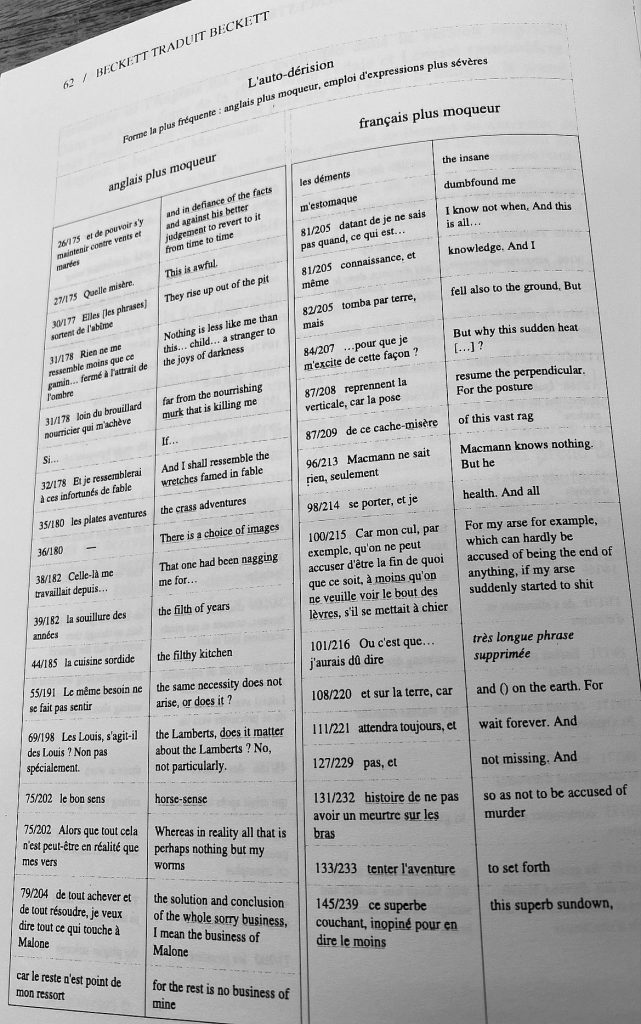
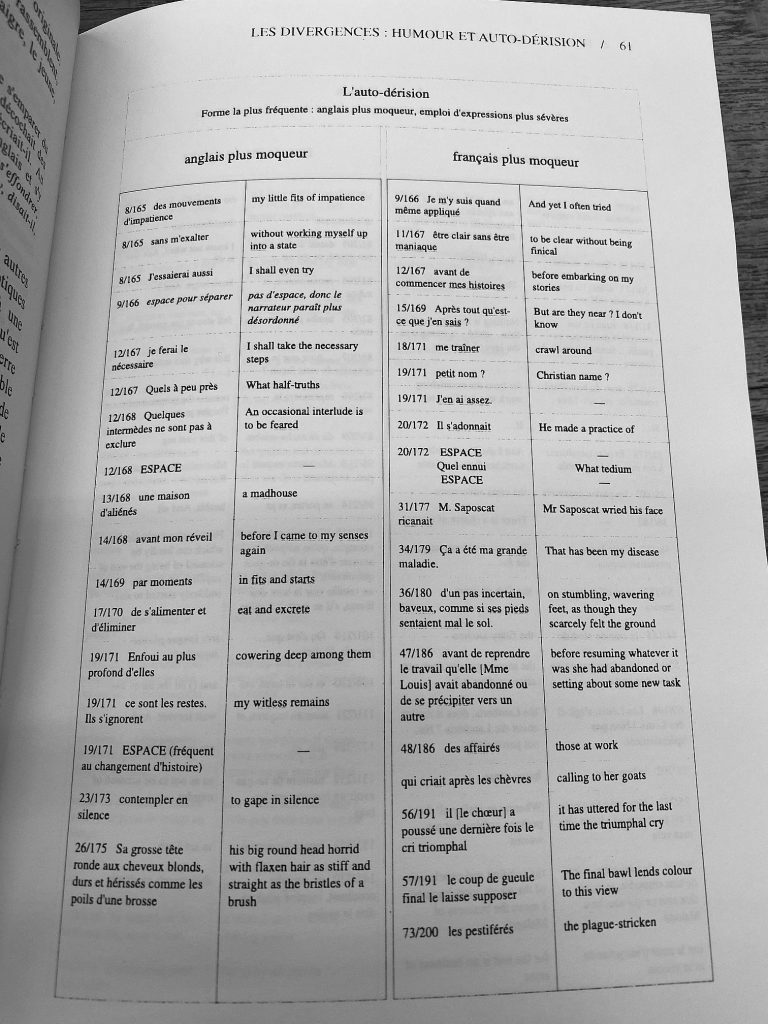
There is an interesting discourse in literature about how to define irony. This really begins with Plato commenting on Sokrates who makes use of the term “eirôneia”. In the history of the idea of irony comes next the philosopher Kierkegaard with his not-ironic treatise “The Concept of Irony. With Constant Reference to Socrates”. Reading philosophy can be really entertaining. It is, therefore, no surprise to find a publication entitled “Ironic Samuel Beckett” (Pol Popovic Karic, 2009). Following Karic there are 3 defining elements of irony: (1) “The message should be intentionally created, …(2) The meaning of an ironic message needs to be “covert”,… (3) During the analysis of a stable irony, the reader can assume that the first interpretation of the ironic message is correct.” (Pol Popovic Karic, 2009 p.49).
Additionally, to understand irony it might be necessary to know more about the context of the statement. Sometimes the ironic statement can only be interpreted as such if you have additional knowledge about the biography of the author (p.47). To understand Beckett better it is advisable to read about his life course in the many biographies available nowadays.
Beckett by Beckett, meaning the translation of Beckett by Beckett himself yields many fruitful insights into his kind of irony and constant reflection and laughing about himself as his very own form of irony. This becomes most evident in the many helpful tables Linda Collinge (2000) presents in her book on “Beckett traduit Beckett”. Translating irony is a tricky endeavour. Many of the translations do not seem to be straightforward at all and can only be understood from the perspective of the whole translation of a piece and the underlying “Haltung”, ironic attitude of the author to his own work. Beckett by Beckett remains a master piece for translaters beyond those from French to English. (Images: Linda Collinge, 2000, p.61-2).
Beckett and philosophy
Beckett and philosophy is the title of challenging read of usually unconnected literatures. Richard Lane embarks on the challenge “theorising Beckett and Philosophy” in Part 1 of the book. This is followed by 2 other parts on “Beckett and French thought” and “Beckett and German thought”. The whole book constitutes an attempt to identify the links between seemingly unrelated work. Sometimes spurred by tiny citations, the importance of influences becomes apparent.
Beckett like Rousseau favours speech over writing. Speech giving access to nature. This, Beckett has taken from French thought traditions. Redefining philosophy after the 2nd world war links Beckett to the thoughts of Adorno and Habermas (early writings). Posing Nietzsche’s thoughts as a post-modern project of endless questioning, Beckett himself enters into a kind of Socratic dialogue with Nietzsche. Spoken words become writing, the written word resembles an unspeakable void. The borders between void and silence, between spoken and written, become blurred. The essence is the world in-between.
It appears like irony and yet it is our very existence. We probably need somebody to translate Beckett for us in order to better understand his philosophical stance. “Beckett translates Beckett” is such a book title. It invites us to study Beckett’s own efforts to translate himself, at least from one language to the other.