Sax and the Sax

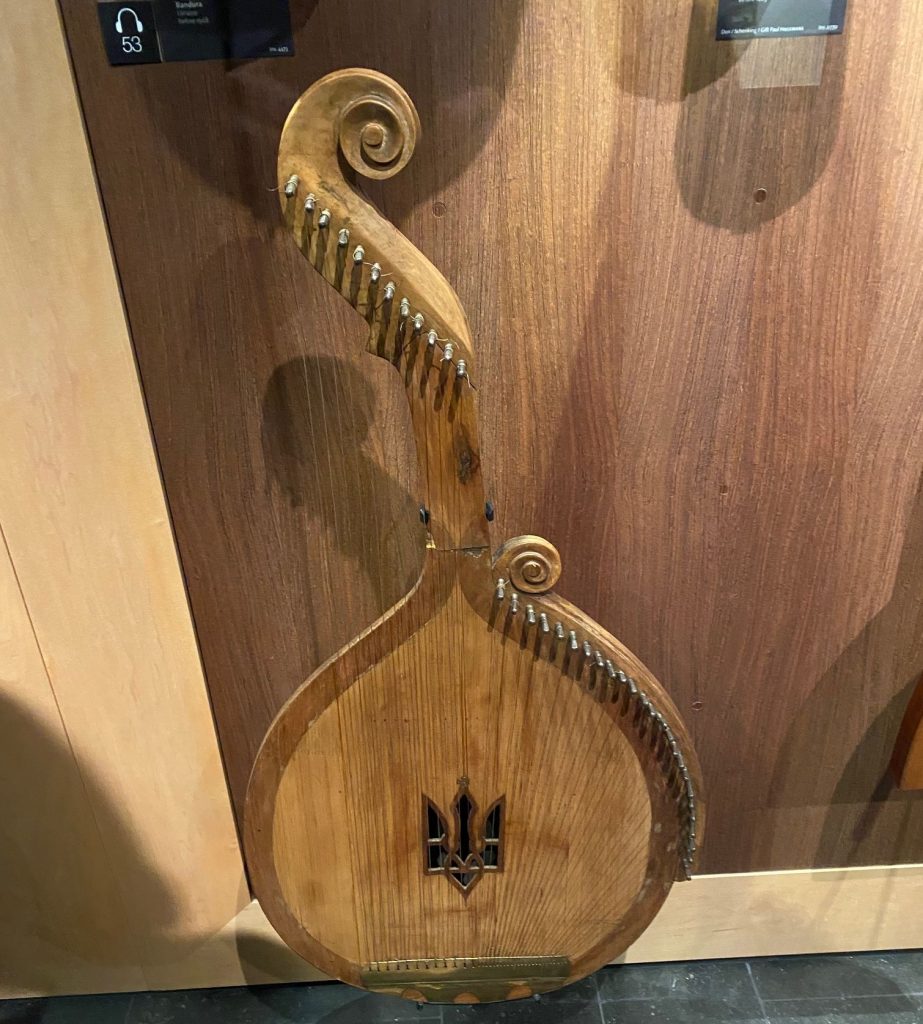
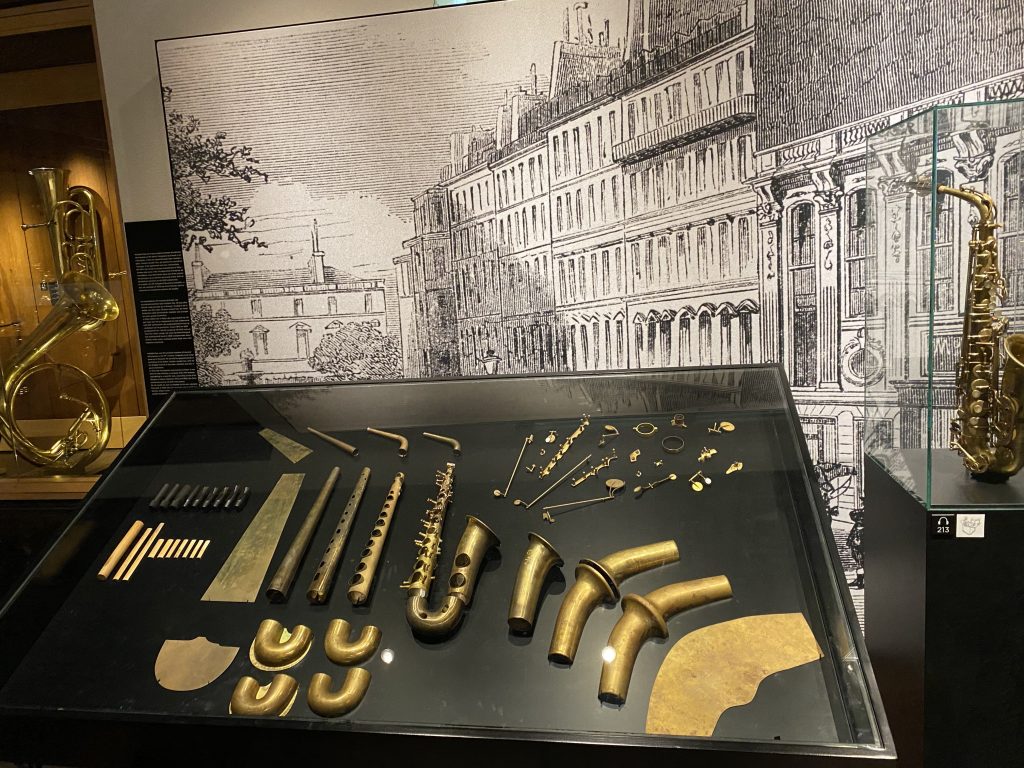
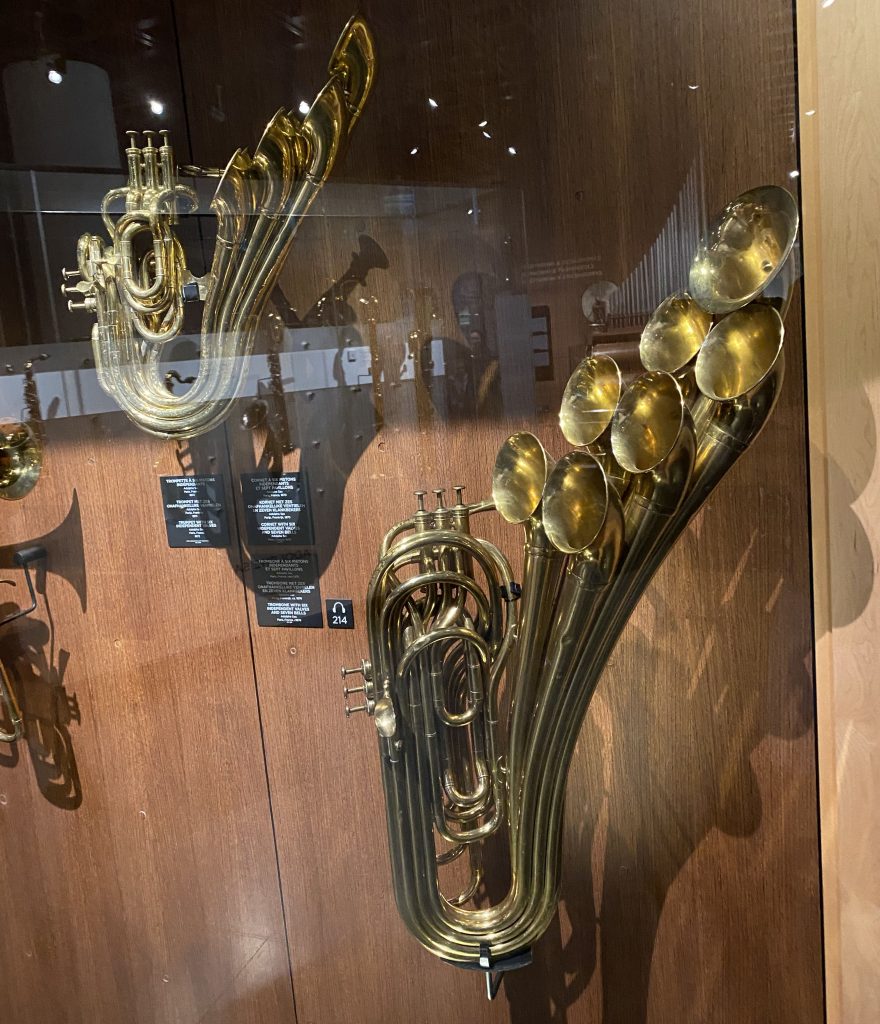
Adolphe Sax is celebrated for his celebrated design of musical instruments in what it known and played as the Sax family of musical instruments. Most museums around the world have an example of an early Sax instrument in their collections. Beyond the many fascinating musical delights and emotions produced with the instrument, there is a century-old debate around the issue of the patent attributed to the various designs claimed by Adolphe Sax for the Saxophone among others. The patent attribution was hugely different across Europe in the 19th century (largely inexistant in other parts of the world at the time). The reason for this were differing laws guiding intellectual property rights. “In France no preliminary examination was necessary before a patent could be granted; in Germany examination was obligatory; and … British patent laws, which allowed makers to register designs or apply for patents for developments that had been copied from abroad (imported inventions), as long as they had not been published in Britain.” (Mitroulia and Myers, 2008 p.93). There is a well-documented controversy about the “Berlin valves” and the contested patent in France of it. Design of instruments, particularly popular ones, guarantee sizable earnings for producers of instruments. After 20 years of the 1846 patent in France 1866 the patent expired and the copies could become even cheaper. Some ugly disputes in the middle of Europe were fought around this issue. Remember that military music was still accompanying troops for better or worse. “Visionary or plagiarist? The authors are unable to give a simple verdict. … The fact that Sax claimed originality for some borrowed ideas seems in retrospect less important than the true vision shown.” (Mitroulia and Myers, 2008 p.135). We might not agree with this statement. The visit to the MIM in Brussels gives a good overview of the evolution of musical instruments over thousands of years and across continents, which pushes us to rethink the link of society and technology through the lens of music and technology. Welcome to techno music beyond patent laws. Pushing the boundaries of copyrights on sound sequences to new limits.
(Sources: MIM Brussels, Rice A. R. (2009). Making and improving the nineteenth-century saxophone. Journal of the American Musical Instrument Society. 35:81-122. Mitroulia, E., A. Myers. (2008). Adolphe Sax: Visionary or plagiarist? Historic Brass Society journal, 20, 93-141).
Flotow Singelée

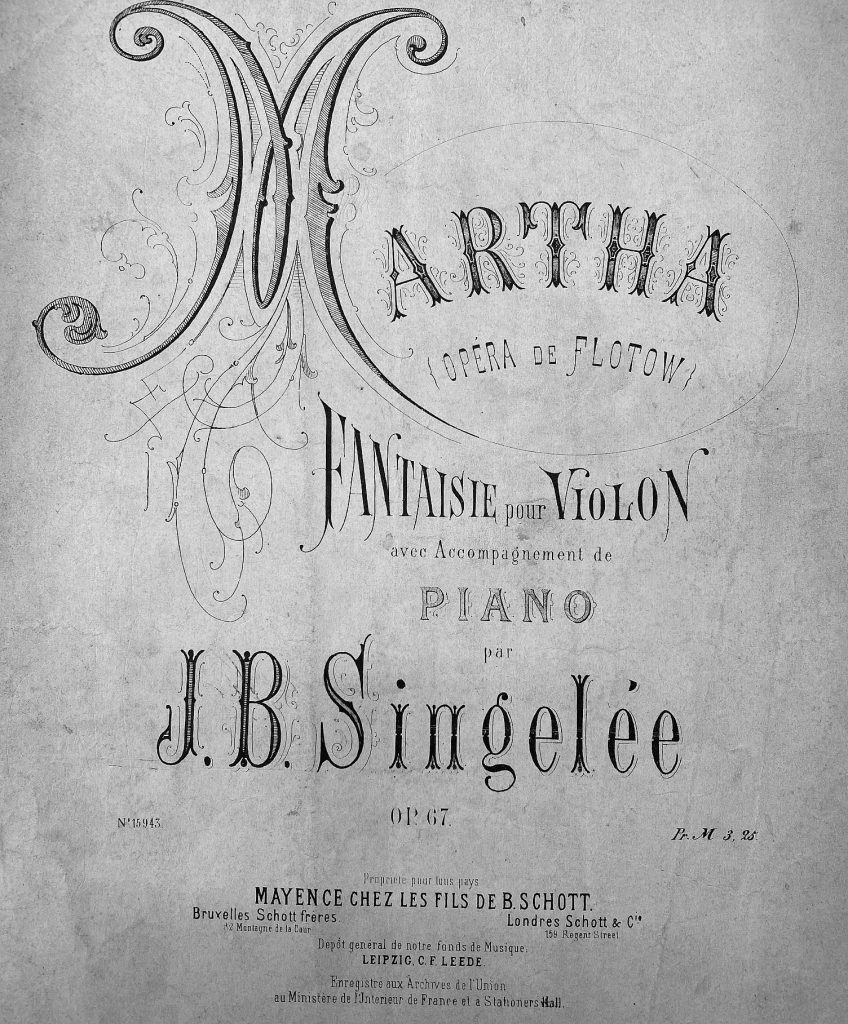
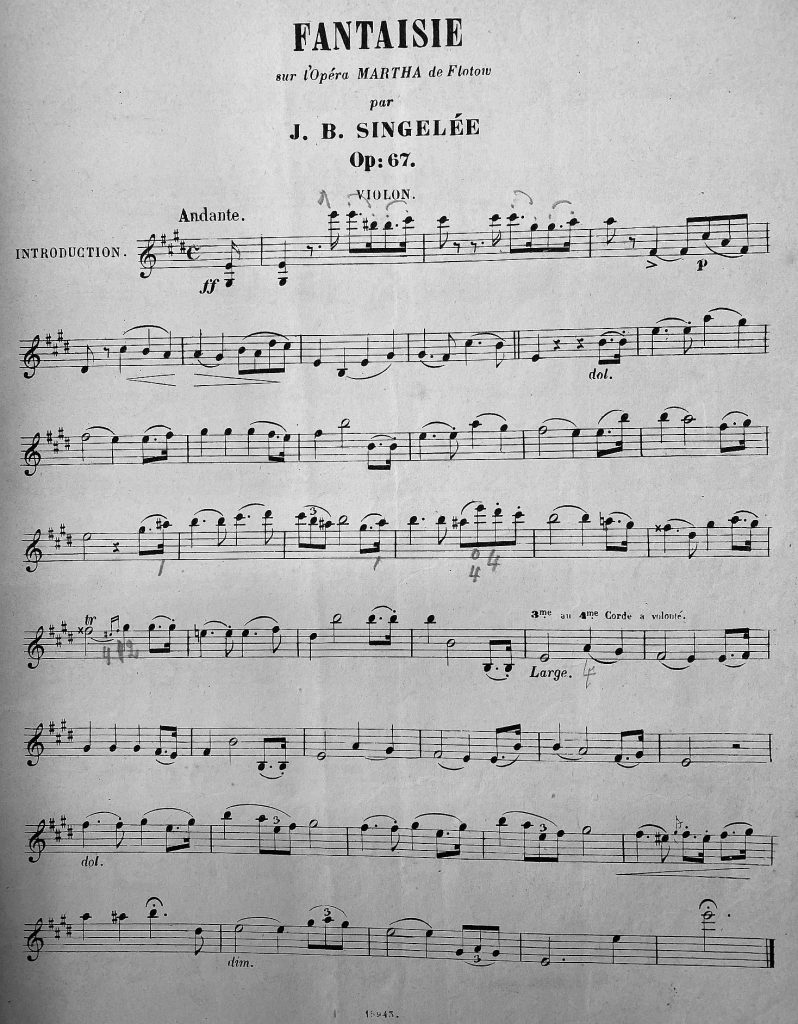
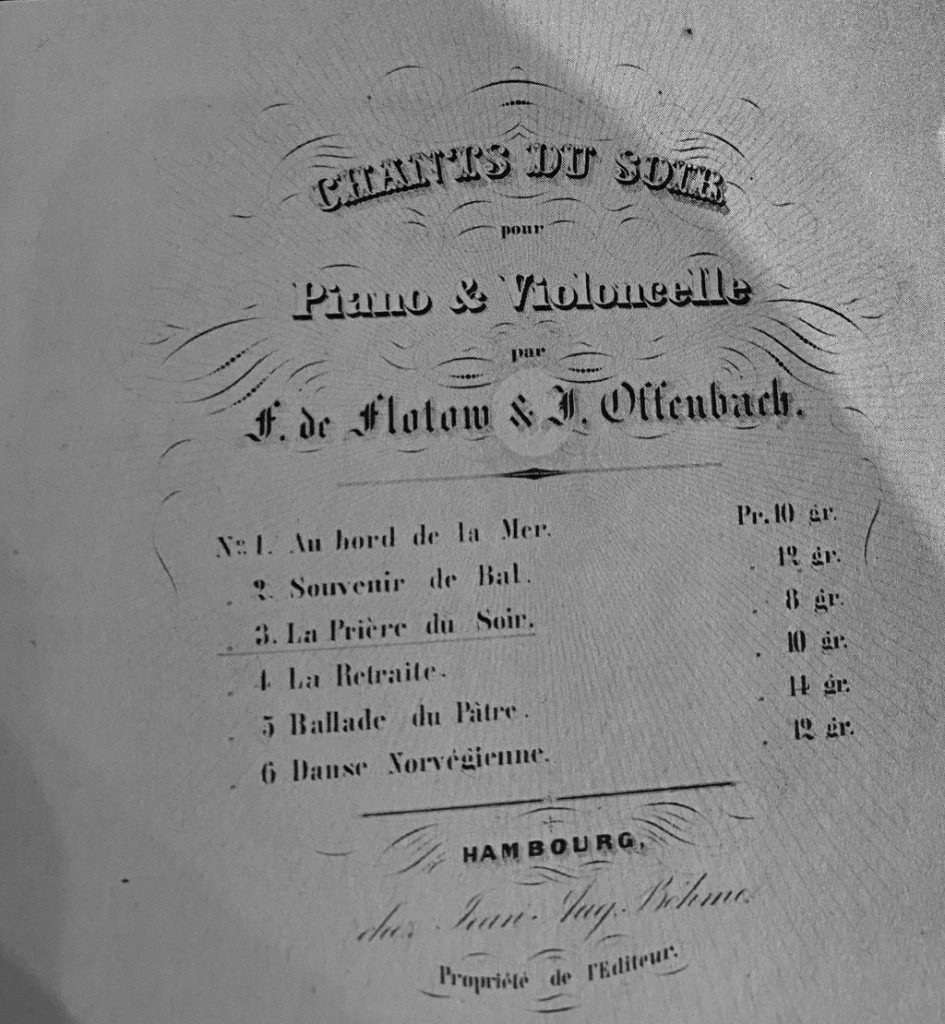
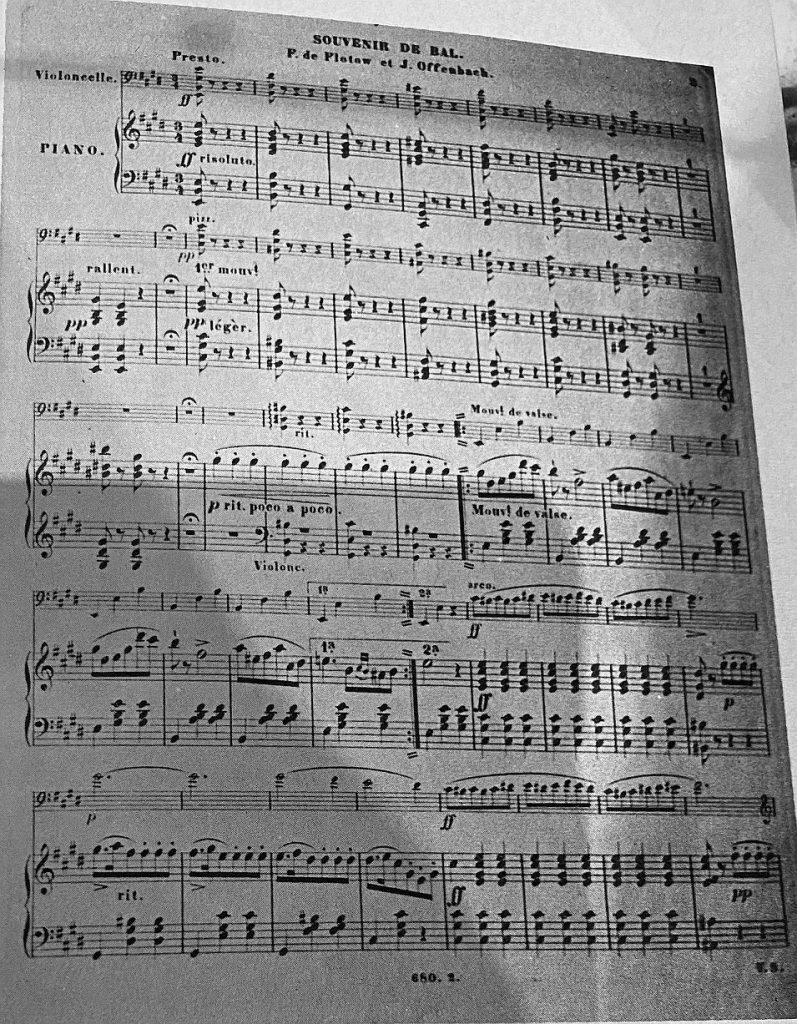
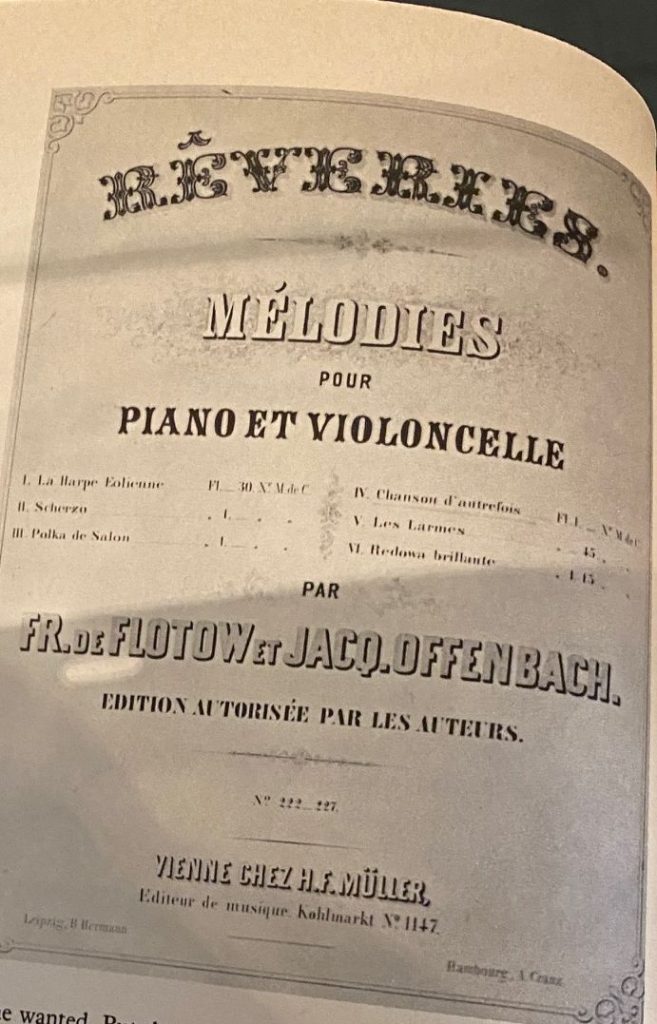
Frédéric de Flotow hatte sicherlich in Jean-Baptiste Singelée einen Fan. 2 seiner frühen Opern, Stradella und Martha, wurden mit Fantasien für Violine und Klavier von Singelée neu arrangiert. Der Geiger, Dirigent und Komponist Jean-Baptiste Singelée, geboren 1812 in Brüssel (damals noch zugehörig zu Frankreich) ist in Ostende 1875 verstorben. Eine spätere Würdigung im Kursaal in Ostende mit einem Konzert verdeutlicht die Wertschätzung über sein Wirken als Konzertmeister und Dirigent hinaus u.a. in Brüssel. Sein kompositorisches Werk ist beachtlich, auch wenn seine einzige Oper vielleicht nicht so viel Nachhaltigkeit erreicht hat, trotz des einprägsamen Titels: „Les dentelles de Bruxelles“. Uns interessieren hier seine Fantasien basierend auf Themen von Flotow, die als Drucke erhalten geblieben sind und in der „public domain“ einsehbar sind. Interessant ist auch die gemeinsame Zeit am „Conservatoire Royale de Musique à Bruxelles“ mit Alphonse Sax, der später die Patente auf die Instrumentenfamilie der Saxophone erlangte. Klassische Musik populär machen, war schon ein frühes Bestreben vieler Komponierenden und Musikschaffenden. Ganz nach dem Motto: „Ich mag keine Klassik, aber das gefällt mir“ werden so Personen erreicht, die sich ansonsten für ganz andere Musik und Rhythmen interessieren. Da hat der Fritz oder Frédéric de Flotow vielleicht noch mehr Chancen in der Unterhaltungsmusik. Mit Jacques Offenbach verband ihn eine Freundschaft, die “Co-creation” hervorgebracht hat. Beide verdienten sich wohl etwas Geld für den Lebensunterhalt in Paris in jungen Jahren.

Thucydides on War

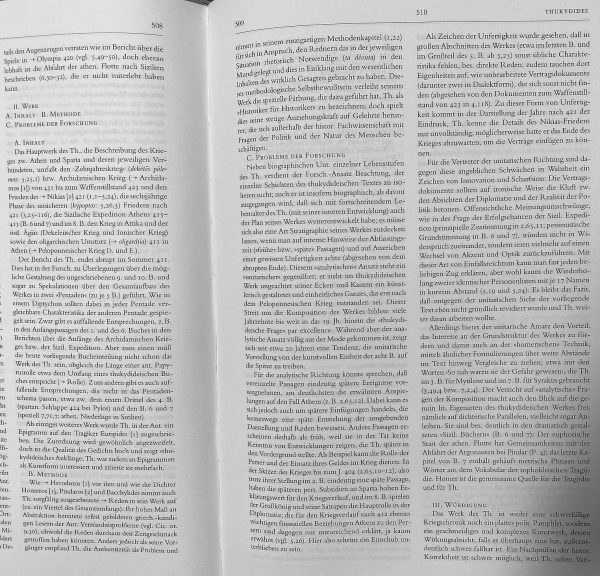
Thucydides (born around -460) has received a lot of fame for his “thick description” of the Peloponnesian War. He deserves continued praise even for inspiring statisticians. The account of events without emotions, but with lots of details, is often perceived as the beginning of historiography and history as science as well as empirical political science. The entry of “Thucydides” in the Encyclopedia of Social Measurement (2005, p.805) by P.A. Furia and A. Kohen cites the derivation of a causal or explanatory effect based on his historical account as a foundation of scientific approaches based on empirical data. “The growth of the power of Athens, and the alarm which this inspired in Lacedaemon (i.e. Sparta), made war inevitable” (Thucydides, I 23). The empirical assessment of the growth of power is subject to controversial accounts. Power may derive from population, wealth, industry, weapons, munition or general military capabilities or skills. The assessment would also need to consider relative rather than absolute strength of just a one-sided approach. Here we are in the middle of the Russian war on Ukraine from 24.2.2022 onwards. Statisticians discuss, whether it is just a single variable that has the overall explanatory power for the beginning of the war and what other intervening variables might be important to take into account to avoid a selection bias. Beyond this materialist explanation we might stress the importance of the sociological concept of “collective fear” (links to approximation through trust, xenophobia) of the strength of Athens as the underlying causation of the beginning of war. The ideation of perceived strength gives rise to the construction of many intervening processes (Coleman’s macro-micro-macro linkages), which make a simple causal attribution just to material strength an illusion or risky shortcut explanation. The Thucydidean Method (p.806) exemplifies much of the dilemma and spice of social science analyses. Scholars of diplomacy challenge the empiricist perspective in arguing that the breakdown of diplomatic discourse several decades before was at the beginning of the causal chain. Here again we can make links to the preparation of war by Russia through strategic diplomacy as well as the risks taken through a break-up of diplomatic channels of communication. The perceived strength of the opponent in war might play a decisive role at the beginning and at the end of war. The charisma of leaders, democratic decision-making and political alliances with neighbouring states, Sicily at the time of the Peloponnesian War, were further intervening processes. This is perhaps not all too different from today, if we consider the role of Belarus in the aggression of Russia against the Ukraine. In fact, Thucydides seemed to be convinced that under similar circumstances human behaviour would reproduce itself. Therefore, thick description of historical facts might still inform political leaders today and tomorrow.
(Reallexikon für Antike und Christentum, XV pp. 752,
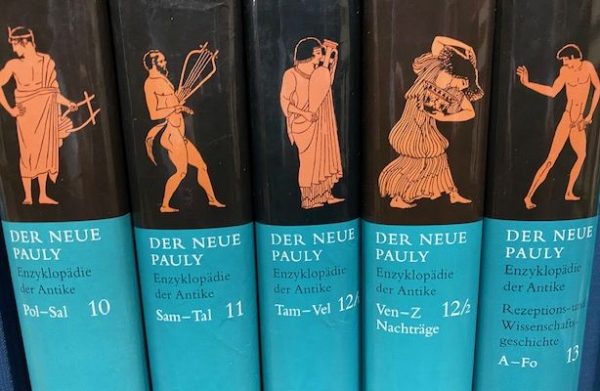
Der neue Pauly, Enzyklopädie der Antike 12, pp.505 image below).

Ukraine Resilience

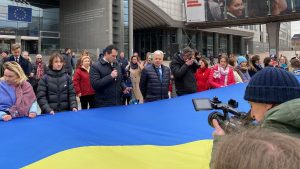
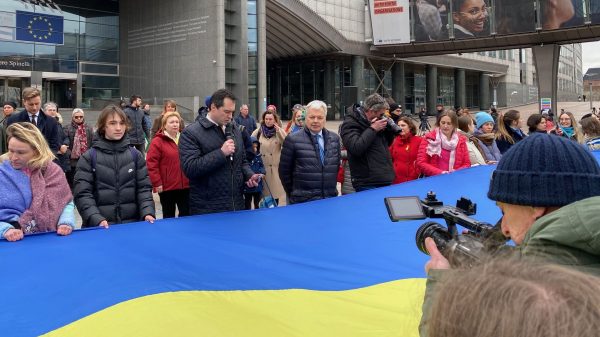
The opening of the exhibition on war crimes committed by Russian soldiers took place in front of the European Parliament today. The images frighten us as they reveal human atrocities. Destruction on a large scale with so many lifes lost will take a long time to overcome the grief. The images of the commemoration and the minute of silence show the solidarity of the whole of Europe with the Ukrainian people. The European Parliament has the patronage of the exhibition which is curated by Justyna Napiórkowskiej. Commissioner Reynders expressed the commitment of the EU to support the Ukraine 🇺🇦 in their capacity to fight back and the rebuilding of the country. Stand with Ukraine.

Dumky

In cultural performances it is always interesting to refer back to titles given or attributed for example to music pieces. Dumky is the title of Antonin Dvořák’s 4. Klavier-Trio opus 90. In the late 19th century Antonin Dvořák found inspiration in the notion of Dumky. Rather than just composing a “Trauergesang with few joyful intermezzi” he creates a new form for this Trio containing, quite unusual, 6 parts. Dvořák plays around with structure and sharp swings from “piano to forte” parts, “moll to dur” intonations reflecting sorrow and joy in frequent and refreshing short sequences. It feels sometimes like fireworks, but at times the sorrow of soldiers and their families becomes evident as well. However, the music proves resilient. Knowing that Dumky is a Ukrainian word and notion, the choice of one of the masterpieces of Antonin Dvořák  close to the 24.2.2023, the day of the anniversary of the Russian attack on Ukraine is a commemoration of the sorrow caused by war and ways to overcome it. The “Concerts de Midi” of the Musée des Instruments de Musique” allowed us to travel through Ukraine a bit and experience the longing for better times. Joy will eventually prevail there again just listen to Dvořák’s version of the Dumky. Superb and effectful presentation of the work by the “Trio Impression” made for a memorable lunch break in the city centre of Brussels. The (virtual) visit of the Museum should be one of the attractions of visitors to Brussels as well, not just for the Art Nouveau architecture, but for the inclusive “global music” collection.

Aphorismen L

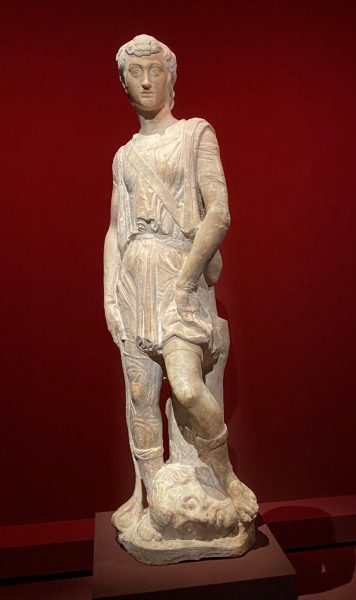
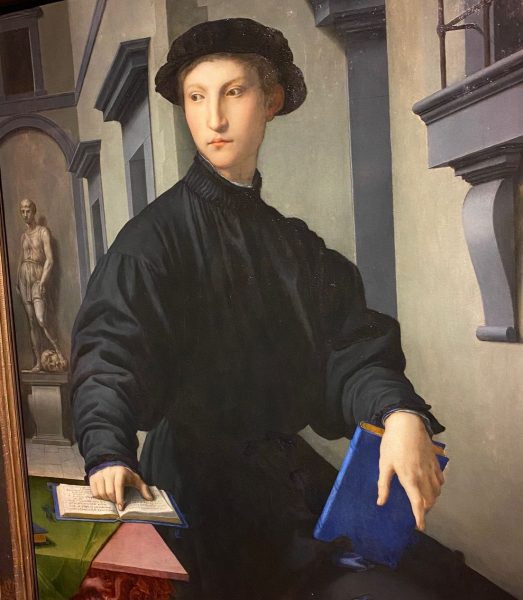
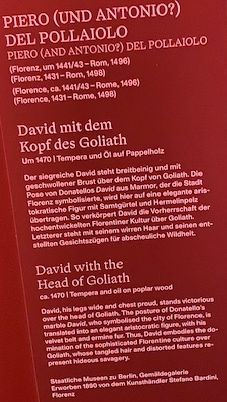
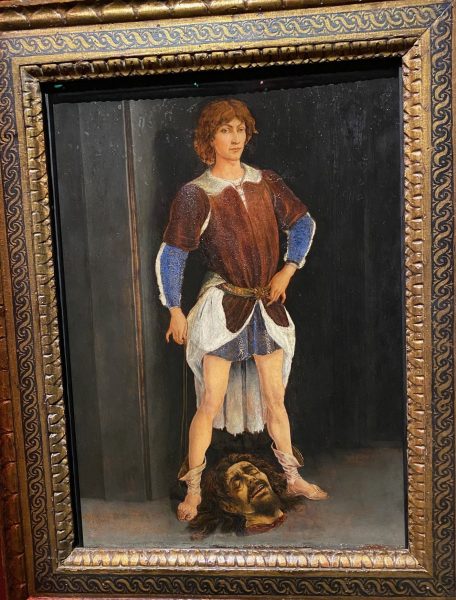
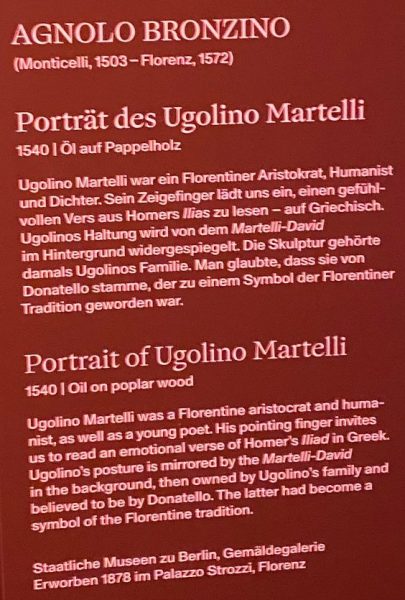
Lichtenberg hatte den späteren ausufernden Individualismus spekulativ in seinen Aphorismen vorweggenommen. Im ersten Band der Sudelbücher schrieb er bereits: „Je länger man Gesichter beobachtet, desto mehr wird man an den sogenannten nichtsbedeutenden Gesichtern Dinge wahrnehmen, die sie individuell machen.“ (1976, S.25). Unsere Fototechnik und soziale Medien haben eine wahre Revolution durch die Flut der allgegenwärtigen Fotos geschaffen. Was früher der Spiegel war, ist längst der schnelle morgendliche Blick in die Kamera des Handys geworden. Intelligente Spiegel wären also die durch Kamera aufgenommenen und direkt auf einen größeren Bildschirm übertragenen Bilder. Das Hautscannen auf Melanome oder checken von depressiven Phasen könnten eine frühzeitige Erkennung ermöglichen. Sollten wir das wollen? Aus derartigen Hinweisen lässt sich sozial invasiv Gefahren für den Einzelnen, die Einzelne ableiten, aber eben durch Bezug des Einzelfalls auf verallgemeinerungsfähige Vergleichsfotos. Gesichter länger anzusehen, das hat seine sozialen Grenzen. Mit Breughel durften wir das dann. Kindern wird früh erklärt Personen nicht anzustarren, dabei trainieren sie so, was das einzelne Gesicht so singulär macht, die Augen, Ohren, Mund, Zähne, Nase oder Schattierungen. Donatello, gepriesen als der Erfinder der Renaissance, spielte schon mit den Details der Gesichter. Mehr Mut zum längeren Hinsehen sollten wir aufbringen, auch beim Hinsehen auf einfache Charaktere, auf Armut statt Wegsehen. Oft ist David interessanter als Goliath. Die Rahmung des Bronzolino verstärkt geschickt eine zeitgenössische Analogie zum 24.2.2023.

Know how

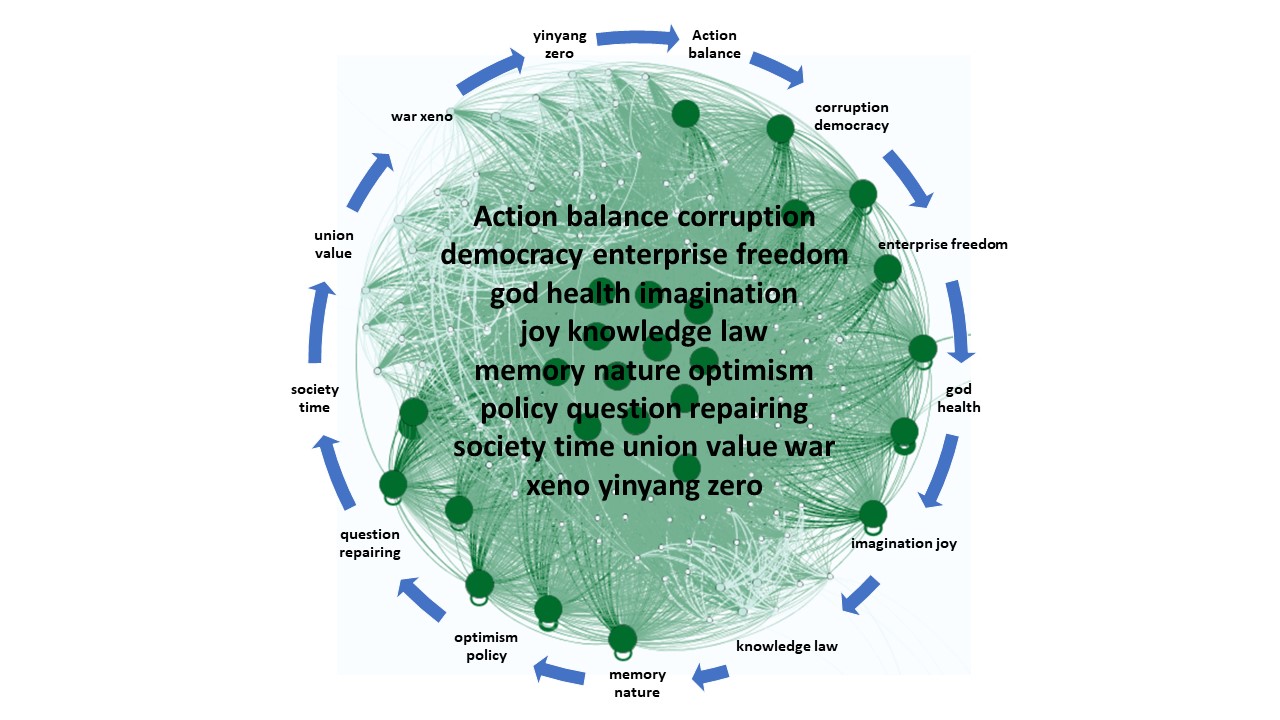
The construction of a knowledge graph is like an exercise in visual thinking or image thinking. A common method in design, visual thinking uses graphical tools to visualize ideas and develop the ideas on the basis of these visuals. So, let’s take our ABC of notions running from action … over nature … to zero. We place these notions in the core of the knowledge space and develop the satellite combined notions around the core. Visually this is easily reflected in the figure below. Content-wise a lot of thinking has to fill the combinations and check empirically this mind map of the knowledge space. Abundant complexity will let us search for digital tools to accomplish such tasks. On this webpage we find already a cloud of words that is empirically showing biggest the words with the most entries of the same key word. This shows us visually what this blog is mainly about. Europe and democracy appear fairly big. Additional analytical tools will clarify what are major or minor links to this pair of notions. “There’s something on my mind”, something which I might not even be aware of. Just an empirical question, should be easy to solve, eventually.

Bio-medical-sociology

In family histories we like to look on tree-like linking structures. Most frequently the choice is the descendant perspective (Top down). X, Y, Z have been the children of A and B and so on for a couple of generations. Bottom-up perspectives are equally feasible and modern patchwork families have more widespread representations of their families. Those representations were easy to do as families were lifelong bonds. Shorter family bonds, previously mainly caused by pre-mature deaths, are more common as people might have different partners and off-springs at different periods of their life course. Drawing family trees then looks more like a network structure of several families. History and literature is full of stories of how families aimed to keep their genealogy simple to the outside world. Modern days are no exception to this. Law had to adapt to these societal facts and changes thereof. Comparing decades over the last century there is, in my view, the remarkable trend to allow for more complexity in family histories, even after the 60s leading to many complete ruptures of family ties and links throughout the 70s and 80s.
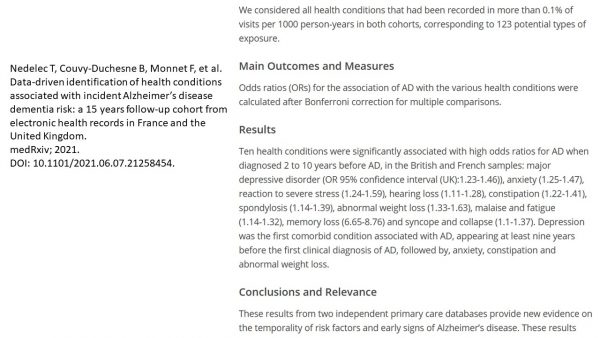
With reducing fertility rates in most, not only western regions of the world, medical demography is back on the agenda. Similar to family trees, new forms of identifying promising pharmaceutical products have moved to more data-driven disease insights. Historically the local medical doctor had an overview about the likelihood of diseases following family’s medical histories over generations. Data-driven analyses, supported by data analytics and/or AI support, can learn permanently about potential and actual risks. New links of diseases are discovered this way extending the family doctor’s view of risks to watch out for in patients. Additional remedy and marketing potentials of existing drugs are also detected this way, beyond anecdotal evidence. Research published in the “Journal of biomedical semantics” by Vlietstra et al. (2020) classifies disease trajectories to construct knowledge graphs of biomolecular interactions. What previously a medical doctor in region could infer from his medical records in a less systematic way, can now be analysed on big data sets of countries, continents or even the global scale. Data is knowledge, and some already know, that this data-driven knowledge is worth a lot of money. Linking previously and seemingly unrelated facts or events, just like becoming aware of more complex family trees through DNA-analyses is the medical part of history. How we deal with this as families or societies as a whole, is the trickier part. Structural changes of societies are marked by decades-like changes, but specific events like “Fukushima”, Tschernobyl or other man-made rather than natural disasters have created new forms of contamination and the spreading of it. In addition to family trees we need broader consideration for knowledge bases to demonstrate, for example, the spread of cancer in the networked society. Additionally this evidence should have a stronger recognition in courts as prove of contamination lines. Statistical reasoning is more likely to become court-relevant. Hence, train the legal profession beyond what “statistical discrimination” is like. Causal mechanisms are manifold. Some are more likely than others. Semantic knowledge graphs remind us of the presence of reverse causality many relationships. Scientists need an optimistic state of mind to abstract from many intervening processes on health, be they tiny micro- or bigger macro-level societal effects.

Flotow Potpourri

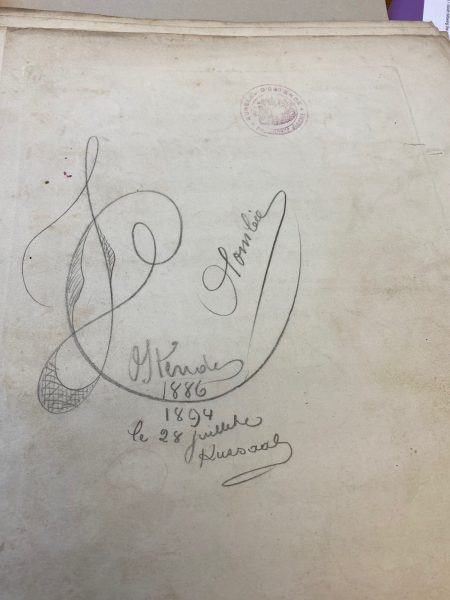
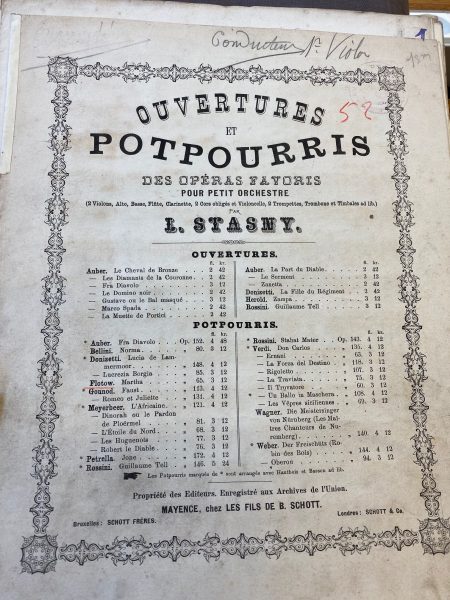
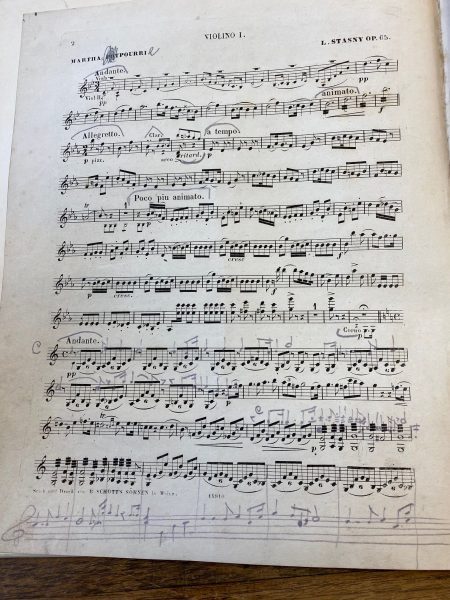
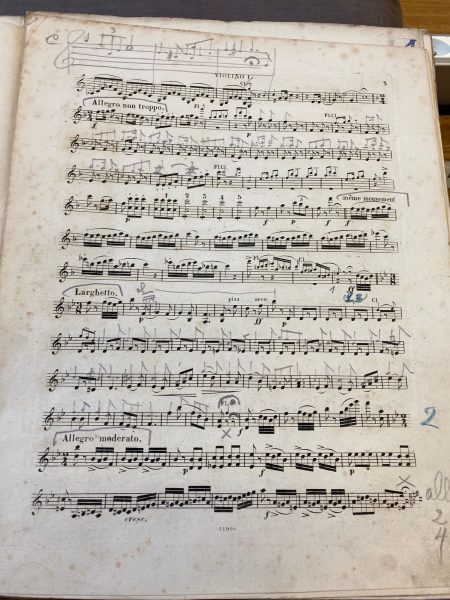
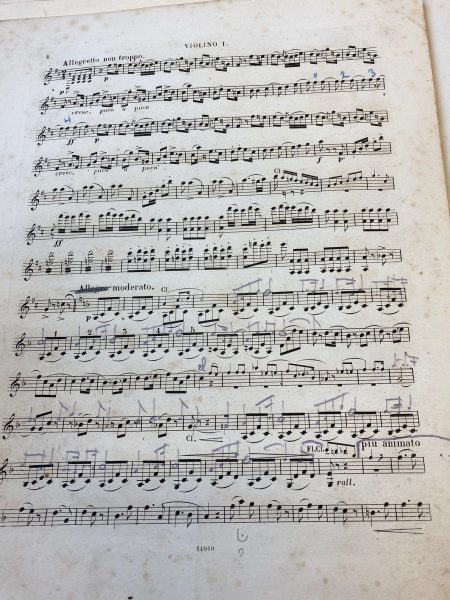
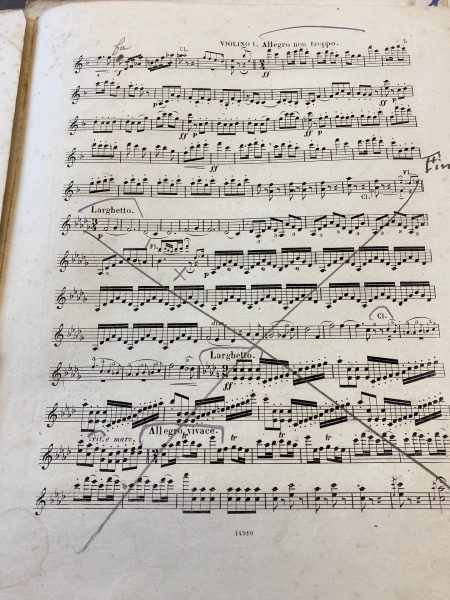
Über das musikalische Thema der Flotow Oper „Martha“ gibt es der heutigen Popmusik vergleichbar spätere verkürzte Versionen. Zu einiger Beliebtheit ist das Potpourri zu den Motiven von Martha gekommen. Kleineres Orchester und ein melodisches vereinfachtes Arrangement konnten für kurze Konzertabende verwandt werden. Der Komponist und Arrangeur Spasny Op. 65 hat Flotows Melodien aus „Martha“ publiziert (desgleichen von Wagner und Verdi). Die Kopie in der KBR Bruxelles ist ein kompletter Orchestersatz datiert von 1886 und 28.7.1894. Aufgeführt wurde das Potpourri im Kursaal von Ostende, wahrscheinlich für die Sommergäste in der Hafenstadt mit naheliegenden Erholungsgebieten und Küstenorten. Neben einigen schönen handschriftlichen Kopien für Violine (5 Seiten) oder Pauken (1 Seite, viele Pausentakte) ist die Partitur für die 1. Violino als „Conducteur“ (assisté?) ausgewiesen und sehr abgegriffen. Interessant sind die Anmerkungen und Einfügungen, wahrscheinlich zu wichtigen Parallelstimmen. Die komplette Streichung ab dem Larghetto am Ende der Partitur, anfänglich in Des-Dur, war vielleicht zu anspruchsvoll, für das zu erwartende Publikum. Ein F-Dur Abschlussakkord vorher klingt erholsamer, zumal im Urlaub nicht wahr. Der an einem Gag interessierte Musikfreund amüsiert sich an der Kritzelei am Anfang. Aus MARTHA; POTPOURRI ist Martha, Potpourrie geworden, was so viel heißt, wie „Martha verdorben“. Der Dirigent (Assistent? Es gibt noch ein sauberes Conducteurexemplar in der Mappe) hatte wohl einen schwierigen befristeten Sommerjob angenommen. Alternativ könnten wir das aber auch interpretieren als Kommentar zu der vereinfachten, aber verdorbenen Version der Flotowschen Martha als Originalstück. Genauer wollen wir das gar nicht wissen, oder?