Don’t laugh. This is a very serious scientific term to describe the way social media function in the 21st century. The scientific reference goes back to 2025 and article in “Science” by Kai Kupferschmidt. Twitter, now eXit, like most other social media platforms uses algorithms that select posts for you from the millions of posts that are likely to induce a reaction from you, which prolongs your time on the platform. Additionally, eXit Twitter applies an algorithm that prioritizes accounts with already a huge followership, which makes these accounts even bigger. The result is an increasing inequality in attention to info, facts, fake news, but also revenue for the platform owners through more advertisements. As hate speech and fake news are commonly perceived as shit, many social media are happy to spread more shitty things on their platforms as this generates more money for the platform as well. In short, enshittification happens sooner or later to most platforms and we all suffer from this. As user of these platforms, it is hard to escape from this process, as most platforms tend to “convert” to enshittification at some later point in their life cycle, unlike babies who manage to quit this phase after a few months. A move to Bluesky might be indicated, but there is no guarantee that the same process will just happen again. Mastodon is another small twitter-like platform that like Bluesky offers a more open approach to its governing algorithms and a more controlled access in the registration process.
To avoid enshittification, we have to be ready to move away from one platform to another one, just like changing bank accounts or club memberships. Make sure to take most of your friends with you and there are already tools for this online as well. Enjoy the safe online life again on another platform or consume more of the traditional media like newspapers, radio or tv with proven quality. (Image: extract from Jan Steen, 1625-1679, The Rhetoricians – “In liefde vrij”, MRBAB) 
Science and Fiction
We associate with science and fiction the extrapolation of scientific trends into some futuristic settings. The most striking examples of science fiction in novels or video use some scientific findings (dinosaurs, genetic engineering) and project this knowledge into another fictional setting. The usual personal relationships follow rather predictable plots of romance, deception, violence or war.
The novel “Wellness” (Hill 2024) is also a kind of science fiction as it is based on social science evidence and builds its fictional plot firmly embedded into the social and psychological research. The attachment of references (and defending the print of those in translation) underlines the commitment to write a new type of “social science fiction”.
In this innovative style the scientific basis of psychology and sociology is then extrapolated into a fictional arrangement. Research on subjective well-being with the U-shaped form over the life course and the extrapolation of the placebo effect, which is instrumentalized for a business, derive from key topics in the social sciences. In fact, the novel and the background scientific literature in the bibliography could well figure in a social science course at university entry level. These readings constitute a 360-degree-view on personal development and social structures. Of course, social sciences move on and add new evidence on an almost daily basis, but the selection and arrangement of the characters create an innovative social science fiction, without some unrealistic technological extrapolation.
It strangely feels like we are already part of this social science fiction (compare “Klara and the sun” by Ishiguro) as politicians advocate and campaign with placebo topics in elections and project us into some more happy past or future.
The social science fiction of Nathan Hill resembles for me the great utopian novel by George Orwell “1984” published in 1948. A title “2032” instead of “Wellness” could have worked quite well, as the first edition of Nathan Hill’s social science fiction was published already in 2023. (Image: Extract of: Lo Spagnolo, 1665-1747, Hecuba makes Polymnestor blind, MRBAB).

Not learning
For decades our attention has been focused on how learning works. However, at the beginning of 2025 it might be more important to shift our focus of learning research on “not learning”. Recent research on learning includes the study of “social learning” of mice (Winiarski et al. 2025) and the related brain mechanisms that are involved in social learning like the prelimbic cortex.
For our human societies we also rely to a great deal on social learning. In mice, however, the disruption of the prelimbic cortex causes mice to no longer seek “social information related to rewards” from other mice. In Eco-HAB cages these mice follow their scent capabilities to “sort” their information seeking from for example higher “social status animals”. This tested reward seeking behavior allows clues to how learning works. The intervention to disrupt the synaptic plasticity in a later phase of the experiment reveals less social learning from the network social information and fewer contributions to the social network.
Only intact neural plasticity in the prelimbic cortex ensures the maintaining of the social structure. Of course it is highly questionable, whether these results based on animal experiments tell us anything about social structure and social learning in other mammals, but there might be reasons to search for explanations of “no social learning” in humans as well. 
Wellness Sickness
There appears to be some kind of a relationship between the 2 conepts of wellness and sickness. Some would argue that the more sick you are, the more you seek wellness. Sickness seems to be the precursor of wellness for many people. Wellbeing or happiness are even higher order concepts which are only indirectly related to wellness. In an almost 600 pages science and fiction novel, Nathan Hill (Link) constructs his plot based on the psychological research on the placebo effect. With a sufficient aura around a pseudo-medication administered in a wellness clinic, the clients or some figure near the 50% random positive effects are treated with at least no negative side effects. On page 152 we find the more explicit description of how to induce a placebo effect in participants. Context, expectations, faith, symbols, metaphors and story are all ingredients for a placebo effect to work. Sometmes without knowing we receive a treatment in our childhood or throughout the life course that we work on using placebo effects to overcome them. The novel by Hill (2024) is a well researched psychological as well as sociological fiction including a bibliography, which reminds us „If you cling too hard to what you want to see, you miss what’s really there.“ (p. 496). 
Investment Disinvestment
Asume we live in a world of fixed amounts of investments. The option to invest in a new project or product will automatically reduce the amount of investment in another product. The investment decision, therefore, is subject to opportunity costs. A recent study by Naci et al. (2025) applies this rationale to the investment in new drugs compared to financing other traditional treatments. The results for the U.K between 2000 and 2020 revealed that the „quality-adjusted life-years (QALYs)“ is not in favor of the investment in new drugs. The relatively small numbers of beneficiaries of the new drugs is compared to the many other persons who could have benefited from the less costly previous treatment. Investment in one new drug causes disinvestment in other ones. The overall balance for the UK turned out to be negative. Particularly the disinvestment in prevention of diseases appears to have very detrimental effects in view of the results based on this study. Preventative measures are relatively cheap compared to the estimated 20.000 pounds for one additional quality adjusted year of life for a new drug. The message is: choose your health investments wisely to avoid ever rising health costs and health insurance. (Image: rest room Belgium) 
No tobacco Sweden
Sweden is the forerunner as country with the lowest number of smokers across Europe and probably even the world with only 5% of the population 16 years and older. The success of these public health policies is due to banning smoking not only form pubs and restaurants, but also outside in the surroundings of public spaces like schools, playgrounds, train stations and sports facilities. These policies work quite well and the effects of discouraging smoking in public is reduced to a minimum rather than the normal encounter.
Health of the other persons and children passing through these areas is not the only goal. A new estimate of lost days or years due to smoking based on a study from England shows that “each cigarette smoked reduces the smoker’s life by about 20 minutes (17 for men, 22 for women, LINK to study). Of course, there is a huge variance and other work and life conditions that play an important role as well, but the broad average estimate is a nice way of talking about statistics. The basis of the estimate is for those who stop smoking and not those reducing their tobacco intake by some percentage or replacement product.
In the Belgian football stadium (image below 2024) in Brussels the No tobacco sign is well placed to make parents of children and youth understand the challenge ahead. Good resolutions are assisted by gentle regular reminders as well. 
Air Concept
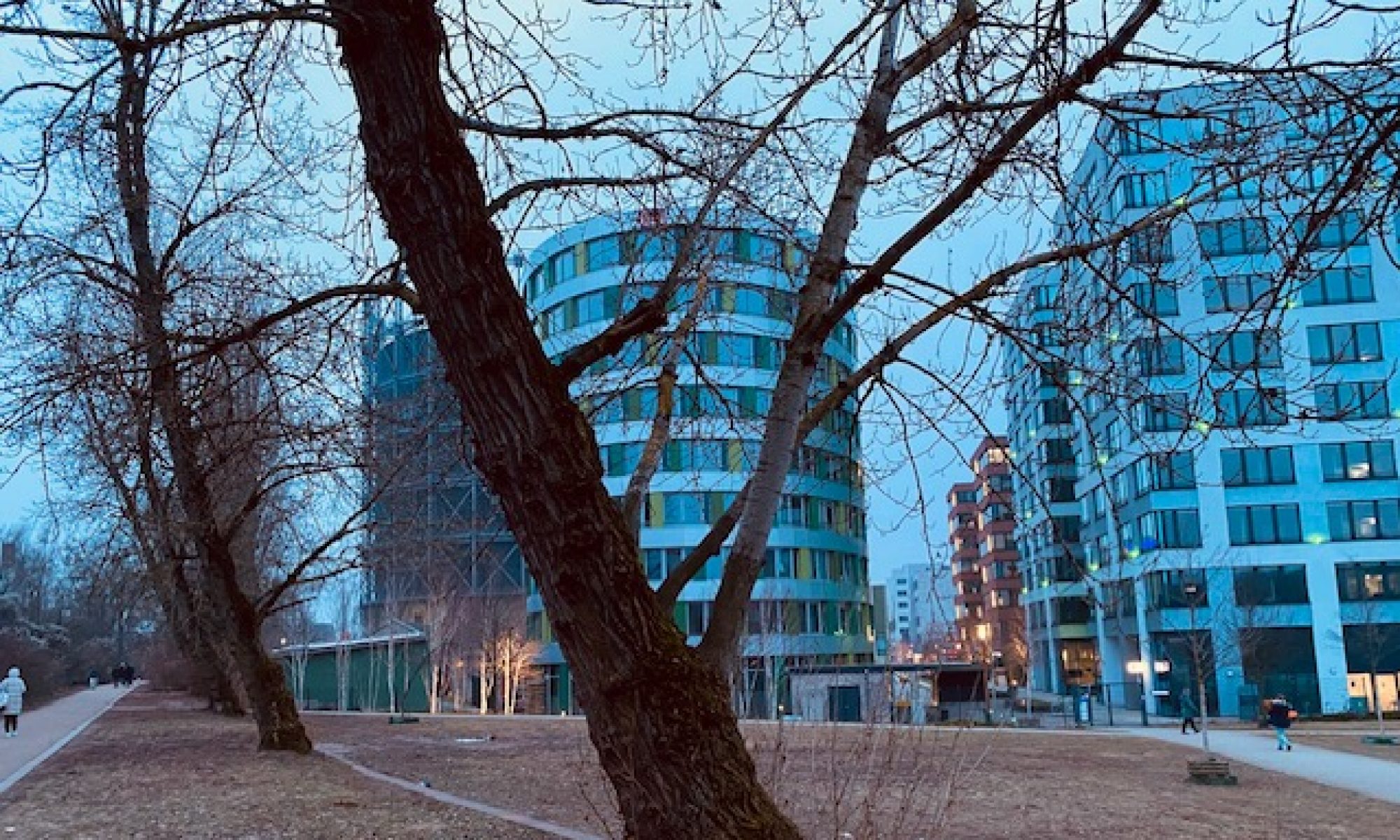
Well yes, this is the latest fart in design and architecture. The Berlin International University of Applied Sciences composed an exhibition on “Air Architectures” which takes air seriously. The international group of 7th semester students took Air Architecture seriously and developed their ideas in the context of a curated exhibition. Nice semester project.
Air is a fundamental precondition for humans to (co-)exist. The biology of air (breathing) or the chemistry of air (fine particle matter) have been studied extensively. The physics of air flows in cities receive more attention as well in architecture. Interior design has yet a lot to contribute in the age of heat pumps and air conditioning.
Let’s think architecture from the perspective of air and air flow. Depending on our cultural background we might have very different associations with air. Indian or Chinese practices like yoga or Tai Chi teach us to take air more seriously than Western practices. Most architecture in cold countries of the northern hemisphere aim to keep air to the outside of buildings. Yet, the percentage of humidity of air is a serious concern of architecture as well. Air flow and quality then becomes a key issue of construction and architecture, somehow through the back door.
Maybe in approaching architecture we might think first of what is or has been the architect’s concept of air or aerodynamics. 100 years after the death of Gustave Eiffel and the Olympic Games in Paris, we still gain from thinking about air (not only air pollution) and its dynamics. Looking forward to the next generation of air architects.
(Image: Exhibition, Air architectures, at Berlin International, University of Applied Sciences 2024-12) 
Kids Space
Political claims to reserve more space for kids in cities have a tough time. Kindergardens or child care in general are scarce and the lobby for kids is often limited in time and extent, since it is the parents that usually are the ones to advocate while their children are small. Jointly parents and children of young age experience the tough atmosphere to find, preserve or extend the space for kids.
The Gropius Bau in Berlin has opened up an exhibition space reserved to children 3+ as part of an art project “BauBau” designed by Kertin Brätsch 2024. A colorful room and installations as “loose parts” are the starting point to delve into a real/fantastic world were kids reign. There are a few so-called “playworkers”, who accompany the endeavours, if need be. At the end of the day the room was still in pretty good shape I would say assuming that “children set the tone and decide what happens in this place”. Safe and supportive environments for children are scarce and parents are always challenges in their attention to watch out for risks of all sorts in public city spaces.
Even if the “play space” is free of charge, it takes parents or kindergarden managers to reserve the space.
An early experience of a museum from the inside is likely to have lasting effects on children and the parents. They might have fond memories of a museum as an exciting space also for them. It constitutes a nice continuation of the outdoor “radical playground” project during summer 2024.

Health Tech
Health technology assessment (HTA) is an interesting scientific field. The new digital opportunities allow people to participate in medical and medication trials in their homes or even in bed. Their health data and the administration of medication is also encouraged and sometimes supported through digital devices. The pharma and health industries have many devices ready to go. The differences to the traditional forms of medical trials, however, is an issue as we want to compare the results from both kinds of trials. Participants of trials, might prefer or struggle with these novel kinds of study designs. In any case the results will be impacted in several forms (Study Link). In the best of all worlds for the researcher the effects will cancel out each other, but is rather unlikely. Some participants will reach more positive effects with the use of digital tools, whereas others are challenged and might even abandon during the trial. Monitoring during the study (for example through digital inhalors) is another advantage of such distributed trials. Rather than taking adherence to a trial medication for granted, digital tools allow a more precise monitoring of subgroups as well. Data and effort invested in the trial is preserved through the easier access to person’s information, assuming continuous readiness to stay on in the trial.
Our own smartphones are still underexploited in terms of health monitoring and use in research designs. The possibilities to link data to other external data sources shall further advance the research potentials in many interesting ways. Data protection and data security become even more important with the ever smarter phones and connected devices.

Health data
2025 will be a crucial year for health data across the EU. Germany introduced the electronic patient card, which can store basic information to then access data in the health insurance cloud for medical doctors, hospitals and other related health services. Potentially this is a great step ahead as some tests do not have to be repeated if they had been completed recently before already.
In pseudomised form, research may draw samples from such databases to enhance our science based understanding of disease. The evaluation of public health interventions becomes easier and medium and long term efficiency of measures can be assessed in many instances.
The Belgian research using health data has met to discuss the potential and limitations to link health data to other data sources to allow more complete and more complex analyses of health and disease processes. Another extensive data source sits on our smartphone. Collection of steps walked, sleep patterns or heart beats give valuable insights into a person’s own contribution and care about personal health. Although data are frequently incomplete, researchers are used to estimate missing data on the basis of existing or comparable person’s data. The basis for improving health for all are quite promising, data handling and linking them will be a challenge to the competence of all stakeholders and everyone involved in better health. It will be stressful before it becomes a routine. 