Marc Aurel AI

In the 21st century it is possible to chat with Marcus Aurelius. Part of the exhibition at the Simeonstift is a chatbot you may freely consult and questions with or about Marc Aurel. Based on your questions the animated screen image of Marc Aurel will reply based on his own writings like the Meditations and (probably) other secondary literature on Marc Aurel. Questions about feminism or slavery are answered based on the original texts. Some of these answers  appeared rather modern like the basic equality of all including women or slaves. The Meditations are an idealistic vision of mankind in the stoic tradition. In practice such ideals have proven very ambitious for the many and growing temptations in the day-to-day lives of ordinary people including their political, religious, business and military leaders. The AI is confronted with the issue to give answers to ethical questions which refer to the time of the author, but not all can apply to today’s ethical standards and basic human rights. Reading the original source, therefore, remains the preferred choice. 
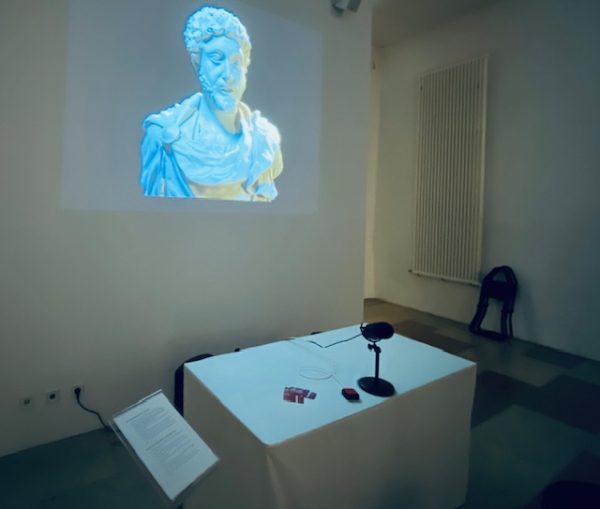
Marc Aurel Philosopher

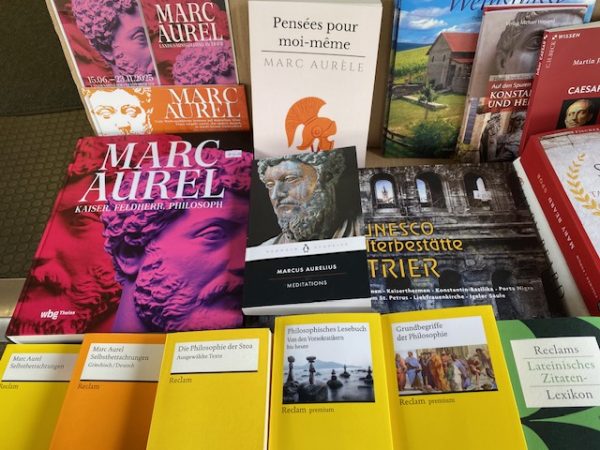
2025-9 marks an additional landmark in the achievements of the late Marc Aurel. In the Roman built city of Trier, 3 museums offer exhibitions on the life, ideas and imperial governance style of Marc Aurel. Libraries and bookshops around the city portray a wealth of books and studies by and about Marc Aurel as well in many languages (image below 2025-9). The stoic author and practitioner has served as an example of a leadership style which became for many subsequent leaders a hard-to-achieve precedent. The writing style of Marc Aurel in short paragraphs and aphorisms proved highly accessible, although his readership swell only after a Latin translation of his Greek original appeared in the 16th century. The title “Meditations” in English, “Pensées pou moi-même” in French or “Selbstbetrachtungen” in German demonstrate the difficulty to get to grips with the author’s intention and objectives in writing down these reflections on life, ethics, humanity and good governance. Through the use of Greek rather than Latin he puts himself in the line of Greek philosophers rather than the succession of Roman emperors. As the numbers of bad leaders still outnumber the good governance style advocated by Marc Aurel, these exhibitions in the Simeonstift, the Landesmuseum and the Stadtbibliothek are a perfect opportunity to demonstrate that good governance is something that can be studied and learned even in the distant Roman history.  

Vacation or Workation

Vacation or Workation, that is the question. Remote work and outsourcing of work have  created the opportunity for more people to work from distant places. Logging into the firm’s or the administration’s secured intranet enabled to work from where you prefer to work rather than on the premises of the firm. After the technological shift to enable secure remote work, the acceptability of remote work is a societal issue. Whereas bosses worked or had to work while on travel for many decades, the same has become feasible due to reduced costs for many other employees as well. The Covid-19 pandemic has forced another shift in the need to accept and advance remote work as well. Taken together the option of a “workation” instead of a vacation became equally more feasible. The borderline between remote work, “workation” and vacation has become more and more blurred. It remains to be seen, whether these options enhance an outsourcing trend by firms or whether  more “back-sourcing” or “in-sourcing” will be the consequence.
Employers with their associations and employees with their trade union representatives have a need to include such topics in their bargaining agenda in addition to pay, health and safety, as well as working time adaptations.
(Image created with Canva 2025-9)


Paris Sorbonne

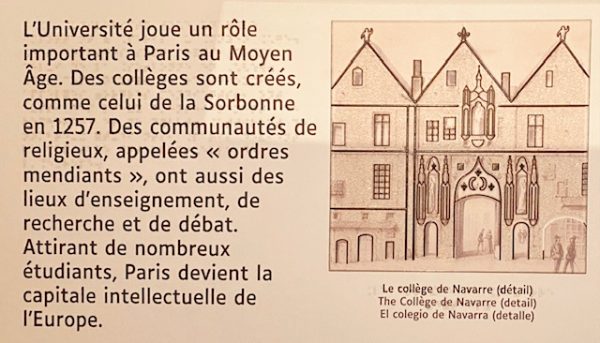
The history of the university on the left bank of “La Seine” dates back to 1257 when Robert de Sorbon an advisor to Louis IX was asked to create a unifying structure of several colleges which provided room and board already. The location on the left bank in Paris allowed these colleges to escape the religious doctrines and archbishop who dominated the right bank. The choice of the name of the advisor rather than the King was already showing early signs of independence which was cherished by generations of students and professors. The Colleges had individual names like “Collège des Bernardins” or “Collège de Navarre” and operated under the title of “La Sobonne”. The “Musée Histoire de Paris Carnavalet” shows an early design of the Collège de Navarre. Independent thinkers and writers were formed there who became very influential later on in their careers. Thomas d’Aquin was one of them.

liberté urbanité

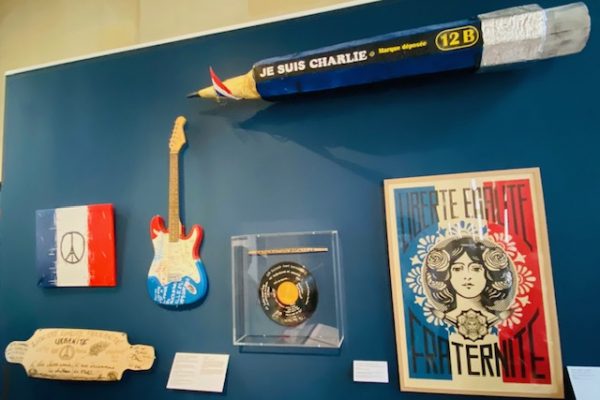
In the museum of the history of Paris “Musée Histoire de Paris Carnavalet” we find a special place devoted to the commemoration of the terror attacks in Paris in the Bataclan event location and the office of the journal “Charlie Hebdo” (see image below”. The skateboard on the bottom left of the wall raises the value of “urbanité” next to liberté, égalité, fraternité. The attack of an urban living style with youth going out as they like and journalists and caricaturists speaking their minds freely had been attacked, but continues nevertheless. This statement is part of the Paris state of mind. 

Home for dog

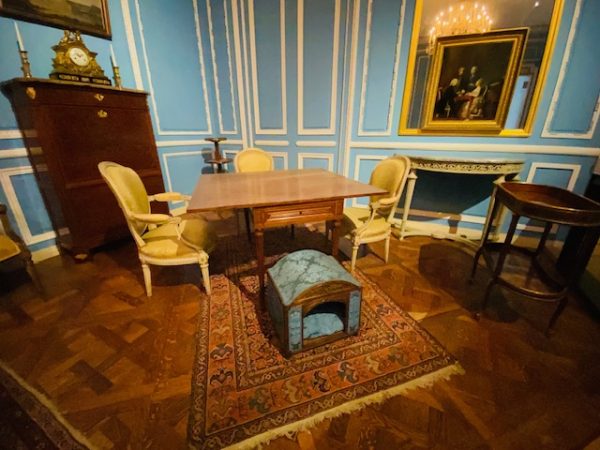
The places where some dogs live can be rather big. But even tiny dogs may enjoy a luxury home like their owners. This was certainly the case for the dog’s niche in a Paris home, a few years before the French revolution (1785). The exhibit is a testimony of the tough inequality of the late 18th century in Paris, where some enjoyed far reaching luxury and large parts of the population were forced to live in poverty within Paris or the suburbs with little access to basic sanitary facilities. The discrepancy between the luxurious homes of pets and the average person might serve as an indicator for income and health inequality. The Musée Histoire de Paris Carnavalet has a great stock of artifacts that can speak to the issue. Image: Musée Histoire de Paris Carnavalet dog niche 1785). 

Emotional history

The making of emotional memories of a city is an art in itself. Many cities have professional photographers who accompany all major events in a city over years. Paris has had the chance that artist photographers and film makers have contributed greatly to the emotional history of the city. Agnès Varda was such a formidable person whose images and movies moved people and allowed to share emotions about the city’s busy and diverse neighborhoods. The « Musée Histoire de Paris Carnavalet » combines an autobiographic perspective with the emotional depiction of live in Paris from the 1950s onwards into the late 20th century. (Image: Agnès Varda, 1950 self-portrait, MEP Paris). 

Femmes Photographers

Paris puts 2 women photographer into the spotlight. The MEP and the Musée historique de la Ville de Paris feature a gender perspective on photography. Both photographers have a common starting point in black and white photography.  Each moved on to develop their art into an additional direction later during their career. Marie-Laure de Decker shifted from the early camera technology from black and white images to color photography in the later stages of her career. Agnès Varda moved from her initial b/w photographic work on to the production of videos for cinema, mainly focused on life in Paris from the early 1960s onwards. An evolution over the professional life becomes evident for both through these retrospectives of their respective work. Technologies evolved and became more accessible for artists’ creative expression. Both moved on to adopt new techniques and challenges. Great personal learning experiences and models for today’s challenges.

(Image Marie-Laure de Decker, L’image comme engagement 2025-8 MEP Paris).

Gentileschi Iconologia

Ever since the publication of Cesare Ripa’s „Iconologia“ (1593) the codes of art had become subject of a coded production and interpretation of art. Attributes of power or wealth like palms, scepters or crowns, decorated with gold and diamonds spoke a language easily understood by onlookers irrespective of time periods. Orazio and his daughter Artemisia applied this Iconologia throughout their work. The apparently simple depiction of bad weather became a sign of trouble ahead in a person‘s life, office or reign. From the success of Caravaggio‘s paintings, the application of light and shadow became another stylistic feature of especially Artemisia‘s work. Whereas the application of these techniques is a sign of craftsmanship, the own contributions like a more emotional and emancipatory repertoire of Artemisia make her an artist of her own kind. (Image Artemisia Gentileschi, Madelaine pénitante 1625, Musée Jacquemart André“ in Paris 2025-8) 

Women artists

The history of art has been dominated in public opinion for centuries by men. However, recently art historians have drawn our attention to the numerous works of women who took Centre stage with their art during the last 500 years. Flavia Frigeri (2019, 2024) begins her history of women artists with Lavinia Fontana (1552-1614) followed by Artemisia Gentileschi (1593-1652). Both painters produced extraordinary paintings which brought their own touch to the paintings at a time when an independent expression through art was still largely reserved for men. The subjects of Gentileschi were greatly influenced by her experiences as a woman in a male dominated society in the 17th century in Europe. Her choice of subjects for her paintings added a female vision and depiction of biblical and historical narratives that were unique. The „Musée Jacquemart André“ in Paris featured a great retrospective of her art work in 2025. The catalog of the exhibition allows to enter into the art and wit of this early woman artist.