Fighting fires

In our homes and offices we are used to have electric, digital and chemical devices to assist us in fighting fires. Fires can have multiple origins ranging from faulty technical devices to human errors, behavior and volition. Some countries have terrible experiences with city fires engrained into their history. The scale of wild fires in forests in Europe, the USA, Australia or Canada have reached a new dimension. With global warming fires known in southern parts of Europe reach further north and become more intense. The fire near Fontainebleau (Forêt de Sénart, France) in 2018 destroyed 9000 hectares forest. In 2026 the fires near Bordeaux burned 10 times the size (Link). There were about 8 years to get prepared between the 2 large scale incidents. The technocrats’ answer usually is just limited to the immediate surroundings of the fire. Instead larger scale actions have to be prepared and enacted to prevent the next incidents. The technocrat’s answer is more technology like aircrafts and yet bigger aircrafts(still largely insufficient in 2026-7). Satellite and drone surveillance with infrared cameras additionally can go a long way, but the human factor remains a hard to fight beast in all such technical fire fighting scenarios. This setup seems to be somehow like a constant to take into account in all technological propositions.  
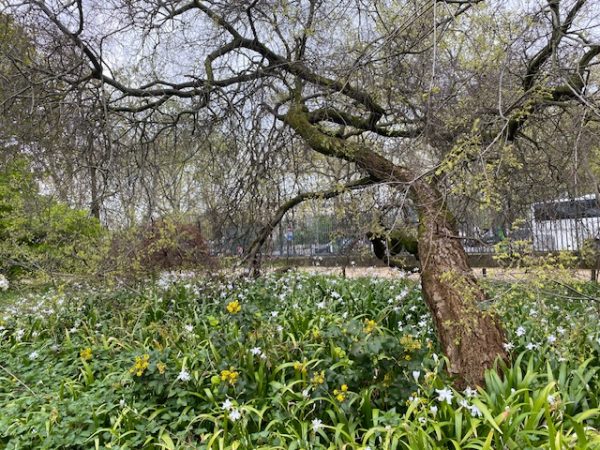
Cercis siliquastrum Jardin des plantes Paris, planted 1785.

Sedentary society

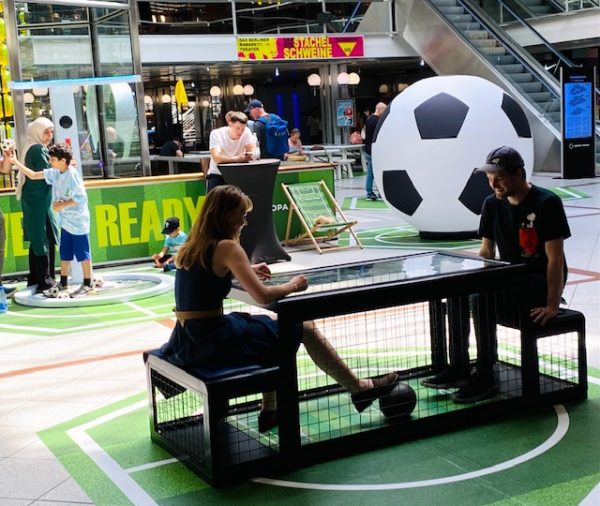
The football or soccer world cup, like other sports, used to be an event which mobilized people to become active as well. Many people, particularly the young, joined football teams and clubs or practiced in backyards. The sedentary society has managed to transform this in the 2020s into a seated activity (football soccer seated 2026). In order to capture attention and time spent in a shopping center, itself a good predictor of money spent, the FIFA world cup serves as a means to promote football at any costs. Sit and kick, that is the new lifestyle. You even have your hands free to do something else. Eat and drink, probably. Great, that the football-mania is over in 2026 for a while. Time to get real exercise.

Dancing alone

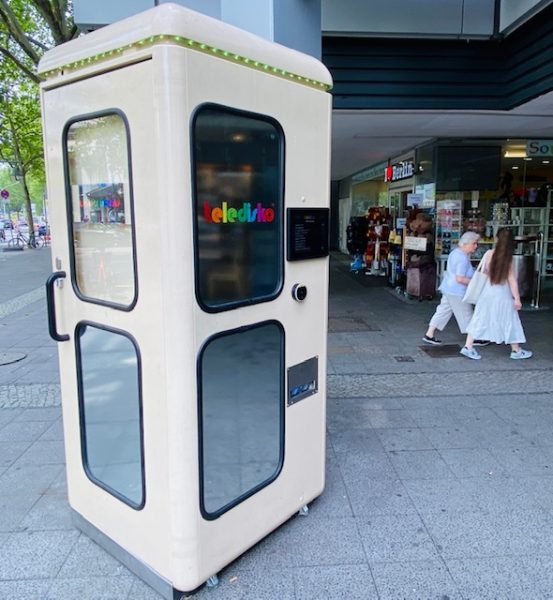
In 2026 it is possible to step into the old telephone box, but to use it as discotheque with music. You can choose your favorite song and dance to it inside the box and photos are taken from yourself to take home. Whereas sociologists have long argued that individualism can go to far in modern societies, the solo disco-box is a telling example of how monetizing of music, dancing and enjoying music can reach levels where people no longer realize how far we have gone beyond „bowling alone“. We do social activities alone and then share the images of the pseudo social activity. Room for social or socializing activities does not come for free, but creating meeting spaces even in crowded cities is worthwhile. Dancing in public rather than a box might be enjoyable for others too.

Berlin moves it

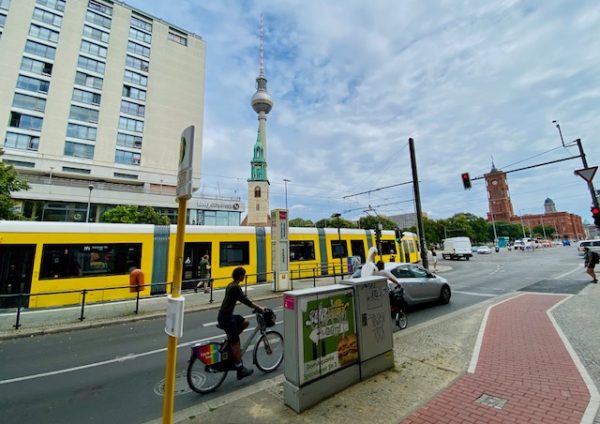
Yes, we like to move it. Investment in infrastructure follows a long-term economic rationale. In urban areas space is a scarce and, therefore, an expensive resource. In order to use the current space for mobility more efficiently, the use of a longer tram or train is an effective way to increase capacities. Rather than to increase the frequency, which is no longer possible without safety risks, a longer vehicle allows to bring more, and more diverse, passengers on board (kinderwagen and wheelchairs included).
It is a long-term objective to make urban areas liveable for all ages. Tramways which allow a low or, better, no barrier to entry is a necessary condition in this respect. The new “Urbanliner” in Berlin (image below) offers such essentials of access and urban mobility. A single tram is 50m long with 88 seats and 215 standing persons in larger corridors. 300 tram passengers can be compared to about 12 average length cars with at best 15-20 passengers.
A consensus of “how best to move it” in cities pays off in the long-term. Planning has to start about a decade before delivery and needs to survive political cycles going back and forth.

Learning moral sentiments

In school curricula and evaluations of pupils learning progress there has been little attention to pupils’ learning moral sentiments. Religion and comparisons of religious practices have entered educational programs, but even the big PISA studies have largely refrained from evaluations of learning achievements in ethical matters or moral sentiments. Adam Smith as proponent of the Scottish enlightenment had written about “The theory of moral sentiments” before embedding his market economy into the enlightened society. In the 2020s we realize that we have neglected this part of learning for far too long. This is the point where memorials can play a primordial role as a central part of learning not only about history, but moral sentiments in the broadest sense. Memorials “Gedenkstätten” operate as quasi-schools” in this respect for young and experienced learners at the same time considered that more than 50% of learners in memorials pupils, students or from teaching professions. However, outcomes of  learning in memorials could also be assessed in order to check what kind of learning goals and moral sentiments can be addressed in such historically charged learning environments. Such learning locations of moral sentiments have to balance the intended learning with the necessary decency of the commemoration in such learning environments. (Image: Topography of terror Berlin exhibitions) 

All the lonely people

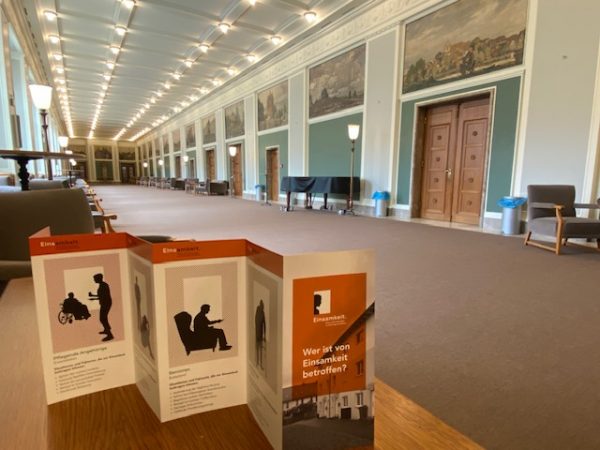
This line of a song by “The Beatles” dates back to 1966. “Ah, look at all the lonely people” is a kind of puzzled outcry to reckon with the loneliness even in busy and charitable places. 60 years later in 2026 we have whole ministries in some countries to deal with loneliness. It is not a niche problem. Tackling the problem needs to go beyond raising awareness. Loneliness occurs at all stages of the life course: children, adolescents, young adult, migrants, employees, single parents, care giving people, even within couples, seniors and very old persons. It is not restricted to urban or rural areas, but changes from one to another phase in a person’s life course carry the risk to encounter loneliness. It may well be only a temporary phase before new relationships can be established or previous contacts revived. There is a role to reach out to people who might be lonely for all of us. Public policies should be scrutinised on all levels whether they manage to break barriers or raise new ones for persons to feel lonely. In Berlin, the local level in each district is taking measures to facilitate informal meeting points open to all ages and walks of life. The “Wüstenrot foundation” sponsors many initiatives where public policies are short of funds. Projects enhance networks of people and organisations eager to assist “all these lonely people”, wherever they all come from.  (Image: Conference on loneliness at Berlin city hall Schöneberg 2026)

Soccer business

The FIFA has turned soccer into a juicy business activity. Of course, it has been like this for some decades now. After all professional athletes, coaches, managers and medical teams all around the games have their own high fees. With huge funds involved and millions of supporters the does not lack public support. The national leagues have been topped up with several international competitions which with less clear remuneration structures, but abundant national pride involved. The betting industry is worth billions in soccer alone. This invites all sorts of influences and corruption. As the football judiciary is not independent as a other judicial institutions, interference is apparently more easy with some return-favors between FIFA and host countries. More spectators and more TV-time supercharge profits. In countries that exit early, like Germany, the merchandising products will be forced to sell with substantial discounts. 

Willingness to pay

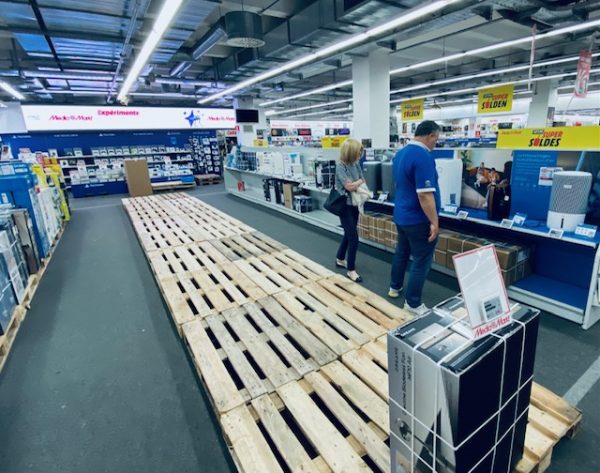
The willingness to pay for a product by consumers can be easy to predict. During the June 2026 heat wave in Europe, earlier and more intense than ever before, many people went to retailers offering cooling systems or fans with a determination to buy. However, the retailers who had stocks available found themselves depleted rapidly. The physical urge to find a solution to cool down a hot apartments has pushed the willingness to pay to new heights for such systems. A kind of market failure occurred as too many (short-sighted) consumers wanted to buy a quick fix for a serious personal health-related issue. The widely observed shortage of supply of air-conditioners and fans raised considerable frustrations on all sides, missed turnover and substantial profits for the retailers and lack of physical cooling in a suddenly “overheated” market.
The increased willingness to pay might be redirected to other “greener” solutions to the heating problem, but they often entail behavioral changes. This bi-directional relationship between willingness to pay and (lack of) readiness for behavioral changes is a fundamental principle of behavioral economics and sociology.

Exams time

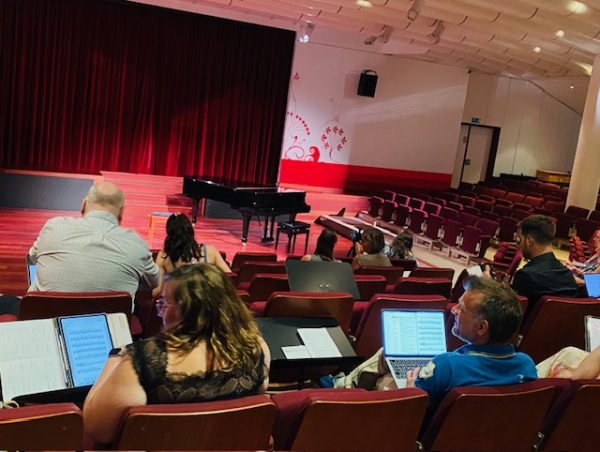
From time to time its exams time. Students of all ages have to face juries or standardized exams. For the credibility and for the sake of transparency, exams of higher grades invite the public to participate in these academic and learning rituals. For profs it is a moment to demonstrate the standards against which accomplishments and yearly progress is assessed. The level of instruction  is, however, still difficult to assess as the prior level, the year or years before is of course a quite influential intervening factor. Recruit the best and you are likely to have the best results after year after as well. The clarity about what is going to be assessed at the end of a Masters degree is essential as various target professional activities might determine a student’s orientation and ambition. Music is a great case to study as many students go into teaching professions afterwards and only a few shall aim for stage performance level or orchestra positions. Even within music exams time is not only just about music. 

Ensor Home

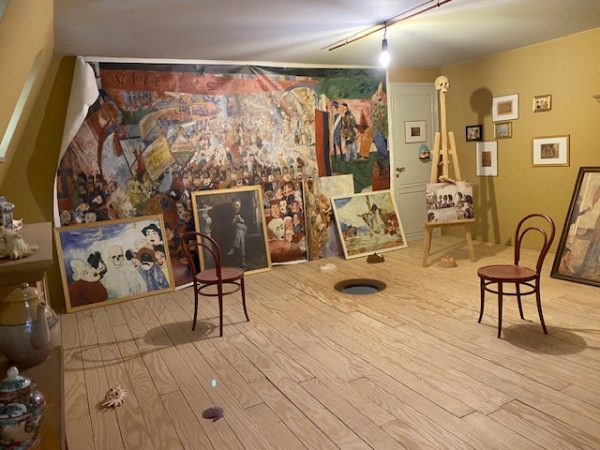
There are few artists who stayed in their home for almost all their life. James Ensor was a personality who was profoundly attached and continually attracted to his native city of Ostend. After a short and unsuccessful spell at the Brussels art academy, he returned to his parents’ home and due to a heritage from an uncle, he could live in a nearby house, which also served him as his atelier. Although I did not come across documents that showed he had traveled a lot, nowadays his art work is spread across the globe. The seaside resort of Ostend was a real tourist destination and, therefore, many famous people of the 1st half of the century passed by and met with Ensor there. Not only fellow artists, but also scientists like Albert Einstein. Critical minds and people searching beyond the trodden paths must have been attracted to him, a personality who dared to challenge conventional painting and techniques of his time. A reconstruction of his atelier and several animations give a lively modern touch to his work and living style. My take home message from the Ensor Home: The search for inspiration might be just around the corner.