Processed food

We eat a lot of pre-processed food. Our busy work schedules allow us to take only short breaks for meals in order to get more work done while in office or at work in general. The intensification of work has reached the next level and we move from pre-processed food to ultra-processed foods (UPFs). In medical journals and nutrition recommendations the warnings to not eat too much ultra-processed foods are abundant. The signs of obesity in societies reach higher levels from year to year. Especially younger people seem to be at higher risks to consume a lot of ultra-processed foods. Freisling et al. highlight the “risk of multimorbidity of cancer and cardiometabolic diseases” due to UPFs. The discussion between scientists is a lot on which UPFs are most harmful (beyond animal origin or and artificially sweetened beverages) and/or whether it is the combination of UPFs that additionally increases the danger of UPFs. Preventing the “too much of each” is probably the safest recommendation. Being able to read the nutrition information on the labels is already a difficult task. Just making the information abundant and very small print discourages most efforts to compare across products. Learning about basic human needs like food has never been more difficult. Combined with “shrinkflation” we have a hard time to make informed choices of what to buy and eat. There are many hurdles to overcome for a healthy meal.
Digital organising

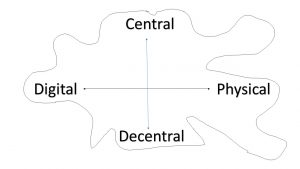
Since the digital innovations continue to broaden our scope of how to organise, we have to make conscious choices which way to choose. The traditional form of sending out newsletters and waiting for responses is still a feature that is prevalent across Europe. Most organisations have shifted to digital plus physical versions by now, just like newspapers. Young organisations by founding year have started or shifted to digital only for speed of delivery, CO2 and cost saving mainly. We may derive a first dimension of organising between the digital and physical.
A second dimension consists in the central versus decentral forms of organising. Similar to the franchise principle of organising companies, organisations have a choice to keep a central structure with varying degrees of freedom at the regional, sectoral or local level. Organisation theory is helpful in this respect. Various hybrid forms are equally possible. Centralised in financial aspects, but scope for local decisions on content.
Bohn et al. (2023) define digital organising as “collective purposeful alignment and distributed action fostered through digital technologies”. Centralisation and/or Decentralization become a matter of conscious choice. The processes of datafication and connectification, whereby every bit of information becomes a data point and any electronically enabled device can be connected with each other. Organisations now have a choice of how to organize including digital organising. The opportunities are within the space opened up by the 2 dimensions (figure below). A specific subject matter may require more physical presence and maybe centralised structure, but digital only forms with highly decentralised forms are powerful tools in the 21st century. New as well as established social movements may well take advantage of these digital technologies as well. (Image: Digital Organising 2024 Protest Berlin).

Spring has Sprung

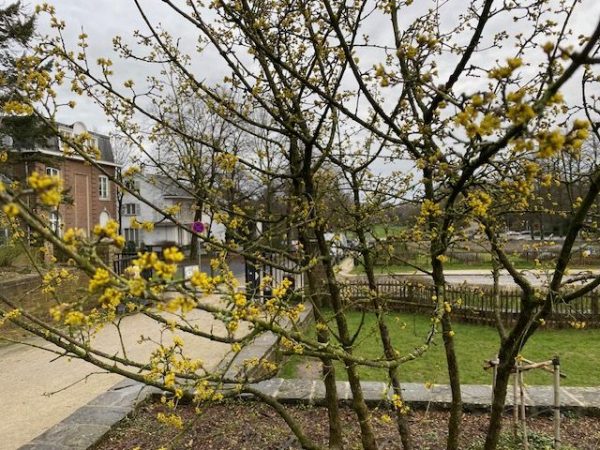
In Europe it is expected that spring follows winter. The closer you move to the equator the more you find days equally long in winter and summer. In Northern Europe we have marked differences in terms of light between winter and summer. In January and February 2024 we had a very mild winter. As of 15th of February we had 15° C in Brussels and the first few blossoms showing up. Climate change is undeniable and the call for action to intervene urgently become louder and louder. Why is it so difficult to take action? Well, there are many vested interests and countries that hope to benefit from climate change. In simple economic theory this is not a problem as long as those who gain from climate change would compensate those who lose from it. However, if the total sum of losses is so much bigger than the sum a few will gain, the global balance sheet will deteriorate rapidly.
Monitoring climate change and the shifts in national and global wealth are part of the scientific endeavour. Rising inequalities on a national as well as global scale will create numerous new challenges which are difficult to forecast due to complex feedback and reinforcement loops. It would be wise to apply the precaution principle in this respect as well, but this seems to be hardly understood, let alone, to be followed.
Sometimes it needs a cold winter, unusual flooding or a bad harvest to acknowledge to value and apply the precautionary principle in the following years. Only, this time it might be fundamentally different, because climate change is irreversible for generations to come. Early blossoms in winter as precursor of spring are nice, but we have mixed feelings considering the impact on irreversible climate change. (Image Brussels 2024-2-15)

AI and Behavior

We start to analyze the impact of AI on our behavior. It is an important question to be aware of not only how we interact with AI (Link), but also what effect the use of AI (disclosed or not) will have on our social behavior. Knowing that AI is used might change our willingness to cooperate or increase or decrease pro-social behavior. The use of AI in form of an algorithm to select job candidates might introduce a specific bias, but it can equally be constructed to favour certain criteria in the selection of candidates. The choice of criteria becomes more important in this process and the process of choosing those criteria.
Next comes the question whether the announcement includes as information that AI will be used in the selection process. This can be interpreted by some that a “more objective” procedure might be applied, whereas other persons interpret this signal as bad sign of an anonymous process and lack of compassion prevalent in the organization focused mostly on efficiency of procedures.  Fabian Dvorak, Regina Stumpf et al. (2024) demonstrate with experimental evidence from various forms of games (prisoner’s dilemma, binary trust game, ultimatum game) that a a whole range of outcomes is negatively affected (trust, cooperation, coordination and fairness). This has serious consequences for society. The social fabric might worsen if AI is widely applied. Even or particularly the undisclosed use of AI already shows up as a lack of trust in the majority of persons in these experiments.
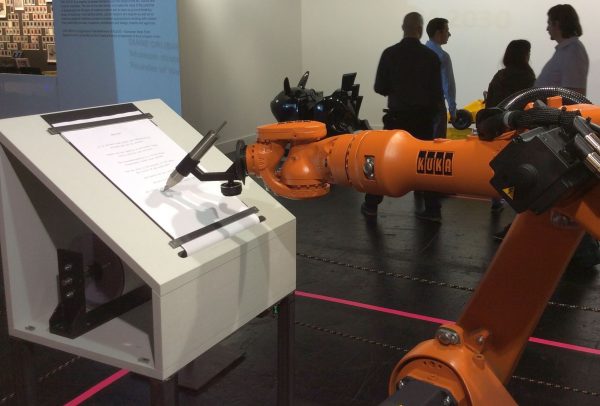
In sum, we are likely to change our behavior if we suspect AI is involved the selection process or content creation. This should be a serious warning to all sorts of content producing media, science, public and private organizations. It feels a bit like with  microplastic or PFAS. At the beginning we did not take it seriously and then before long AI is likely to be everywhere without us knowing or aware of the use. (Image taken on Frankfurt book fair 2017-10!)

Stroke

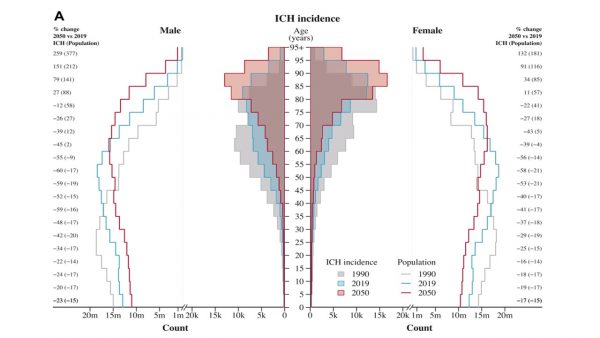
A stroke is a very serious medical incident. The NIH defines it in easy language as the the moment in which “blood flow to the brain is blocked or there is sudden bleeding in the brain“. Thanks to a European HORIZON project  forecasting models are produced to estimate the likely incidence until the year 2050 by age and gender within Europe. The good news is major regional imbalances of incidence and mortality have been reduced and will likely be reduced across Europe. The challenge remains the aging of societies which necessitates to address the issue of strokes in each single region of the European Union. We know that the shorter the time to treat a stroke immediately after its occurrence, the better the survival chances and the better the prognosis for (partial) recovery.
In the US the widespread use of blood thinners which tripled over 30 years has not lead to the reduction of intracerebral hemorrhage (Link to studies). High blood pressure and arhythmic heart beat are major causes of this often disabling medical event. The study by Wafa et al. (2024) uses age-pyramids to demonstrate the effect that as European societies are aging the incidence of intracerebral haemorrhage occurs with increasing age and even more so for women than men of 80 years and older.
Prevention of high blood pressure through walking or careful endurance exercise seems even more indicated for an aging society.
Image below from Wafa et al. (2024), The Lancet Regional Health, Europe.

Publishing2024

With new channels of publishing online the publishing world continues to change. Scientific research  moves also online and the reach of audiences has become a much more important factor in evaluation of success. Elite circles of in-groups publishing and quoting each other have a harder time to survive. It is a form of democratising the world of research which is by very large amounts financed by public budgets. Public radio and television now start to feel the heat as so-called influencers, some working independently, challenge the world of traditional journalism. The good news is that there are many more people active to produce news and entertainment and the two separate worlds become more and more integrated. Young people who have left the “official” media world, engage with their own peer groups and make their voices heard and more influential.  The quality of the provision of information is, however, a matter of concern. Audiences will have to check even more carefully than before which sources can be trusted. This is not an easy task. Speed of spreading information becomes an additional factor. It has always been like that, but the rhythm of a daily or weekly newspaper was very different from the publishing and consumption of news and information today.
The second factor that has drastically changed is the influence of “external” influences and information as well as disinformation campaigns that have an impact on “internal” reporting and commenting. What used to be the world of professional journalists has become an accessible possibility for many more than journalists. Publishing has become a very different world from the printing days and yet printing remains one important channel of publishing. (Link to own edited volumes of blog post for printing here).
Previously, we prepared the manuscript in paper, nowadays this seems to move online and the edited and sometimes corrected versions will be published in print later on. The challenge to science and journalism is ticking. Not accepting that there is a serious challenge is no solution either. (Image from Exposition “Books that made Europe”, 2016)

Force of dependency

Drugs have their particular strength in creating dependency. This is well known for tobacco or alcohol. Helping people to overcome the forces of dependency has its merits. At the same time it is big business. Vaping instead of smoking might be a way out one dependence but into another one. In the end it is an empirical question how many persons can escape the force of dependency of both types. Important to test the probability to get rid of the dependency altogether. With respect to hard, life-threatening drugs like Nitazene the death toll keeps rising in the UK. In the latter case changing the dependency is already a success. The sustainable deflection from drug dependency has to address underlying issues and health hazards. It is a rather individual issue. Society wide evaluation studies need to inform the debate also about placebo effects. The force of dependency might not only be physiological but psychological or linked to the social environment. All these potential effects have to be carefully sorted out before simple pseudo-solutions are implemented. Even the price and availability of drugs is part of the overall equation to solve the force of dependency.

Arthur Sapeck 1887 Illustration, BNF Pastiche 2023-4

Skill loss

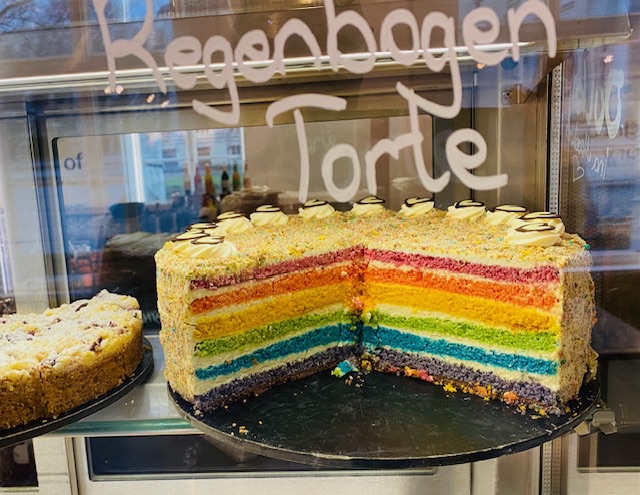
There is a sense of skill loss in watching the trends to increase comfort. We all use washing machines and maybe dishwashers. Households can save a lot of time by using those machines. Some porcelain and clothes should not be left to the machines. The need to organize traditional washing routines is almost forgotten after 1-2 generations. The same holds for many technical skills. Bicycle and car repairs or small repairs of electrical appliances are delegated to specialized repair shops. Not using or having learned these skills puts you in a form of dependency and at the risk to pay a price for specializing on other skills. Find out and focus on what you are best at. This has been the mantra of economic theory since Adam Smith. The potential value of satisfaction with an own production rather than a bought product is frequently acknowledged for baking cakes yourself rather than simply buying one in a shop. The same rationale holds for many other skills. Autonomy of own production with possibility to improve or repair are forgotten values. The have become a luxury item or a necessity for persons lacking financial spending power to buy products from others. Many skills will be lost rapidly because products have become so cheap to replace or order for home delivery. Industrial production is desperately searching for skilled persons but losing skills is pervasive at the same time. Public schools and academic curricula will not be able to stand the tide of pervasive skill loss.

Modernism

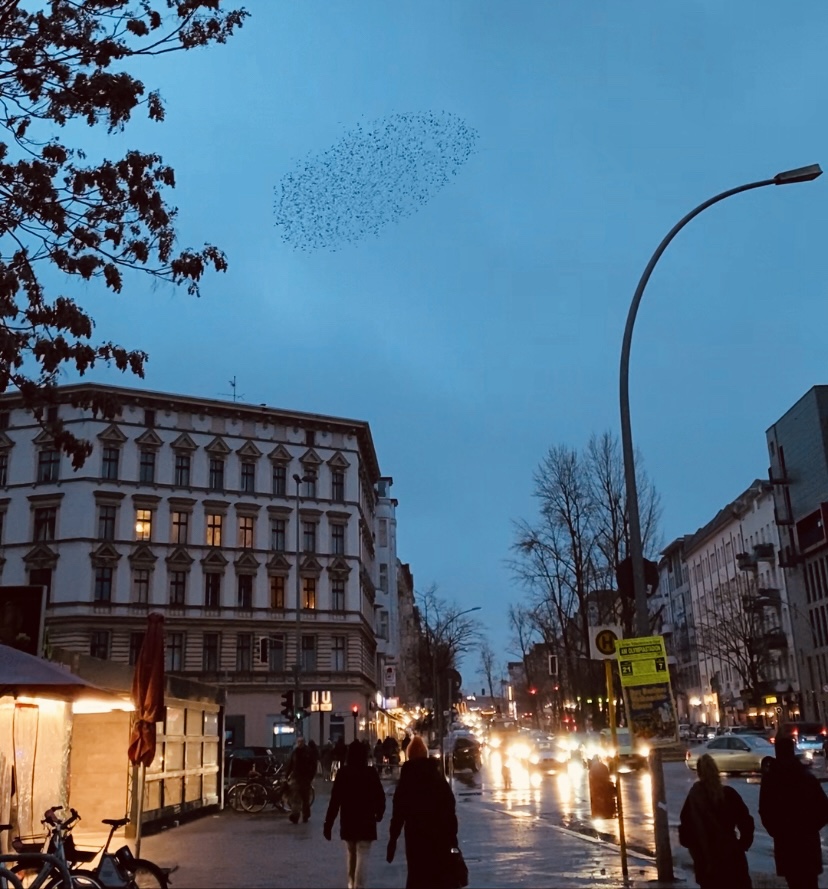
More and more people move into cities. A modern way of living is more accessible there. Besides abundant car traffic public services of transportation like buses and underground are within easy walking distance. Culture, science and education offer attractive opportunities for learning, working and leisure. Diversity is an additional asset most people appreciate of cities. The chances to live your very own way of life are much easier to achieve and thrive in as in remote or rural communities. “Birds of the same feather flock together “. It is easy to find likeminded people among a million people than among a hundred particularly if you’re a bit off the mainstream or avantgarde. The excitement of birds passing the city can reach the emotional force of Hitchcock’s famous movie “The birds”. Even in the modern world we not quite sure what these creatures are up to. Is it a swarm of drones? Are they out of control? Modernism has brought us many amenities, we have to make sure that we really are still in control.

Berlin Kleistpark 2024-1

AI or I

Generative AI receives a lot of attention. One of the main issues is, to study how AI interacts with humans. The hiring decision by managers or an AI algorithm is an interesting application. According to Marie-Pierre Dargnies et al. (2022) the preference for human decisions remains strong despite reasonably unbiased performance of an algorithm. The main issue is with the transparency of the algorithmic decision-making. As a worker or as a hiring manager the preferences continue to sit with the person rather than the AI. It is a worrying outcome, however, that if the rule of gender equality is removed from the algorithm both workers and managers tend to prefer the algorithmic outcome. I interpret this as a latent preference of study participants for gender bias, which could lead them to expect a more favoured outcome in case the AI makes the decision. Knowing what decision-making rules have gone into the hiring algorithm has an impact on all persons involved.
A new managerial competence is to be able to assess tasks carefully, whether you should perform the task yourself or delegate to AI. In this sense the old question: to do the task yourself or to delegate has simply been enlarged by an additional delegation option. The decision-tree goes from (1) To delegate or not to delegate, and (2) if I want/need to delegate, should I delegate to AI or somebody in person (not allowed to use AI).
I opted to use AI for image creation rather than to take a photo myself or by one from a professional photographer. (Image creation: NEUROFLASH AI – Image-Flash 2024-1-26)