Autonomy in literature

As we might imagine, autonomy has been and is a huge topic in literature. From the foundations of democracy to the autonomous state building, historical accounts are full of treaties on autonomy. Literature has taken similar steps by asking can we really be autonomous in our decision-making as we are social beings embedded into varieties of Throne, families and networks. There are ever larger parts that we are conscious about, but the realm of unconsciousness or sleep remains substantial. Maybe in literature, the author Samuel Beckett has gone furthest in dealing with human autonomy in his writings. The search for autonomous action might lead to far-reaching inactivity in “Waiting for Godot”.
However, Beckett’s view about autonomy can also be interpreted as a continuous battle of mankind as demonstrated in the often cited expression by Beckett (“Worstward Ho”, 1983, p.7) “All of old. Nothing else ever. Ever tried. Ever failed. No matter. Try again. Fail again. Fail better.” Our strive for autonomy remains a lifelong struggle. The path to more autonomy is not linear over the life course. In fact, much evidence from gerontologists suggests that it might follow an inverse U-shape, being low at birth and low before death. Literature has guided us in such questions just as much as religious, philosophical, legal and social concerns enter into the underlying concept of autonomy and autonomous decision-making across the life course.
Mammalian Aging

Mammals share a lot of similarities with respect to aging. The researchers Alexander Tyshkovskiy and Vadim N. Gladyshev et al. (2026) spearheaded multiple research to identify similarities across humans, macaques, rodents and mice. The outcome of this overarching study of mammalian aging and mortality is a set of biomarkers that can serve to predict time to death.
Why is this interesting? With the rise of the longevity interest in the 21st century, the need increases to use robust biomarkers that can assess any presumably miraculous innovation to smooth human aging or prolong the time to death. Steps towards “universal transcriptomic signatures” including CDKN1A and LGALS3 (compare across species), which proved to be important in mortality predictions based on the large UK Biodata.
It is the accumulation of damage, which drives  processes of aging . However, “inflammation, replicative senescence, metabolic inhibition and γ-irradiation” can be attenuated or occasionally even reversed. The aging of cellular components has been demonstrated using “modular-specific clocks”.
With these biological advances in the field of biomarkers, the BPS nexus (biology-psychology-society links) could receive more attention as well in order to enlarge the society-wide research into the causes of human aging.
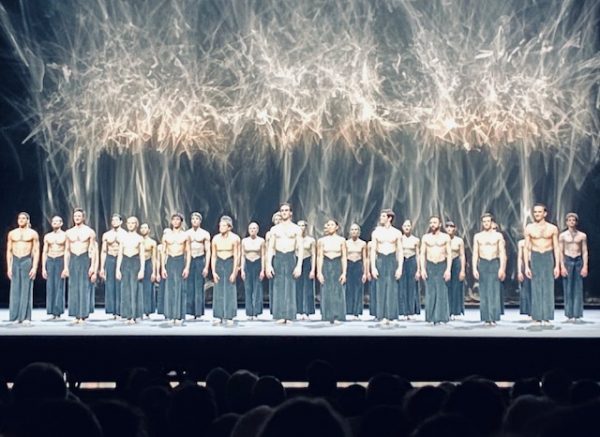
(Image: Staatsballett Berlin, Choreographie Crystal Pite, Gods and Dogs, Angels’ Atlas performed 2026-5, final applause)

Nothing changed

It reads like an entry into a personal diary. The poem “Darmstadt, 4. Januar” by Renate Schmidgall (2025, p. 24) reflects on the obsession with change. The sky shows traces of airplanes, which have passed some time ago. Trees age slowly, a pigeon sets off. “Nichts ist anders als gestern,” (Nothing is different from yesterday, then suddenly a poem finds again its space in me, …). Nothing changed, and yet, suddenly, all is different again. Motivation sets in and time appears rather short.
In “Donnerstag” (Thursday) Schmidgall (2026, p.30) notes a daily routine and the planning of today, even the day after tomorrow. Emptying her paper basket, she finds a quotation from Bruno Schulz she noted previously. “An allem schuld ist der schnelle Zerfall der Zeit.” (The fault of everything is the rapid dissolution of time).
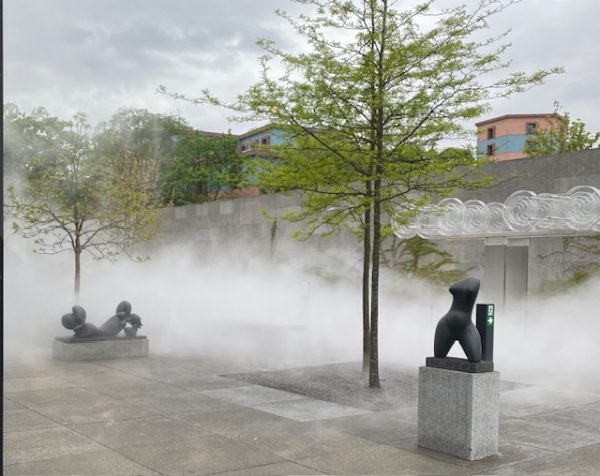
Time is portrait in these two poems as both a moment-specific personal experience as well as the short-cut description of a society-wide trend. Just, as if time was the driving force of change on both levels, even if we know it is not time in itself, but other forces are at work. “O tempora, o mores” as Cicero stated, appears to be still valid summary claim. (Image: Neue Nationalgalerie Front – WZB (Stirling architecture) in background, Fog installation in sculpture garden 2026-5).

Time in poetry

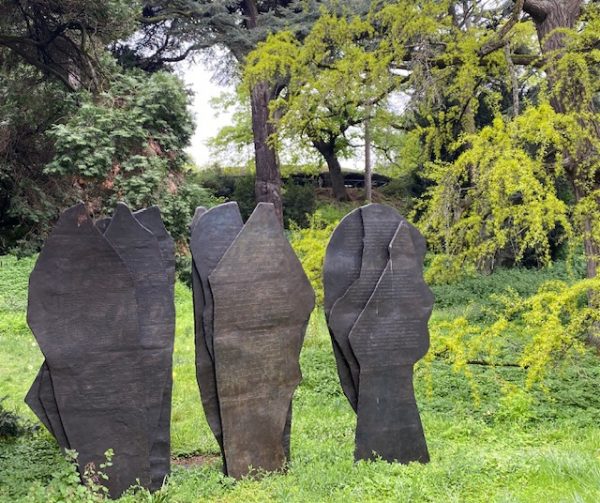
Some might argue poetry is all about time. It is a perfect way to “decelerate”. Reading pace, in most instances, slows down considerably. At least the first time reading is frequently a stop and go process. A few examples of poetry may hit personal trigger points. The random collection of poems I consulted in the “Lese lounge” in 2026-5 contained each the topic of time in one or the other form. Renate Schmidgall (2025) carries time indirectly in her title “Kein Verlass auf Uhren und Gestirne” (Don’t depend on clocks and stars, own translation). She creates new metaphors like “Am Kirchturm rostet die Zeit” (p. 12 On the church tower time rusts). This sentence precedes the sentence which became the book title. Time is also envisioned a bit like an onion in another metaphor “die Uhr schält rückwärts die Stunden“ (the clock peels backwards the hours). So much to gain with so little time spent with poetry.  (Image: Bronse in Jardin des Plantes, Paris, homage to Saint-John Perse 2026). 

Taking a break

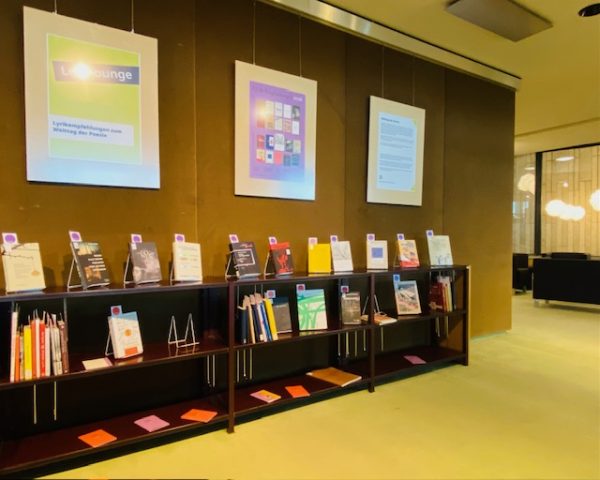
The time a researcher spends reading is still above average, I suppose. Even in times of AI doing astonishing summaries of documents and texts in general, we still need to check the output by reading as well. Taking a break from data compilation and writing, it’s time to do other reading. The Staatsbibliothek tries to lure people studying and researching there into their „Reading Lounge“. In 2026-5 the proposed reading is poetry. Based on the recommendations by an expert group 10 titles of German and 10 translations of poetry are available with direct access for onsite reading. The shift from on screen reading to paper based reading gives your eyesight a break. Your mind wonders off to something else. Much better concentration and new synapses afterwards. Why is still so difficult to take a break this way? We are working on it. 

Woman artist scandal

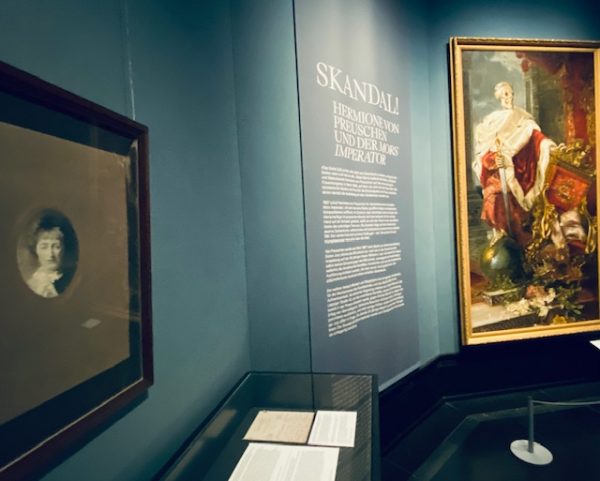
The painter Hermine Schmidt-von Preuschen, little known today, had to face strong forces in the established art community of her time. The skills and audacity she displayed at an early stage of her career as painter is epitomized in her work “Imperator Mors”. This painting dates back to 1887 and was rejected by the art academy in Berlin for their official exhibition. The woman artist was already at that time confident enough that her painting was of sufficient quality to deserve to be not only considered in the exhibition, but also to be seen by larger audiences. Similar to the refused painters of the impressionist movement, she decided to mount her own exhibition. The turnout to this proved to be quite a success according to the press cuttings presented as part of the exhibition in Berlin at the “Alte Nationalgalerie” 2026-5. Maybe it was the intended philosophical topic or message that killed the chances to be part of the art academy exhibition. “Imperator Mors” shows death or a skeleton to be the ultimate ruler of our fate. For all those who believe in some sort of life after death, this can be viewed as a “Scandal” in itself. The scandal created with such a depiction probably overshadowed the fact that the provocation came from a woman artist. Still very avantgarde for the end of the 19th century. (Image: Hermine Schmidt-von Preuschen and her painting Imperator Mors 1887)

Gone fishing

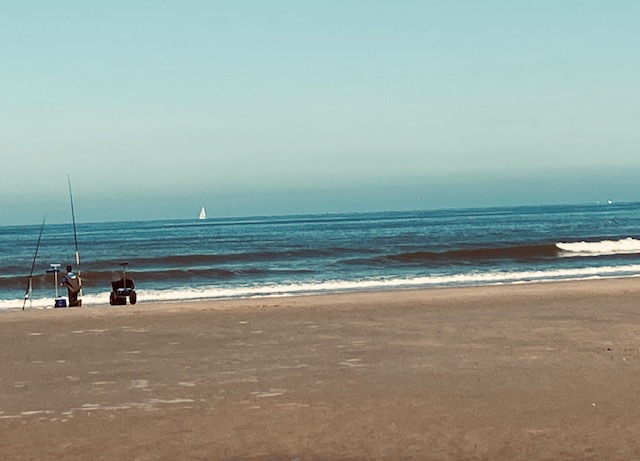
There are still many persons who on a weekend put up a sign on the door: “Gone fishing”. We are of course curious what these people are really up to. The reduction of fish in the sea and rivers has become a real problem across the planet. Overfishing is a policy issue and fishing quotas have taken hold of most fishing waters. The past time or hobby of fishing is very different from the industrial form of fishing. The preservation of the environment has a high priority in the very own interest of being able to fish in future. Simply watching a person fishing in the sea gives the impression that time is passing at a different pace.

Revolutionary time

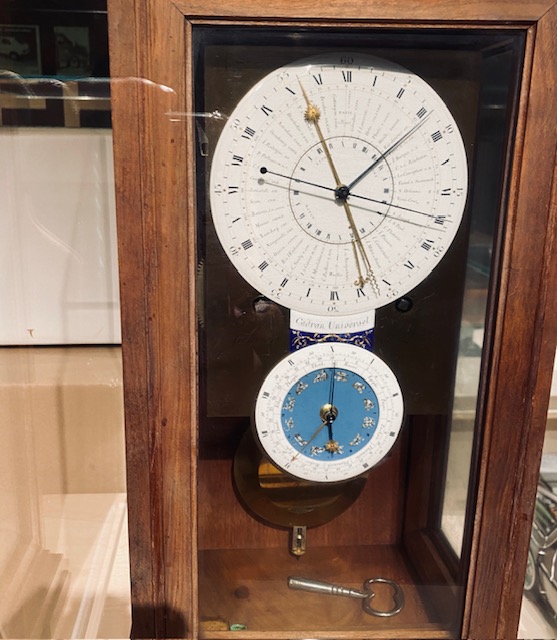
The French revolution has certainly been a turning point in the development of democracy. The radical changes proposed at that time comprised changes to the calendar and the counting of time. Rather than a clock using a system based on the system of multiples of 12, 24 hours for a day and 60 minutes per hour, the revolution proposed to shift to a time system based on multiples of 10, just as for weights,  lengths or volumes. After decimal time had been adopted in 1793 it was disbanded in 1795 as being too revolutionary and declared a failure. We keep being used to 60x24h= 1440 minutes per day rather than for example a 10×100 =1.000 time intervals for a day. We are just so used to acquired habits that behavioral patterns have taken hold of us without us even noticing them. Maybe AI will eventually tell us to adapt because of computational speed of a superior time measurement system just based on a 0/1 based alternative counting algorithm. (Image: Universal dial regulator, Fail collection Musée Arts et Metier, Paris). 

Time Response

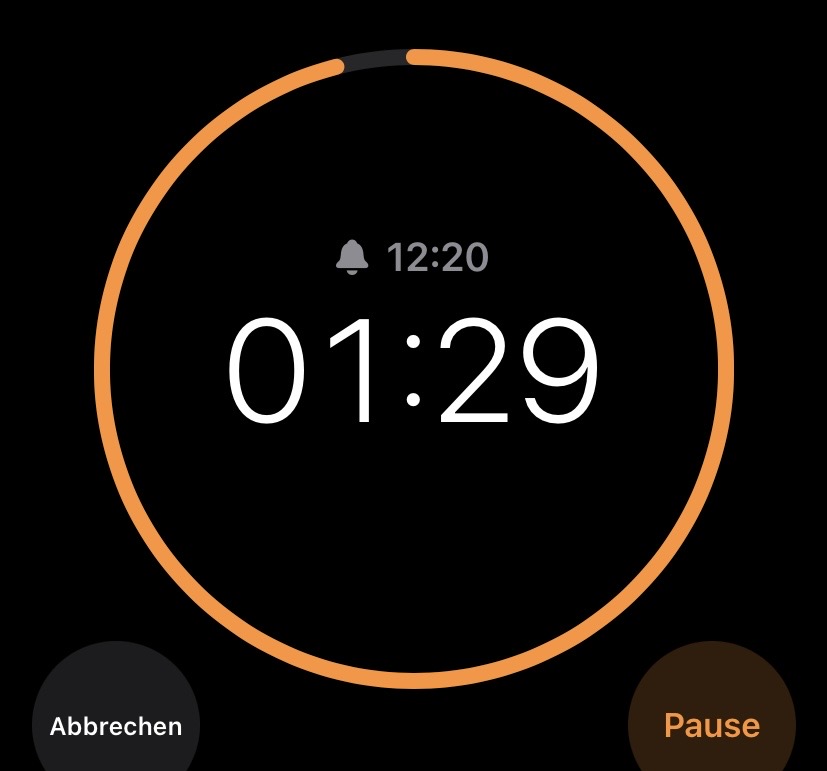
Time enters in many studies of behavior as response time. It could be summerized under a mechanism defined as “action – reaction” in many instances. In the animal model this is studied not only from external stimuli and bodily reactions, but with direct brain or nerve stimulation and subsequent reactions in other parts of the body.
Within humans the same rationale is widely acknowledged as well (Kimura2023). In many processes it is not no longer a question, whether a response will occur, but the differences in response time play a crucial role, for example in processes of aging. In many mental processes, response time is a fairly reliable indicator of aging as response time increases and the reaction is slowed down. The focus then shifts on strategies how to keep response times within usual boundaries. Eliminating or at least reducing disturbing peripheral influences like noise or light as distractions become an issue. In jazz music, the “call – response” mechanism has entered as a successful element in composition and improvisation. Time and response or response time is a highly passionate, physiologic and emotional issue.

Screenshot

Tree as sculpture

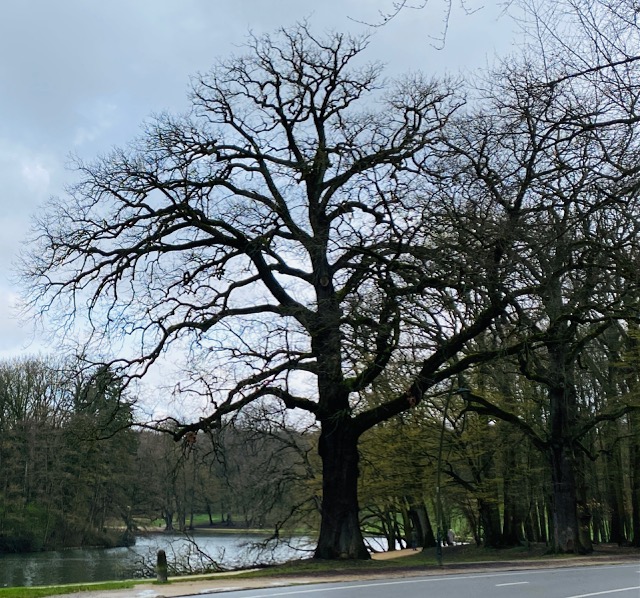
Nature has lots of treasures to offer. A tree is just a splendid sculpture if we take the time to look at them. Over years, decades, sometimes even centuries, a sophisticated sculpture arises due to the imprints of sun, wind and rain over time. There are so many trees around us if we take care of them a little bit better . The simple appreciation of nature’s beauty can be the start of a longer journey. Many people remember a specific tree (Lindenbaum) that had some importance during their childhood or adolescence. Some even choose a tree to be buried nearby. Our life course reflects the growing of a tree. In some cultures you are considered an accomplished human being only if you have planted a tree. Examples of a miniature version of a tree are bonsai trees from the Japanese tradition. The real treasures of life might be just in your neighborhood.