Being On Time

“Being on time” has a different meaning,  depending on the society and culture you are living in. Of course, this tends to reinforce stereotypes and raises expectations about the punctuality, the respect of time as a means to effectively synchronize human behavior and its interaction with technology. Train or bus services are commonly referred to in this context. However, our interest here is with the wider margins or, statistically speaking, the normal or not so normal distribution around a specific point in time.
Colloquially we refer to these time periods as being late (more common) or as being early (less common). Add to this perspective that you may be very late (early) or too late (early) and we are going to really deal with the spice of life. Just think of the last instances when you were late, very late or too late.
The same rationale of a “statistical view of time” can inform the sociology of technology. Some innovations can come too early for society to be ready to deal with it, or they may come too late to save us from disaster.
Genetic engineering of human cells is an issue in this regard, both too early for wider applications, but too late for persons in need of curing a specific diagnosis. There is an additional social-psychological aspect to the cognitive process of being on time. It is the cognitive dissonance of what you expect from yourself or somebody else and the actual experience of not being on time which causes stress. Societal norms of being on time can contribute substantially as well to the overall mental load associated with time. Take it easy.  
Interconnected multipolarity

In a very long-term anthropological perspective on the balance of power on the globe, the period that mankind lived on this globe has been characterised by an unconnected multipolarity. People lived in their more or less isolated communities before the Egyptian, Roman, Chinese, Australian, African or Japanese empires and people of the world became connected through new means of transport and communication networks.
In the 21st century the world wide web has broad us closer together and suddenly we realize that unipolarity or bipolarity might be options again through the unipolar dominance in airspace and radio frequencies. Even if unconnected multipolarity has been by far the longest period of mankind, the new developments in international politics resemble more a world of interconnected multipolarity than an American dominated unipolar or bipolar world of the Cold War period until the collapse of the Soviet Union. Stephen Walt (2026) and Raja Mohan (2026) discuss the concept of multipolarity in the same issue of Foreign Affairs (Vol. 105 Nr.2). Whereas Walt emphasises the USA as a “predatory hegemon”, Mohan describes the USA as being tempted and actually currently going it alone in international politics.
The current military image of world politics seems to be dominated by unipolarity again, maybe just before the longer run realities of economic, demographic, financial, trade and productivity developments, already reflected already in such data, take the upper hand again. The spectrum of the unipolar, bipolar, multipolar world privots around multipolarity in the long run, even if bipolar or unipolar intermezzi are part of the historical evolution.
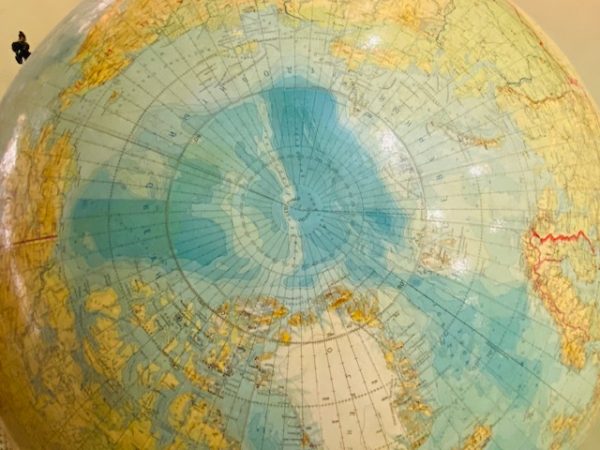
(Image: view of Obzorno-geografceskij globus, Moskau 1994, Stabi Berlin 2026-1)

Time occult

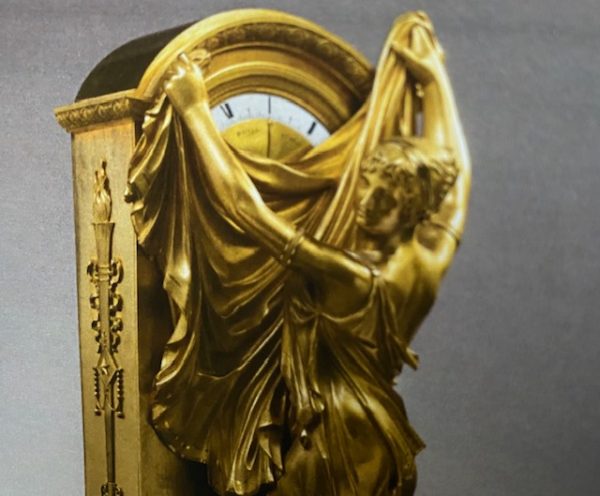
The passing of time may occult what has happened years or decades earlier. However, archives can do a great job to preserve historical facts that time might otherwise occult. The term of occultation has not only the meaning of making something secret, it can also mean that something is hidden from the public or direct visibility. The latter more obvious perspective has become a fashionable feature from time to time. As early as mechanical clocks existed, the arts and crafts have found ways to occult time in the sense of not distracting people from too much attention to the passing of time. At least at some moments in time, it may be of interest to hidden the time to devote more time to a specific moment or event. In the early 19th century this was a very upper class concept. In the early 20th century people wore closed watches in their costumes. Early 21st century people wear wrist watches that might have the light switched off, albeit being always on and connected. There seems to be an awareness among people that there can be too much attention to the passing of time.   (Image: extract from Claude Galle et Bailly 1819 „L’amitié cache les heures“, Musée Marmottan Monet, Paris).  

Time in Leadership

We identified already the importance of monitoring in democracies. The same theoretical considerations hold for an analysis of leadership irrespective of the organizational context, be it a government, governmental organization, non-governmental organization, association or private enterprise. In democracies, it is in most cases a constitutional rule that leadership positions are limited in time and it is “best practice” to have clear rules about renewable terms of office as well.
In private enterprises this seems to be of lesser importance, but the issue deserves more close scrutiny, not only by shareholders in case of a shared ownership or stocks. A particular person in the leadership position might be a good match for a company at times of growth or scaling of a start-up, but the same leadership is less likely to be an equally good match for the period of eventual stagnation or shrinkage.
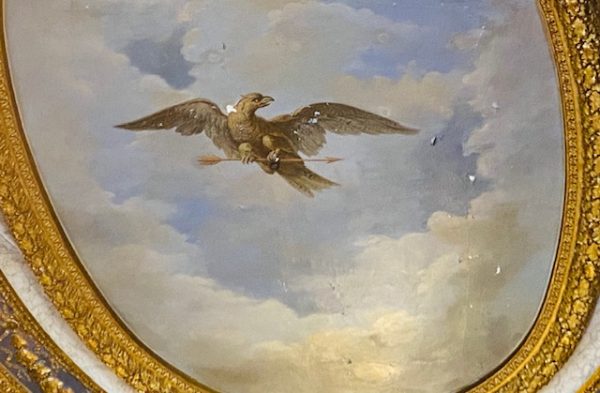
Therefore, as an alternative hypothesis it might be wise to adopt leadership rules similar to filling leadership positions with politicians. Fixed-term and 1 renewal could be worth testing at the leadership level (like in presidential republics, USA or France), even if this does not preclude close monitoring of leadership processes. As a starting point for empirical research, Vogel, Raes, Bruch (2022) offer a toolkit to assess organizational energy and leadership trajectories. Learning from democracies as well as democratic procedures might be a worthwhile leadership model to follow. (Image: ceiling painting in chateau  Vaux le Vicomte)

Time to prevent

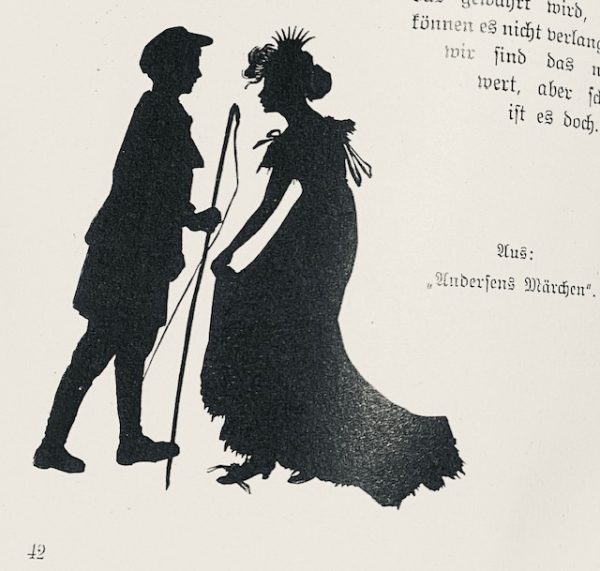
If we take a medical life course perspective, we shall become aware that for each event there shall be a time to prevent it. From a scientific and socio-economic point of view, this is the crucial time to prevent failure of an organ, duration of an illness, death or an otherwise disruptive event. Taking our lung or liver as examples we intuitively know that there is a long time spell during which we have a chance to work on prevention. The monitoring of the early onset of disease is (Ge et al. 2026), potentially, a very cost-saving way as well in addition to avoid humans suffering later on in multiple ways. From a theoretical point of view it will be interesting to “think intervention as prevention” already, rather than the predominant way of intervention “post-hoc”, which means after the onset of disease. This implies a rather complete overhaul of medical research just as much as social research to guide policy makers interested in the “survival” of our social security systems as we know them currently in Europe. (Image is illustration in book on fairy tales: Beckmann in exhibition at Kunstbibliothek Berlin, 2026)

Time wasted

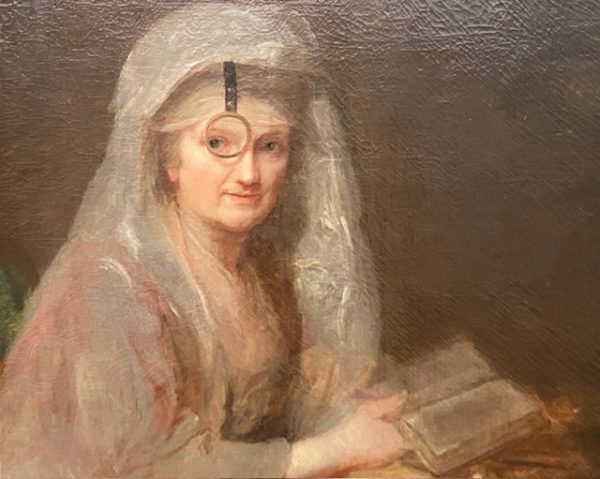
It is a rather narrow, mainly economically driven, view on time that time can be wasted. Maybe, it is just interpreted as the opposite of „carpe diemcarpe diem“ (make use of the day). In the immediate instance time might appear as not used in a productive manner, but with a longer time perspective in mind, wasted time might happen to have contributed substantially to a valuable outcome. The measurement of time can be done in a neutral fashion like using a digital or analog clockdigital or analog clock. Time wasted, however, is a judgement and attaches a value on a duration. In retrospect, or from a life review standpoint, wasted time may be subject to revision. How much of reading is wasted time? Some reading becomes relevant only at later times during the life course. Just keep wasting time this way. Sing songs like from Honahlei „Where has all the time gone“, there will be long term benefits. (Image: extract from Anna Dorothea Therbusch, Selbstbildnis, 1782, Gemäldegalerie Berlin)

Illness duration

The focus in medical analyses is primarily put on the diagnosis of illness. This is the best strategy, if the onset of an illness has a precise beginning and ending. In all processes, where either the beginning and/or the ending is less well-defined as precise point in time, the progression, as phase in or phase out of illness, is also of substantive interest. A duration analysis can inform about the potential presence of a co-morbidity in case, for example, an infection continues beyond the normally expected duration.
Financial pressures in the medical systems makes it necessary to release patients in a timely fashion. Therefore, has become more important to monitor patients even after release from hospital. Digital devices can support such a monitoring.
The study by Josi Levi and co-authors (2026) shows that smartphones or just the monitoring of the number of steps of patient offers a rather reliable indicator on the health status towards the end. The information that a patient has recovered to the normal level of activities as before the onset of the illness works quite well as indicator of recovery. A more precise measure of the duration of an illness is important for patients, care persons, the health system overall. The duration is one of the cost-intensive factors of any illness and it is surprising how little we know about the issue of time and duration in many health processes.

Climate, time and space

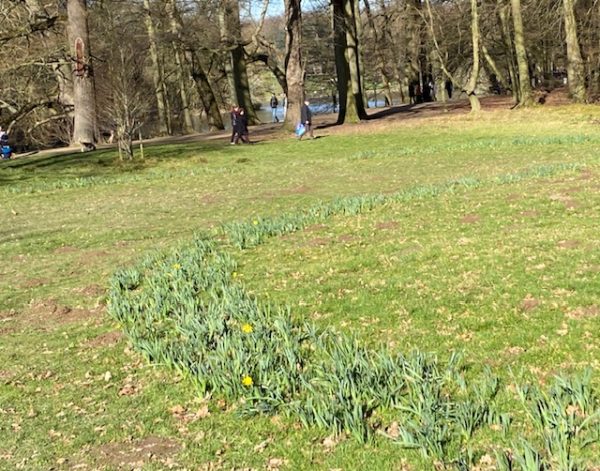
For statistical analyses is good practice to not only study averages, but whole distributions over time and space. Climate change is an obvious candidate to apply such a methodology. The analysis of US data on temperature changes across quantiles of the distribution in 48 regions over 70 years finds distinct patterns of temperature changes. The authors María Dolores Gadea Rivas and Jesús Gonzalo published their findings in PLOS Climate, which showed different patterns of climate warming. Taking into account that it is not only average temperatures that may shift, but only the lower winter temperatures or the warmer summer peaks, they find overall 84% of the regions experienced a statistically significant warming effect. Whereas a higher summer peak is commonly perceived as a climate warming problem, a warmer winter usually is less associated with climate change. This leads to an overall misinterpretation or lower perception that climate warming is and has been happening over the last decades. With yellow daffodils on 2026-2-8, usually a winter day in Brussels (see image), the warm winter days are also evidence that global warming is well under way all year round and across the planet.  

Time and power

Who commands our time? Who commands your time? Both macro- and micro-level analyses of power relationships related to time need to be investigated. Time policies are most obvious when it comes to regulations of working time, permissions of business hours or so-called bank holidays. On the micro or individual level, it is often the question of who spends more time on work, care and repair. Hourly wage rates have been claimed by economists to guide or decide societal time spent on one or the other activity. An extension of this rationale with an overriding objective of happiness might considerably change the impact of power relationships on time. Longer time perspectives on health shall also shift the view of how power impacts the time spent on various activities. Time sovereignty is a precious value in its own right.
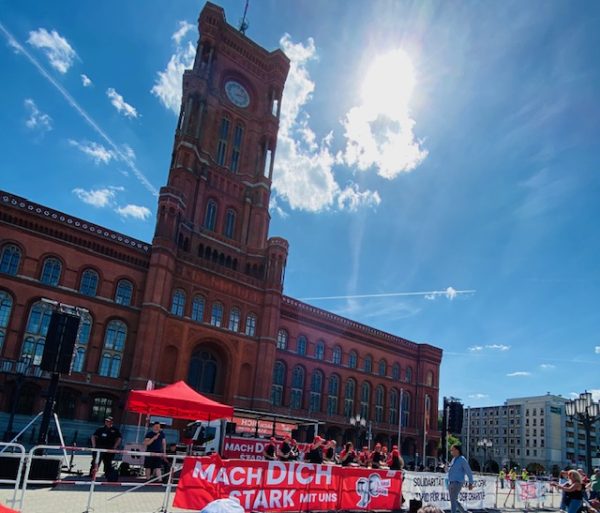
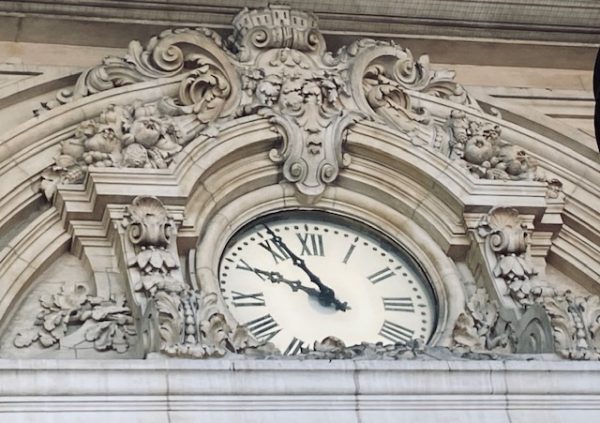
The power play between employers and employees keeps shifting the balance, albeit the overall trend over the last 100 years has been towards a reduction of working time and increased time sovereignty of employees as a form of democratization of working life. This constitutes one form to share the benefits of productivity gains over decades as well. (Image clock on Berlin City Council building on labor day 2025).


Time simultaneously

The simultaneous experience of time forms part of the basic understanding of what society is about. However, the participants of a simultaneous game of chess might arrive at a different perspective on time. At the same time when time advances for say 20 chess players, the one person facing the 20 players is advancing on 20 processes simultaneously, but also on a single time measure shared by all. The different processes, or chess clocks, all run in the same timeframe. The experiences of time will be rather different as the simultaneous games usually stop at very different times. Each player has to live up to her own competence, only the one simultaneous player lives in multiple games or time simultaneously. The experience, even on a much smaller scale to handle just 3 parallel processes is a challenge for us. The fascination of juggling might convey a similar experience just on a more physical level.