Water pleasures

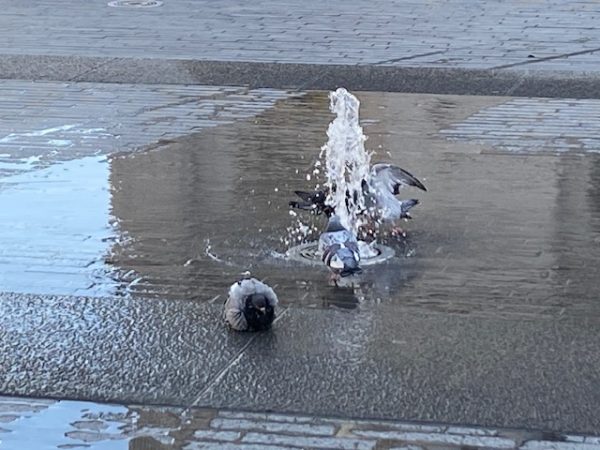
Maybe some of us associate water pleasures with the splendid fountains in the castle of Versailles (France). Our daily concerns, however, are much more about making cities more resilient and able to cope with water scarcity. According to a study by Krueger et al. (2025) the user perspective and behavioral challenges that go along with saving water by end users has been neglected for years. Water management in cities is part of the infrastructure package that has to be managed efficiently. Aging water distribution infrastructure is just as much a problem on the supply side of water as consumption has its (increasing) price on the users side. Rainwater capture, re-use and recycling are promising alternatives to simply providing more water. Pollution is, of course, another hazard that needs our attention. In the meantime we may think of water pleasures for all including the animal world.
Brussels relaxes

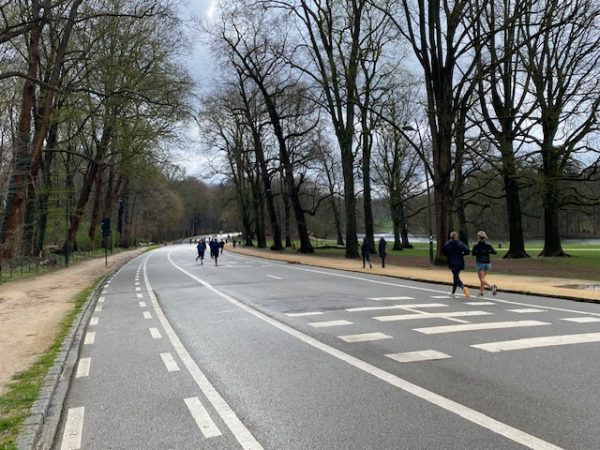
Especially during the weekends and the summer activities some roads can be blocked for other uses. The obese societies of the 21 century need to make room for more exercise wherever possible. Brussels has done so for more than 5 years already. The “Bois de la Cambre” offers an amazing space to all those seeking respite from the busy and warm urban surroundings (Image below). Children and families exercise all sorts of activities and sports. The closed roads are perfect for cycling and jogging as well as the learning of both. Levels of air pollution drop and the running sport is no health hazard as in inner cities. Each and everybody advances at her/his own rhythm (Video Weekend jogging in Bois de la Cambre on Road 2026) or just watches others passing by. Ways to relax in cities are manifold, in a matter of choice and commitment. Commit to relax and detox, at least on weekends. This can be quite a behavioral change with serious health benefits.

Berlin moves it

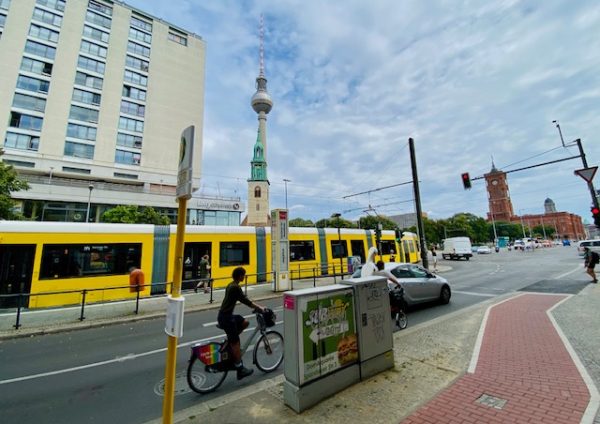
Yes, we like to move it. Investment in infrastructure follows a long-term economic rationale. In urban areas space is a scarce and, therefore, an expensive resource. In order to use the current space for mobility more efficiently, the use of a longer tram or train is an effective way to increase capacities. Rather than to increase the frequency, which is no longer possible without safety risks, a longer vehicle allows to bring more, and more diverse, passengers on board (kinderwagen and wheelchairs included).
It is a long-term objective to make urban areas liveable for all ages. Tramways which allow a low or, better, no barrier to entry is a necessary condition in this respect. The new “Urbanliner” in Berlin (image below) offers such essentials of access and urban mobility. A single tram is 50m long with 88 seats and 215 standing persons in larger corridors. 300 tram passengers can be compared to about 12 average length cars with at best 15-20 passengers.
A consensus of “how best to move it” in cities pays off in the long-term. Planning has to start about a decade before delivery and needs to survive political cycles going back and forth.

Berlin Futures

The city of Berlin is projecting itself into the future. Two long-term goals, Olympic Games 2036 or an Expo organization 2035, are potentially looming and all actors have to project themselves as to what role they want to play in such processes. Trades and industries have an essential role to play to realize any vision of the future, at the same time, local trades and industries ask for amenable conditions to do business in the necessarily restricted city space.
There is competition between housing projects and business parks across each metropolitan area as any form of growth needs space to grow in. The “1. Berlin Future Day of business parks” highlighted this potential source of conflict and business leaders exchanged their experiences and strategies how to arrive at manageable comprises.
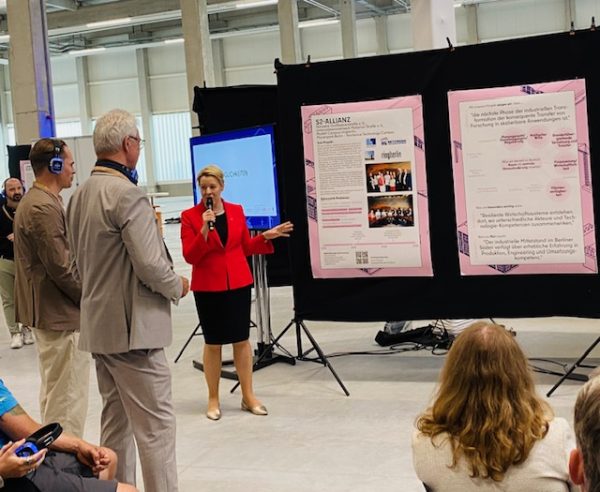
There are several Win-Win constellations in which for example an additional stop on a metropolitan “S-Bahn” line benefits the business area and all those (future) employees going to and back from work. Infrastructure like transport, mobility, energy, internet speed and security, all play key roles in such visions of future. If networks of organizations address policy makers with well-defined requirements, politicians can act as facilitators to ease sometimes lengthy bureaucratic impediments. The call for public infrastructure investments by private business initiatives is a reminder of the need for public-private partnerships to create promising Berlin Futures. (Image: 1. Future Day of Business areas in Berlin, Senator Franziska Giffey 2026-7-15)

Learning locations

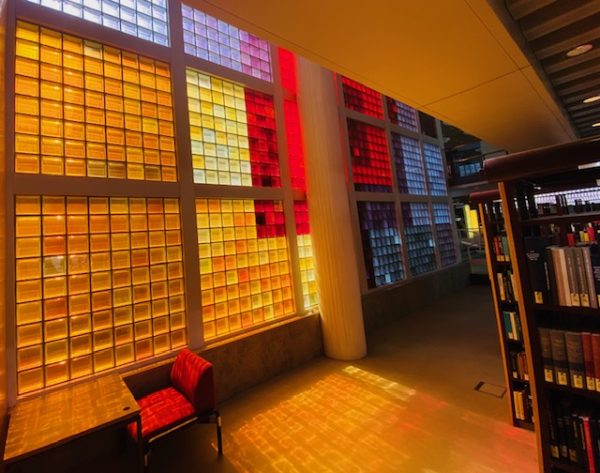
We tend to associate schools as the primary learning locations. However, there is a multitude of additional locations that offer excellent learning locations like museums, libraries, churches, enterprises or various associations. Some of these learning locations have better equipped learning facilities and environments than many schools. It is about time to reckon with this and advocate stronger links between the often disconnected worlds of learning. Teacher training focuses on schools, curricula and teaching methods, but the systematic combination of all these „external“ learning locations with the full-time schooling world could stimulate so much more learning. Maybe, even the social selectivity of education could be reduced through the motivation and different entry points into learning by a diversity of learning locations. Lifewide and lifelong learning are likely to be motivated at an early age. (Image: Stabi West-Berlin 2026-7)

Learning and authenticity

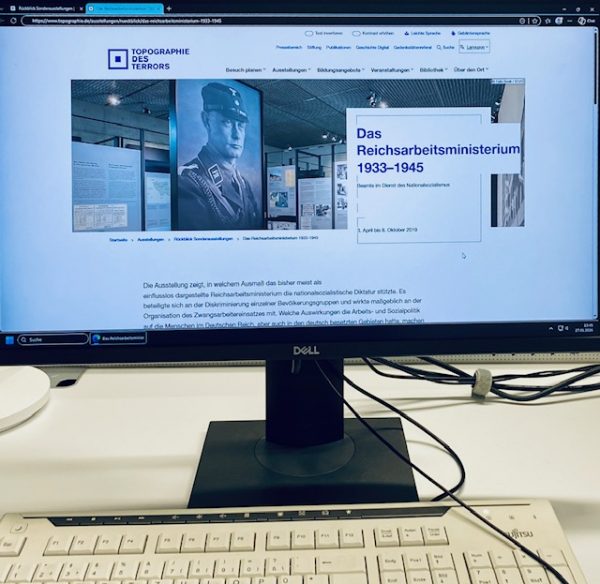
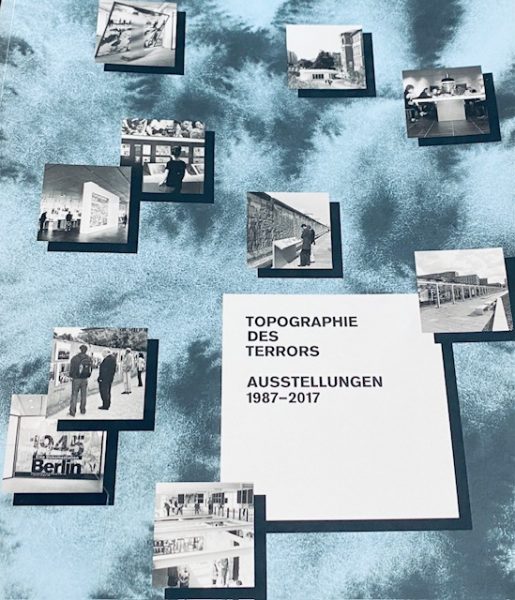
For historical, philosophical, social and many other domains, learning in authentic locations moves learners particularly. This can consist in reinforcement learning of an otherwise abstract event or process. The neuroscience of learning has demonstrated that both parts the rational mind and the emotional relatedness contribute to learning success. Memorials are such places where persons get involved with all their brain and senses. Robert Sigel (2015 pp.50-53) described the wealth of pedagogic approaches that has entered memorials. They range from flyers, guided tours to geo-caching, digital apps and continuous involvement in social media related to on-site visits. Memorials are no social-pedagogic institutions either. They cannot guard or even correct more or less likely antisocial social behavior of visitors. Additionally, they have to strike a balance between 360 degrees, engaged learning and decent commemoration. Authentic objects and information, like biographical accounts, original voices, videos or handwriting reinforce the lasting memory in and of  a memorable location ( Koessler, 2025 p. 79). School curricula make far too little use of this well implemented combination of learning and authenticity so far. Great potentials are ahead of us building on the specificity of each memorial. (Image: topography of terror, webpage access on site 2026).

Learning moral sentiments

In school curricula and evaluations of pupils learning progress there has been little attention to pupils’ learning moral sentiments. Religion and comparisons of religious practices have entered educational programs, but even the big PISA studies have largely refrained from evaluations of learning achievements in ethical matters or moral sentiments. Adam Smith as proponent of the Scottish enlightenment had written about “The theory of moral sentiments” before embedding his market economy into the enlightened society. In the 2020s we realize that we have neglected this part of learning for far too long. This is the point where memorials can play a primordial role as a central part of learning not only about history, but moral sentiments in the broadest sense. Memorials “Gedenkstätten” operate as quasi-schools” in this respect for young and experienced learners at the same time considered that more than 50% of learners in memorials pupils, students or from teaching professions. However, outcomes of  learning in memorials could also be assessed in order to check what kind of learning goals and moral sentiments can be addressed in such historically charged learning environments. Such learning locations of moral sentiments have to balance the intended learning with the necessary decency of the commemoration in such learning environments. (Image: Topography of terror Berlin exhibitions) 

Water in Parks

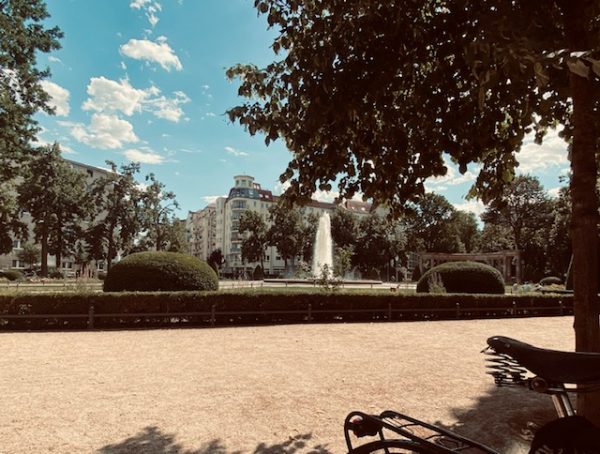
In 2026-7 and a 3rd hear wave approaching, the real luxury consists in water in inner cities. As a source of refreshment and cooling when temperatures rise, water provides a natural source to cool down nearby people, buildings as well as any trees. The wisdom of a hundred years ago appears again as a major solution as global warming progresses. Evaporation of water is cooling. Some simple facts deserve to be repeated over and over again as urban planning seems to have forgotten such simple physics. We have think about a lot of green and blue spots again in our cities to achieve the much needed cooling effects. (Image: Viktoria-Luise Platz, Berlin 2026-7)

Realist Democracy

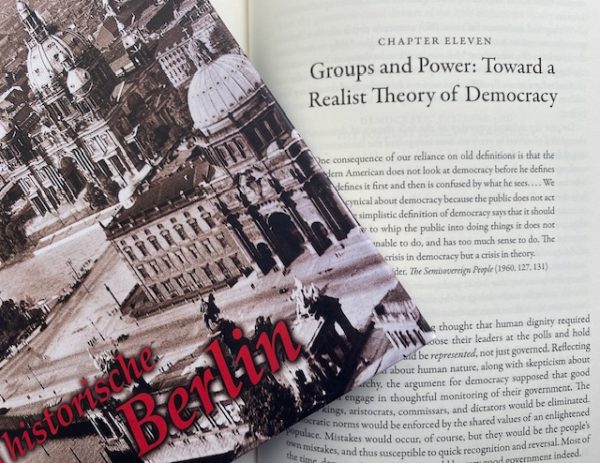
2000 years after the “invention” of and first attempts to develop a theory of democracy, we have come round to seriously think about “a realist theory of democracy” (Achen & Bartels, 2016). The ideals formulated in constitutions deviate sometimes substantially from the practice. Therefore, we have courts, (ideally) independent judiciaries, journalists and scientists. All these well-established safe-guards to ensure well-functioning democratic structures continue to be challenged. In each democratic country we can cite “derailing” of political leaders that try to bypass democratic institutions. The latest example in 2026 is the Mayor of Berlin Kai Wegner. He deceived, some claim he lied, repeatedly before his own party base refuted him as their representative when lies were uncovered. There have been several other politicians who have covered up his misinformation of the public about his handling of an urgency, which affected 100.000 people sitting without electricity during winter days. It took 6 months to uncover the truth about the handling of the crisis. However, eventually the truth and the lying to the media and the public became uncovered. The merit of this occurrence in Berlin is the hope that democratic ideals can be upheld even in rather hierarchic organizations and so-called head-fast leadership.

Repetition and Variations

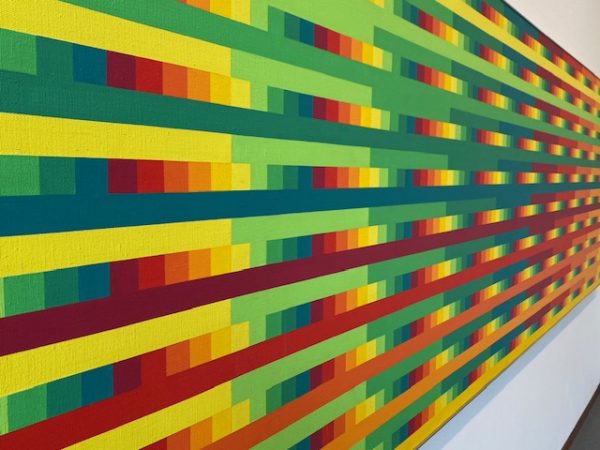
Learning and, surprisingly, innovation or creativity build upon repetition as a method. You may just recall the content or repeat an exercise and this is an obvious form of learning by simple repetition. A bit  more challenging is active recall, which would take into consideration to ask (yourself) questions about the subject at hand. The time component is another form for effective or “spaced” repetition as time intervals and timing over a learning period are powerful mechanisms of learning strategies as well. Even visualizations of content in form of a mind map is a creative form of repetition. The basic content remains the same. You may also just use repetition in a form that you (imagine) teaching the same content to another person, which is also known as the Feynman method. Learning can consist in variations of repetitions. This works in many disciplines and the repertoire of repetitions is a part of any pedagogical toolbox and exercises. (Image: Extract from Horst Bartnig, Composition in ten colours 000-999, 1981, Neue Nationalgalerie Berlin)